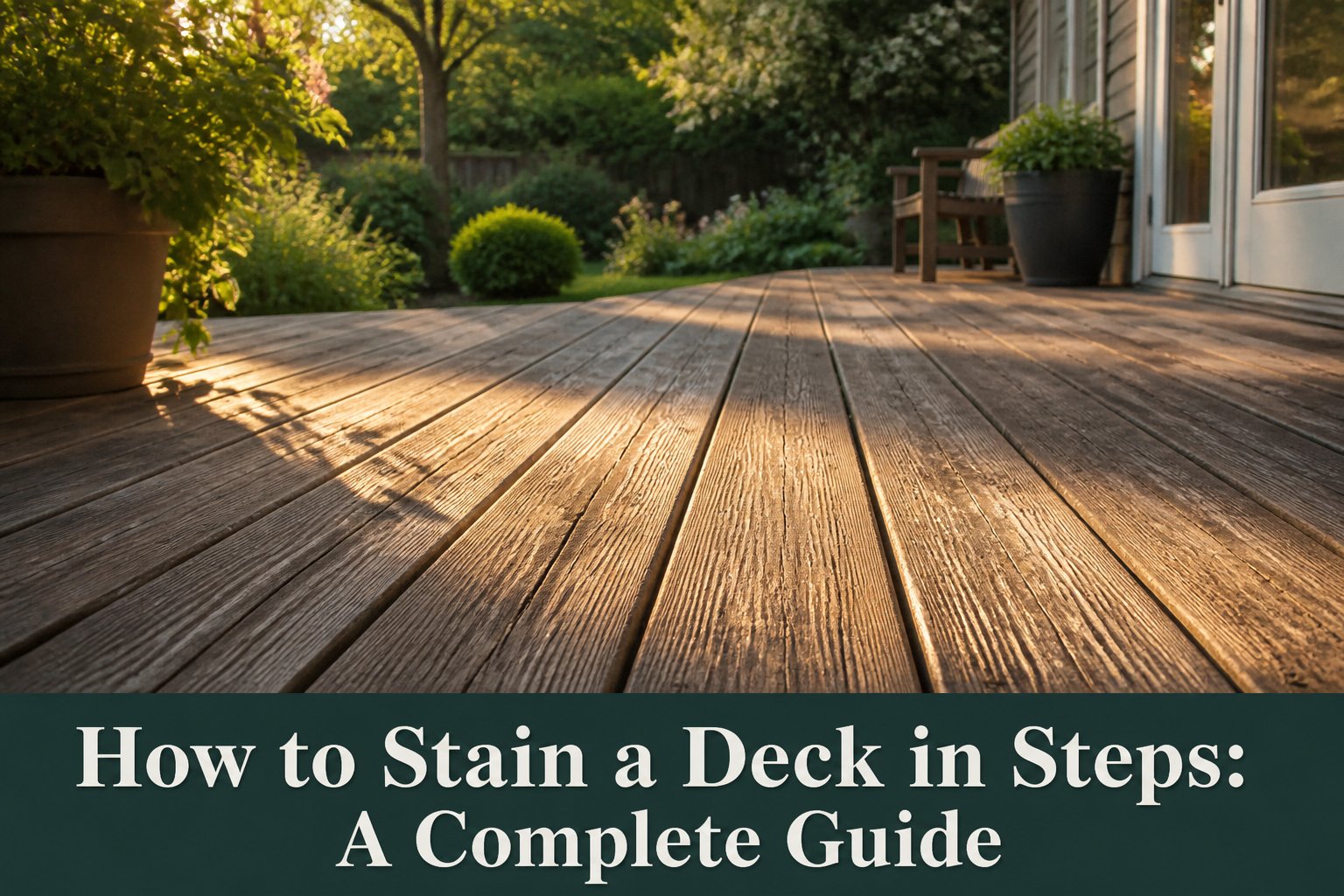
A finished deck stain gives you two to three years of protection, but only if the wood is fully dry before you start. Most people rush the cleaning step, stain over damp boards, and watch the finish peel by fall.
The real discipline is waiting 48 hours after rinsing, even when the surface looks bone-dry.
1. Inspect the Deck

Walk the deck with a hammer and drag it across the boards. Where the head catches, a nail has worked itself above the surface.
Drive those flush or slightly below with a nailset so the stain pad glides over them instead of snagging. Raised metal telegraphs through stain like a bruise through thin shirt fabric; the finish does not hide problems, it spotlights them.
Splinters, loose boards, and gaps packed with old leaves need the same honest look.
A hose on its highest jet setting will blast debris from between boards, but rot or serious warp means replacing the piece now, not after the color goes on.
I have skipped this step once, thinking a dark semi-transparent coat would swallow the sins. A dark stain will frame every flaw instead, so budget an afternoon of sanding back to bare wood if the surface is rough.
The extra hour of inspection saves a full redo.
Recommended Products

Ultra oxidizer, oxygen-activated powder concentrate

Each container of 32 oz. concentrate mixes 10 gallons, 20 gallons total, cleaning and brightening approximately 1200 sq. ft.

Ideal cleaner for both wood and composite surfaces including decks, siding, fences as well as broom swept and porous concrete surfaces
2. Clean the Deck

Stain soaks into clean wood better and lasts longer, so this step is worth the time. Start by sweeping leaves and debris off the boards, then cover any nearby plants with plastic so they don’t get sprayed.
For the cleaner itself, a homemade mix works well: 2 gallons warm water, 2 cups powdered OxiClean, and 1/4 cup liquid dish soap. Pour it into a garden pump sprayer and coat the wood generously, working in small sections.
Let it bubble for about 15 minutes to loosen grime and mildew.
A stiff broom or brush makes the difference here. Scrub the boards after the cleaner has sat, then rinse.
A pressure washer on its lowest setting with a 40- to 60-degree fan tip will finish the job, but keep the wand 12 inches from the surface and sweep with the grain to avoid gouging the wood.
Once everything is clean, let the deck dry at least 48 hours before you open the stain can. Two full days of sun and breeze matters more than the exact hour you started rinsing.
Recommended Products

Complete set: Twinkle Star Pressure Washer Tips contains 1 Black Brass soap nozzle, 1 Red Stainless Steel Nozzle Tip (0 Degree), 1 Yellow Stainless Steel Nozzle Tip (15 Degree), 1 Green Stainless Steel Nozzle Tip (25 Degree), 1 White Stainless Steel Nozzle Tip (40 Degree)

Package Included: 1 x pressure washer nozzle holder, 1 x rinse mode nozzle tip, 1 x soap mode nozzle tip. 1 x red nozzle (0°), 1 x yellow nozzle (15°), 1 x green nozzle (25°), 1 x white nozzle (40°), 1 x black nozzle (65°).

NOT 6 BUT 7: Instead of one, our 7-in-1 pressure washer nozzle has two soap patterns: soap fan + soap jet. Soap fan pattern creates thicker foam while cleaning the car, soap jet pattern is great for cleaning gap. MEKOH spray nozzle comes with seven quick changeover spray patterns: 0, 15, 25, 40 Degree, Rinse, Soap Fan, Soap Jet, working flawlessly in different cleaning applications. We are proud to say that our adjustable pressure washer nozzle is smaller, lighter and more efficient than others
3. Brighten the Wood

A wood brightener is the step most people skip, and it shows in the final color. After power washing, especially on gray or weathered boards, the surface can look blotchy and the pores stay tight.
The brightener opens those pores back up and pulls the natural tone out of the wood, so the stain sinks in evenly instead of sitting on top.
I mix it at roughly one part concentrate to four parts water in a pump sprayer, wet the deck first, then mist the solution across the boards.
It needs three to five minutes of dwell time, kept wet the whole while. Rinse thoroughly with a hose or a low-pressure tip.
If the lower boards or high-traffic areas still look splotchy, a second pass is worth the extra gallon.
The timing matters more than the brand. Oxalic acid works well on weathered gray wood, and the liquid concentrates are gentler on the fibers.
Either way, let the deck dry completely before staining. With a water-based stain, that usually means the next day; oil-based needs longer.
Recommended Products
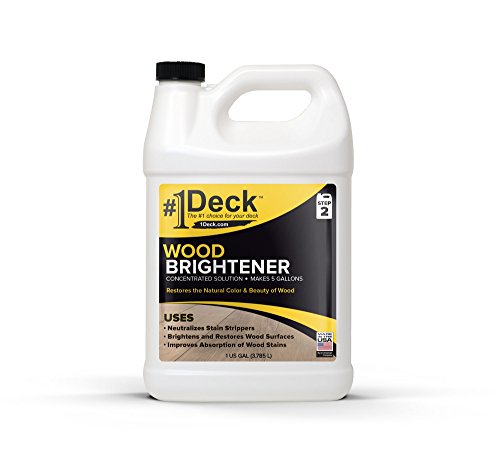
Restores wood's natural color and beauty

RESTORES THE NATURAL BEAUTY OF WOOD - DEFY Wood Brightener cleans and restores weathered wood surfaces to make them look new again

Restores the natural brilliance of outdoor/exterior wood by effectively brightening and removing dirt and graying
4. Choose the Right Stain

The first decision is how much wood you want to show. Transparent stains are nearly clear, letting every knot and grain line stay visible while adding a thin protective coat.
Semi-transparent stains add more color but still let the grain peek through. Solid stains hide the wood entirely, giving that composite-deck look, but go solid now and you cannot easily walk it back to a natural finish later.
For a first-time stain on new wood, starting lighter leaves more options open as the deck ages.
Water-based stains have improved enough that the old performance gap has narrowed. Cleanup is soap and water, drying is faster, and the synthetic resins in some lines resist mold and mildew better than oil in damp climates.
Oil-based stains still penetrate deeper into the wood itself, which matters for longevity, and they tolerate wood that is not fully dry at application.
Oil-based stains last longer and penetrate better, but you will deal with solvent cleanup, longer drying time, and harsher fumes. For a small deck or a balcony project where ventilation is limited, water-based is usually the easier live-with choice.
Recommended Products
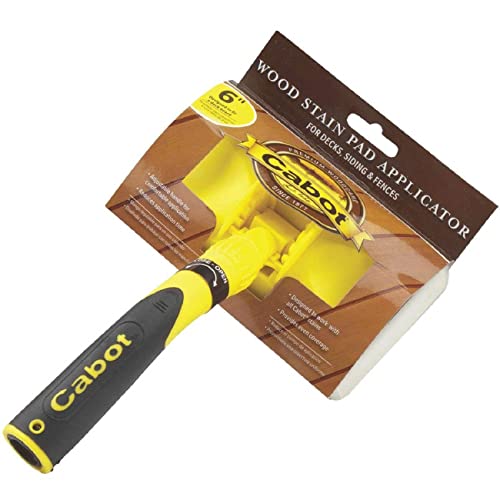
Package length: 9.3"


Bates deck stain brush features a 7.5-inch width for expansive and even application, ideal for efficiently staining decks, fences, and other large wooden areas.
5. Apply the Stain

A brush gives the most control, but a roller or sprayer will speed things up on large, open areas. Thick coats do not work with stain; it needs to work into the wood, not just sit on top.
After rolling or spraying a few full boards at a time, go back over them with a brush while the surface is still wet.
This back-brushing pushes the stain into the grain and catches the thin spots a roller leaves behind. It also prevents the lap marks that form when overlapping edges dry at different speeds.
Temperature matters more than most first-timers expect. Apply stain between 50°F and 90°F, with low to average humidity and at least two days of dry weather ahead.
Direct sunlight is the other enemy. It pulls moisture from the stain before the wood can absorb it, leaving streaky, underperforming coverage.
Early to mid-morning or late afternoon, when the deck sits in shade, gives the stain several hours to permeate before sun hits it directly.
Recommended Products

Worsks on all types of wood

IMPORTANT READ FIRST - Will not remove solid color opaque stains, paints, polyurethanes, or excessively over-applied acrylic (water-based) stains. If you have a question about if this will work for removing your stain, please ask below in the Questions Area with the brand name and type of stain being removed or contact us directly.

💎BRUSH SPECS: 7” (180mm) wide x 2” (50mm) thick. Giant Block Stain Brush. This large brush with threaded handle can be attached to an extension pole or a long broom handle. Stand Stain Brush Applicator, free up your back and knees as you paint deck floor and wall ceilings.
6. Let It Dry

A deck stain needs 24 to 48 hours of dry time before you walk on it or drag furniture back out. I treat that as a hard rule, not a suggestion.
The stain is still curing underneath the surface even when it feels dry to the touch, and foot traffic too early will leave marks you cannot fix without starting over.
The real discipline is in the weather window. You want 48 hours with no rain both before and after application.
If the wood is damp from a shower the day before, the stain cannot soak in evenly. If rain hits within a day of your last coat, you risk streaking, whitening, or the whole finish lifting in patches.
I check three forecasts and still hedge toward a three-day dry stretch if I can get it.
Temperature matters too. Most stains perform best between 55°F and 95°F. Direct sun is another trap; it drives the surface dry before the wood has absorbed the stain, leaving you with a patchy, underperforming coat.
I aim for early morning on an overcast day, or late afternoon once the deck has passed out of direct light.
Recommended Products

POWERFUL DECK CLEANER & MILDEW REMOVER – This deck cleaner and mildew remover is a professional-grade deck cleaning solution, effectively eliminating black and green stains, mold, and built-up grime on wood and composite surfaces.

This kit comes with a 7" deck stain brush and a 3" small wood paint brush. The 7" large brush is designed for quick, large-area painting, while the small paint brush is ideal for precisely painting narrow corners, edges, and railing crevices.

BRIGHTENS & RESTORES WOOD COLOR - Restore-A-Deck Wood Brightener helps restore the natural appearance of weathered exterior wood after cleaning or stripping by improving wood tone and reducing darkened wood fibers.
Stain Types Compared

Transparent stains let the wood grain show through completely, but that visibility comes at a cost: they offer the least protection from sun and moisture.
Semi-transparent stains add enough pigment to shield the wood somewhat while still letting grain texture read through. Solid stains behave almost like paint, burying the grain entirely in exchange for the longest wear and strongest UV block.
| Transparent | Semi-Transparent | Solid | |
|---|---|---|---|
| Transparency | Full grain visible | Grain visible, softened | Grain hidden |
| Durability | Lowest | Moderate | Highest |
| UV protection | Minimal | Moderate | Best |
| Best for | New, premium wood you want to feature | Balanced look with decent protection | Older decks, maximum color choice |
The water-based versus oil-based choice has shifted lately. Water-based formulas clean up with soap and water, dry faster, and now outperform many oil-based stains for weather resistance.
Synthetic water-based resins also resist mold and mildew better in humid climates. Oil-based stains still penetrate deeply and can be forgiving on application, but they carry solvent odors and longer dry times.
For a small deck or balcony project where quick turnaround matters, water-based usually wins.
Recommended Products

PRECISION MATCH – 1300-3000 PSI, 1.2–3.0 GPM, 2.5 orifice. 1/4" quick connect fits standard wands — fits Simpson, Generac, DeWalt, Craftsman, Ryobi, Greenworks, Karcher, Champion, and Westinghouse.

ATTENTION: MAKE SURE WORKING PRESSURE of YOUR PRESSURE WASHER is HIGHER THAN 1700 PSI. The higher pressure you have, the further water will reach. 2nd story pressure washer tips with rinse and soap mode,offer a JET STREAM that reaches farther than standard spray tips. Long range nozzle reaches the second floors.

Nozzle Tips set includes: 1 Red Stainless Steel Nozzle Tip (0 Degree), 1 Yellow Stainless Steel Nozzle Tip (15 Degree), 1 Green Stainless Steel Nozzle Tip (25 Degree), 1 White Stainless Steel Nozzle Tip (40 Degree), 1 Brass soap nozzle tip (65 Degree). Choose different angles nozzle according to the actual need
Tools and Equipment

The right tools turn a long afternoon into a quick job, and the wrong ones leave streaks you’ll notice every morning. Here’s what actually matters.
- Synthetic-bristle brushes pair with water-based stains; natural bristles go limp as they drink up the water in the finish, so they lose their shape fast.
- A ¼-inch or shorter nap roller lets stain adhere to the wood without pooling; longer naps dump too much product at once and fight you for even coverage.
- A pump sprayer or a paint mitt speeds work on broad, open boards, though overspray from any sprayer will damage siding and cars if you don’t mask carefully. For airless options, Graco’s Magnum line outlasts budget alternatives, and Wagner’s Flexio 590 costs less upfront.
- Wood cleaner and brightener come before the stain, not after; skip them and the grain stays sealed by grime.
- Safety glasses, closed-toe shoes, long pants, and hearing protection belong on the list if a pressure washer enters the job; that stream can break skin.
Synthetics maintain their integrity, whereas natural bristles can become limp as they absorb the water in the finish.
That difference in bristle material is the kind of detail that saves a re-do.
Weather and Timing

Temperature matters more than most people expect when they set aside a Saturday for this. Stain needs a 48-hour dry window before and after application, with air temperatures sitting between 50°F and 90°F the whole time.
I check three days back, not two, because wood that looks dry on the surface can still hold moisture deeper down. That extra day of buffer has saved me from watching a fresh coat turn blotchy by Sunday evening.
Direct sunlight is the other trap. The stain dries before the wood drinks it in, leaving a patchy film that peels within a season.
I aim for early morning, or I wait until the deck slides into shade in late afternoon. The surface still needs hours of indirect light and air movement to cure, so late evening starts risk dew settling on tacky stain.
As for how often to restain, the water test tells the story. Pour a small puddle on a high-traffic board.
If it beads and sits there, the seal is holding. If it sinks in fast, the wood is thirsty again.
Most decks hit that point every two to three years, though a solid stain with heavier pigment can stretch toward the longer end.
Recommended Products
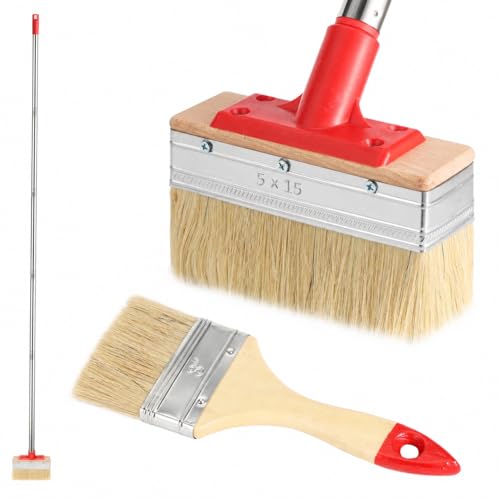
Bates deck stain brush set includes a 6-inch wide deck stain applicator, a 77-inch extension pole, and a 3-inch paint brush for versatile painting and staining tasks.

【Easy-to-Adjust Applicator Head】Quickly hand-adjust from 0° to 180°. Made from rugged nylon to withstand repeated use. Come with a comfort-gripping handle for short-range application. Smooth performance on all heights, surfaces, and tight spaces.

RUGGED ALUMINUM CONSTRUCTION: Built with rugged aluminum, this painting roller extension pole offers the durability necessary for tough paint jobs. 6-1/2'
Maintenance After Staining

A deck stain job starts aging the day you finish it, and the maintenance rhythm matters more than the brand you chose.
I sweep mine every couple of weeks through the season, then wash it down with a stiff nylon brush and plain deck cleaner before the boards gray out.
That routine, plus a fresh coat every few years, is what keeps the wood from checking.
The real decision comes when the old coat starts to fail.
If the previous stain is peeling or flaking, you have to strip it back to bare wood before restaining; a new coat over loose material will flake right along with it.
Power washing, wire brushing, or sanding removes the loose stuff first, then a wood stain remover lifts whatever remains.
Let the stripper work for the 20 to 30 minutes the label specifies, scrub with a nylon brush and water, and repeat any spots that resist. Rinse, brighten and neutralize the wood, then sand smooth once it dries.
If the old stain is still sound and you’re reapplying the same product or a compatible one, you can skip the stripper. Clean with a pressure washer and stiff brush, maybe sand lightly, and go straight to staining.
The difference between a two-hour prep and a two-day prep is whether that old coat is holding on or letting go.
Recommended Products

Brush Specs: Comes with 1x 7’’ large block stain brush with long handle and 1x 3'' small wood paint brush. The long deck paint brush is for larger surface expansive painting, and the small paint brush is for narrow places premise painting.

IMPORTANT - This will not remove solid color/opaque stains, paints, polyurethanes, or excessively over applied acrylics. If you are unsure, please ask in questions with brand and type of stain used prior.

Complete 11-Piece Deck Stain & Cleaning Kit Includes 1x 7" deck stain brush, 1x floor scrub brush, 4x extension poles (up to 51"), 1x 3" wood paint brush, 1x foot-pedal paint tray, 1x paint brush comb, 3x tray liners, and a cleaning scraper — everything you need for staining, painting and sealing outdoor wood projects
Common Questions

A few questions tend to come up once the stain is on and the brush is rinsed.
- Wait 48 hours after cleaning before you open the stain can. Water trapped in the boards ruins adhesion, and two full days of dry weather is the minimum for letting that moisture escape.
- Staining in hot weather is possible, but stay inside the 55°F to 95°F window. Much above that and the stain skins before it soaks in. I look for a dry stretch with at least 48 hours after application, no wind strong enough to blow debris onto wet boards, and temperatures that won’t dip below 55°F overnight.
- Brush, pad, or sprayer all work for application. What matters more than the tool is keeping a wet edge and working the stain into the grain rather than letting it pool.
- Restain every 2 to 3 years, sooner if the color has gone flat or water stops beading on the surface.
- Remove old stain only if it is peeling or flaking. Sound stain that still adheres can stay; clean it, maybe sand lightly, and apply a compatible product over top. Once it lifts, though, you need stripper, a stiff nylon brush, and a day of drying before you sand and start fresh.
Frequently Asked Questions
How long should I wait to stain a new deck?
Wait at least 48 hours after cleaning before you open the stain can. Water trapped inside the boards ruins adhesion, and two full days of sun and breeze gives that moisture time to escape.
The deck may look dry on the surface long before it actually is.
Can I stain my deck in hot weather?
Yes, but stay inside the 50°F to 90°F range and avoid direct sunlight. Hot sun pulls moisture from the stain before the wood can absorb it, leaving streaky, underperforming coverage.
Early morning or late afternoon, when the deck sits in shade, gives the stain several hours to permeate before direct sun hits.
What is the best way to apply deck stain?
A brush gives the most control, but a roller or sprayer speeds up large open areas.
Back-brushing makes the difference: after rolling or spraying a few boards, go back over them with a brush while still wet to push the stain into the grain and catch thin spots.
This also prevents lap marks from overlapping edges drying at different speeds.
How often should I restain my deck?
Every 2 to 3 years, or sooner if water stops beading on the surface. Pour a small puddle on a high-traffic board; if it sinks in fast instead of beading, the wood is thirsty again.
A solid stain with heavier pigment can sometimes stretch toward the longer end of that range.
Do I need to remove old stain before restaining?
Only if the old stain is peeling or flaking. Sound stain that still adheres can stay; clean it, maybe sand lightly, and apply a compatible product over top.
Once it lifts, though, you need stripper, a stiff nylon brush, and a full day of drying before you sand and start fresh.
What not to do when staining a deck?
Do not skip cleaning and brightening, do not stain over wet wood, and do not apply in direct sunlight or when rain threatens within 48 hours.
Do not walk on the deck during the first 24 to 48 hours of drying, even if it feels dry to the touch; the stain is still curing underneath.
Is it better to spray or roll stain on a deck?
Neither is better on its own; the winning move is combining them with back-brushing. Spraying or rolling covers ground fast, but stain needs to work into the wood, not just sit on top.
Go back over sprayed or rolled sections with a brush while wet to push the product into the grain and prevent lap marks.
What month is the best time to stain a deck?
The right month is whichever gives you a 48-hour dry window before and after application, with temperatures between 50°F and 90°F and no rain.
In most of the country, that means late spring through early fall, though exact timing matters less than the specific forecast.
Check three days back, not two, because wood that looks dry on the surface can still hold moisture deeper down.
What if it rains 3 hours after I stain my deck?
Rain that soon risks streaking, whitening, or the finish lifting in patches. The stain needs 24 to 48 hours of dry time to cure properly, and moisture during that window can ruin the coat.
If rain hits within a day of your last coat, you may need to strip and redo the affected areas once they dry fully.