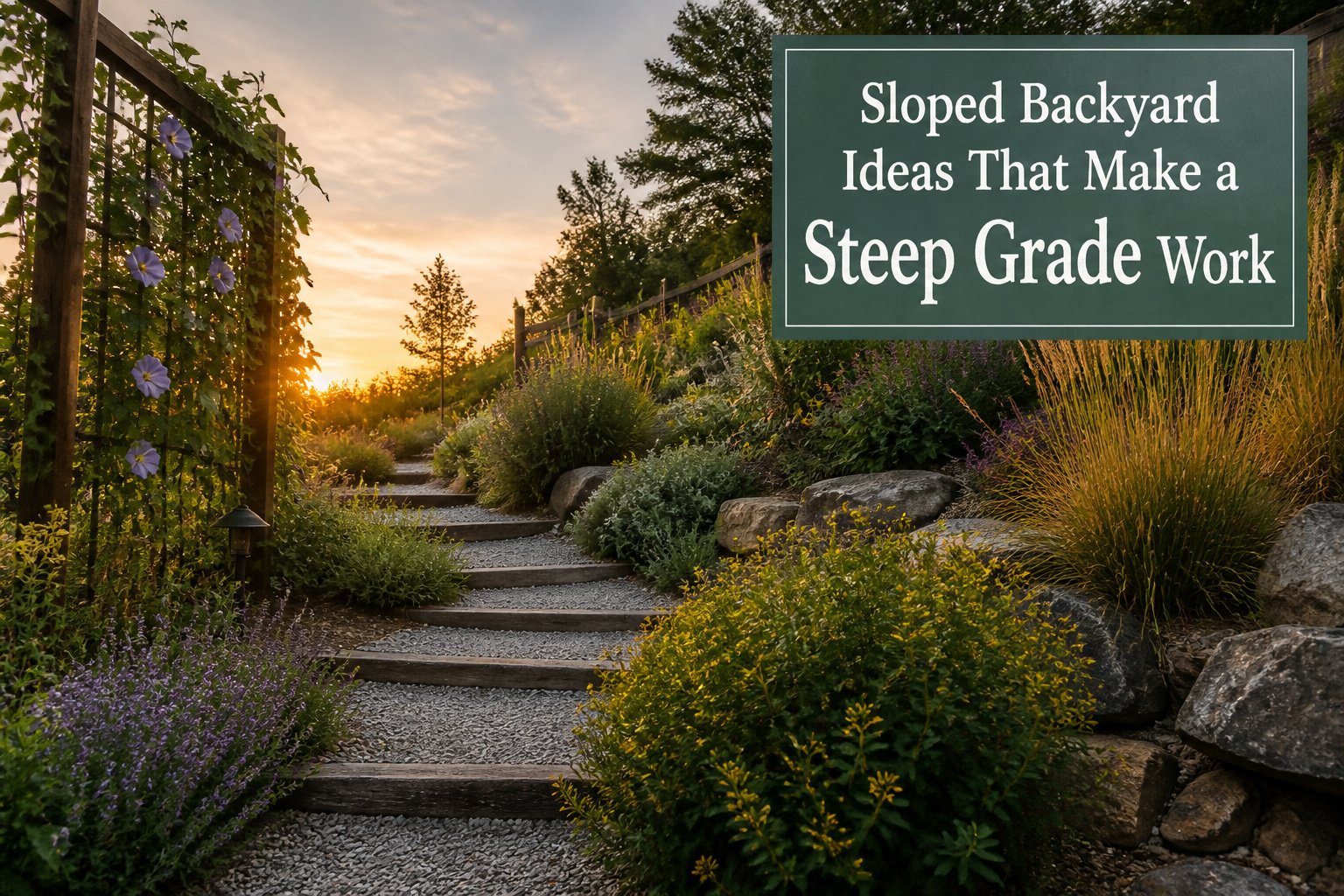
The right fix for a sloped backyard runs from a single gravel path to a $22,000 terraced overhaul, and the deciding factor is almost always drainage. Skip it, and even a low timber wall will bow outward within a few seasons.
The same gravity that makes water rush downhill can power a recirculating stream, but only if French drains, weep holes, or swales are in place before anything decorative goes in.
1. Retaining Walls

A retaining wall turns a slope into usable ground by holding soil in place while it carves out level terraces behind it.
The steeper the grade, the taller the wall needs to be; a mild slope might settle for a low row of large rocks or railroad ties, while a steep drop calls for concrete blocks or stone slabs stacked to serious height.
Cinder blocks work too, though they rarely win on looks unless you face them.
Weep holes matter more than the facing you choose. Water collects behind any wall, and without drainage it will push through or push over.
Drill or leave gaps at the base, add gravel backfill, and the pressure bleeds off instead of building.
I have watched a neighbor’s timber wall bow outward after three seasons because he skipped this; the repair cost him the wall plus the patio grade it was holding.
Recommended Products

No cutting concrete wall block, timbers or stone

High quality material: 304 stainless steel, with a certain degree of elasticity, corrosion and rust, long service life.

Quality materials: Weep hole covers are Stainless spring steel made, Spring Steel provides excellent clamping and a long service life.
2. Terraced Gardens

A slope that sends your tools rolling downhill every spring becomes workable ground once you cut it into terraced levels held by retaining walls.
Each flat step gives you planting beds you can actually tend without bracing one foot higher than the other, plus walking space that does not feel like a workout.
The walls do more than hold soil. Water that would sheet down a continuous grade and carry your mulch with it hits each terrace and slows, giving the ground time to absorb it.
That break in runoff is the erosion control you need on anything steeper than a gentle incline.
Cost runs high if you are bringing in stone or engineered block for multiple walls. One Colorado plan I looked at priced out steeply against simpler sloped backyard ideas, though the usable square footage it added was significant.
Two ways to play this: build one broad terrace across the middle and keep the upper and lower slopes planted, or commit to three or four levels and gain near-level yard throughout. The single terrace wins on budget.
The full stack wins if you want a vegetable garden up top, a path of stepping stones descending to a patio, and a fireplace level below, each defined by its own wall height and planting scheme.
Recommended Products
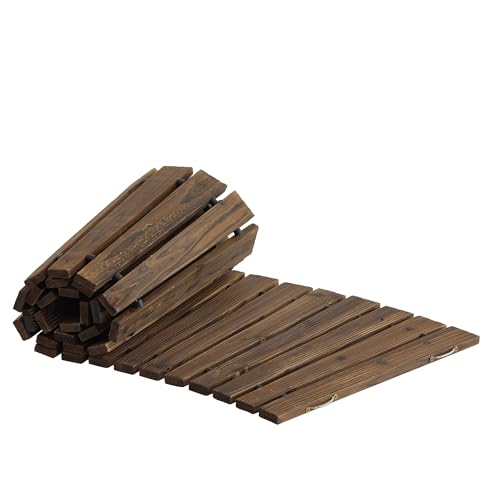
VERSATILE DESIGN: Roll-out wooden walkway that can be laid in curved or straight configurations for garden paths, beach access, or special event walkways

UNIQUE OUTDOOR WALKWAY SOLUTION: Transform your garden, lawn, or backyard with BIRDROCK HOME Rubber Stepping Stones. These durable pavers provide a beautiful and practical pathway through your outdoor spaces. The modern design not only enhances the look of your landscape but also offers a sturdy and solid surface to walk on.
3. Pathways and Steps

A slope without a path will funnel every footstep to the same rut, and that rut deepens faster than you think.
The first summer I watched a backyard hillside turn into a gully, the problem started right at the access point: people walking the shortest line between the patio and the garden gate, rain following the same track, soil washing out in sheets.
A path is the simplest way to control where feet go, and on a grade it doubles as erosion control.
Stone steps or large slabs suit steeper drops, while pavers or gravel handle gentler inclines. Curved routes follow the land better than straight shots; they feel easier underfoot and keep the grade change gradual.
For a sharp rise, switchbacks break the climb into safer segments instead of forcing a straight staircase.
Materials run from linear brick or cut stone for a clean look to irregular slabs and boulders if you want the path to read as found rather than built. Wood works too, though it needs more upkeep in wet zones.
The real design move is deciding what the path connects. A route that links the patio to a seating area or a garden bed gives the slope purpose; a path that leads nowhere reads as leftover construction.
Match the surface to what surrounds it, but prioritize texture underfoot. Smooth pavers after a rain are a hazard on even a mild grade.
Recommended Products

Low-profile Drain System: Dimensions of each channel: 5.9" W x 5.1" H x 39.4" L. Commercial water drainage systems allow safe and efficient drainage for grassed areas, gardens, farms, patio areas, pool sides, office buildings, driveways, or factory interiors. The anti-flotation design prevents floating and doesn’t require staking when setting in concrete.

KIT INCLUDES: FDM's Turf Restrictor Plate with Pop-Up Door and FDM’s 4 in Not Quite a 90 fitting for maximum flow rate.

Universal Compatibility: This innovative drain grate cover is designed for 4" SCH 40, 4" SDR 35, 4" Corrugated Pipe. It provide a stable and quick connection for most drainage systems while ensuring a seamless fit during water draining
4. Rock Gardens

A rock garden turns the slope itself into the structure, which saves the fight of flattening anything. Rocks anchor the soil in place and slow water enough that it trickles through instead of carrying dirt downhill.
Between them, pockets of soil hold plants that grip the ground further.
For plant choices, creeping phlox spreads low and roots as it goes, so it locks the surface layer together. Ornamental grasses, especially natives matched to your zone, send fibrous roots deep enough to knit the lower soil.
Both handle the drainage that a slope forces on them better than most bedded perennials.
One practical call: heavier planting at the bottom of the slope, since that is what you actually see at eye level from the yard. The top can stay lighter without the garden looking thin.
Angular boulders work better than smooth ones on steeper grades. They dig in and stay put; rounded rocks tend to roll or wash out with the first hard rain.
Mix sizes and let the colors vary rather than matching everything. The result looks like it grew there, which on a slope is exactly the look that reads as intentional.
Recommended Products
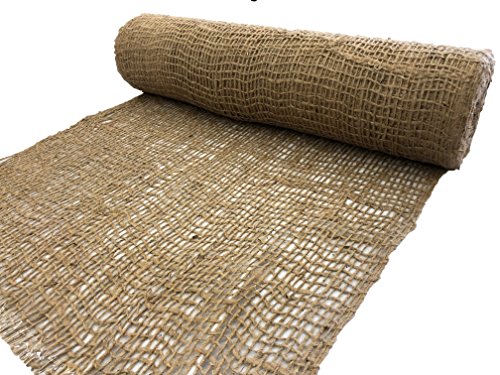
Premium Jute Construction: Our Soil Saver Erosion Control Fabric is made from premium-quality jute, a natural and biodegradable material renowned for its superior erosion control capabilities. Crafted with meticulous attention to detail, this 48-inch wide and 20-yard long fabric ensures a sturdy, reliable solution for preventing soil erosion.

100% Biodegradable - The Material and Netting in this Blanket is 100% Biodegradable. Both the agricultural Wheat Straw and Coconut Fibers are 100% Biodegradable and they are held together by a Biodegradable Brown Poly Net that will biodegrade after 90 days. This product comes as a 7.5' Width for shipping purposes.

Abundant to Choose: you will receive 2 rolls of burlap erosion control blanket, suitable for beach erosion, shoreline protection, to address erosion near oceans, rivers, streams or lakes, sufficing your daily needs and replacement demands
5. Water Features

A slope that drops even three or four feet across a small yard already has what most flat gardens lack: gravity ready to move water downhill.
That same force becomes the engine for a water feature, so a pump only needs to recirculate what reaches the bottom, not lift the whole flow from a basin.
I have watched this work in a city lot barely twenty feet deep, where a streambed of river rock and a few boulders turned the grade into something that sounded like a creek after rain.
For a small yard, keep the feature to one or two visual "rooms" rather than a long cascade that eats walking space.
A short fall into a basin pond, or a narrow stream that disappears into a gravel bed, reads as generous without dominating the footprint.
Scale the boulders to what a single person could roll into place with a bar, or hire help for one statement rock and build the rest from manageable stone.
Secure the slope, not load it with mass that shifts in freeze-thaw cycles. Aquatic plants at the edges soften the hardscape and give the eye a reason to pause without demanding the wide margins a formal pond would need.
Recommended Products

Easy Installation: Made of spring stainless steel, this weep hole covers are not so flimsy or thin that they kink, our brick wall hole cover has super elasticity, easy to adjust the width and still spring back after bending them down. Confirm the size of the hole before use, squeeze and insert into weep holes, and use a rubber mallet to bump brick repair to complete the installation

【DESIGNED FOR BRICK WEEP OPENINGS】 Includes 20 stainless steel weep hole covers for vertical openings in brick walls. The dense multi-hole surface gives each opening a neat, finished appearance while supporting its intended airflow and drainage function.

【Use Separately or Together】Use as mesh weep hole covers alone for general coverage, or pair with the included 1# steel wool (half roll for 20PCS, full roll for 30/40PCS). The steel wool fills inner gaps – especially useful for smaller openings. Brick weep hole covers work with or without the wool.
6. Decks and Patios

A deck or patio can float above the slope entirely, which sidesteps grading problems that would otherwise eat your whole budget.
The structure rests on posts or piers driven to stable depth, so the ground beneath keeps doing whatever it was doing while you cook dinner level with your kitchen door.
Multi-level decks work especially well on steeper grades. One level catches morning sun for coffee, a few steps down another holds the dining table, and the connection between them happens on stairs that are part of the frame itself.
That beats cutting switchbacks into the hill and wondering if they’ll wash out.
Labor cost runs high. A sloped build needs additional support and modifications that flat ground doesn’t, and the steeper the grade, the more piers, the more beams, the more hours.
For a gentler slope, some of the work can be DIY’d. For anything steep or anything that needs engineered footings, a professional build is the practical route, and quotes vary enough that you’ll want several before committing.
Access from the house matters more than most people notice until it’s wrong. The deck should step out at floor height, or as close as the structure allows, so you’re not climbing or descending to use your own yard.
That single decision determines whether the space feels like an extension of the house or a separate destination you never visit.
7. Fire Pits

A fire pit on a slope works best when you carve out a level pocket rather than trying to perch it on the grade itself.
I watched a neighbor learn this the hard way: their first attempt sat on a slight tilt, and every evening ended with someone sliding downhill in their camp chair.
The second try, they dug back into the slope to create a flat pad, then built a low retaining ring uphill to catch any rolling embers.
That seating should follow the contour, not fight it: built-in benches that step with the grade keep everyone stable without looking like a theater rigged onto a hillside.
A fire pit on a slope pulls people toward the part of the yard they usually ignore.
Most of us default to the flat spot near the door, but a fire built down-slope, even by just fifteen or twenty feet, turns the incline into a backdrop instead of an obstacle.
String lights overhead and a circular seating arrangement around the pit complete the draw. In a terraced design, the fire pit becomes the natural gathering point between levels, giving each trip down the stairs a purpose beyond maintenance.
Recommended Products

【 4in. Grate Yard Drain Efficient Drainage 】Drain grate downspout drainage emitter is expertly designed to efficiently channel rainwater, groundwater, and sump pump discharge away from your home’s foundation, effectively preventing standing water, soil erosion, waterlogging, and costly structural damage. Yard drainage provides reliable protection for your house, lawn, patio, and landscape, making it an essential solution for residential drainage systems

Separates Soil from Gravel: Nonwoven filter fabric lets water move through freely while holding soil out of the gravel bed, so a drain field keeps draining year after year

These units are perfect for any home. Includes grating, end cap as well as channels.
8. Raised Garden Beds

A slope turns every planting session into a balancing act. Raised beds fix that by giving you a level surface to work from, and the way you build them can either fight the hill or work with it.
The practical move is to follow the contour in long, flat tiers rather than cutting straight across. Each bed acts as a small retaining wall, catching soil uphill and giving you a stable plane for sowing and weeding.
On steeper ground, the beds themselves get taller and thicker, functioning as usable retaining walls you can plant from both sides.
Soil in raised beds warms faster in spring and drains more freely, which on a slope means you lose less to runoff and root rot.
You also control the mix: fill with amended soil suited to what you’re growing instead of wrestling with whatever the hill gave you. A stepping stone path between tiers keeps the whole setup reachable without the scramble.
Materials matter for the look as much as the structure.
Stone, concrete block, or even thick timber each read differently against the rest of the yard, and combining beds with other hardscaping ties the slope into a coherent design rather than a patchwork fix.
Recommended Products
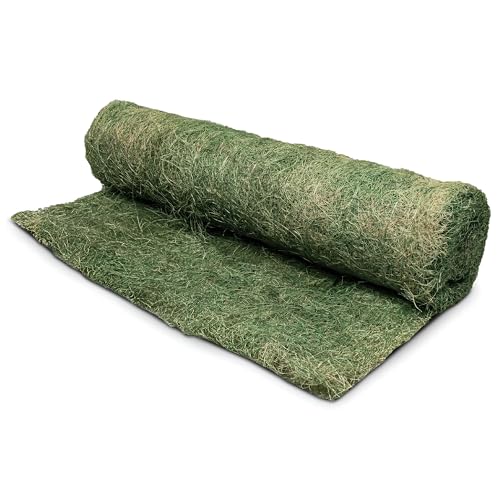
Aspen Wood Fiber Blanket: Made from natural curled aspen wood excelsior with long fibers distributed evenly throughout the blanket to support soil retention on disturbed ground areas

Great For Edging - This Roll is great for growing grass on the edging of a sidewalk, in between houses, backyards, front yards and many other areas.

Durable and Biodegradable: The AK TRADING CO. Jute Erosion Control Mesh Blanket is made from 100% natural jute fibers, providing robust durability and eco-friendly biodegradability, perfect for sustainable landscaping projects.
9. Ground Covers

Creeping phlox was the first plant I watched actually grip a slope instead of sliding down it.
The roots spread sideways, knitting through the top few inches of soil and holding it in place while the foliage forms a mat that breaks the impact of rainfall before water can gather speed.
That combination is what makes ground covers worth the patience they demand.
The establishment period is the part nobody wants to hear. For the first season, maybe two, those small plugs look sparse and vulnerable, and weeds will push through anywhere the cover hasn’t filled in yet.
Hand-weeding or a light mulch layer during that window saves the long-term project. Once the mat forms, weed suppression follows naturally: the dense foliage blocks light to the soil surface and leaves nowhere for seedlings to land.
Planting heavier at the bottom of the slope, where your eye rests most often, gives the fuller effect while the top fills in. I’ve seen that trick turn a threadbare first year into something that reads as intentional.
The foliage canopy slows water absorption during heavy rains, and that protective layer over the surface is what keeps topsoil from washing away before roots can anchor it.
Recommended Products

【ANTI CLOG】Beautiful, finished look.Rugged and strong stainless steel cover designed to weather the elements. This wall weep covers keeps dust and debris out of wall cavities, and won't get clogged with dust or debris, while maintaining needed ventilation.

Buff refurbishment round weep vents
10. Integrated Lighting

A sloped yard empties out fast once the sun drops. Steps you navigated by muscle memory in daylight become a hazard, and any terrace or retaining wall you built simply disappears into the dark.
Low-voltage LED path lights along each step riser solve the safety side without the shock risk or the permit headache of 120-volt work; the 12-volt transformers plug into a standard outlet and the cable buries shallow enough that a spade and patience get it done.
Uplighting changes how the space reads at night.
A fixture tucked at the base of a retaining wall washes the face upward, turning structural necessity into architecture, and the same treatment at a tree trunk on the slope pulls the eye through vertical layers that flatten out in daylight.
Keep lighting strictly functional, or push toward a more theatrical look with shrubs and seating areas lit for effect. The choice is really a budget call, since every additional fixture adds cable, wattage, and timer channels.
What lighting actually buys you is time. A lit slope stays usable past sunset, which matters more on a small lot where the yard is your only outdoor room.
The evening hours you gain back matter, not the fixtures themselves.
Erosion Control and Drainage

Water on a slope never stays put, which is why drainage has to come before anything pretty goes in.
I learned this the hard way watching a neighbor’s new retaining wall bow outward after two seasons; dirt and water had packed behind it with nowhere to go.
French drains, swales, and weep holes in walls are the three tools that actually move water where you want it. A French drain buried at the base catches runoff and diverts it before it pools.
Swales, those shallow grassy channels, slow water down and let it sink in instead of sheeting across bare soil. Weep holes drilled through a retaining wall release pressure that would otherwise push the wall over.
A wall needs proper drainage, compacted backfill, and a buried base course or it cracks, shifts, or collapses.
Plants and mulch handle what drainage doesn’t catch. Groundcovers and spreading plants soften the slope and hold soil in place, especially if you plant heavier at the bottom where you see it most at eye level.
Mulch adds another protective layer between rain and bare dirt. Without this living cover, rainwater picks up speed and strips away topsoil, nutrients, and any seeds you just planted.
Retaining walls help too, particularly terraced ones that break a steep grade into flat, usable levels. Each terrace controls soil movement and manages water for the section above it.
The wall material matters less than the drainage behind it; even boulder walls need proper water management to last.
Get the water right first, and everything else on your slope has a chance to survive.
Plant Selection for Slopes

Creeping phlox spreads fast enough to cover bare soil on a slope before the first hard rain washes it away. The roots stay shallow at first, then deepen over two or three seasons once the plant finds its footing.
That establishment period matters more on a grade than anywhere else in the yard; a plant that needs constant moisture will struggle where water runs downhill before it soaks in.
Ornamental grasses handle the same conditions with a different strategy. Their fibrous roots knit together to hold soil in place, and mixing heights and colors keeps the slope from looking like a single monoculture block.
Native grasses matched to your zone skip the coddling entirely; they already know the dry spells and the occasional saturation.
The real mistake on slopes is overplanting. Too many varieties competing for the same thin soil layer means none establish properly.
Three or four plant types, repeated in masses, let each colony develop the deep root system that actually controls erosion. A slope should get easier to maintain each year, not harder.
Budgeting a Sloped Yard Project

A full sloped backyard makeover with patio and landscaping runs about $22,000, which puts it well outside the annual $500–800 budget most household gardeners work with. That gap is not a reason to stall; it is a reason to sequence.
Free materials stretch the budget first. Landscape rocks, topsoil, and compost often show up on neighborhood giveaway sites or city composting programs.
Recycled concrete from sidewalk demolition works for stepping paths or small retaining pads, and some wilderness areas allow permitted rock collecting if you are willing to haul.
DIY terracing or a single retaining wall built over one season, then a patio the next, keeps cash outlays under that yearly ceiling. The slope itself will tell you what fights erosion fastest; start there.
A dry creek bed of salvaged stone costs little and buys time for larger hardscaping later.
Prioritizing means living with half-finished grades for a while. My own preference is to tackle drainage and the steepest cut first, since water damage undoes cheap work fast.
Flat usable space can wait if the soil is not sliding past the foundation.
When to Call a Professional

A slope that funnels water toward your foundation or your neighbor’s yard is not a weekend project.
The steeper the grade, the bigger the drainage problem becomes, and a retaining wall that redirects runoff without proper engineering can turn a puddle into a lawsuit.
Walls over a few feet in height need professional engineering, not just for structural loads but because most municipalities require permits and inspections once you cross that threshold.
I have watched homeowners try to tier a steep slope with landscape ties alone, only to watch them bow and shift the following spring. Mild slopes handle planting and boulders fine.
Moderate slopes can work with timber retaining walls. Steeper ground needs a retaining wall plus a drainage system behind it, and that backfill detail, the perforated pipe, the gravel envelope, is where the self-taught builder usually gets it wrong.
Rock walls, berms, and waterfalls on slopes also need specialized equipment; the rental excavator and YouTube tutorial approach stops being funny around the time the soil starts moving.
Get multiple quotes before committing. Retaining wall costs swing wildly with slope steepness, wall size, surrounding access, and material choice, and labor runs high enough that the bid range matters more than any online estimate.
If your property sits in slide-prone country, a landscape designer or contractor who has read your soil and your watershed is not a luxury. It is the part of the project that keeps your upstairs neighbor’s patio off your driveway.
Maintenance That Keeps Slopes Stable

A slope keeps moving, even after the last stone is set. I check my retaining walls in spring and late fall, walking the full length to look for cracks, tilting, or water pooling where it should run off.
Catching a shifted block early costs an hour and a bag of gravel. Ignoring it until frost heave finishes the job costs a crew and a weekend.
Bare soil on a grade is an invitation. I replant open patches the moment I spot them, always before a forecast of steady rain.
A six-inch gap in ground cover becomes a channel faster than most people expect, and channels become gullies. Mulch refresh belongs on the same schedule as mowing, not as decoration but as armor.
Two inches of shredded bark breaks the impact of rainfall and keeps soil where the roots need it.
Drains are the part nobody wants to think about. I force myself to clear inlet grates after heavy leaf drop and to listen for gurgling that means a line is choking.
A clogged drain does not announce itself until the wall behind it is already wet and stressed.
Small fixes on a slope are not preventive maintenance in the abstract. They are the difference between a ten-dollar Saturday and a five-thousand-dollar spring.
Frequently Asked Questions
How do I prevent erosion in my sloped backyard?
Use ground covers, retaining walls, and mulch together. Plants like creeping phlox spread roots sideways to knit the topsoil in place, while terraced walls break the grade into flat steps that slow runoff.
A two-inch layer of shredded bark acts as armor against rainfall impact, and bare patches should be replanted before steady rain hits.
What plants are best for a sloped yard?
Creeping phlox and native ornamental grasses are the most reliable choices. Phlox spreads low and roots as it goes, locking the surface layer together; grasses send fibrous roots deep enough to knit lower soil.
Pick natives matched to your hardiness zone so they handle dry spells and occasional saturation without extra watering. Stick to three or four varieties repeated in masses rather than mixing too many competitors.
How can I improve drainage in my sloped yard?
Install French drains at the base to catch and divert runoff, swales to slow and absorb water, and weep holes in any retaining wall to release pressure behind it.
Water collects behind every wall, and without these outlets it will push through or push the structure over. Get drainage right before adding any decorative elements.
How much does it cost to landscape a sloped backyard?
A full makeover with patio and landscaping runs about $22,000, which exceeds the typical household gardening budget of $500–800 per year.
Most homeowners should sequence the work over multiple seasons, tackling drainage and the steepest cuts first while using free or salvaged materials like recycled concrete and landscape rocks to stretch funds.
How do I make my sloped backyard usable?
Cut the slope into terraced levels held by retaining walls to create flat ground for planting, seating, or walking. A deck or patio can float above the grade on posts or piers, sidestepping grading costs entirely.
Pathways with stone steps or pavers control foot traffic and double as erosion control, while a fire pit carved into a level pocket draws people to parts of the yard they normally ignore.
What can I do with a yard that has a slope?
Turn the grade itself into a feature rather than fighting it.
Rock gardens use angular boulders to anchor soil in place, water features use gravity to move water downhill without heavy pumping, and raised beds follow the contour in long flat tiers that act as small retaining walls.
Each option keeps the slope structurally stable while adding function.
What are some good landscaping ideas for a sloping yard?
Retaining walls, terraced gardens, pathways and steps, rock gardens, water features, decks and patios, fire pits, raised garden beds, ground covers, and integrated lighting all work with the slope rather than against it.
The right mix depends on steepness, budget, and whether you want flat usable space or a garden that uses the elevation as design.
How do I landscape a sloped backyard on a budget?
Sequence the work across seasons and scavenge free materials. Landscape rocks, topsoil, and compost often appear on neighborhood giveaway sites; recycled concrete from demolition works for stepping paths.
Build one broad terrace instead of multiple levels, start a dry creek bed with salvaged stone, and tackle drainage first since water damage undoes cheap work fast.