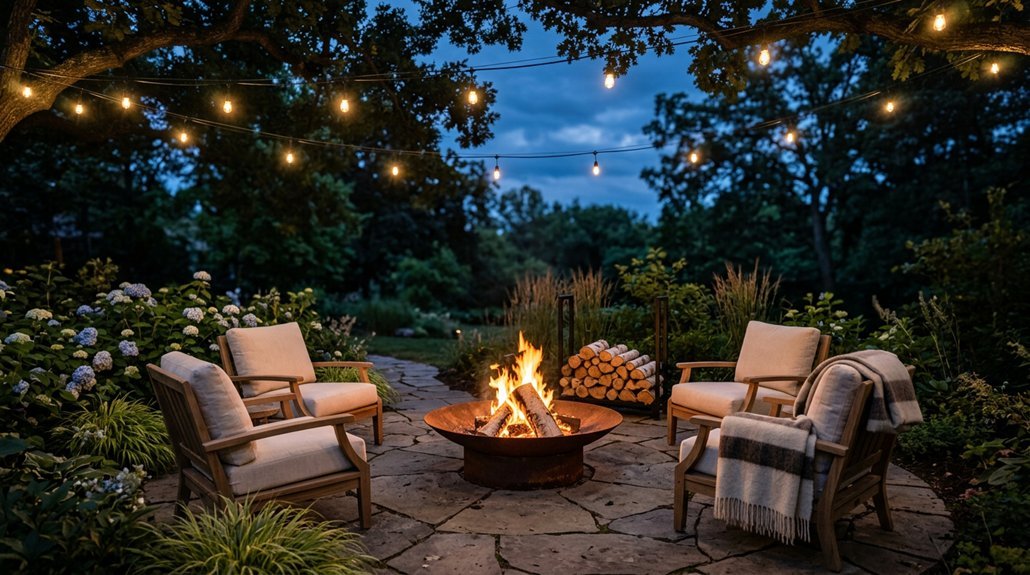
You’re looking to transform your backyard into a gathering space, but choosing the right fire pit isn’t as simple as picking what looks good. Fuel type, placement, and how you’ll actually use the space all matter more than you’d think. Get one element wrong, and you’ll either fight smoke every evening or never use it at all. The good news? There’s a setup that fits exactly how you live.
Fire Pit Fuel Types: Which Heat Source Fits Your Lifestyle?
Selecting the right fuel type shapes how you’ll actually use your fire pit. You’ll need to weigh convenience against ambiance and maintenance.
Wood-burning pits give you that crackling sound and smoky scent you crave for authentic campfire nights. You’ll gather kindling, tend flames, and clean ash afterward, but you’ll savor the traditional experience.
Propane options let you flip a switch for instant flames. You’ll enjoy precise temperature control and no smoke in your eyes, though you’ll refill tanks periodically.
Natural gas lines eliminate refueling entirely. You’ll pay more upfront for installation, yet you’ll never interrupt conversation to add logs.
Bioethanol burns cleanly indoors and out. You’ll appreciate portability and zero ventilation concerns, but you’ll notice less heat output.
Your lifestyle dictates which trade-offs you’ll accept.
Recommended Products

Fun Moments Around the Campfire: If you want to create a welcoming atmosphere in your backyard for gatherings where you can enjoy delicious marshmallows and endless conversations together with your family and friends, the Gas One portable fire pit for camping is the ideal solution!

[3 IN 1]: OutVue fire pit is equipped with 2 cooking grills, 1 lid and tabletop[No waterproof cover]. When you fix grills and tabletop to the fire pit, you can enjoy the roast and bonfire. When it not make fire and cover the lid, you will get a 42 inch round table to have a meal or coffee for 8-10 persons. OutVue provide a wood fire pit has 3 functions: bonfire, barbecue and table, which can be used all year for your garden, yard, patio. This's also a very thoughtful gift to friends.
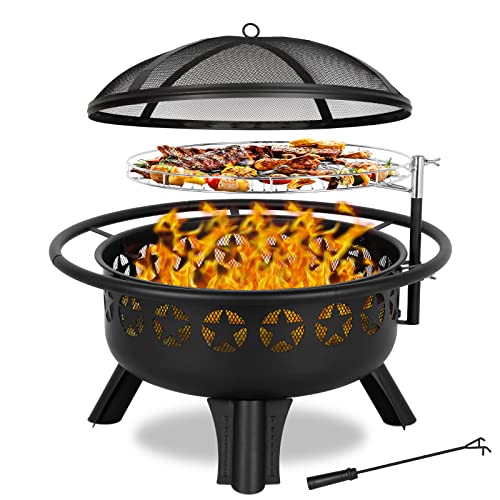
【2 in 1 Outdoor fire pit with grill】: 31” Dia x 24” H, this wood burning fire pit features a multi-functional design ideal for outdoor heating or grilling. The fire pit with cooking grate is designed with an outer ring around the central fire area allowing for easy movement. The creative pentagram vents help increase airflow for the firewood and brings a brighter flame. Air circulation burns longer and vigorously, and a mesh cover can prevent from flying sparks.
Stone and Masonry Fire Pits for Rustic Backyards
Why settle for temporary when you can build something that lasts? You construct stone and masonry fire pits from natural materials like fieldstone, river rock, or poured concrete. You create these permanent structures as backyard centerpieces that age beautifully and withstand decades of use.
You customize the size, shape, and height to match your landscape. You build seating walls around the perimeter for integrated gathering space. You choose between wood-burning authenticity or gas line conversion later.
You maintain these pits with minimal effort—just occasional debris removal and mortar inspection. You appreciate how they anchor your yard with weight and permanence no metal bowl provides.
You invest more upfront, but you gain a heirloom-quality feature that transforms your rustic vision into solid reality.
Recommended Products

Natural Volcanic Material: Authentic red lava rocks with vibrant hues, formed by volcanic activity. Contains no additives or artificial colorants. Reusable and durable for long-term enjoyment. Ideal for creating rich color accents in fireplaces and fire pits

Premium Pit-Proven Performance: We source our genuine volcanic rocks from the Far East, so they'll bring a touch of exotic authenticity to your fire pit; And our fire pit rocks are made with extreme heat resistance

【Natural Fire Pit Rocks】 -These black lava rocks have natural a porous surface, which can help spread the gas dispersion in all directions to improve the flame performance. It works great as a firebase underneath fire glass for fire pit or fireplace. While, it requires very little maintenance.
Propane and Natural Gas Tables for Clean, Instant Flames
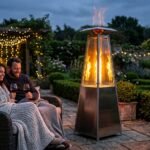
What if you could spark a fire with nothing more than a dial? Propane and natural gas fire tables deliver exactly that convenience. You’ll flip a switch and watch flames dance across lava rock or glass beads instantly.
These sleek units eliminate wood storage, ash cleanup, and smoke in your eyes. You’re choosing between portable propane tanks or fixed natural gas lines depending on your setup. Natural gas connects permanently to your home supply, while propane offers flexibility for rearranging your space.
You’ll find styles ranging from modern concrete rectangles to rustic faux-stone designs. Most include adjustable flame heights and safety shutoffs. They burn cleaner than traditional options, producing no embers or particulates. Your furniture stays soot-free, and local burn bans rarely restrict their use. You’re getting ambiance without effort.
Recommended Products
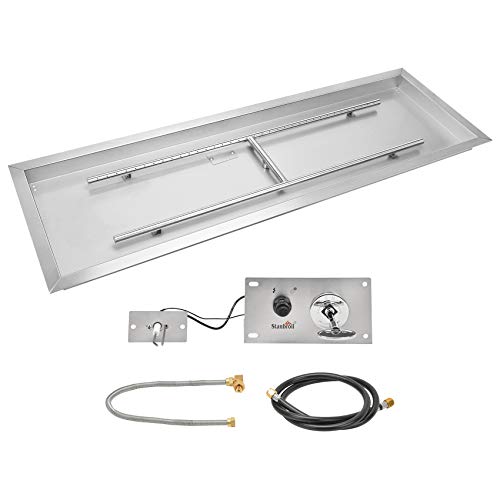
【Natural Gas Fire Pit Burner】- Fueled by natural gas, certificated with CSA, fire pit pan built-in H-Shape Burner rated for up to 185,000 BTU; It provides more heating and flame in your patio fire pit.

Longevity & Strength: Constructed from high-quality aluminum, this 43" rectangular fire pit table is built for durability with minimal upkeep; The rust-resistant, all-weather frame features a protective powder coating that prevents corrosion; Reinforced welding and sturdy aluminum tubing provide excellent stability, ensuring a lightweight yet robust structure that stands up to years of use

【Extended 24Ft Length — Double The Reach】: This 24-foot natural gas hose gives you double the reach of standard 12-foot hoses. Perfect when your gas outlet is far from your grill, or when you need to run a line across a large patio, deck, or backyard. 1/2-inch inner diameter ensures full gas flow — no drop in heat output. CSA certified for outdoor use. Max working pressure: 1/2 PSIG. This is a 1/2" ID hose — NOT 3/8"
Smokeless Wood-Burning Pits for Traditional Campfire Flavor
Three engineering tricks stand between you and actual smokeless wood fires: double-wall construction, secondary combustion, and precise airflow control. You’ll feed logs into a chamber where oxygen channels through perforated walls, igniting unburned gases before they escape as smoke. The result? You get crackling flames and that unmistakable wood scent without stinging eyes or clinging clothes.
You won’t sacrifice authenticity for convenience here. These pits burn hardwood efficiently, leaving fine ash instead of half-charred chunks. You’ll find yourself tending the fire less and actually relaxing more.
Position yours on stone pavers or gravel, keeping it twenty feet from structures. You’ll spend more upfront—quality units run five hundred to fifteen hundred dollars—but you’ll reclaim evenings lost to smoke dodging. Your neighbors won’t complain either.
Portable Bowls and Tabletop Units for Small Patios
A handful of compact fire solutions can transform even the tiniest balcony into a gathering spot.
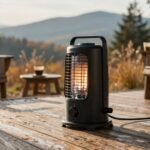
You’ll find portable fire bowls that weigh under twenty pounds and collapse flat for storage. These units run on propane canisters you hide inside decorative bases. You simply twist the knob and enjoy instant flames without smoke or sparks.
Tabletop models sit directly on existing surfaces. You can place one on your bistro table during dinner, then move it to a side table for after-drink warmth. Look for units with tempered glass guards that protect nearby cushions while preserving your view of the flames.
When you’re done, you shut off the gas and carry the unit indoors. No cleanup, no lingering embers, no permanent footprint on your limited square footage.
Recommended Products
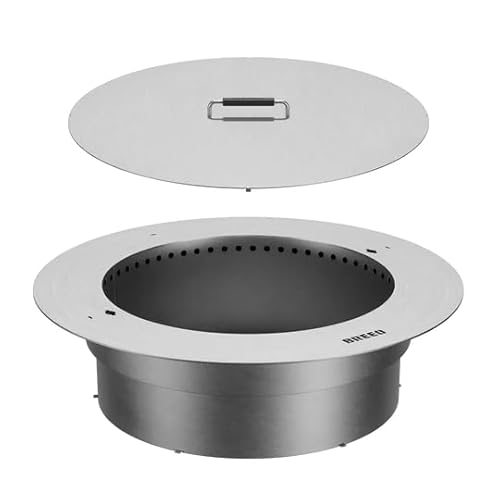
EFFORTLESS INTEGRATION - This 30" round smokeless fire pit insert seamlessly fits into new or existing block, stone, or masonry surrounds without complex installation. Simply drop it in—no assembly required.

EFFORTLESS INTEGRATION - This 24" round smokeless fire pit insert seamlessly fits into new or existing block, stone, or masonry surrounds without complex installation. Simply drop it in—no assembly required.

EFFORTLESS INTEGRATION - This 24" square smokeless fire pit insert seamlessly fits into new or existing block, stone, or masonry surrounds without complex installation. Simply drop it in—no assembly required.
Sunken In-Ground Designs for Permanent Gathering Spaces
Unlike portable options you pack away, sunken fire pits become part of your landscape’s bones. You dig into the earth, creating a recessed circle that draws eyes downward and gathers guests close.
You’ll need proper drainage and a gravel base to prevent water pooling. Line the pit with firebrick or steel rings to contain flames safely. Build retaining walls from stone, concrete, or weathered timber that match your home’s materials.
You control wind exposure better below grade, so flames burn steadier. Add stepping stones or a surrounding patio to define the space. Position seating at rim level so legs dangle comfortably toward warmth.
Check local codes first—many municipalities require specific setbacks from structures and tree lines. Once installed, you’ll enjoy a permanent destination that anchors your backyard for decades.
Recommended Products
[3 IN 1]: OutVue fire pit is equipped with 2 cooking grills, 1 lid and tabletop. When you fix grills and tabletop to the fire pit, you can enjoy the roast and bonfire. When it not make fire and cover the lid, you will get a 36 inch round table to have a meal or coffee for 6-8 persons. OutVue provide a wood fire pit has 3 functions: bonfire, barbecue and table, which can be used all year for your garden, yard, patio. This's also a very thoughtful gift to friends.

Fun Moments Around the Campfire: If you want to create a welcoming atmosphere in your backyard for gatherings where you can enjoy delicious marshmallows and endless conversations together with your family and friends, the Gas One portable fire pit for camping is the ideal solution!

3-in-1 Fire Pit: EcoNook outdoor fire pit can provide inviting warmth for your patio, yard, or garden, also be used as an outdoor BBQ to cook food or as an ice bucket to keep beverages cold. When you enjoy the bonfire, you also get a 32-inch fire pit table to have a coffee for 4-6 people at same time,bigger than others.EcoNook wood burning fire pit is also a practical gift for friends and family. (Please note that BBQ grate is not included).
Integrated Seating Sets for Hosting Larger Groups
How do you host twenty without the chair scramble? You build seating into the design itself. Integrated seating sets wrap benches or curved stone walls around your fire pit, creating permanent, ample spots for guests.
You’ll find these setups in modular metal collections or custom masonry builds. They eliminate the wobble of folding chairs and the awkward gaps between mismatched furniture. Everyone faces the flames, and conversation flows naturally across the circle.
Choose weather-resistant materials like powder-coated aluminum, concrete, or treated cedar. Add cushions in outdoor-rated fabric for comfort that withstands rain. Some designs include backless benches you can straddle either direction, doubling your flexible seating.
You reclaim storage space, too—no hauling chairs from the garage. Your backyard becomes event-ready every evening.
Recommended Products

SMOOTH TUMBLED FINISH, NOT JAGGED LAVA ROCK — Unlike traditional porous lava rock, these stones are hand-tumbled to create a smooth, rounded shape with no sharp edges. The result is a clean, modern look that complements contemporary gas fire pits, fire bowls, and gas log sets beautifully.

Wanting a Great Patio Party?: Having a patio party is different from an indoor party. Outdoors you need to consider the coldness and a center of attention to gather everyone. A propane fire pit table can provide the atmosphere needed for a great time!(note:1:use soapy water to check for leaks before use 2:The reminder card contains interface size instructions and interface inspection instructions)

【Natural Lava Rocks】Genuine red lava stones formed by natural volcanic activity, offering vibrant, earthy hues without any artificial dyes or chemical additives. These reusable rocks bring lasting beauty and a touch of nature to your fire display.
Sizing Your Fire Pit: Clearance, Placement, and Safety Rules
Where exactly should you put this thing so you don’t singe your siding or your guests? Position your fire pit at least 10 feet from structures, trees, and fences. You’ll need overhead clearance too—avoid low-hanging branches and covered patios unless you’re using a gas model rated for enclosed spaces.
Size matters for safety. A 40-inch diameter pit works well for intimate gatherings, while larger groups need 4 to 5 feet across. Keep seating 18 to 24 inches back from the rim; you’ll stay warm without risking sparks on your clothes.
Check local burn ordinances before you dig. Some areas restrict open flames entirely. Install a spark screen if you’re burning wood, and always keep a water source or fire extinguisher within reach. You’ve built this backyard oasis—protect it with smart placement.
Recommended Products

WHISTLE FREE - Multi-pattern corrugation disrupts the vibrations that cause whistling.
【Package Included】 A fire pit pan with pre-assembled H burner, stainless steel flex line with fittings, igniter key valve kit and gas hose for natural gas; Coming with all necessary hardwares, the fire pit kit is easy to install and use;

STAINLESS STEEL CONSTRUCTION: Dreffco flex gas line features corrugated stainless steel tubing with a black finish for gas appliance connections, helping provide a durable hose option for fire pits, fireplaces, dryers, stoves, and equipment.
Conclusion
You’ve explored eight distinct fire pit styles, each offering unique warmth and atmosphere for your backyard. Whether you prioritize crackling authenticity, clean convenience, or flexible portability, there’s a perfect match waiting. Consider your space, lifestyle, and how you’ll gather before choosing. Then install thoughtfully, respect safety clearances, and enjoy countless evenings around your new favorite outdoor centerpiece.
Recommended Products

Cast Iron Grate: The propane fire pit includes a rust-proof grate for long-lasting durability. Enjoy the outdoors with confidence in your backyard, patio, or campsite.

Perfect S'mores Experience: Create magical moments with our tabletop fire pit - ideal for roasting s'mores and marshmallows. Brings cozy warmth to any outdoor space, from garden patios to intimate balcony settings

✓ PERFECT NO MESS CAMPFIRE: Say goodbye to dirty ash, expensive firewood, and bothersome smoke and enjoy a clean realistic propane campfire. The perfect outdoor centerpiece for camping trips, RV travels, tailgating get-togethers, beach parties, and family evenings on the backyard patio.