The future of home food production has already arrived. Hydroponic tower gardens stack plants vertically in nutrient-rich water instead of soil, saving 90% of the water traditional gardening wastes.
My favorite systems combine automated pumps, full-spectrum LEDs that mimic sunlight, and modular tiers you expand as skills grow. You’ll pay $80 for compact ten-station units or $400 for seventy-slot commercial-grade towers.
These systems suit apartment dwellers and busy professionals who accept one caveat: you must monitor pH levels weekly or lose entire crops to chemical imbalance. I recommend starting with a thirty-five-pod mid-range model, it balances capacity with manageable failure risk. The real question isn’t whether vertical hydroponics works.
AOONEG 28Pods Indoor Hydroponics Growing System with LED Grow Light

【Indoor Herb Garden Kit】- This hydroponic system includes: 28 sets of planting baskets, sponges, and domes,14 hole covers,1 A&B nutrient set,4 grow lights,1 water pump,...
The AOONEG 28Pods system operates through a two-layer vertical stack with 28 planting sites, each fed by a 16-liter water reservoir that circulates nutrient solution via a 24-hour pump. This 24-hour cycle increases oxygen content, which roots need to absorb nutrients efficiently. A sensor auto-restarts the pump when water runs low, and the pump stops if the tank empties completely.
I evaluate hydroponic systems on durability, automation, and adaptability. The PP5 food-grade plastic tank outlasts common ABS construction significantly. The 30W LED lights rotate and adjust vertically, reaching lower plant parts directly. PVC height extenders reach 23.6 inches. This matters for cherry tomatoes and peppers.
You’ll match this system if you want modular herb and vegetable growing with minimal daily intervention. The programmable timer offers 9, 12, or 15 hour cycles with memory function. Seeds aren’t included, so factor that into your planning. The float indicator helps monitor water levels, but you’ll still refill every twenty days.
My favorite feature is the adjustable pump adapter controlling flow and noise. It’s pragmatic engineering. I recommend this for beginners seeking controlled indoor expansion without overwhelming complexity. The glossy white unit fits kitchens unobtrusively.
Best For: Beginners seeking a modular, low-maintenance indoor hydroponic system for growing herbs, vegetables, and small fruiting plants like cherry tomatoes and peppers with minimal daily intervention.
Pros:
- Durable PP5 food-grade plastic construction outlasts common ABS materials used in other hydroponic systems
- 24-hour pump circulation with oxygen-increasing function and auto-restart sensor ensures consistent root health with minimal monitoring
- Adjustable 30W LED grow lights rotate and extend vertically to 23.6 inches, accommodating plants from seedling to harvest
Cons:
- Seeds not included, requiring additional planning before starting
- 16L water tank requires refilling approximately every 20 days despite “minimal intervention” claims
- 24-hour pump operation may increase electricity use and wear compared to intermittent cycling systems
Recommended Products

SOILLESS CULTIVATION: Hydroponics is used instead of traditional soil cultivation, so the automatic top-down timed watering cycle makes better use of water and reduces water waste compared to outdoor potted plants.

【Smart Top to Bottom Watering & Nutrient Circulation】The timed pump delivers water from the top down through all 14 layers, ensuring every plant receives consistent moisture and nutrients. Unlike drip systems that clog, this flow design minimizes waste and prevents dry spots—so your tower garden thrives with less effort.

Maximize Your Space: Start an indoor herb garden with the LYCereal hydroponic growing system, which is designed to make it easy to grow produce, even in tight spaces. It fits in less than 2 sq. ft., perfect for beginners and compact living areas. Whether you live in a villa, apartment, or high-rise building, the hydroponic germination kit offers a soilless option for indoor gardening. No soil, no mess – just a clean, soilless tower that grows fresh produce right where you live
JPWDDWYT Hydroponics Tower Indoor Growing System (35-Plants)
SOILLESS CULTIVATION: Hydroponics is used instead of traditional soil cultivation, so the automatic top-down timed watering cycle makes better use of water and reduces water...
Who needs a sprawling backyard? I’ve found the JPWDDWYT Hydroponics Tower Indoor Growing System, a vertical garden planter that grows 35 plants without soil. This motorless system uses timed, top-down watering that cycles automatically. You fill the 2,380 cubic inch reservoir, and gravity does the work.
This tower suits apartment dwellers and villa owners alike. Its self-watering mechanism reduces water waste compared to outdoor pots. You harvest farm-quality vegetables from your kitchen or living room. The design moves easily between spaces.
You can grow 30 different crops simultaneously—salads, fruits, even potatoes. My favorite feature: true soilless cultivation (hydroponics, meaning water-based growing) with zero technical complexity.
I recommend this for beginners seeking high productivity without mechanical failure risks. One caveat: the “indoor sky garden” concept requires adequate light placement.
Best For: Apartment dwellers, villa owners, and beginners seeking high-productivity indoor gardening without mechanical complexity or soil maintenance.
Pros:
- Motorless, self-watering design with automatic timed top-down watering eliminates mechanical failure risks and reduces water waste compared to outdoor pots
- Compact vertical tower grows up to 35 plants (30 different crops simultaneously) including fruits, vegetables, salads, and potatoes in minimal space
- Easy mobility between kitchen, living room, or outdoor spaces with 2,380 cubic inch gravity-fed reservoir requiring no technical expertise
Cons:
- “Indoor sky garden” concept requires careful placement for adequate light, which may necessitate additional grow lights in some environments
- Soilless hydroponic cultivation limits growing media options and may require learning curve for nutrient management
- 35-plant capacity and vertical design may become top-heavy or unstable if not properly balanced or placed on level surfaces
Recommended Products

Efficient Growing: This hydroponic tower features a 9-tier vertical design with 45 plant pods. It maximizes growing efficiency in compact spaces like kitchens and balconies while supporting a greener lifestyle

Vertical grow light:Using the latest side lighting technology,the vertical plant grow light provides unique 120°lateral illumination compared to traditional plant lights that only shine on the top of plants,the feature ensures comprehensive lighting for plants. Additionally, comprised of four 15-inch tubes, this plant light can be adjusted in height from 16'' to 60'', suitable for plants of various heights.

【Vertical Grow Light】Latest Side Lighting Technology,Featuring a 120° beam angle, it provides larger and more even illumination, stimulating the growth potential of plants. The detachable design makes it easy to install and can also be hung, ensuring your plants receive optimal lighting in different settings.
Ahopegarden 60-Pod Indoor Hydroponic Growing System with LED Light

3X Growth Smart Dual Modes : Our Ahopegarden indoor garden is a versatile hydroponics growing system kit. It features "Vegetables" and "Fruits/Flowers" modes, each...
Urban growers seeking maximum output from minimal floorspace will find their match here. The Ahopegarden 60-Pod system stacks sixty growing ports vertically, drawing water through a submersible pump that circulates nutrients automatically. You add solution periodically; the machine handles irrigation cycles.
My favorite feature: the dual-mode LED board switches between vegetable and fruit/flower spectrums, running sixteen or twenty-two hour photoperiods. Thirty watts of full-spectrum light accelerates growth without guesswork.
Two tanks hold thirty-two liters total—eight plus twenty-four—supporting dense planting without constant refilling. Assembly takes minutes. Wheels let you roll the tower between rooms. This suits apartment dwellers who want serious harvests.
One caveat: the sixty-pod capacity demands vertical space; measure your ceiling height before buying. I recommend this for families craving year-round herbs and strawberries without soil mess.
Best For: Urban apartment dwellers and families seeking maximum hydroponic yields from minimal floorspace who want year-round herbs, leafy greens, and strawberries without soil mess.
Pros:
- 60-pod vertical capacity with dual-mode LED (vegetable/fruit-flower spectrums) and automated 16h or 22h light cycles for optimized growth
- Self-contained irrigation system with submersible pump, 32L dual-tank water capacity, and minimal maintenance beyond periodic nutrient refills
- Quick assembly, rolling wheels for room-to-room mobility, and space-saving tower design suited for small spaces
Cons:
- Demands significant vertical space; ceiling height must be measured before purchase
- 60-pod capacity may produce more harvest than small households can consume
- White color and tower aesthetic may not blend with all interior decors
Recommended Products

[Max Yield, Mini Footprint] – Grow up to 28 thriving plants in just 2 sq. ft. of space! Our vertical 7-tier design boosts planting density by 3x compared to flat hydroponic systems, making it perfect for tight spaces like apartments, kitchens, or balconies. When the season is over, the modular, stackable design allows you to disassemble and nest the layers easily for compact, hassle-free storage
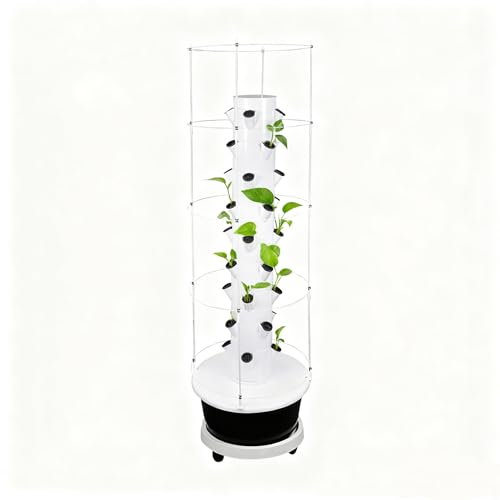
【Indoor Gardening System】Our vertical hydroponics growing system allows you to grow up to 28 plants at once, letting you cultivate vegetables, fruits, herbs, and flowers with ease while enjoying bountiful harvests. Compared to traditional soil gardening, it significantly reduces time, space, and water usage, speeding up growth cycles for efficient yields.

36 Pods Smart Hydroponic Garden – Features 36 large planting sites for growing leafy greens, herbs, fruits, and vegetables. Perfect indoor or outdoor hydroponic system for home gardeners.
MQHUAYU Vertical Hydroponic Tower Garden, 35 Pods 7-Layer Growing System

MAXIMIZE YIELD IN MINI SPACE:Grow up to 35 plants simultaneously in just 1.72 sq. ft. of floor space. Our 7-layer vertical design is perfect for high-density planting of...
Looking for maximum plants in minimal space? The MQHUAYU Vertical Hydroponic Tower Garden delivers exactly that. This 7-layer system holds 35 pods within 1.72 square feet. I’m genuinely impressed.
The mechanism is straightforward. A 30-liter reservoir feeds a whisper-quiet 12V pump, which pushes nutrient-rich water through a top-down recirculating system. Water cycles downward through all seven layers, then returns to the base. This closed loop cuts water waste by 90% compared to soil gardening. One fill lasts 5-7 weeks.
My favorite feature: nine programmable timer modes controlling pump cycles precisely.
Purchase criteria favor space-constrained growers needing modular flexibility. Snap-fit assembly takes five minutes without tools. Layers detach for deep cleaning. BPA-free, UV-resistant materials ensure longevity.
You’ll match with this system if you want farm-quality produce fast with minimal intervention. Caveat: no built-in grow light means you’ll need adequate natural light or supplemental LEDs.
I recommend this tower for beginners and professionals seeking clean, sustainable harvests in apartments or on balconies.
Best For: Space-constrained growers in apartments or on balconies who want maximum plant capacity in minimal footprint with minimal maintenance and quick harvests.
Pros:
- Ultra-compact 1.72 sq ft footprint holds 35 plants across 7 modular, tool-free snap-fit layers
- Highly efficient closed-loop system reduces water waste by 90% with 5-7 weeks of operation per 30L reservoir fill
- Beginner-friendly complete kit with 9 programmable timer modes, seedling sponges, and instructional video
Cons:
- No built-in grow light requires sufficient natural light or separate LED purchase
- 46.5 inch fixed height may limit placement under standard cabinets or shelves
- Single power-dependent pump design creates vulnerability to electrical outages or pump failure without backup
Recommended Products
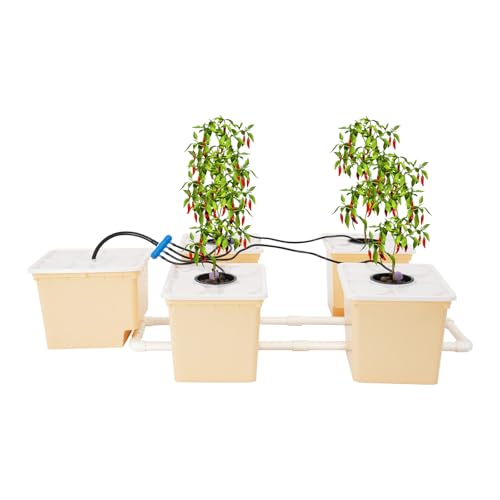
High-quality Material: This bucket drip growing system is made of PP and UV, making the product durable, and not easy to deform, so it can be used for a long time.

Nutrition Provider: This vertical hydroponic garden utilizes a top-down recirculating irrigation mechanism that greatly increases oxygen flow to the root zone, making it more nutritious than soil-grown products, which in turn allows for increased productivity and ease of use
14-Layer Hydroponic Tower Growing System Kit (70 Slots)
【Smart Top to Bottom Watering & Nutrient Circulation】The timed pump delivers water from the top down through all 14 layers, ensuring every plant receives consistent...
Why consider a 14-layer tower? You double your growing capacity without doubling your footprint. This system delivers 70 plant slots through a vertical stack, making it my favorite choice for serious indoor-outdoor production.
The mechanism works through gravity-fed distribution. A timed pump pushes nutrient solution from the 5.3-gallon reservoir to the top layer. Water cascades through each level, reaching every root zone. This closed-loop design eliminates dry spots and cuts waste dramatically.
You’ll refill every several days, not daily.
Purchase criteria center on scale and autonomy. The 20-liter reservoir supports extended absence. Soilless operation means zero weeds, zero soil pests, zero runoff mess. Weather-resistant construction transitions seamlessly from kitchen to patio.
This tower suits urban growers demanding farm-level output from compact spaces. One caveat: its height requires stable flooring and adequate vertical clearance.
My recommendation? Choose this if you prioritize yield density and low maintenance equally. It delivers precisely that balance.
Best For: Urban growers and space-constrained enthusiasts seeking high-yield, low-maintenance hydroponic production for year-round indoor-outdoor growing.
Pros:
- 70-plant capacity in minimal footprint via 14-layer vertical stack with gravity-fed nutrient distribution
- 5.3-gallon reservoir enables multi-day autonomous operation with infrequent refills
- Soilless design eliminates weeds, soil pests, and runoff mess while maintaining clean growing environment
Cons:
- Requires stable flooring and adequate vertical clearance due to significant height
- Fixed 70-slot configuration may exceed needs of casual or beginner growers
- Dependence on timed pump and electrical power creates vulnerability to outages
Recommended Products

General Hydroponics pH Control Kit contains everything you need to measure pH levels of your hydroponic grow reservoirs

Ph Test Kit

Clean lab quality pH and EC probes with Bluelab pH and Conductivity Probe Care Kit; General uses include growing tent, reservoir, water tank, and hydroponic system
Ahopegarden Indoor Hydroponics Growing System with LED Grow Light

High planting efficiency: Start an indoor herb garden with the Ahopegarden hydroponic growing system, which includes a water reservoir, an overhead LED grow light, and a...
Compact kitchens demand smart solutions. The Ahopegarden Indoor Hydroponics Growing System with LED Grow Light delivers exactly that. It is my favorite countertop option for 2026.
This system uses a water reservoir (a storage tank holding nutrient solution) with an overhead LED grow light and circulation system that keeps water fresh. Ten growing stations hold your plants. A see-through window shows water level instantly.
The height-adjustable post extends to 14.5 inches. A built-in timer runs 16 hours on, 8 hours off automatically.
Two full-spectrum light modes optimize growth: blue for vegetables, red for flowers and fruit. You simply add seeds, water, and nutrients. Growth accelerates in these controlled conditions.
Plants max out at 14.5 inches. This limits options. Tall tomatoes won’t work here. Compact herbs, greens, and small fruiting plants thrive instead.
This unit suits beginners and gift-givers seeking year-round indoor gardening without complexity. The black finish blends into kitchen counters cleanly.
I recommend this for small-space growers prioritizing simplicity over scale. It works. It fits. It grows food reliably.
Best For: Beginners and gift-givers seeking a simple, compact indoor hydroponic system for year-round growing of herbs, greens, and small plants in limited kitchen spaces.
Pros:
- Height-adjustable LED grow light with automatic 16/8 timer and two spectrum modes (blue for vegetables, red for flowers/fruit) tailored to plant type
- Compact countertop design with see-through water level window for easy monitoring and minimal maintenance
- 10-pod capacity with circulation system that keeps water fresh, enabling faster, healthier growth in controlled conditions
Cons:
- 14.5-inch height limit restricts plant options, ruling out tall crops like full-sized tomatoes
- No expandability or scaling options for growers wanting to increase capacity over time
- Fixed light timer (16 hours on/8 hours off) cannot be customized for specific plant needs or growth stages
Recommended Products

Versatile 15-Pod Indoor Garden with Visual Water Window:Cultivate fresh herbs, vegetables, fruits, and flowers year-round with our complete hydroponic system. Features 15 universal pods compatible with most grow baskets and a clear water level window for easy monitoring. Perfect for indoor herb gardens grow tent and kitchen gardening.
High planting efficiency: Start an indoor herb garden with the Ahopegarden hydroponic growing system, which includes a water reservoir, an overhead LED grow light, and a circulation system that keeps the water fresh. The hydroponic setup and lighting systems allow plants to grow up to faster and healthier in controlled conditions. Simply add plant seeds, water, and nutrients to the reservoir and watch the plants grow

Vertical Hydroponic Growing System with 36 Planting Sites
36 Pods Smart Hydroponic Garden – Features 36 large planting sites for growing leafy greens, herbs, fruits, and vegetables. Perfect indoor or outdoor hydroponic system for...
Seeking substantial yields without sacrificing floor space? I found my answer in Netouit’s 36-site vertical tower.
How it works. Water pumps from an 8-gallon base through the column, feeding roots directly—no soil needed. An adjustable timer releases moisture in 5, 15, or 30-minute bursts. This intermittent cycle prevents rot and accelerates growth.
The rolling base lets me chase sunlight across my balcony.
What matters. The 2.8 square-foot footprint holds 36 plants. Food-grade plastic cleans easily. You receive baskets, 128 sponges, pump, and timer—everything required.
Who benefits. Apartment dwellers and patio gardeners gain maximum production. The one-year warranty covers defective parts. However, you must monitor water levels manually.
My verdict. This system delivers exceptional efficiency. The mobility feature proves invaluable. For serious home production in tight quarters, I recommend this tower without reservation.
Best For: Apartment dwellers, balcony gardeners, and anyone seeking maximum crop production in minimal space who values mobility and automated watering.
Pros:
- Space-efficient 2.8 sq. ft. vertical design fits 36 plants in tight indoor or outdoor spaces
- Rolling base allows easy repositioning to optimize sunlight exposure
- Complete kit with automatic timer, pump, baskets, and 128 grow sponges includes everything needed to start growing immediately
Cons:
- Requires manual monitoring of water levels with no automated alert system
- One-year warranty only covers defective parts, not full system replacement
- Limited to specific interval timing options (5, 15, or 30 minutes) without more granular control
Recommended Products

【Vertical Grow Light】Latest Side Lighting Technology,Featuring a 120° beam angle, it provides larger and more even illumination, stimulating the growth potential of plants. The detachable design makes it easy to install and can also be hung, ensuring your plants receive optimal lighting in different settings.

Full Spectrum Grow Light: Featuring 36W and 210 premium LED chips, the plant stand with grow light combines deep red 660nm LEDs, high-brightness 6000K daylight LEDs and warm white 3000K LEDs to provide full spectrum lighting for indoor plants. With a high color rendering index up to 96, it helps show plant colors clearly and naturally while supporting healthy growth from seedlings to flowering.

【Compact and Space-Saving】The JESLED Hydroponic Tower fits in the space of a single pot and makes it easy for homes and classrooms to grow fresh food in a small space. In just a few weeks, you can grow up vegetables, herbs, and flowers from seed to harvest—without soil.(Best for beginners)
Factors to Consider When Choosing a Hydroponic Tower Garden
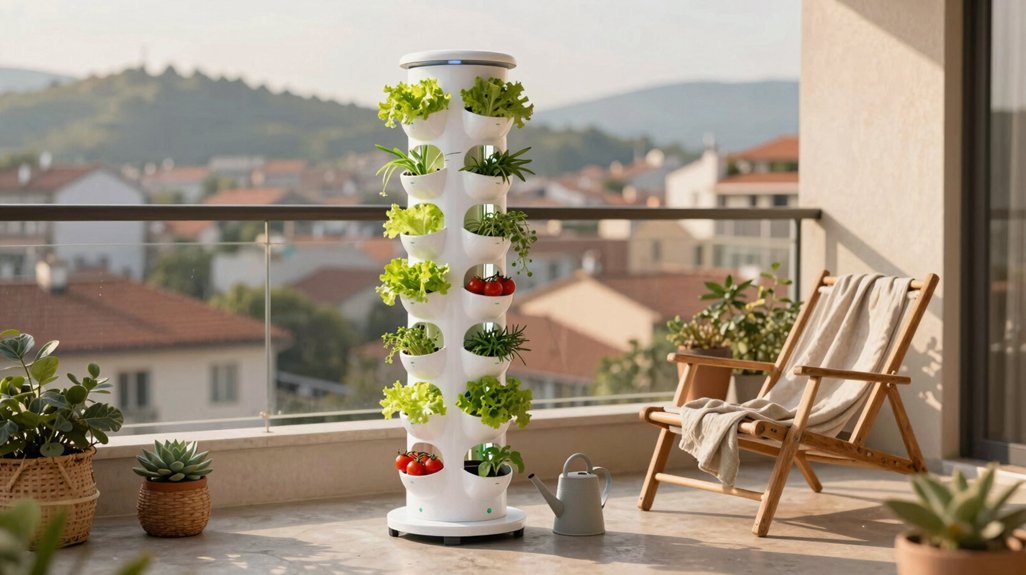
I evaluate any hydroponic tower garden (a soil-free growing system that stacks plants vertically) by checking five mechanical specs because bad math here ruins your harvest. Plant capacity determines your yield ceiling, and I’ve learned that grow light quality, measured in micromoles, or light particles plants consume, directly controls growth speed if your windows fail you.
My favorite rule: match water tank size to plant count so pumps don’t dry out. Note that vertical space needs punish small apartments, and demand timer automation features because forgetful watering kills crops faster than pests.
Recommended Products

Nutrition Provider: This vertical hydroponic garden utilizes a top-down recirculating irrigation mechanism that greatly increases oxygen flow to the root zone, making it more nutritious than soil-grown products, which in turn allows for increased productivity and ease of use

【Multi-Scene Growing Solution】Professional hydroponic tower system for indoor/outdoor/commercial use, featuring corner-friendly design to maximize space efficiency in homes, apartments or greenhouses

【Hydroponic Growing Kit】:Revolutionize your indoor gardening with TIRUSS hydroponics System, a hydroponics growing system featuring LED grow lights for year-round cultivation of vegetables and herbs without soil.
Plant Capacity
How many plants do you actually need? I match capacity to my consumption habits. Plant capacity means the maximum pods, slots, or plants a tower supports, ranging from 10 to 70+ across these systems.
Taller multi-layer towers deliver higher counts. I see 70 pods in one model, 60 in another, and 35–36 in mid-range options. These numbers determine my simultaneous yield of herbs, greens, or small fruits.
Capacity pairs directly with reservoir size. A 5.3-gallon tank struggles with 60 plants. I need 30 liters for dense configurations.
Single-tower designs save space but limit output. Multi-layer systems with separate tanks maximize my vertical growing area.
I recommend counting my weekly harvest needs first. Then I add 20% for crop rotation gaps. This prevents overcrowding and nutrient competition.
Grow Light Quality
Light determines everything your plants become. I always check for full-spectrum LED grow lights first. These cover blue wavelengths for leafy vegetative growth and red wavelengths for flowering and fruiting stages. This dual coverage supports diverse plants through their entire lifecycle.
Height-adjustable light posts matter enormously. Lowering the fixture reaches the bottom canopy and maximizes uniform light distribution across all growing pods. I prefer systems with built-in timers or programmable cycles. These align with daily photoperiods, typically 12–16 hours on, ensuring consistent growth without manual intervention.
Even canopy penetration prevents weak growth. Multiple, evenly spaced diodes eliminate hot spots that damage tender leaves. My favorite fixtures mount vertically with secure clips, avoiding shadows on adjacent pods. Verify this compatibility before purchase. Poor light integration wastes your entire investment.
Water Tank Size
Why does tank capacity dominate my maintenance schedule? Larger reservoirs simply extend the interval between refills. I’ve watched 16-liter tanks demand attention every few days, while 30-liter systems stretch that window significantly. This matters for longer growth cycles.
The mechanism is straightforward: more water volume maintains stable nutrient concentration, the measured food dissolved for plants, and consistent oxygenation through continuous circulation. You avoid the spikes that stress roots.
My purchase criteria center on planting sites. More pods absolutely require more capacity. I specifically favor dual-tank configurations totaling 32 liters for high-density setups. They distribute load intelligently.
Match your tank to your desired maintenance frequency. Higher capacity means less labor. My favorite systems pair 20+ liters with 20+ pods. This balance delivers genuinely reliable performance without daily intervention.
Vertical Space Needs
Where does a tower garden actually fit in your home? Vertical towers range from 46 to 60 inches tall, so ceiling clearance matters. Taller models hold 35 to 70 pods, the small cups that hold plants, but they need sturdier mounting because tipping risks increase with height.
You’ll need stools for intermediate heights. My favorite models include wheels, which solve space constraints through easy repositioning. Modular layers adjust to your ceiling and allow future expansion without full replacement.
Purchase criteria: measure your space first. User match: apartment dwellers need mobile bases; high-ceiling homes accommodate expansion. Caveat: heavier towers stress weak flooring. My recommendation: start modular. This mechanism, adjustable stacking, prevents costly mistakes. Height directly determines accessibility. Plan vertically, not just horizontally.
Timer Automation Features
Precision transforms inconsistent harvests into reliable yields. Timer automation in hydroponic tower gardens delivers scheduled on/off cycles, typically offering preset periods of 9, 12, or 15 hours daily. I prioritize systems with two-way memory timing, which maintains consistent patterns without daily resets. Auto-restart features prove essential: they resume pump operation automatically after water or nutrient shortages resolve.
Adjustable timers controlling light cycles separately from irrigation enable tailored day-length for different crops, longer light for fruiting plants, shorter for leafy greens. This coordination optimizes water usage by synchronizing top-down or recirculating irrigation with lighting schedules. Reduced waste promotes uniform growth across all tower levels.
My favorite systems include precision timers with dual-channel control. Choose programmable automation if you grow multiple crop types simultaneously. Basic preset timers suffice for single-variety gardens.
Mobility and Portability
Timer automation locks your garden into fixed positions. Mobility breaks that constraint. I look for rolling bases or wheels that let me shift the tower between rooms or outdoors, chasing sunlight as seasons change.
Weight matters critically. A fully loaded tower, plants plus reservoir water, becomes dangerously heavy. I demand lockable wheels and a low center of gravity to prevent tipping on uneven floors.
Compact footprints or slim profiles squeeze into kitchens and balconies without dominating the space. My favorite systems include integrated handles and detachable layers. These features let me relocate or disassemble the unit for cleaning without strain.
Ergonomic balance determines whether I lift comfortably or struggle awkwardly. Prioritize lightweight shifting capability. Your back, and your flexibility, will thank you immediately.
Assembly Complexity
How quickly can you realistically build your tower? I check assembly time first because tool-free, modular kits with snap-fit joints save me serious frustration. Pre-assembled components beat stacking seven or fourteen individual layers by hand. I watch for towers with assembly videos or printed guides because unclear instructions cost me hours. Color-coded parts or clear labeling eliminate my guesswork during setup.
I evaluate whether the base detaches or rolls on wheels because repositioning a fully assembled tower matters. My favorite systems combine modular stacking with mobile bases. I recommend beginners choose simpler kits. Complex layered designs suit experienced growers. Precision here prevents buried plants and wasted money.
Material Safety
Chemical safety stops me cold when I inspect any tower. I check every water-contact surface for food-grade PP5 plastic, the resilient polymer that won’t degrade or leach toxins into your nutrient solution. BPA-free construction is non-negotiable; this industrial chemical has no place near edible plants.
UV-resistant plastics prevent breakdown under grow lights, extending system lifespan dramatically. I examine pump housings, sponges, and sealing gaskets for continuous-duty ratings. These components must resist corrosion and mold colonization. Smooth interior surfaces allow thorough sanitization between growing cycles.
My favorite systems combine all five safety factors at mid-range price points. Avoid bargain towers with unspecified plastics; degradation contaminates entire crops. Prioritize material transparency from manufacturers. Your health depends on these choices.