I was just replacing my own dying pathway lights when I realized 2026 models have changed dramatically. Solar panels absorb daylight through photovoltaic cells (tiny silicon sheets that convert sun into electricity), storing energy in rechargeable batteries that power LEDs after dark.
You’ll want IP65 housings (dust-tight, water-jet-proof seals), monocrystalline panels for faster charging, and 3000K color temperature (warm white, not bluish). My favorite setup suits busy homeowners needing zero wiring, but cheap batteries fail in subzero winters. I’ll show you which five models actually survive three seasons, and why the top pick surprised me.
Greluna Solar Pathway Lights Outdoor (12-Pack)

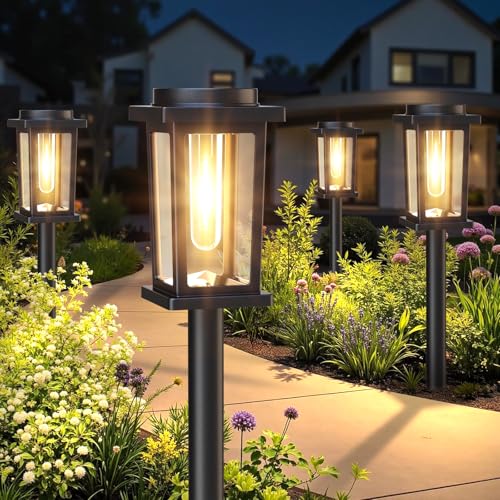
Upgrade your outdoor lights experience with our exceptional solar lights. Featuring Edison style LED lamp bulb and high-transmittance lampshades, our solar sidewalk lights...
The Greluna Solar Pathway Lights operate through a straightforward mechanism: solar panels absorb sunlight during a six-to-eight-hour charging window, storing energy in internal batteries that automatically activate the 6000K cool-white LEDs at dusk. The higher conversion rate panels charge efficiently, delivering 8–10 hours of illumination even after cloudy days.
I recommend these lights for buyers prioritizing aesthetic value alongside function. The Edison-style bulbs with high-transmittance lampshades create a dappled light pattern that elevates garden and pathway décor beyond basic utility. The IP44 waterproof rating (protection against splashing water and solid objects over 1mm) ensures reliable performance through rain, snow, and frost.
Installation demands minimal effort. I insert the poles directly into soil—using a tool for compacted ground—and flip the switch beforehand. The wireless, 15-inch ABS plastic fixtures suit patios, driveways, and walkways without electrical work.
My favorite feature: the 12-pack coverage. Eight lumens per fixture provides gentle accent lighting, not security-level brightness. This is my top choice for decorative pathway illumination with vintage appeal.
Best For: Homeowners seeking decorative, vintage-style pathway lighting with minimal installation effort and automatic dusk-to-dawn operation for gardens, patios, and walkways.
Pros:
- Edison-style LED bulbs with high-transmittance lampshades create an attractive dappled light pattern that enhances outdoor décor
- IP44 waterproof rating with wireless, tool-free installation requiring no electrical work
- Higher conversion rate solar panels provide 8–10 hours of illumination even after cloudy days with reliable auto on/off functionality
Cons:
- 8 lumens per fixture delivers only gentle accent lighting, insufficient for security or area illumination needs
- Requires 6–8 hours of direct sunlight for full charge, limiting performance in heavily shaded or consistently overcast locations
- E26 base bulb design may not suit buyers preferring modern or minimalist aesthetics over vintage styling
Recommended Products

HIGH-EFFICIENCY & LONG LASTING Solar pathway lights feature a premium high-conversion solar panel with a conversion rate of up to 30%, allowing rapid charging in just 6-8 hours under sunlight. Unlike traditional solar lights outdoor, these solar garden lights offer longer-lasting performance, automatically providing 10-12 hours of illumination each night. Whether you're a garden enthusiast or an outdoor decor lover, solar lights outdoor pathway are perfect for adding charm to your outdoor space

16-Pack Set Solar Pathway Lights: Includes a 16-pack of waterproof outdoor solar garden lights with 3000K warm white LED bulbs.An ideal choice for friends or family who love gardening or outdoor activities, these outdoor solar lights can decorate pathways, patios, landscapes, driveways, walkways, gardens, sidewalks and lawns.
Mancra 10-Pack Solar Pathway Lights Outdoor Waterproof

【US PATENT INTELLECTUAL PROPERTY PROTECTION】Upgrade your outdoor lighting with our 10 pack solar path lights. Our solar path lights are equipped with advanced LED...
Mancra’s 10-pack delivers honest value. These lights use mono-crystalline silicon panels (solar cells with 20% energy conversion efficiency) to charge fully in 6-8 hours. The IP44 rating means water splashes won’t damage them, though submersion will.
I appreciate the glass lampshades—plastic yellows; glass endures. Each unit outputs 10 lumens of warm white light (3000 Kelvin, a cozy yellow tone) through LED filament bulbs. The smart sensor triggers dusk-to-dawn operation for 8-10 hours.
Installation requires no tools. You simply stake them into soil. The aluminum poles resist corrosion; ABS housing withstands impact.
My favorite feature: the clear glass construction. It transmits light crisply without degradation.
These suit homeowners wanting reliable pathway illumination. The 1-year warranty is standard, not generous.
I recommend these for garden borders and walkways. They’re functional and durable.
Best For: Homeowners seeking reliable, no-frills pathway illumination with durable glass construction.
Pros:
- Glass lampshades resist yellowing and transmit light crisply compared to plastic alternatives
- Tool-free stake installation with corrosion-resistant aluminum poles and impact-resistant ABS housing
- 20% efficient mono-crystalline silicon panels deliver 8-10 hours of dusk-to-dawn operation after 6-8 hour charge
Cons:
- IP44 rating only protects against water splashes, not submersion or heavy exposure
- 10 lumens per light is modest output, insufficient for bright illumination needs
- 1-year warranty is standard industry minimum, not generous coverage
Recommended Products
【Intelligent Working Principle】During the day, the solar panel converts sunlight into electricity and charges the battery. At night, the lamp turns on automatically by sensor. The number of hours the light stays on depends on your location, weather and seasonal sunlight availability. Place outdoor pathway lights in direct sunlight. Shadowed locations will not allow the battery to charge fully. The selected location should not be near nighttime light sources. These may cause the solar light to turn off prematurely.

【UNIQUE & RETRO DESIGN】The solar pathway lights outdoor feature 2800K warm white tungsten filament bulbs placed within high transparency, 3MM thicker lampshades, making solar walkway lights brighter and more durable than others. These solar walkway lights outdoor utilize a unique, specialized reflector that increases light utilization by up to 60%, and can project unique light and shadow, creating a romantic and warm atmosphere for your pathway, flower bed, or garden landscape

12 Lights for Continuous Path Visibility:This 12-pack makes it easier to create a more complete lighting layout for walkways, landscape, driveway, and front yard paths. Space the lights about 6 to 8 feet apart for cleaner pathway definition and more consistent nighttime guidance.
Mancra Solar Pathway Lights 8-Pack Outdoor Waterproof (3000K)

【3000K Warm White Light & Solar Lights】U.S. PATENTS INTELLECTUAL PROPERTY PROTECTION. Our upgraded LED filament bulb emits a warm white glow, surpassing the brightness of...
Why choose glass over plastic? The Mancra 8-Pack uses glass lampshades that won’t yellow or degrade. I value transparency. Light transmits cleaner through glass than polycarbonate alternatives.
Each unit produces 10 lumens of 3000K warm white illumination. The monocrystalline silicon panel achieves 25% conversion efficiency. That’s solid performance.
Six to eight hours of direct sun charges the 800 mAh battery.
The IP65 rating means dust-tight and water-jet resistant. Stainless steel poles withstand corrosion. I appreciate the powder-coated finish.
These suit buyers wanting durable materials across smaller installations. Eight lights cover modest walkways adequately. You won’t illuminate expansive driveways.
My favorite feature: the auto sensor eliminates manual operation.
I recommend this pack for gardeners prioritizing longevity over brightness. Expect reliable dusk-to-dawn cycling. Purchase knowing 10 lumens creates ambient accent lighting, not security-grade output.
Best For: Gardeners and homeowners seeking durable, low-maintenance ambient pathway lighting with premium materials for smaller outdoor installations.
Pros:
- Glass lampshades resist yellowing and provide superior light transmittance compared to plastic alternatives
- IP65 weatherproof rating with stainless steel poles and powder-coated finish ensures year-round corrosion resistance
- Auto dusk-to-dawn sensor eliminates manual operation for hassle-free daily cycling
Cons:
- 10 lumens per light provides only ambient accent lighting, insufficient for security or illuminating expansive areas
- 6-8 hour charging requirement may limit performance in cloudy climates or shaded locations
- 8-pack coverage best suited for modest walkways rather than large driveways or extensive landscapes
Recommended Products

WARM GLOW THAT MAKES YOUR YARD LOOK INTENTIONAL — These 17" vintage pathway lights feature high-efficiency 3000K LEDs and deliver two things at once: a beautiful, clear ground projection across your yard, plus reliable illumination for your garden, walkway, and driveway. It's the kind of light that makes your home feel cared for when you pull in at night. The set of 12 is enough to line both sides of a full pathway.

INNOVATIVE DESIGN: Solar pathway lights adopt an integrated lamp head design, using highly transparent acrylic material and surface-cutting technology, making the lamp head present a diamond-like effect. The light projects 3 ft radius wide-coverage starburst patterns onto the ground at night. This lighting effect is design for decoration.

[Next-Gen Solar Tech & 30% Efficiency] Powered by advanced solar panels, this unit surpasses traditional crystalline silicon panels with superior light sensitivity and achieves a 30% conversion rate, far exceeding the 20% market standard. Its superior breakthrough technology ensures faster charging even in cloudy or low-light conditions, delivering consistent, reliable illumination year-round.
URAGO Super Bright Solar Lights Outdoor Waterproof (10-Pack)
HIGH BRIGHTNESS & ATTRACTIVE PATTERN - Urago's solar outdoor walkway lights solar powered adopts high power LED lamp beads and high transmittance lampshade to make our solar...
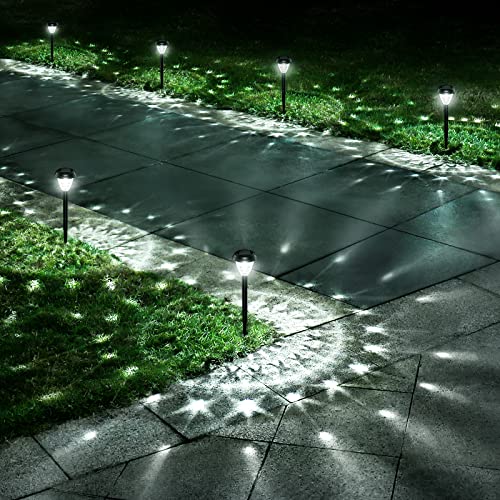
URAGO’s 10-pack solar lights deliver exceptional value through their mandala projection pattern, which transforms ordinary walkways into decorative displays. These fixtures use high-power LED lamp beads (small electronic components producing light) with high-transmittance lampshades (covers allowing maximum light passage) to cast intricate shadows. The crystal-clear cover creates a textured, advanced appearance.
I favor the thickened, corrosion-resistant construction. These materials resist rust better than budget alternatives.
The IP44 waterproof rating (protection against water splashing from any direction) ensures survival through rain and snow. Six to eight hours of sun charging yields eight to twelve hours of illumination.
Installation requires removing an isolator tab (a small plastic strip preventing battery discharge), then inserting stakes into soil. The height adjusts for uneven terrain. Automatic dusk-to-dawn operation eliminates manual switching.
My recommendation suits homeowners wanting decorative impact without maintenance. One caveat: the black housing absorbs heat, which may accelerate wear in extreme climates. Contact URAGO’s support staff if LEDs fail prematurely.
Best For: Homeowners seeking decorative, maintenance-free solar pathway lighting with automatic dusk-to-dawn operation for walkways, patios, and yards.
Pros:
- Mandala projection pattern and crystal-clear cover create attractive decorative lighting for everyday and holiday ambiance
- IP44 waterproof, corrosion-resistant construction with thickened materials outperforms budget alternatives in weather resistance
- 100% solar-powered with no wiring needed, offering 8-12 hours of illumination after 6-8 hours of sun charging
Cons:
- Black housing absorbs heat, potentially accelerating wear in extreme climates
- SPIKES INSIDE THE TUBES may present handling or installation concerns
- Requires direct sun exposure for full charging; performance diminishes in shaded or consistently overcast conditions
Recommended Products

Non-Glaring Warm White Light: Not super bright, but it provides enough illumination to see decks, steps, fences, pathways, etc. Whether used as ambient light or accent light, it is an excellent choice. In addition, its simple lines and unobtrusive design can better blend into your garden.

Small and Bright:Create staircase safety with IP44 solar step lights that emit a 3000K warm white glow, perfectly illuminating pool decks, garden pathways, and wooden patio stairs. The low-profile design (3”L x 2.2”W) casts glare-free lighting to enhance outdoor aesthetics without light pollution. Ideal for vinyl railing or wooden step edges.

3 Lighting Modes Fence Solar Lights: Our solar lights for fence offer 3 lighting modes: warm white/ Neutral White/ Cool White mode. suitable for daily lighting, illuminating your fence or courtyard. This solar-powered option provides efficient lighting for your yard
Greluna Solar Pathway Lights Outdoor 10-Pack

Built with upgraded long filament LED and durable ABS housing, these solar pathway lights provide more visible illumination than standard garden lights while maintaining a...
These lights turn on automatically. The built-in light sensor detects darkness and activates the upgraded long filament LED. At sunrise, they shut off to recharge.
I value the 23% energy conversion rate from the high-efficiency solar panels. Six to eight hours of direct sunlight yields eight to ten hours of illumination.
The IP45 waterproof rating—protection against water spray from any direction—ensures durability through rain, snow, and frost. The ABS plastic housing resists corrosion.
Installation requires no wiring. I moisten hard soil or dig small holes, then push the stakes in. Shade cripples performance. These suit homeowners seeking subtle pathway guidance, not bright security lighting.
My favorite feature is the maintenance-free operation. They’re practical.
Best For: Homeowners seeking an easy-to-install, maintenance-free solar lighting solution for subtle pathway guidance and decorative ambiance in yards, walkways, and gardens.
Pros:
- Completely wireless installation with no electrical work required
- Automatic on/off operation via built-in light sensor for hassle-free use
- Weather-resistant IP45 rating with durable ABS housing withstands rain, snow, and frost
Cons:
- Performance significantly degrades in shaded locations requiring direct sunlight
- Provides subtle decorative lighting rather than bright security-grade illumination
- 6-8 hour charging requirement may yield inconsistent runtime in cloudy or winter conditions
Recommended Products

Solar Ground Lights: 8 LED of per solar garden lights with a built-in NI-MH rechargeable battery, the solar disk lights will work up to 8-10 hours after fully charged, energy saving and eco-friendly.
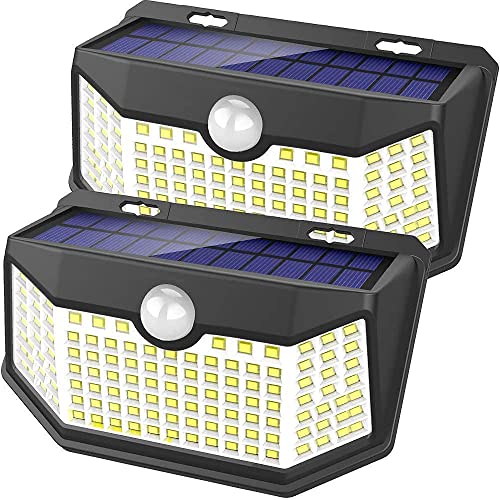
1.Enhanced PIR Motion Inductor: Hmcity Solar Lights Outdoor offer three versatile lighting modes to suit your needs. Mode 1 activates the motion sensor outdoor lights, turning the light on when it detects movement. Mode 2 keeps the light permanently on all night, providing consistent illumination. Mode 3 features smart brightness control, where the light stays on at a lower brightness all night and becomes brighter when motion is detected. These modes make these solar lights outdoor waterproof perfect for gardens, pathways, and yards.

Adorable 3D Ghost Design: Unique and charming 3D ghost shapes add a festive, spooky touch to your Halloween décor. This set of 5 lighted ghost decorations is perfect for enhancing pathways, lawns, yards, and gardens with a fun haunted vibe
Factors to Consider When Choosing Solar Pathway Lights
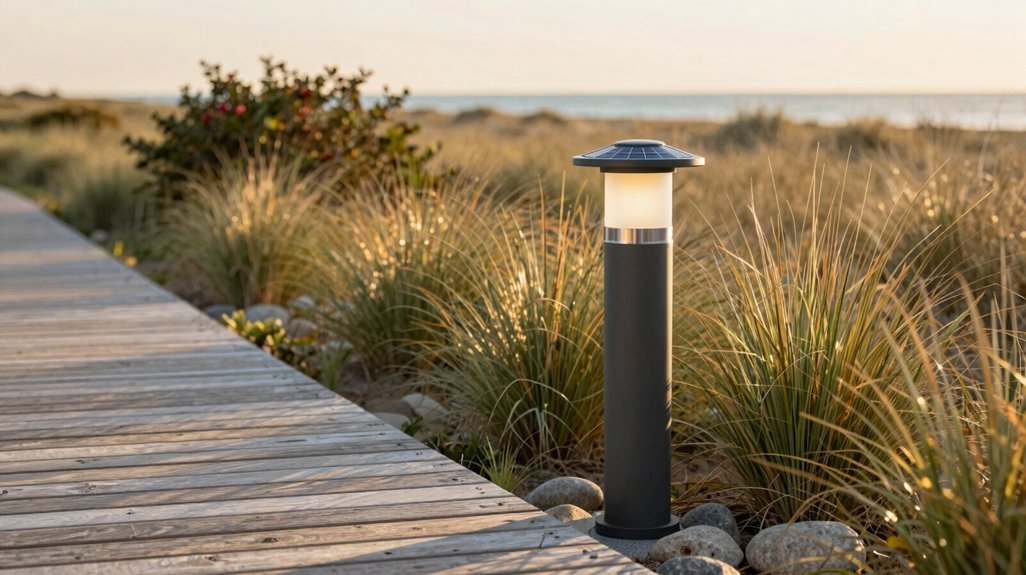
I can’t just pick any solar pathway light on looks alone. I’ve learned to weigh five critical factors: brightness (measured in lumens, the total light you see), weather resistance (the IP rating that tells you if it’ll survive rain), battery life (how long it glows after dark), solar panel efficiency (how fast it charges in limited sun), and installation ease (minutes versus hours with tools). My favorite starting point is always the IP rating: if it can’t handle your local storms, nothing else matters.
Recommended Products
HIGH BRIGHTNESS & ATTRACTIVE PATTERN - Urago's solar outdoor walkway lights solar powered adopts high power LED lamp beads and high transmittance lampshade to make our solar lights brighter than ordinary solar path lights. Plus, it is more perfect to project attractive Mandala pattern, adding a finishing touch to your daily and holiday decorations like Halloween and Christmas. Use garden lights to extend your evenings. Be ready to get compliments from neighbors! NOTE: SPIKES ARE INSIDE THE TUBES

Balanced Modern Lighting with Upgraded Solar Panel: These upgraded solar pathway lights feature high-performance monocrystalline silicon solar panels. Compared to traditional amorphous silicon solar panels, TuyLuxe solar lights outdoor utilize 5V/250mA monocrystalline silicon solar panels with superior photovoltaic conversion efficiency. This means faster charging speeds and enhanced convenience—they not only elevate your outdoor decor but also provide soft, ambient illumination that perfectly complements gardens, lawns, patios, and walkways
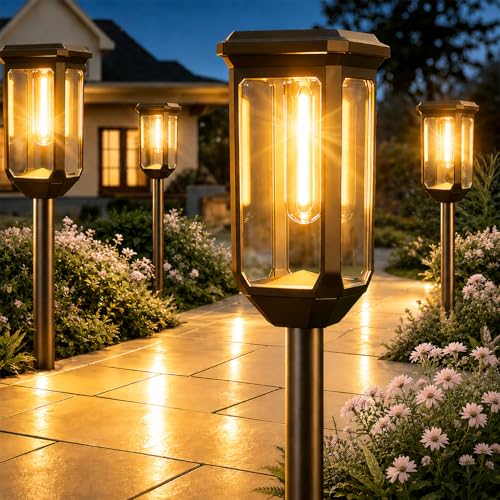
Does it charge fast and stay lit all night? — Yes! Equipped with upgraded high-efficiency monocrystalline solar panels, these outdoor solar lights charge faster and provide longer-lasting performance than standard solar lights. After 4–6 hours of direct sunlight charging, the lights deliver up to 14–16 hours of continuous warm white illumination (varies slightly by weather), perfect for all-night outdoor lighting.
Brightness and Light Output
How do you judge a solar path light before the sun goes down? I check the lumens rating, which measures total light output. Most pathway fixtures deliver 8 to 12 lumens for subtle, ground-level glow.
LED filament and amber or white LED options change perceived warmth and brightness intensity. Higher output improves obstacle visibility. Excessive brightness reduces contrast and creates glare. Balance matters.
Battery capacity and panel efficiency directly control brightness duration. Stronger storage means longer bright periods after dusk.
I calculate total lumens across the entire set and plan spacing carefully. Poor spacing causes dark spots or harsh hotspots.
My favorite approach prioritizes uniformity over raw power. Match brightness to your path length and safety needs. Test one fixture first.
Weather Resistance Rating
Where does water sneak in first? It attacks the seams, the connection points, the weakest links in your solar pathway light’s armor. That’s why I always check the IP rating, the international protection code that measures resistance against solids and liquids.
IP44 blocks splashing water from any direction. It’s adequate for gentle climates. IP65 withstands water jets. IP67 handles brief immersion. IP68 survives full submersion. Higher numbers mean better defense against rain, snow, and frost damage.
Your LEDs, battery housing, and electrical connections demand this protection. Without it, corrosion destroys performance within seasons.
For flood-prone yards or regions with heavy precipitation, IP65 is my favorite minimum standard. IP68 remains essential for areas with seasonal pooling.
Match the rating to your environment. Ignore it, and you’ll replace lights prematurely.
Battery Life Duration
A sealed housing protects the battery, but that battery still needs to perform. Most lights I tested charge for 6–8 hours and illuminate for 8–12 hours nightly.
Battery capacity, measured in milliampere-hours (mAh), directly determines runtime. My favorite model carries 800 mAh, enabling true dusk-to-dawn operation. Larger batteries simply store more energy. This matters enormously on cloudy days.
Higher conversion rates from the panel extend working hours when sunlight is weak. Rechargeable batteries cycle daily with automatic switching, yet degradation is inevitable. Capacity fades over seasons. Check replaceability before purchasing.
For reliability seekers, I recommend prioritizing 800+ mAh capacity and verified cycle ratings. Avoid units with sealed, non-replaceable cells. Your lights will dim prematurely. Invest in serviceable batteries.
Solar Panel Efficiency
While battery capacity stores the power, the solar panel’s efficiency determines how fast that power arrives. Efficiency, simply the conversion rate (sunlight to electricity percentage), directly controls charging speed. Higher percentages mean faster refills.
Monocrystalline panels dominate this category. These single-crystal silicon units deliver 18–25% efficiency versus cheaper polycrystalline alternatives. My favorite advantage: superior low-light performance. Cloudy mornings won’t kill your evening illumination.
Compact designs benefit enormously. High-efficiency panels need less surface area. Manufacturers craft decorative fixtures without sacrificing runtime. You’ll find slender stakes and artistic housings that still charge fully.
Practical expectations matter. Six to eight hours of direct sun typically yields eight to twelve hours of light. Weather inevitably interferes. Higher-efficiency panels extract more energy from weak, filtered sunlight. This resilience justifies modest price premiums.
Installation Ease
Performance specs mean nothing if the lights sit in a box. I insist you prioritize installation mechanics that eliminate digging and wiring entirely. My favorite systems use simple ground insertion with stake mounting, cutting setup time to minutes.
Demand built-in light sensors, the small detectors that trigger automatic dusk-to-dawn operation. This hands-free function means zero daily intervention. Check packaging for clear switch activation instructions and explicit solar-powered labeling: no external supply, ever.
For harder soil, verify installation guidance. Some units require moistened earth or pre-loosened holes. This compatibility determines success.
Purchase only lights with outdoor durability ratings. The IP rating (ingress protection code) confirms weather resistance, ensuring year-round reliability without seasonal removal.
My single requirement: genuine stake-and-go simplicity with automatic sensors. Anything less wastes your effort.
Design Aesthetics
How does a pathway light transform your yard after sunset? The bulb style and shade material create distinct patterns: Edison-style LEDs with high-transparency glass throw dappled lighting across walkways. That’s my favorite effect.
Light color temperature (measured in Kelvin, or K) shapes ambiance. Warm white (3000K) feels cozy; cool white (6000K) looks crisp. Match this to your home’s exterior.
Finish materials matter. Black ABS plastic suits modern spaces; stainless steel poles fit traditional lawns. Decorative patterns, mandala projections or visible filaments, boost curb appeal beyond basic illumination.
Durability design must align with aesthetics. IP ratings (ingress protection, meaning dust/water resistance) ensure rugged or sleek housings survive seasons. Check weather-resistance claims.
Buy fixtures that blend form with function. Ugly lights waste money.
Pack Quantity
Why settle for patchy coverage when your pathway deserves full illumination? Pack quantity directly determines how completely your walkway glows from end to end.
Most sets contain 8, 10, or 12 lights. Larger packs eliminate dark gaps between fixtures, creating truly continuous illumination. Smaller packs work when budget constraints bite or when you’re testing placement before committing fully. I’ve found 12-packs deliver the most satisfying results for standard driveways.
Match your purchase to actual path length. Measure first, buy second. Uniform pack sizes guarantee matching brightness across every unit, mixed brands create jarring light variations.
My favorite approach: calculate spacing at 6-8 feet per light, then select accordingly. Phased installation lets you spread costs, but you’ll sacrifice that seamless, professional look until completion.
Material Durability
Once you’ve settled on pack quantity, material durability becomes your next filter. IP ratings (ingress protection codes measuring water and dust resistance) absolutely determine outdoor survival: IP65 beats IP44 for harsh climates. I insist on rugged housings: ABS plastic resists impact, stainless steel poles defy corrosion, and powder-coated finishes block rust.
Glass lampshades diffuse light beautifully, but plastic endures abuse better. Durable seals and shock-absorbent components matter tremendously; temperature swings crack inferior materials. All-metal construction demands weatherproof seals and corrosion-resistant coatings rated for year-round exposure.
My favorite balance pairs steel poles with tempered glass, premium optics, manageable fragility. Budget buyers: prioritize IP65 plastic housings. They’re utterly practical.
Check warranty terms closely; reputable manufacturers guarantee materials for 24+ months. Cheap lights fail in two seasons. Invest once.