Ratcheting pruners multiply your hand strength through a gear mechanism (ratchet) that clicks through cutting stages, letting you snip thick branches without strain. I look for SK-5 or manganese steel blades, corrosion-resistant coatings, and cutting capacity matched to your task: ¾ inch for shears, 2 inches for loppers.
These tools suit gardeners with arthritis or limited grip strength, though improper sizing causes fatigue and incomplete cuts. My favorite balances threefold power with ambidextrous grips under $40. The five models ahead solve specific problems most buyers overlook.
Ratchet Pruning Shears for Gardening Heavy Duty (8″)
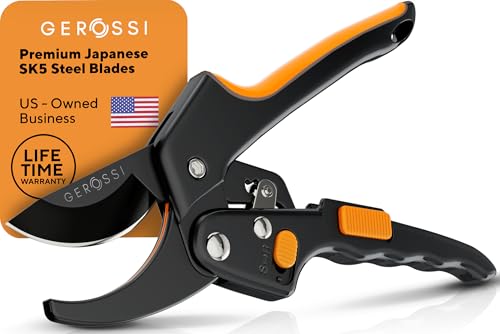
GARDEN SHEARS PRUNING - 2-in-1 Innovative Design. Our model stands out with its unique design, offering two distinct working modes – the traditional Single-Cut for everyday...
The GEROSSI 8-inch ratchet pruning shears use a two-mode mechanism. I switch between Single-Cut for regular stems and Ratchet-Cut for tougher branches. The ratchet multiplies my hand power threefold through three gradual steps.
This matters when I’m tackling dried branches or dense growth. I judge pruners by blade quality and cutting capacity. These use SK-5 steel, a high-carbon alloy sharpened with ultra-fine polishing. The corrosion-resistant coating extends lifespan.
I cut branches up to 3/4 inch diameter—solid capacity for most home tasks. Control matters. These deliver clean, precise cuts on roses and woody perennials.
These suit gardeners with weak hands, arthritis, or limited grip strength. The ergonomic non-slip handles reduce strain during prolonged use. My caveat: the 8.1-inch length favors medium-sized hands. Very large hands may find the grip cramped.
I recommend these for elderly gardeners and anyone seeking reduced-effort pruning. My favorite feature is the secure safety lock—one-handed operation, no fumbling.
Best For: Gardeners with weak hands, arthritis, or limited grip strength seeking reduced-effort pruning for home and professional tasks.
Pros:
- Two-mode versatility with 3x power ratchet mechanism tackling branches up to 3/4 inch diameter
- SK-5 high-carbon steel blade with corrosion-resistant coating ensuring clean, precise cuts and extended lifespan
- Ergonomic non-slip handles with secure one-handed safety lock reducing strain during prolonged use
Cons:
- 8.1-inch length may feel cramped for gardeners with very large hands
- Ratchet-cut requires multiple steps, potentially slower than single-motion alternatives for quick cuts
- Anvil design not ideal for live, green stems requiring bypass-style precision cuts
Recommended Products
GARDEN SHEARS PRUNING - 2-in-1 Innovative Design. Our model stands out with its unique design, offering two distinct working modes – the traditional Single-Cut for everyday pruning tasks and an advanced Ratchet-Cut with a 3-step mechanism for dealing with thicker branches.

✅ CUTS BRANCHES UP TO 1.5 INCHES – HEAVY-DUTY PERFORMANCE – Designed for larger cuts and tougher jobs. Best suited for medium to large hands – Equipped with a premium SK5 hardened carbon steel blade, these pruning shears slice through branches up to 1.5 inches thick with precision. The non-stick coating ensures smooth cuts without gumming up, reducing friction for easier operation. Whether you're trimming thick stems or shaping shrubs, these pruners handle the toughest jobs with ease. Perfect for professional landscapers and home gardeners alike!

🎁WELL-MADE AND EASY TO USE: Our German-style garden clippers are a high quality product that is great for pruning a variety of plants, German forging technology. including fruit trees, suitable for people with carpal tunnel syndrome, arthritis or small hands, providing a good pair of gardening shears for our gardening needs, use for 10 years without replacement
Ratchet Pruning Shears with Heavy Duty Steel Blade

Strength-Boosting Shears: boost your cutting power with ratchet garden shears for pruning, trimming, and harvesting plants. Your TGF anvil pruners help you achieve cleaner...
Why choose ratcheting pruners for stubborn branches? The mechanism multiplies your hand strength through staged cutting.
I push the handles; the ratchet gear engages, bites, releases, re-engages. Each squeeze advances the manganese steel blade deeper without reopening. This is my favorite assisted-action design.
Purchase criteria center on blade quality and body resilience. The Gardeners Friend 3130-3 pairs corrosion-resistant manganese steel with a nonstick coating against sap buildup.
An aluminum body keeps weight down. The neoprene anvil insert grips stems during cuts. Improved safety latch prevents accidental openings.
Who matches this tool? Gardeners pruning branches up to one inch thick, maintaining flower beds and garden rows. Caveat: hardwood limits vary with your grip strength. Soft greenwood cuts easier.
I recommend this pruner highly. The high-impact construction withstands real pressure. Customer support assists enthusiasts directly. Clean cuts come with noticeably less strain.
Best For: Gardeners who need assistance cutting stubborn branches up to one inch thick while maintaining flower beds and garden rows, particularly those with limited hand strength or tackling hardwood pruning tasks.
Pros:
- Ratchet mechanism multiplies hand strength through staged cutting, reducing physical strain while delivering cleaner cuts
- Durable manganese steel blade with nonstick coating resists corrosion and prevents sap buildup for smoother operation
- Lightweight aluminum body combined with neoprene anvil insert and improved safety latch provides secure, comfortable, accident-resistant pruning
Cons:
- Maximum cutting capacity of one inch varies significantly with wood hardness and individual user grip strength, creating inconsistent performance across materials
- Limited to pruning tasks and cannot handle larger branch diameters or specialized cutting needs beyond its assisted-action design
- Safety latch improvements suggest previous accident risks, and ongoing vigilance remains necessary to prevent unexpected blade openings during use
Recommended Products

Fiskars Ratchet Lopper compounds force with a series of easy squeezes for maximum cutting power with very little effort

Ratchet action gives easy cutting in short steps - ideal for cutting thicker, harder branches

IDEAL TREE BRANCH CUTTER: 32" Steel blade bypass lopper that glides through up to 2" thick branches for easy cuts; Tree Pruner that works well for trimming tree branches to maintain your yard and garden
gonicc 8″ Professional Ratchet Anvil Pruning Shears (GPPS-1011)
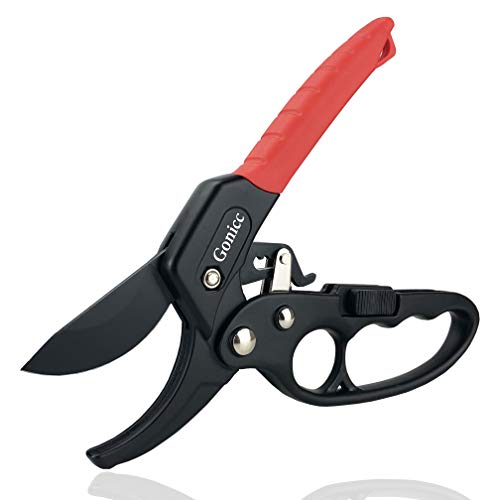
Premium SK‑5 Steel Blades - Our garden shears feature professional-grade SK‑5 steel blades built to the highest quality standards, delivering clean, precise cuts every...
Looking for ratcheting power on a budget? I found the gonicc 8″ Professional Ratchet Anvil Pruning Shears (GPPS-1011). This tool delivers serious cutting force without serious cost.
The mechanism multiplies your hand strength three times through a stepped ratchet system. The blade clicks, locks, advances. You squeeze gradually instead of forcing through thick branches in one motion.
My favorite part: the SK-5 steel blades, a professional-grade Japanese carbon steel known for edge retention and clean cuts. Chrome vanadium handles reinforce the frame against stress. The ambidextrous grip serves left and right hands equally, with cushioned non-slip coating that reduces fatigue during long sessions.
Buy this if you need reliable anvil cutting for dead wood and dry stems under ¾ inch diameter. The anti-rust oil coating protects the blade but leaves slight residue initially; wipe before first use.
I recommend this pruner for budget-conscious gardeners prioritizing function over brand prestige.
Best For: Budget-conscious gardeners who need reliable ratcheting power for cutting dead wood and dry stems under ¾ inch diameter without paying a premium price.
Pros:
- 3X ratchet mechanism multiplies hand force for smooth, low-effort cutting of thick branches
- Professional-grade SK-5 steel blades deliver clean cuts with excellent edge retention
- Ambidextrous cushioned non-slip handles reduce fatigue during extended use
Cons:
- Slight anti-rust oil residue requires wiping before first use
- Limited to branches under ¾ inch diameter
- Anvil design less suitable for live, green growth compared to bypass pruners
Recommended Products

GARDEN SHEARS PRUNING - 2-in-1 Innovative Design. Our model stands out with its unique design, offering two distinct working modes – the traditional Single-Cut for everyday pruning tasks and an advanced Ratchet-Cut with a 3-step mechanism for dealing with thicker branches.
Premium SK‑5 Steel Blades - Our garden shears feature professional-grade SK‑5 steel blades built to the highest quality standards, delivering clean, precise cuts every time. Perfect for trimming light tree branches, rose bushes, shrubs, and hedges with ease.

GARDEN SHEARS PRUNING - 2-in-1 Innovative Design. Our model stands out with its unique design, offering two distinct working modes – the traditional Single-Cut for everyday pruning tasks and an advanced Ratchet-Cut with a 3-step mechanism for dealing with thicker branches.
MEPEREZ Germany Steel Pruning Shears for Gardening
🎁WELL-MADE AND EASY TO USE: Our German-style garden clippers are a high quality product that is great for pruning a variety of plants, German forging technology. including...
I chose MEPEREZ’s yellow 8-inch pruner for gardeners who need serious cutting power without hand strain. This tool uses German forging technology, which means the steel gets compressed under extreme heat and pressure for superior strength. The wear-resistant coating protects the blade through frequent use. My favorite feature: you can sharpen this blade with a standard sharpener when it dulls.
The comfortable grip adapts to different hand types, though small-to-medium hands fit best. It requires very little force to cut thick branches, making it ideal for elderly gardeners or those with arthritis, a condition causing joint pain and stiffness.
The sliding lock mechanism moves smoothly for better opening control. This pruner handles fruit trees, hedges, roses, and indoor plants reliably. MEPEREZ offers free exchange within one year for quality issues. Solid purchase for serious gardeners.
Best For: Gardeners with small to medium hands, including elderly users and those with arthritis or weak hand strength, who need a versatile, low-effort pruner for fruit trees, hedges, roses, and indoor plants.
Pros:
- German-forged steel with wear-resistant coating delivers durable, sharp cutting performance that can be resharpened for long-term use
- Ergonomic grip and minimal cutting force required make it accessible for users with joint pain or limited hand strength
- Reliable sliding lock mechanism and one-year free exchange policy provide smooth operation and quality assurance
Cons:
- 8-inch size may not suit users with large hands comfortably
- Yellow color option only, with no alternative colors available
- Blade requires manual sharpening maintenance rather than staying self-sharp indefinitely
Recommended Products

RATCHETING GARDENING SHEARS - No collection of garden tools is complete without these garden clippers handheld loppers, which have a ratchet that holds the jaws in place when you loosen your grip, allowing you to rest your hand then give an extra squeeze.
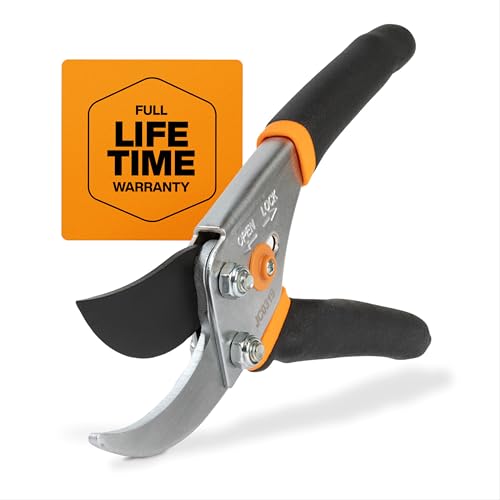
CLEAN CUTS FOR LIVE GROWTH: Bypass blade design is ideal for pruning delicate flower stems and green growth, helping reduce crushing and plant damage while cutting stems and small branches up to 5/8” in diameter
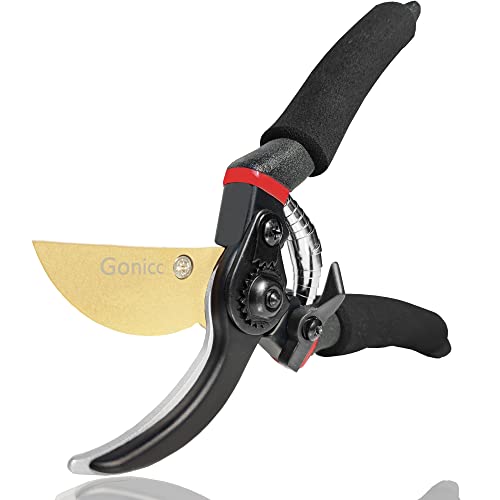
Drop-forged construction delivers exceptional durability and sturdiness for long-term heavy garden use.
Fiskars 32″ Ratchet Drive Anvil Lopper (2″ Cut)
Fiskars Ratchet Lopper compounds force with a series of easy squeezes for maximum cutting power with very little effort Fully hardened, precision-ground steel blade stays...
Need serious cutting power for thick, dry branches? This Fiskars 32″ Ratchet Drive Anvil Lopper delivers exactly that. The ratchet force mechanism compounds your effort through multiple easy squeezes, amplifying cutting strength for dead wood that resists standard tools.
The 2-inch capacity suits established trees with hardened growth. Fully hardened steel blades stay sharp through repeated use, while the low-friction coating prevents sap buildup that slows cutting action.
That 32-inch reach matters—I’m spared the ladder for mid-height branches. Riveted steel construction ensures lasting durability.
This tool isn’t for green, living stems. The anvil design (a flat surface paired with a blade) crushes rather than slices, making it ideal for dry branches exclusively. Misuse damages living tissue.
My favorite feature is the effortless operation. Apply minimal hand strength, squeeze incrementally, and the ratchet advances the cut mechanically.
Purchase this for heavy tree maintenance. Avoid it unless you genuinely need 2-inch capacity.
Best For: Homeowners and gardeners who need to prune thick, dry, dead branches up to 2 inches in diameter on established trees without excessive physical effort or ladder use.
Pros:
- Ratchet mechanism compounds force through easy squeezes, minimizing hand strain while cutting through tough dead wood
- 32-inch length provides extended reach for mid-height branches, reducing or eliminating ladder needs
- Fully hardened, precision-ground steel blade with low-friction coating maintains sharpness and resists sap buildup and rust
Cons:
- Anvil design crushes rather than slices, making it unsuitable for green, living stems where clean cuts matter for plant health
- 2-inch capacity and heavy-duty construction may be excessive for users with only light pruning needs
- Specialized function for dry/dead branches limits versatility compared to bypass loppers for general pruning tasks
Recommended Products

LONG-LASTING SHARPNESS: Japanese SK5 bypass blade with titanium coating is tested through 5,000 cuts to maintain a sharp edge and deliver clean, consistent cuts on live stems and branches
Strength-Boosting Shears: boost your cutting power with ratchet garden shears for pruning, trimming, and harvesting plants. Your TGF anvil pruners help you achieve cleaner cuts with less strain
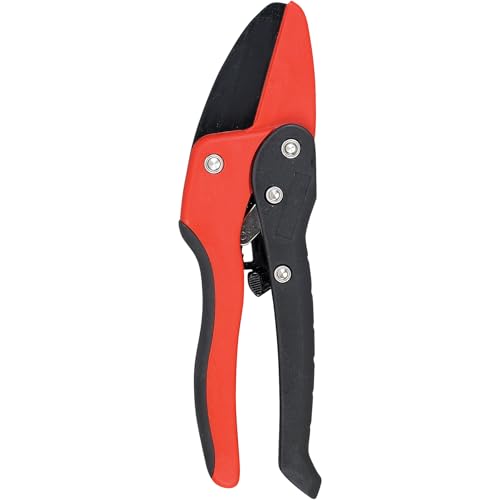
Powerful Ratcheting Cutting Action – Ratchet mechanism cuts in stages to increase leverage, making it easier to trim thicker stems and branches with reduced hand effort and fatigue.
Factors to Consider When Choosing Ratcheting Pruners
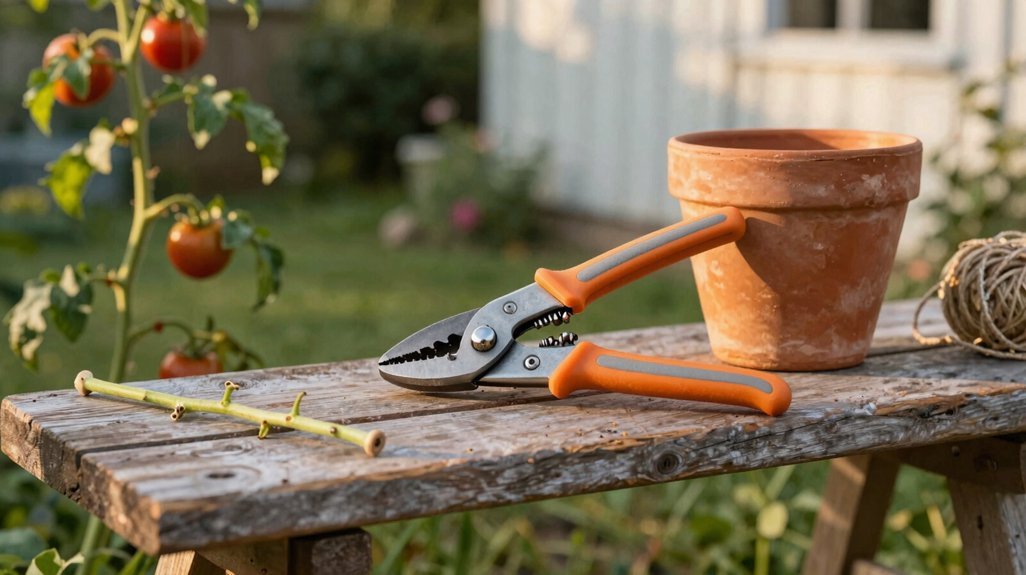
I want you to pick tools that match your actual cutting needs, not just brand names. The ratchet mechanism (the stepped gear system that multiplies your hand force) determines how thick a branch you can cut without strain, while blade material: typically hardened carbon steel or coated stainless, dictates how long you’ll stay sharp between sharpenings.
My favorite approach is balancing cutting capacity limits against weight distribution, because a heavy pruner fatigues your wrist fast. I always test handle ergonomics before buying, since poorly shaped grips cause blisters and reduce control.
Recommended Products

ULTRA SHARP - Much less effort to cut branches with our pruning shears. Crafted from premium SK5 steel with titanium coating, our garden scissors and garden clippers boast...
Cutting Capacity Limits
How much branch can your pruner actually handle? Cutting capacity, the maximum branch thickness a tool can slice, determines your pruner’s true usefulness. Most ratcheting hand pruners top out at three-quarter inch; loppers may reach two inches. The ratchet mechanism, a gear system that multiplies your hand strength through multiple squeezes, expands effective power dramatically. Yet this mechanism has hard limits.
Anvil pruners, which crush stems against a flat base, tackle dead wood beyond bypass models. But I never exceed stated ratings. Forcing oversized branches warps the ratchet dog or chips blades.
My favorite approach: match capacity precisely to your typical task. Buy slightly above your needed range. Pruning small ornamentals? Three-quarter inch suffices. Maintaining overgrown shrubs? Consider loppers.
Blade Material Quality
Why does blade steel matter so much? The metal determines how long your edge stays sharp and how many cuts you’ll make before replacing the tool. I always look for high-carbon steel, specifically SK-5 or manganese steel, because these alloys (metal mixtures) hold their edge through repeated ratcheting action.
Hardened or chrome-vanadium blades resist wear better. They cost more. They last longer.
Nonstick coatings prevent sap buildup. That’s my favorite feature for sticky species like pine or maple. Anti-rust coatings protect against moisture damage. Without them, your blade pits and dulls prematurely.
The grind matters too. A precisely ground blade slices cleanly. It heals plant tissue faster. It reduces your effort.
Cheap steel dulls fast. You’ll work harder. Plants suffer. Invest in quality steel.
Handle Ergonomics Design
Steel quality determines blade longevity, but handle design dictates how long you can actually use those blades without pain. I look for ergonomic handles with non-slip grips and cushioning. These features reduce fatigue during extended use.
The handle shape must support natural hand posture. This minimizes strain on wrists and fingers. Padded or contoured grips accommodate varying hand sizes. Left and right-handed users need equal comfort.
My favorite designs include thick rubberized coating. This prevents slipping when hands get sweaty. The locking system matters for safety. I prefer one-handed operation when storing pruners. A secure latch prevents accidental blade exposure.
Test the grip before buying. Your hand size determines ideal handle circumference. Poor ergonomics cause tendonitis. Good design lets you prune for hours.
Ratchet Mechanism Steps
What separates adequate pruners from genuinely helpful tools comes down to force multiplication. A ratchet mechanism multiplies your hand force in steps, letting you cut thick stems with less effort than a single squeeze demands.
Most quality pruners use a multi-position lock, a metal catch that holds each incremental bite before advancing. This prevents slippage and spares your hands. You’ll find 2-step or 3-step configurations. Two-step models suit routine maintenance. Three-step designs deliver progressively greater power, my favorite for hardwood stems over ¾ inch.
The mechanism engages through spring-loaded action, advancing as you maintain pressure until the cut completes. This matters enormously for weak-hand users or extended pruning sessions without regripping.
Check the click-stopped feel in-store. Mushy engagement signals poor tolerances. Precise ratcheting justifies modest price premiums.
Weight Balance Distribution
I judge a pruner’s worth the moment I lift it. A ratcheting pruner with balanced weight distribution reduces hand fatigue during repeated cutting cycles. Evenly distributed weight between the blades and handles improves control when applying the ratchet mechanism, my favorite feature for tough branches.
A lower center of gravity aids steady cuts and minimizes wrist strain during extended use. Ergonomic designs with proportionate handle-to-blade weight maintain comfort through long pruning sessions. Lighter overall weight with strategic mass in the cutting area enhances precision without sacrificing cutting power.
I always test balance before buying. Poor distribution ruins control. You’ll feel the difference immediately. Match weight to your hand strength and typical pruning duration. My recommendation: choose balanced tools over excessively lightweight models.
Safety Lock Features
How does a sharp blade stay safe when you’re not cutting? A safety lock prevents accidental engagement, securing the blades when not in use. This mechanism keeps the cutting edges closed during storage or transport.
I always prioritize one-handed engagement and disengagement. You shouldn’t reposition the tool to lock or unlock it. Sliding locks or latches hold the ratchet in a safe, open position during storage. That’s my favorite design.
A reliable lock resists unintended release under normal handling. You need tactile feedback, a clear click, when engaging or releasing.
Test glove compatibility before purchasing. The lock must remain easily accessible with thick work gloves on. Quick access matters during pruning.
My top recommendation: choose locks that don’t hinder your workflow. Safety demands zero compromise.
Branch Type Compatibility
Where exactly can ratcheting pruners deliver their full advantage? I find they’re unmatched on thicker, tougher stems, typically up to 3/4 inch, with some models handling 1 inch. The ratchet mechanism, a step-by-step cutting system, makes dense wood feel progressively lighter as you squeeze.
For purchase criteria, I prioritize blade material. SK-5 steel or manganese steel resists corrosion and maintains clean cuts through hardened growth. This matters immensely.
Your branch type determines the style. Anvil pruners crush dead, dry stems effectively. Bypass models slice green, flexible wood cleaner. Choose accordingly.
My favorite approach? Match the tool to the task precisely. I always check ergonomic, non-slip handles with secure locks, they maintain control during tough ratchet cycles. Mismatched pruners damage plants and waste money.