A fly-free backyard costs about ten minutes of weekly maintenance and the discipline to pick up after pets daily.
Most people get the stage wrong: they buy traps and candles first, before finding the wet leaves packed in the gutter or the grease left on last night’s grill.
Those breeding sites let a single female house fly turn 150 eggs into adults in seven to ten days.
1. Sanitation: Remove What Brings Them In

A single female house fly lays 75 to 150 eggs at a time, and in warm weather the cycle from egg to adult takes as little as 7 to 10 days.
That math is why sanitation matters more than any trap or spray you could buy.
Pet waste is the first thing to address. I pick it up daily; every couple of days is too long when temperatures climb.
Garbage needs tight-fitting lids, and if the factory latch is loose, a bungee cord across the top solves it for a few dollars. I rinse the recycling bin every few weeks, especially if anything leaked inside.
The grill is another spot I used to skip: grease on the grates and drip pans draws flies fast, so I scrape and wipe after each use now.
Fallen fruit under trees goes straight to the compost pile or trash; letting it sit on the ground is setting out a buffet.
Insecticides alone cannot be expected to rid premises of flies. Flies breed in wet, decaying organic matter and can complete a generation from egg to adult in as few as 7-10 days.
What this means for your backyard is simple: the breeding sites you eliminate today are the swarm you prevent next week. Traps and sprays only handle the adults already flying; sanitation breaks the cycle itself.
Recommended Products

REUSABLE: TERRO fly trap can be emptied and refilled with bait and water to continue trapping flies
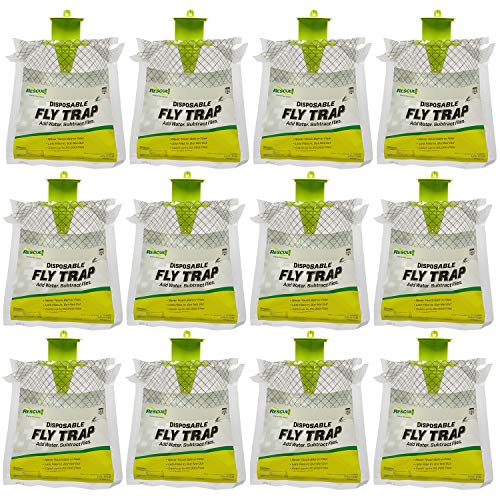
DRAWS FLIES AWAY FROM YOUR SPACE - This outdoor fly trap uses a powerful attractant to lure flies away from patios, trash areas, and outdoor living spaces—helping reduce their presence where you spend time.

Eliminate Flies — This reusable fly trap catches and kills hundreds of common fly species, including house flies, stable flies, bottle flies, flesh flies, horse flies, and many more.
2. Fix Moisture Where Flies Breed

Flies breed in moist organic material, so the most durable fix is letting things dry out.
Last spring I finally traced a persistent swarm to a gutter that clogged every other rain; the leaves had packed into a soggy mat where eggs could hatch undisturbed.
Check the slope so water actually drains; that alone cuts the problem in half before you spend anything on traps.
Leaky spigots and chronically damp mulch beds work the same way.
A slow drip keeps the ground underneath wet enough for larvae, and fresh mulch piled too deep against a foundation stays wet at the bottom even when the top looks dry.
Raking it back to let air in breaks that cycle.
The smaller sources are easy to miss. Birdbaths need fresh water every couple of days, not just for birds.
Saucers under pots collect what drains through, and a low spot in the lawn that holds water two days after rain is enough.
Walk the yard with this in mind: anywhere water sits for more than a day is worth fixing, because drying it out costs nothing and pays double against mosquitoes too.
Recommended Products
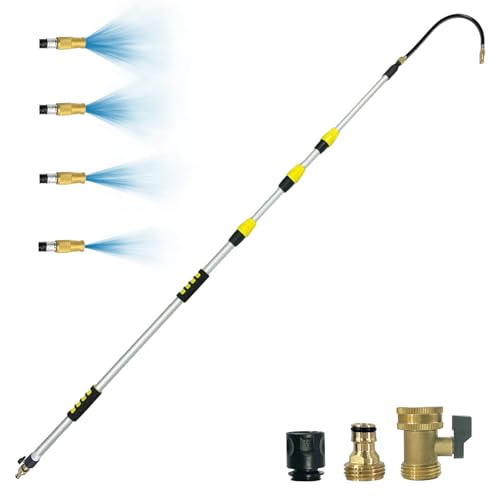
【Telescoping Gutter Wand】Buyplus gutter cleaning tool is made of durable and lightweight aluminum, the length is adjustable from 5FT to 16FT, which allows you to easily reach and clean 2nd story gutters.

TELESCOPING POLE: This wand easily extends from 40 in. to 70 in. making those hard-to-reach rain gutters easy to clean.
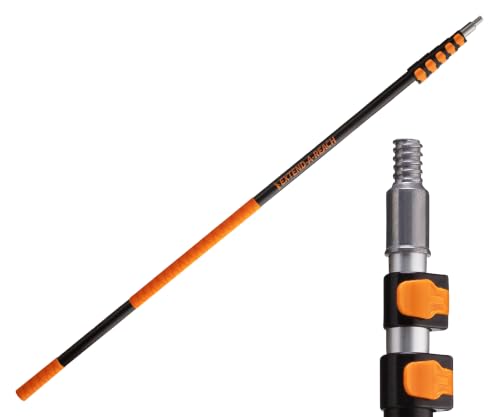
TO INFINITY AND BEYOND » Extending from 5 to 24 feet, the EXTEND-A-REACH retractable telescoping pole will give you up to 30 feet reach when standing, making it easy to accomplish all your hard-to-reach tasks. Adjust the long pole to the length necessary for your specific task: reaching high ceilings, painting walls, dusting light bulbs, cleaning house roofs, washing windows, and more. The EXTEND-A-REACH telescopic pole is the ultimate answer for your daily household tasks.
3. Place Traps 20 to 30 Feet Away

Vinegar traps work for the small flies clustering near food waste or compost. A shallow container of apple cider vinegar with a drop of dish soap, set near the source, breaks the surface tension so they sink.
Sticky traps hang well along fence lines or shed walls where flies already cruise. Baited traps, the ones with a strong fermented lure, pull the heavy hitters: houseflies, blowflies, the ones that loop around your burger.
The placement rule runs counter to instinct. Traps draw flies toward them, not away from you.
A vinegar trap perched on the patio table becomes a beacon, and the evening gets worse, not better. The same bait that lures a fly from forty feet out lures it past your shoulder if you set the trap there.
Position traps 20 to 30 feet from seating, between the fly source and your living space. Trash areas, compost bins, pet zones, the far fence line: these are the intercept points.
Clean the source first, or the trap catches flies all week while the yard still feels full of them.
Recommended Products

Easy Installation $ Detachable Design: The bird bath bowl can be removed and cleaned by unscrewing the wing screws; you do not need to pull the entire stand up to clean the bowl.

STUNNING BIRDBATH: Add charm to your garden or patio with the Alpine Corporation Lotus Birdbath. Standing 33" tall with a natural green lotus design, it provides a safe, elegant spot for birds to drink and bathe while enhancing your outdoor décor beautifully.

ALL THE LOOK OF AGED BRONZE, NONE OF THE WEIGHT: Cast in weather-resistant polyresin with an antiqued bronze finish, it has the shape of the classic garden bird bath at about six pounds, so it moves to a new bed in one trip and comes in for the winter without a second pair of hands.
4. Run Fans on the Patio

Flies are weak fliers, and steady airflow makes landing nearly impossible for them.
A box fan angled across the patio table, a ceiling fan on a covered porch, or an oscillating fan set to sweep the seating area all create enough turbulence to keep them off your food and out of your face.
This is one of the few methods that works the moment you plug it in and leaves nothing to clean up afterward.
I keep a 20-inch box fan on the deck for summer dinners; it moves enough air for a six-person table and costs pennies an hour to run.
Ceiling fans work best when the blades sit low enough to push air at sitting height, not just stir the rafters.
The only real limit is power: extension cords across a lawn are a hazard, so this works best where you have an outdoor outlet or a covered run along the house.
Recommended Products
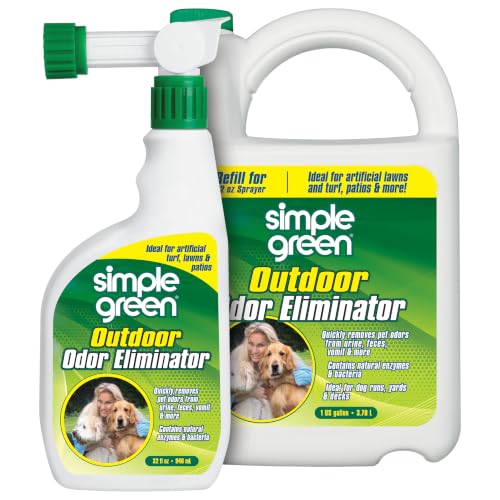
Quickly and effectively neutralizes pet odors left behind by urine, stool, vomit, and other organic soils.

Quickly and effectively neutralizes pet odors left behind by urine, stool, vomit, and other organic soils.
Quickly and effectively neutralizes pet odors left behind by urine, stool, vomit, and other organic soils.
5. Scent Repellents and Their Limits

Citronella, peppermint oil, eucalyptus oil, and pine all produce odors flies avoid, which is why they show up in so many backyard products.
I have lit citronella candles on the patio and watched flies cruise past within arm’s reach once a slight breeze picked up.
The effective radius is only a few feet in still air, and any movement of air scatters the scent before it reaches the insects you want gone.
Oils evaporate off skin or diffusers within an hour or two. Candles burn down and pool wax unevenly outdoors.
Worse, flies adapt. What repelled them Tuesday barely registers by Thursday if they have reason to stay, and food or moisture nearby is reason enough.
These products are not registered by the EPA for efficacy against flies, so claims go untested. A spray or candle can add a little comfort at the table for an evening, but treat it as atmosphere, not control.
Spend a few dollars if you enjoy the smell, but do not expect miracles or build your strategy around it.
Recommended Products
![Outdoor Fly Trap [2 Pack] Fly Traps Outdoor with Dissolvable Non-Toxic Bait - Controls Flies for Patios, Hanging Fly Traps with Tie Included](https://m.media-amazon.com/images/I/51Nj10KN+4L._SL500_.jpg)
FLY CONTROL: Flies are lured into the flytrap and drowned by a superpowerful bait with an irresistible odor that is effective for numerous species, catching up to 20,000 flies!

DRAWS FLIES AWAY FROM YOUR SPACE - This outdoor fly trap uses a powerful attractant to lure flies away from patios, trash areas, and outdoor living spaces—helping reduce their presence where you spend time.
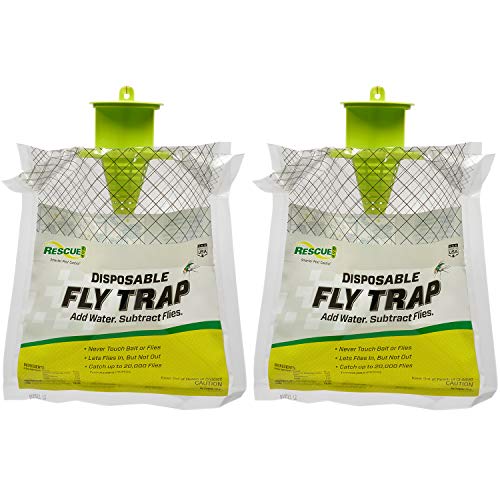
DRAWS FLIES AWAY FROM YOUR SPACE - This outdoor fly trap uses a powerful attractant to lure flies away from patios, trash areas, and outdoor living spaces—helping reduce their presence where you spend time.
6. Skip the Gimmicks

The pennies-in-water bag is the one people ask me about most. A clear zip-top bag filled with water and a few copper coins is supposed to confuse flies with reflected light.
A bag near the patio table is just something you try so you can stop wondering about it. The flies that afternoon did not seem confused in the least.
No reliable evidence supports this trick or the similar ones that circulate, and that matters because time spent filling bags and finding the right sun angle is time not spent on the two things that actually move fly numbers: sanitation and moisture control.
The same goes for hanging bags of cloves, strips of reflective tape, or any other set-it-and-forget-it solution that promises to repel flies through some bit of folk physics.
These gimmicks persist because they feel like doing something without the work of cleaning the grill grease or finding the soggy spot under the downspout where something died. That impulse is understandable.
Acting on it anyway is what keeps the flies around.
Recommended Products

【Telescoping Gutter Wand】Buyplus gutter cleaning tool is made of durable and lightweight aluminum, the length is adjustable from 3FT to 12FT, which allows you to easily reach and clean 2nd story gutters.

All-In-One Gutter Cleaning Tools for Complete Maintenance: TONYINGO gutter cleaning kit includes a 16FT extendable telescopic pole a rigid 360° rotatable duckbill nozzle, shut-off valve, quick adapter, and a full assortment of gaskets and Teflon tape. Clean rain gutters, downspouts, and remove stubborn leaf debris safely from the ground

Package: Include 7 pack 15" high quality pressure washer wands, 30°, 90° and U shape curved wands, 6 different sizes nozzle tips and 10 replacement rings.
7. When to Call for Help

Two to three weeks of consistent effort with no real drop in numbers is the point where I stop treating this as a weekend project.
Persistent swarms usually mean a breeding source I have not found, something buried in a neighbor’s compost, a cracked drain line, or standing water under a deck I never thought to check.
Large numbers are the other red flag. A few dozen flies on a warm afternoon is normal; hundreds clustering on the same railing every morning suggests a population far larger than my traps can pull from.
The species matters here too. House flies, blow flies, and cluster flies each point to different sources, and misidentifying them sends me looking in the wrong place.
Professionals may apply pyrethrin-based insecticides for quick knockdown, but that relief lasts only until the next generation hatches. The chemical does not replace finding and removing the source; it just buys time while the real work happens.
Recommended Products

Flower Planter Base: The wide concave base at the bottom of the bird baths is designed as a planter, you can match your favorite flowers and plants, the planter base looks beautiful and very stable. Birds can safely perch and drink here, which will be a beautiful scenery in your garden

Multifunctional Design: This bird bath features a 2-in-1 multi-purpose design. The top bath bowl can hold fresh water or bird food for birds to drink and forage, while the bottom planter bowl can be planted with flowers and greenery to make your garden more beautiful

3-in-1 Bird Bath & Feeder: The upgraded flower bird bath with three bowls, Large bowl: diameter 10.63 inches, depth 2.96 inches. two small bowls: diameter 6.7 inches, depth 1.78 inches. The overall bird baths with stake height 37.8 inches and it's very suitable for use in your gardens.
Common Attractants to Check First

A backyard that was fine last weekend and suddenly swarms with flies almost always has a new attractant, or an old one that turned worse.
Adult house flies live 15 to 30 days, but a single female lays hundreds of eggs that become breeding adults within about a week in summer heat, so the population explodes before you notice the source.
The five usual culprits are garbage cans and outdoor recycling bins, pet waste, compost piles, outdoor food including pet food, and decaying vegetation like fallen fruit or grass clippings.
Flies travel significant distances and find these by scent, so your yard is not just drawing nearby flies; it is broadcasting to the whole neighborhood’s population.
Tight-fitting lids on garbage cans and regular emptying help, but the real fix is finding which of the five appeared or worsened recently and removing it now.
Recommended Products

Instant Pet Odor Elimination: Nature's Pure Edge Yard Odor Eliminator and Deodorizer instantly neutralizes pet odors in yards on contact

Powerful Natural Odor Eraser: This Chemical-free formula is a pet poop & pee smell destroyer. Spray it on any outdoor surface, and odors will quickly disappear. The only thing left behind will be a fresh eucalyptus scent.

LAWN CARE – Our pet odor eliminator can be sprayed on any outdoor surface to quickly eliminate stool and urine odors, works immediately on contact. Citronella leaves a fresh, clean scent.
Fly Types You Might See

House flies and blow flies cause most backyard trouble, and the same control steps work for both. A blow fly carries a metallic blue or green sheen and shows up wherever something dead or rotting sits.
When a swarm appears indoors out of nowhere, that flash of color usually means a rodent or bird has died inside a wall or crawlspace.
Flesh flies look like oversized house flies with gray racing stripes across the thorax; they gravitate toward pet waste, carcasses, and decaying matter, and some species skip the egg stage entirely, depositing live larvae instead.
Black flies break the pattern entirely. These tiny, hump-backed insects, sometimes called buffalo gnats or turkey gnats, breed in clean, moving water and a single female can lay up to 800 eggs.
A garden stream or bubbling fountain suits them perfectly, which means the sanitation and trapping methods that handle house flies and blow flies will not touch them.
Fans, screens, and repellents help on the patio, but black fly problems often need a professional to confirm the species and point to the exact water source.
Recommended Products

DISCREETLY DRAW FLIES AWAY FROM YOUR HOME. Hang the trap 20 feet from your home to quickly draw flies away making this the best fly trap for outside fly control.

DRAWS FLIES AWAY FROM YOUR SPACE - This outdoor fly trap uses a powerful attractant to lure flies away from patios, trash areas, and outdoor living spaces—helping reduce their presence where you spend time.

DISCREETLY DRAW FLIES AWAY FROM YOUR HOME. Hang the BugBane fly trap bag 20 feet from your home to quickly draw flies away making this the best fly trap for outside fly control.
Seasonal Timing

Fly activity rises with temperature, and that rhythm sets the whole calendar for getting ahead of them. Late spring is when numbers ramp up, and by mid to late summer the pressure peaks.
In warmer southern zones, that stretch can run April into October, while cooler regions see a shorter window. The first cool nights of fall are what finally tapers them.
Early spring is when you have the most control. Flies breed in what you leave lying around, and the population explodes once daily highs stay consistently warm.
A weekend of cleanup before that ramp-up, while adults are still sparse, saves the repeated trap-emptying and fan-running you’ll face once they’re thick. The work is identical; the timing is what makes it feel easy or endless.
Recommended Products

【Carbon Fiber Material】Compared with aluminum, carbon fiber has higher strength and rigidity. Our extension poles are made of carbon fiber material which can providing super high strength and durability, preventing bending and breaking under heavy pressure or harsh environments.

All-in-One TONYINGO Kit for Solar Panel Cleaning & Snow Removal:This versatile kit features a 5-24FT telescopic extendable extension pole with Dual Action Flip-lock & Screw Fixing Design, engineered for daily solar panel dirt cleaning and efficient light snow removal. It’s the ultimate outdoor cleaning tool for high-reach care of windows, RV exteriors, boats, decks, roofs, gutters, car windshields and house exterior walls, meeting all multi-scenario cleaning needs for outside surfaces

【EXTENDABLE REACH】 Telescoping gutter cleaning tool extends up to 12 feet; easily clean second-story gutters from the ground without climbing ladders
Natural Remedies That Help a Little

Basil, mint, and lavender smell pleasant on a patio, and flies do tend to avoid them.
I keep a pot of basil near my seating area mostly for caprese, but the mild repellent effect is a side benefit I notice on still afternoons.
The same goes for lavender and the various mints; their oils, along with eucalyptus, lemongrass, and peppermint, get mixed into water and sprayed around doorways and table edges.
The honest catch: scent effects are weak, short-lived, and limited to a few feet in still air. Vinegar-based sprays follow the same pattern.
Plain vinegar actually attracts flies, which is why it works in traps with dish soap, but as a surface spray it does not hold them back for long.
Six sources I reviewed mention these remedies, yet none rate them as highly effective. Treat them as table-side comfort, not fly control.
The real work stays with sanitation, removing what brings flies in the first place.
Prevention as Routine

Weekly checks for new attractants take maybe ten minutes once you learn the spots. I walk the yard every Saturday morning looking for what changed: a fallen tomato, a bag that tore, clumped grass clippings the mower left behind.
Prevention is just sanitation you keep doing. A single missed pile of pet waste or mildewing leaves can restart the whole problem in seven to ten days, which is how fast flies can breed from egg to adult.
Gutters belong on that same calendar. Clogged ones hold wet decay through summer, exactly the breeding sites the extension bulletins warn about.
I clean mine in late spring and again after the first heavy fall drop; if your yard has mature trees, mid-season checks make sense too.
The rest is just keeping the yard picked up. Tight lids on bins, debris raked, hoses that drip fixed.
Prevention costs almost nothing and it protects every dollar of that $500-800 annual budget. The plants, the patio furniture, the evenings outside, they all lose value if you are swatting through them.
Frequently Asked Questions
Why are there so many flies in my yard suddenly?
A sudden swarm almost always means a new attractant appeared, or an old one got worse. Check garbage cans, pet waste, compost, fallen fruit, or damp grass clippings first.
Flies find these by scent and travel long distances, so your yard can draw flies from the whole neighborhood.
What smells keep flies away outside?
Flies avoid citronella, pine, peppermint, eucalyptus, and lemongrass, but the effect is weak and lasts only an hour or two. In still air, the radius is just a few feet, and any breeze scatters the scent.
Treat these as pleasant atmosphere, not reliable control.
Do outdoor fly traps work?
Yes, but only if you place them 20 to 30 feet from where you sit, between the fly source and your seating area. Traps draw flies toward them, so putting one on the patio table makes the problem worse.
Position them near trash, compost, or pet areas instead.
How long do flies live?
Adult house flies typically live 15 to 30 days. A single female lays 75 to 150 eggs at a time, and in warm weather those eggs become breeding adults in as little as 7 to 10 days, which is why populations explode so fast.
When is fly season?
Fly activity ramps up in late spring and peaks through mid to late summer. In warmer southern regions, pressure can run from April into October; cooler areas see a shorter window.
The first cool nights of fall finally taper them off.
What is a homemade remedy to keep flies away outside?
A shallow container of apple cider vinegar with a drop of dish soap traps small flies near food waste or compost. For a mild repellent, basil, mint, or lavender planted near seating can help on still afternoons.
Neither replaces removing the source that brings flies in.
What can I spray in my yard to get rid of flies?
Vinegar-based sprays and essential oil mixes like peppermint or eucalyptus offer only short-lived, limited relief. Plain vinegar actually attracts flies, which is why it works in traps with dish soap.
Professionals sometimes use pyrethrin-based insecticides for quick knockdown, but the effect lasts only until the next generation hatches.
How can I get rid of so many flies in my lawn?
Start with sanitation and moisture control, the two steps that actually move fly numbers. Pick up pet waste daily, use tight-fitting garbage lids, clean grill grease, and remove fallen fruit.
Then fix any spot where water sits more than a day, clogged gutters, damp mulch, or leaky spigots, because flies breed in moist organic material.
Will coffee grounds keep flies away?
No reliable evidence supports coffee grounds as a fly repellent. Time spent on unproven tricks is time not spent on sanitation and moisture control, the two methods that actually reduce fly populations.