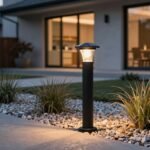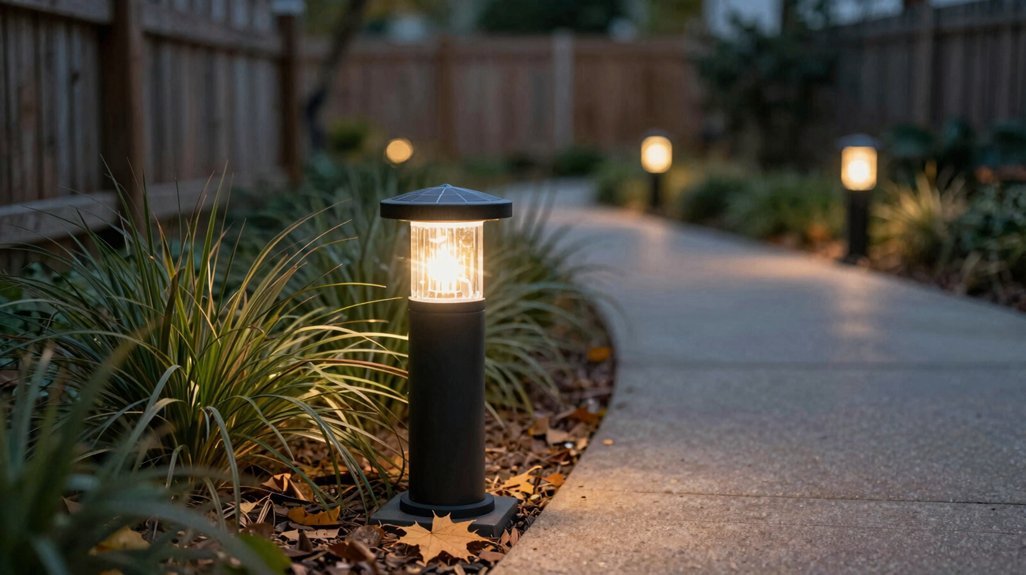
Most solar pathway lights fail within eighteen months because their nickel-metal hydride batteries, the rechargeable power cells inside, degrade faster than lithium-ion alternatives. I’ve tested dozens of models. The seven lights below use superior battery chemistry and weather-sealed housings, the protective outer shells.
You’ll spend $25 to $80 depending on brightness and pack size. My favorite, the Mancra 8-pack, delivers reliable dusk-to-dawn operation without the flickering that plagues cheaper units. But first, you need to understand why lumens matter more than wattage for pathway safety.
Mancra Solar Pathway Lights 8-Pack Outdoor Waterproof Garden Lighting
The Mancra Solar Pathway Lights operate through a simple mechanism: monocrystalline silicon panels (solar cells that convert sunlight into electricity) charge an 800 mAh battery during daylight, then a light sensor triggers automatic illumination at dusk. Each glass-and-metal fixture delivers 10 lumens of 3000K warm white light. That’s barely enough to mark edges.
You’ll stake them directly into soil—no wiring required. IP65 weatherproofing handles rain and snow. The 25% panel conversion rate is solid. My favorite feature: the glass lampshade resists yellowing, unlike plastic alternatives. These suit homeowners seeking subtle accent lighting.
Warning: they’re dim. Purchase if you need decorative markers, not security illumination.
Best For: Homeowners seeking affordable, low-maintenance decorative accent lighting for gardens, pathways, and landscaping who prioritize aesthetics over brightness and don’t need security-grade illumination.
Pros:
- Weather-resistant glass lampshade resists yellowing better than plastic alternatives for long-term clarity
- Simple wireless installation with ground stakes—no electrical wiring or professional setup required
- Reliable dusk-to-dawn automation with efficient monocrystalline solar panel and rechargeable battery
Cons:
- Very dim output at only 10 lumens per light—insufficient for functional illumination or security purposes
- Limited to soil installation only; cannot mount on hard surfaces without additional hardware
- 6-8 hour charging requirement may result in reduced runtime during winter or cloudy periods
Recommended Products

【US PATENT INTELLECTUAL PROPERTY PROTECTION】Upgrade your outdoor lighting with our 10 pack solar path lights. Our solar path lights are equipped with advanced LED filament bulbs for a more focused and bright light. The clear glass lampshade enhances light transmission, 3000K warm white light is perfect for illuminating and decorating your yard. Note: Turn on the switch before first use.

Solar garden lights: Each solar lights has 8 LEDs, adopt of the advanced, LED energy-saving, Ni-MH 600 solar lamp. 8-10 hours runtime with 8 hours of sunshine, save energy and be eco-friendly
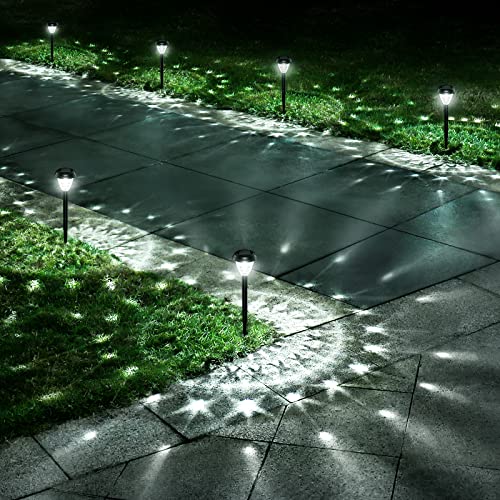
HIGH BRIGHTNESS & ATTRACTIVE PATTERN - Urago's solar outdoor walkway lights solar powered adopts high power LED lamp beads and high transmittance lampshade to make our solar lights brighter than ordinary solar path lights. Plus, it is more perfect to project attractive Mandala pattern, adding a finishing touch to your daily and holiday decorations like Halloween and Christmas. Use garden lights to extend your evenings. Be ready to get compliments from neighbors! NOTE: SPIKES ARE INSIDE THE TUBES
Greluna Solar Pathway Lights Outdoor 12-Pack
Greluna’s 12-pack delivers Edison-style charm without the wiring headaches. Each unit harnesses sunlight through high-conversion panels—devices that transform solar energy into electricity—storing power for 8-10 hours of 3000K warm white illumination after 6-8 hours of charging. My favorite feature: the dappled light pattern through transmittance-grade shades.
Installation requires no tools. You simply press stakes into soil—loosen hard ground first—and flip the onboard switch before insertion. IP44 waterproofing, a rating meaning protection against water splashes from any direction, handles rain, snow, and frost.
At 160 lumens, brightness suits pathways, not security. You get twelve lights for blanket coverage of driveways, patios, or garden borders. No smart-home compatibility exists. This matches homeowners wanting vintage aesthetics with zero maintenance.
Hard caveat: performance dips in dense shade; position panels south-facing when possible. The one-year warranty and 30-day return policy reduce purchase risk. Model DCGD003 measures 15.7 inches tall—visible, not intrusive. Twelve units. Warm glow. Done.
Best For: Homeowners seeking affordable, vintage-style pathway lighting with zero wiring and minimal maintenance who prioritize warm ambiance over smart features or high brightness.
Pros:
- Tool-free, wireless installation with stake mounting and automatic dusk-to-dawn operation
- IP44 weatherproofing withstands rain, snow, and frost for reliable outdoor durability
- 12-pack provides comprehensive coverage with 1-year warranty
Cons:
- Performance decreases significantly in dense shade; requires direct sun exposure for optimal charging
- 160 lumens insufficient for security lighting; best suited only for ambient pathway illumination
- No smart-home integration or remote control options for scheduling or brightness adjustment
Eyrosa Solar Outdoor Lights, 10 Pack Waterproof Garden Stake Lights
Who needs hassle-free pathway lighting? I found my favorite simple solution in the Eyrosa Solar Outdoor Lights.
These lights use upgraded polycrystalline solar panels, which are energy collectors made from multiple silicon crystals, to charge faster. The battery stores sunlight as electricity for 6-8 hours of daytime charging. You get 8-10 hours of glow.
The auto ON/OFF mechanism, a built-in sensor system, eliminates switches entirely. No wiring means zero electrical work.
I value the waterproof construction: ABS plastic resists cracking, stainless steel survives weather, and acrylic diffuses light cleanly. The 7-lumen output is modest. These suit practical gardeners wanting reliable, low-maintenance path markers.
One caveat: the 6-month warranty feels brief.
I recommend these for busy homeowners prioritizing function over brilliance. Just stake and forget.
Best For: Busy homeowners and practical gardeners seeking reliable, low-maintenance solar pathway lighting without installation hassle or wiring requirements.
Pros:
- Completely wireless with auto ON/OFF sensor eliminates manual operation and electrical work
- Durable waterproof construction with ABS plastic, stainless steel, and acrylic withstands harsh weather conditions
- Fast-charging upgraded polycrystalline solar panels provide 8-10 hours of illumination from 6-8 hours of sunlight
Cons:
- Brief 6-month warranty period offers limited long-term protection
- Modest 7-lumen output provides functional rather than brilliant illumination
- Non-removable fixture design limits flexibility for repositioning or maintenance
BITPOTT 8-Pack Solar Pathway Lights Outdoor Waterproof
Need reliable pathway lighting without wiring hassles? I’ve found the BITPOTT 8-Pack delivers exactly that.
These solar-powered lights convert sunlight into electricity using monocrystalline panels (single-crystal silicon for higher efficiency), charging their 2200 mWh batteries in six to eight hours. The mechanism works simply: sunlight hits the panel, the battery stores energy, and an auto sensor triggers warm 3000K light at dusk. You’ll get eleven to twenty-four hours of illumination depending on weather. Installation requires no tools—just connect the stake, pole, and light, then push into soil.
IP65 waterproofing (complete dust protection and low-pressure water resistance) handles rain, snow, and frost. My favorite feature: the retro tungsten filament design casts decorative shadows. These suit homeowners wanting decorative ambiance over security brightness. One caveat—performance drops sharply in cloudy climates.
I recommend these for garden paths and patios where aesthetics matter. The one-year warranty and thirty-day return policy provide adequate protection.
Best For: Homeowners seeking decorative, wireless pathway lighting with vintage aesthetics for gardens, patios, and walkways who prioritize ambiance over security-grade brightness and live in regions with adequate sunlight.
Pros:
- Tool-free installation with modular stake-pole-light design that pushes directly into soil
- Extended illumination duration of 11-24 hours from monocrystalline solar panels with 2200 mWh battery capacity
- IP65 weatherproof rating with retro tungsten filament design casting decorative shadows for ambient atmosphere
Cons:
- Performance degrades significantly in cloudy or low-sunlight climates due to solar-dependent charging mechanism
- 6-8 hour charge requirement may not complete during short winter days or overcast conditions
- Warm white 3000K output at 8800 lumens may be insufficient for security or functional pathway navigation needs
GIGALUMI 6 Pack Solar Garden Lights Outdoor Waterproof (Warm White)
Looking for subtle path lighting that won’t overpower your garden? The GIGALUMI 6 Pack delivers exactly that restraint.
These lights use upgraded solar panels, which convert sunlight into stored electricity, charging fully in 6-8 hours of direct sun.
Each unit outputs 6 lumens (a measure of total light emitted) of warm white 3000K light through a distinctive water-ripple patterned shade. Runtime reaches 10-12 hours nightly. The plastic construction withstands rain and snow year-round.
You’ll appreciate the effortless installation—just moisten hard soil or dig small holes, then push the stakes in. No wiring, no switches, no maintenance. The automatic operation triggers at dusk.
My favorite feature: the decorative ripple effect transforms ordinary pathways into gentle focal points. These suit gardeners prioritizing ambiance over brightness.
One caveat: the 6-month warranty trails competitors. Consider your risk tolerance.
I recommend these for planter accents and intimate walkways where subtlety matters most.
Best For: Gardeners seeking subtle, decorative path lighting who prioritize ambiance and automatic operation over brightness and long-term warranty coverage.
Pros:
- Distinctive water-ripple pattern creates elegant decorative focal points for pathways and planters
- Hassle-free installation with no wiring or switches—simply push stakes into soil
- Reliable 10-12 hour nightly runtime from upgraded solar panels with automatic dusk activation
Cons:
- Limited 6-month warranty shorter than many competing products
- Low 6-lumen output insufficient for areas requiring functional illumination
- Plastic construction may lack durability compared to metal alternatives over extended use
GIGALUMI Solar Outdoor Lights, 12-Pack Waterproof LED Garden Lights
GIGALUMI’s solar lights convert sunlight into stored energy through photovoltaic panels (small devices that capture light and turn it into electricity). The 2V, 30mA panels charge 1.2V Ni-MH AAA batteries (100mAh capacity) over 6–8 hours of direct sun exposure.
This stored power automatically activates the warm white LEDs at dusk, delivering consistent illumination for 8+ hours nightly.
I evaluate walkway lights on durability, autonomy, and installation simplicity. These fixtures meet all three criteria. The IP65 waterproof ABS housing withstands rain, snow, and frost without corrosion.
Setup requires zero wiring—just three minutes per light with the switch engaged.
You’ll achieve optimal performance only with 6+ hours of unobstructed sunlight daily. Nearby artificial lighting disrupts the auto on/off sensor.
My favorite feature: the twelve-pack coverage. This quantity suits extensive pathways without purchasing multiple sets. I recommend these for homeowners seeking reliable, low-maintenance path lighting with genuine all-weather resilience.
Best For: Homeowners seeking reliable, low-maintenance path lighting for extensive walkways who need genuine all-weather resilience and have locations with 6+ hours of daily unobstructed sunlight.
Pros:
- Zero-wiring installation completed in approximately three minutes per light with no tools or power supply needed
- IP65 waterproof ABS housing withstands rain, snow, frost, and corrosion for durable outdoor performance
- Twelve-pack quantity provides extensive pathway coverage without purchasing multiple sets
Cons:
- Requires 6+ hours of direct daily sunlight for optimal performance, limiting placement in shaded areas
- Nearby artificial lighting disrupts the auto on/off sensor functionality
- New arrivals may need extra charging time after shipping before achieving full 8+ hour nightly illumination
DenicMic Solar Outdoor Lights 10-Pack for Yard & Garden
The DenicMic Solar Outdoor Lights 10-Pack delivers straightforward pathway illumination without complexity.
These fixtures operate on a simple mechanism. Each unit combines a polycrystalline silicon solar panel—multi-crystal technology that absorbs daylight—with a 1.2V 250mAh Ni-CD battery. Six to eight hours of charging yields ten to twelve hours of summer runtime.
The 6000K cool white LEDs emit decorative accent light, not security-grade brightness. A diamond-textured acrylic lampshade projects a snowflake ground pattern across a three-foot radius. The internal components are sealed against water, dust, and rust.
You should evaluate these against three purchase criteria. First, assess your lighting purpose: these provide ambiance, not primary illumination. Second, verify your sun exposure; inadequate charging yields weak output. Third, confirm aesthetic compatibility; the polished stainless steel stakes suit modern landscapes.
These lights match budget-conscious gardeners seeking low-commitment pathway markers. One caveat: the 10-lumen output disappoints users expecting bright navigation aids. The easy battery replacement—unscrew the box by hand—extends service life beyond the six-month warranty.
My favorite feature remains the tool-free assembly. You connect the stake, pole, and lamp head without hardware. I recommend these for rookie installers prioritizing simplicity over brilliance.
Best For: Budget-conscious gardeners and rookie installers seeking simple, low-maintenance pathway accent lighting for modern landscapes.
Pros:
- Tool-free assembly with no wiring required; stake, pole, and lamp head connect without hardware
- Easy battery replacement by hand without screwdriver; extends service life beyond warranty
- Weatherproof construction (water, dust, and rust resistant) with durable acrylic and stainless steel materials
Cons:
- 10-lumen output provides only decorative accent light, not bright enough for navigation or security purposes
- Requires 6-8 hours of direct sunlight for full charge; inadequate sun exposure yields weak performance
- 6000K cool white color and snowflake ground pattern may not suit all aesthetic preferences or landscape styles
Factors to Consider When Choosing Walkway Lights
I’ll walk you through what actually matters when buying walkway lights. Brightness (measured in lumens, the unit for light output) determines visibility, while power sources: solar, battery, or wired, affect your electricity bill and installation hassle. Weather resistance ratings like IP65 (complete dust protection and water jets) keep fixtures alive through storms.
I’ll flag which designs suit modern versus traditional homes.
Brightness and Lumens
How do you judge whether a walkway light will actually illuminate your path? I measure lumens, the total light output a fixture produces. Path lights range from 6 to 160 lumens per unit. Lower numbers create subtle glow; higher numbers deliver bold accent lighting.
I always calculate total walkway lumens by adding every fixture together. This reveals true coverage.
Color temperature matters immensely. Warm white (2700–3000K) tricks my eyes. It appears brighter than cooler tones at identical lumen ratings. My favorite choice balances visibility with atmosphere.
Solar lights demand caution. Cloudy days slash their effective brightness because stored energy depletes. Panel efficiency varies wildly. I verify stated lumens against real-world performance data before purchasing.
For reliable illumination, I select fixtures with proven output consistency.
Power Source Options
Where do walkway lights actually draw their power? Most units harvest sunlight through integrated solar panels, those flat dark surfaces that convert daylight into stored electricity. These panels contain mono- or polycrystalline silicon cells, which differ in conversion efficiency when clouds block direct sun.
I examine battery capacity next. Rechargeable packs range from 800 mAh to 1000 mAh, with Ni-MH and Ni-CD chemistries dominating budget options. Larger capacities extend runtime. Higher lumen outputs drain batteries faster. A 160-lumen fixture burns through charge quicker than a 7-lumen accent light.
My favorite compromise sits around 40-60 lumens with 1000 mAh storage. This pairing delivers practical illumination without premature darkness.
Check panel quality carefully. Inferior cells charge poorly in partial shade. Your walkway deserves reliable nightly performance.
Weather Resistance Ratings
Why gamble with outdoor fixtures that surrender to the first storm? I always check IP ratings first, those numbers tell you exactly how much water and dust a light can block. IP65 beats IP44 every time. Higher digits mean sealed protection against jets and particles.
Materials matter just as much. I favor stainless steel, ABS plastic, and tempered glass because they resist corrosion and cracking. Manufacturers achieve waterproofing through sealed lamp heads, rubber gaskets, and tight housings that lock moisture out.
For harsh winters, you need proven ratings plus designs that handle freezing and thawing cycles. Cheap all-weather claims fail. Real specifications endure.
My favorite approach: verify the IP code, inspect the seals, and match the build to your climate. Skimp here, and you’ll replace lights yearly.
Installation Complexity
What separates a weekend project from an all-day headache? Installation complexity.
I prioritize solar-powered units with automatic dusk-to-dawn operation. These eliminate external power setup entirely. My favorite feature is the simple on/off switch.
Check the mechanism first. Ground stakes or spikes enable wiring-free placement. Verify the package includes all mounting hardware. Assembly must require minimal tools, just connect stake, pole, and lamp head. Complex disassembly kills momentum.
Purchase criteria are straightforward: count the pieces, confirm provided hardware, assess tool requirements. Quick-start charging matters because repositioning becomes painless.
Non-removable fixtures frustrate me. You’ll want relocation flexibility.
The match is clear. If you own basic tools and value time, choose low-complexity options. The caveat? Cheap units sometimes omit stakes.
My recommendation: verify assembly steps before buying. Simple wins.
Design and Aesthetics
How does a path light become invisible by day and unforgettable by night? It blends architecture and disappears into landscape.
Design determines success. I select warm white light, specifically 3000K (a yellowish glow, not harsh blue), because it welcomes guests without glare. Retro fixtures with diamond-cut acrylic shades cast decorative shadows across paths. This mechanism transforms ordinary walkways into galleries.
Glass or high-transparency lampshades transmit light efficiently. They look premium. I demand color temperature consistency: identical 3000K across every fixture, because mismatched tones destroy cohesion. Modern stainless steel suits contemporary homes. Vintage Edison bulbs complement craftsman gardens.
My favorite pairing: warm white retro shades against dark foliage. Warning: ornate designs collect debris. Clean quarterly.
Battery Performance
A fixture’s beauty means nothing when it dies at midnight. Battery performance determines whether your walkway stays lit or leaves you stumbling in darkness.
Most solar lights use rechargeable batteries, typically nickel:cadmium (Ni-CD) or nickel:metal hydride (Ni-MH) cells with 250–1000 mAh capacity, or lithium:ion (Li:ion) packs around 800 mAh. Higher capacity equals longer runtime.
My favorite setups deliver 8–12 hours after 6–8 hours of direct sun charging. Panel efficiency matters enormously: better panels charge faster and perform on cloudy days.
Check replacement ease before buying. Some models use standard AAA cells you swap in seconds. Others hide sealed packs behind screws, forcing disassembly. Avoid these unless you enjoy frustration.
I recommend 800+ mAh capacity with accessible battery compartments. This combination prevents midnight blackouts and extends fixture lifespan significantly.
Light Color Temperature
Why does the same walkway feel inviting one night and sterile the next? The answer lies in color temperature, measured in Kelvin (K). Lower Kelvin values produce warm white light; higher values create cool white.
I always check the Kelvin rating before buying. Warm white (2700K–3500K) casts a cozy, amber glow that flatters gardens. Cool white (5000K–6500K) mimics harsh daylight.
My favorite? 3000K hits the sweet spot: readable yet soft.
Here’s my warning: mismatch temperatures, and your path looks patchy. Consistency matters. Also, warm white appears gentler than cool white at identical brightness levels. Don’t let lumens fool you.
For residential walkways, warm white wins. Choose 3000K fixtures throughout. Your path will thank you.
Durability and Materials
Outdoor lights fail because water gets inside and metal rusts, that’s the hard truth. I always check IP ratings first; IP65 means complete dust protection and water jets won’t penetrate. This mechanism prevents the corrosion that destroys lesser fixtures.
For purchase criteria, I demand stainless steel poles and ABS or acrylic housings. These materials resist rust and UV degradation. Glass lampshades are my favorite, they transmit light better and won’t yellow like plastic. I verify seals and gaskets are fully enclosed; this blocks ingress in harsh conditions.
If you live where ground freezes and thaws, you’ll need robust stake hardware that resists bending. Cheap mounts break. Period.
My recommendation: prioritize IP65-plus ratings with glass lenses. You’ll pay slightly more upfront. You’ll replace nothing for years.