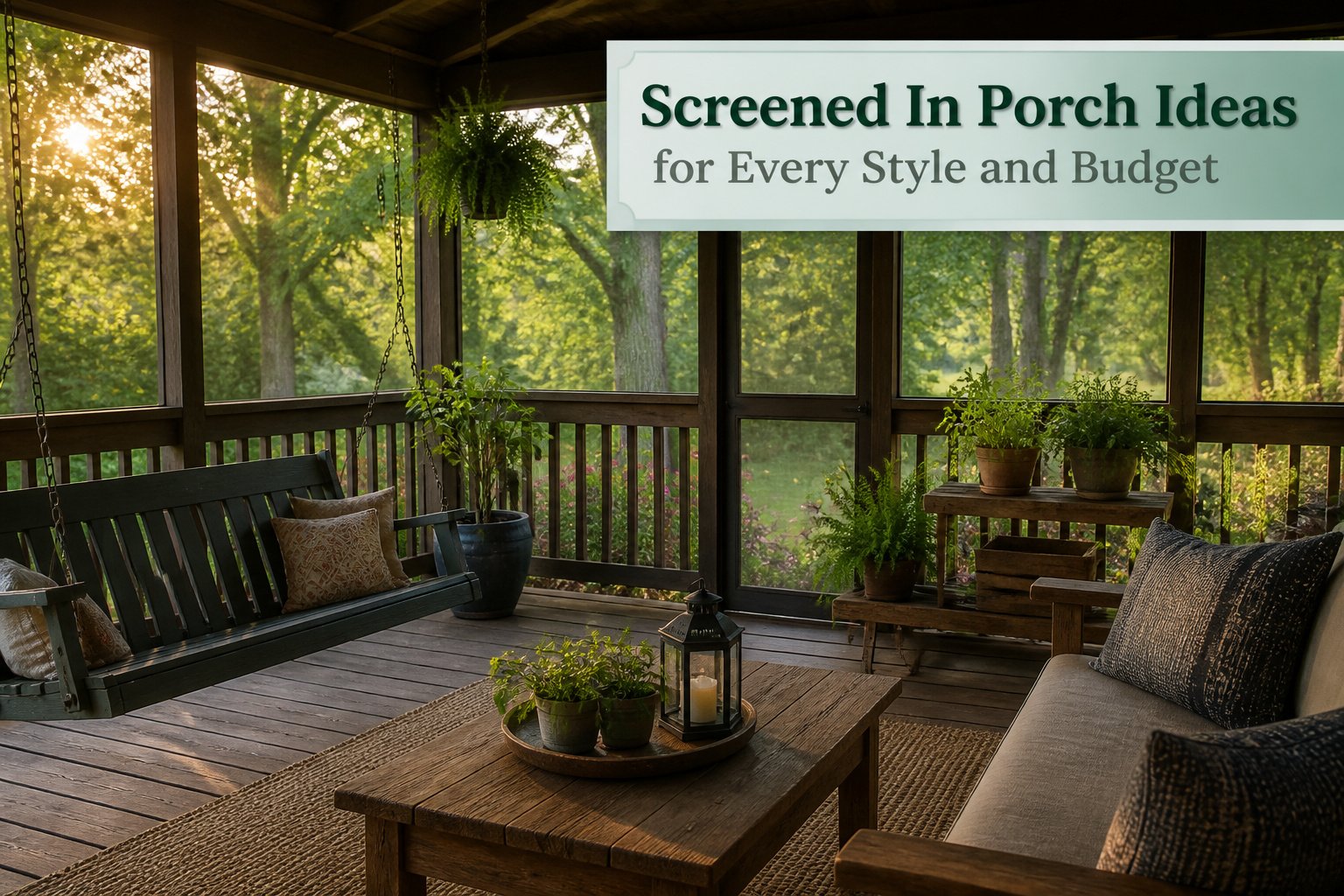
The right screened in porch idea depends on how many months you actually need the space to work, not how pretty it looks in a photograph.
A three-season porch with sliding acrylic panels stretches from April to November in zone 6 for far less than a fully conditioned four-season build, which starts around $35,000 and climbs fast.
My own phased wrap-around went up in two parts precisely because screening the full footprint at once would have emptied the budget before the first chair sat down.
1. Coastal Screened Porch

A coastal screened porch lives or dies on its ability to handle salt air without turning shabby in a single season.
White or pale blue palettes read fresh against gray skies, and rope accents or shiplap-style walls carry the nautical thread without drifting into theme-park territory.
Natural fibers help, but Sunbrella fabric is the fabric that actually survives full sun and salt spray; my first attempt with navy cushions faded to a mottled purple by August, and the replacement in a lighter sand tone still looks presentable three years later.
The lighter color was the fix, not just the tougher weave. Maryland’s Chesapeake Bay area proves this works in practice, though the same palette needs restraint anywhere else to keep from looking like a seafood restaurant.
Breathable light colors for summer keep the space from feeling boxed in, and swapping to bolder patterns in winter prevents the porch from going dormant with the garden.
Recommended Products

No More Messy Stapling and Screen Spline – Say goodbye to the hassle of messy stapling and cumbersome screen spline. The SCREENEZE screen system offers a revolutionary way to easily install your screening for porches or patios. With its innovative cap and base design, this screen porch kit effortlessly snaps together to secure and tighten your screen, ensuring a smooth and flawless finish every time.

PERFECT FOR: Covered patios, screened porches, lanai enclosures
No More Messy Stapling and Screen Spline – Say goodbye to the hassle of messy stapling and cumbersome screen spline. The SCREENEZE screen system offers a revolutionary way to easily install your screening for porches or patios. With its innovative cap and base design, this screen porch kit effortlessly snaps together to secure and tighten your screen, ensuring a smooth and flawless finish every time.
2. Rustic Screened Porch

Exposed wooden beams left in their raw state, warm stain colors that deepen over a few seasons, and natural textures that age into the surrounding trees give a rustic screened porch its staying power.
Reclaimed wood accents work here, though the difference from a farmhouse look comes down to finish: rougher, more weathered boards with little or no paint, letting the grain and the wear show through.
Stone or rough timber posts carry the weight instead of smooth columns, and riverstone features at the base or along a knee wall ground the structure in something that feels found rather than built.
Log furniture inside extends the same logic, adding the depth and interest of a cabin without drifting into themed territory.
The stain color matters more than most people expect; a warm tone that reads orange-red in the can will settle into something quieter after a year of sun and rain, so test it on a scrap of the actual beam and let it weather for a month before committing.
Recommended Products

IMPORTANT BEFORE YOU BUY: Click on color swatch for most accurate pillow fabric.

Fade Resistant, Stain Resistant, and Weather Resistant: These coastal dining chair cushions are crafted with next generation indoor outdoor fabric tough enough to withstand the elements but soft enough to use indoors; Resists fading up to 1000 hours of direct sunlight

IMPORTANT BEFORE YOU BUY: Click on color swatch for most accurate pillow fabric.
3. Modern Screened Porch

Clean lines and minimal ornament define the modern screened porch, and the frame does most of the visual work. I went with black metal, charcoal powder coat specifically, in thin profiles that hold large screen panels with barely visible mullions.
The effect is more window wall than cage.
Composite decking in gray tones keeps the palette quiet underneath. No grain pattern fighting the geometry; the boards read almost like poured concrete but stay forgiving underfoot.
For railings inside the screen, I first tried cable for that same airy line. Cable sags in summer heat, enough that I was re-tensioning twice a season.
Switched to flat bar steel, three-quarter inch by quarter inch, vertical every four feet. Same visual lightness, zero maintenance, and it actually reads cleaner against the black frame.
The whole assembly feels intentional rather than decorated, which is the point of the style.
Recommended Products

【Rustic Natural Wood & Carbonized Finish】This outdoor garden bench is crafted using solid fir wood known for its warmth, toughness, durability and natural beautiful texture. It is free of burrs to avoid injuring the skin and has a natural log fragrance. With a carbonized surface treatment that reduces the risk of bench chair warping and cracking and enhances the stability and durability of the wood, prolonging its service life.

Product 1: CUSHIONED SOFA: Looking for something more refined in your outdoor space? This sofa fulfills with comfy cushions and eucalyptus wood that's protected to weather the elements with ease
4. Plant-Filled Screened Porch

A screened porch can become a greenhouse without the glass.
Hanging ferns spill down from corners, potted citrus trees hold the center, and climbing jasmine or clematis trained on a trellis against the screen wall blur the line between inside and out.
Humidity that moves rather than settles keeps the plants healthy. Enclosed screens trap moisture exactly where still air sits, and I learned that the hard way.
A ceiling-mounted staghorn fern I loved turned to rot in one humid summer, the fronds blackening from the center out where no breeze reached.
Now I keep a small circulation fan running on low during the wet months, the kind sold for greenhouses, and I water at the soil line rather than misting overhead.
Direct spray on leaves in still air is asking for mildew. Ferns and citrus both want consistent moisture in the root zone, not a daily shower on their foliage.
Position the fan to skim across the tops of pots, not blast one plant, and the air stays fresh enough for sitting even when the humidity climbs past what the rest of the house tolerates.
Recommended Products

Tempered Glass Panels for Patio, Porch, Enclosure Windows – Don’t spend your time or money replacing entire broken or dated glass. Our glass panels are the perfect solution for patio, porch, or enclosure glass replacement. This way, you preserve the original structure, while upgrading its appearance and functionality with replacement glass panels that fit.

Continuous Cap Roll – The Screen Tight system cap is now available in continuous rolls in easy-to-handle project packs. Trim to your exact dimensions and eliminate waste - the perfect fit for your next screening for porches project! Each cap is 96 inches long, offering the flexibility to cover expansive porch enclosure areas. The cap works effortlessly with both Screen Tight and MeshGuard systems, offering versatility that’s tailored to your unique project needs.

Tempered Glass Panels for Patio, Porch, Enclosure Windows – Don’t spend your time or money replacing entire broken or dated glass. Our glass panels are the perfect solution for patio, porch, or enclosure glass replacement and can serve as storm windows. This way, you preserve the original structure, while upgrading its appearance and functionality with replacement glass panels that fit.
5. Vintage Screened Porch

A vintage screened porch lives or dies on whether you commit to one decade and stay there. I usually set the clock at the 1920s or 1930s, when American porches still functioned as outdoor rooms rather than afterthoughts.
A painted wood floor in a checker or striped pattern grounds the whole look.
Gray and white diamonds will scratch and ding, but the wear itself becomes part of the story; touch up the paint every few years after a good scrub-down.
Above it, a beadboard ceiling catches the light the way flat drywall never does.
The porch swing hangs from chain hangers, not rope, because the hardware matters as much as the seat.
Flea market finds fill the corners: a glass table wiped down and ready for another summer, wood chairs recovered in navy, white, and kelly green fabric that can be changed out when the mood shifts.
One woman I read about has re-covered hers five times in twenty years. Sturdy frames last; fabric refreshes.
The trap is making it feel like a museum. Cohesion comes from the palette and the era, not from matching sets.
Reclaimed wood accents help, but only if they read as furniture someone actually used, not stage dressing. Keep the pieces working, keep the colors speaking to each other, and the porch feels lived-in rather than frozen.
Recommended Products

IMPORTANT BEFORE YOU BUY: Click on color swatch for most accurate pillow fabric.
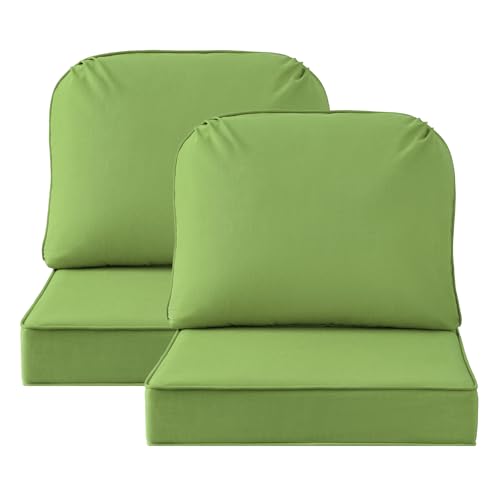
IMPORTANT BEFORE YOU BUY: Click on color swatch for most accurate pillow fabric.

IMPORTANT BEFORE YOU BUY: Click on color swatch for most accurate pillow fabric.
6. Destination-Themed Screened Porch

A single strong piece does more than a roomful of hints.
I learned this the hard way with a Greek-island scheme that collapsed under its own weight: three blue pots, two striped throws, a ceramic donkey, and suddenly the porch looked like a gift-shop clearance rack.
The blue-and-white palette was sound, but piling on regional souvenirs turned theme into parody.
One bold element carries the whole idea. A Moroccan zellige tile on a side table, a Balinese daybed in untreated teak, or a single wall painted Santorini blue gives the eye somewhere to land.
Everything else stays quiet: natural linen, pale wood, maybe a terracotta planter if the tone needs warming. The tile or the daybed does the traveling; the rest of the room just agrees.
Mediterranean builds easiest on porches that already have warm light and some raw texture, like concrete floors or cedar framing.
Tropical reads greener and heavier, so it needs air: a rattan pendant, yes, but pair it with pale walls and open weave so the space still breathes. The mistake is always the same, adding until the room shouts.
Pick your one piece, build outward in neutrals, and stop while it still feels like a porch, not a departure lounge.
7. Traditional Screened Porch

White painted wood with a gabled or shed roof, simple square columns, and a wood floor still forms the backbone of most screened porches in the Midwest and South.
A ceiling fan overhead moves the air enough to make July evenings tolerable. The form is so reliable that when my parents’ 1980s porch rotted out, they rebuilt it identical in 2019.
Basic construction runs $10,000–$25,000, which lands in the middle of the range for screened-in additions. The finish stays matte or semi-gloss, never high-gloss, because porch paint takes a beating from pollen and humidity.
If the budget forces a choice, spend on the roof pitch and the screen framing; the floor can be upgraded later when the boards check.
Recommended Products

【Durable Aluminum Screen Mesh Material】Made from durable aluminum material, this window screen mesh is designed for window and door screen repair and replacement around the home.
Tempered Glass Panels for Patio, Porch, Enclosure Windows – Don’t spend your time or money replacing entire broken or dated glass. Our glass panels are the perfect solution for patio, porch, or enclosure glass replacement and can serve as storm windows. This way, you preserve the original structure, while upgrading its appearance and functionality with replacement glass panels that fit.

Complete Porch Screening System – The Mini Track screen porch kit includes 8-ft aluminum track bases, screws, screen spline, and installation instructions. Just add your choice of screen to this DIY screen frame kit and you’ll be ready to install your porch or windmesh ow screen. This all-in-one porch screen kit simplifies the DIY process, giving you professional results with ease.
8. Three-Season Porch

Removable acrylic panels that slide over the existing screen turn a basic porch into something usable from early spring through late fall.
The mesh stays in place year-round; the panels simply block wind and light rain when the season calls for it. No heating system, no insulated glass, no price tag that drifts toward four-season territory.
I run mine from April into November in zone 6. The panels go up in October once night temperatures drop into the low forties, and they come back down in May when the evenings stay reliably above fifty.
Installation takes an afternoon with a helper; the tracks mount to the existing frame and the panels hang from the top, sliding sideways on a simple roller system.
The limitation is real and worth naming. A hard freeze still drives you indoors.
Snow load on acrylic is not something you want to test. But for the months between furnace season and air conditioning season, the porch earns its keep as actual living space rather than a bug-free viewing platform.
Cost stays closer to a standard screened build than to a fully conditioned room, which matters when the annual landscape budget is already covering raised beds and a patio set.
Recommended Products

Premium Sunbrella Performance Fabric – Indoor/Outdoor Bench Cushion Made with premium Sunbrella material that resists fading and stands up to the elements. Perfect for high-traffic areas and outdoor exposure—keeps its vibrant color season after season

PREMIUM FABRIC – These cushions are crafted from Sunbrella's top-tier performance fabric. Woven from 100% solution-dyed acrylic, Sunbrella fabric provides unparalleled colorfastness to provide a product with water and fade-resistance to last for years. Sunbrella fabrics include a five-year limited warranty.

Premium Sunbrella Fabric: Crafted with all-weather 100% Sunbrella performance fabric, these waterproof Sunbrella cushion covers with inserts are UV and stain resistant, making them durable, long-lasting and practical, ideal for high back chair cushions. These patio chair cushions are made with a recyclable Sunbrella performance fabric cover, giving these patio cushions for outdoor furniture sustainable comfort and lasting quality
9. Four-Season Porch

A four-season porch, sometimes called a sunroom, sits at the far end of the screened in porch ideas spectrum. It comes with insulated walls, double-pane windows, and its own heating and cooling, sometimes tied straight into the house HVAC.
The windows open, but not with the wide swing of a summer screen; the space is built for January as much as July.
The budget starts where a three-season porch tops out and climbs fast from there. I priced one out at $35,000 and chose three-season instead, and that was a few years back.
For a household gardener working a small yard on $500–$800 a year, the math rarely works. The plants stay outside in their zone, and the porch stays a porch, not a second living room with a plant budget attached.
10. Wrap-Around Porch

A wrap-around screened porch gives you two or three distinct outdoor rooms in one build, each with its own light and its own use.
I put a small table on the east side for coffee and the paper, then a deeper seating area on the south where the afternoon sun lingers.
The corner between them, where the walls meet, catches both morning and evening light; that is where I spend most of my time from March through October.
Screening a full wrap gets expensive fast, so I phased mine. The south side went up first, where mosquitoes collected in the shade of a neighbor’s oak and made the old open porch unusable after four o’clock.
Two years later, I added the east wing once I had saved enough to match the frame style and the screen mesh.
The seam where the two phases meet is visible if you look for it, but no guest has ever noticed.
Recommended Products
PERFECT FOR: Covered patios, screened porches, lanai enclosures CUSTOMIZABLE SIZES: With 5 size options, this pet door is perfect for every size of cat and dog....
11. Detached Screened Porch

A detached screened porch sits on its own in the yard or garden, reached by a path rather than a door off the house.
That separation turns it into a destination, a room you walk to with intention, not a hallway you pass through on the way somewhere else.
The independence costs. A stand-alone structure needs its own foundation and usually a new electrical run from the house.
In 2021 I built a 10-by-12 foot version near my vegetable garden for $8,200, using pier blocks instead of a full foundation to save roughly $3,000.
A basic screened porch generally runs $10,000 to $25,000, so the block method kept me at the low end despite the separate site work.
Privacy and a clear sense of retreat are what you get in return. Mine faces the beds instead of the back door, which means morning coffee out there is a different ritual entirely, not just a change of seat.
12. Elevated Screened Porch

An elevated screened porch sits on posts or pillars, which makes it a practical choice for sloped yards or any spot where you want to pull in a view from above the tree line.
The stairs become part of the design rather than an afterthought; I spent more time choosing the tread width and riser height than I did on the screen frames, because you look at those stairs every time you walk up.
Height changes wind patterns more than most people expect. My own porch sits about eight feet off the ground, and that elevation turned casual candle dinners into a relighting exercise until I switched to weighted glass hurricanes with solid bases.
Cheap tea lights in standard holders did not survive one evening.
Railings matter visually from below, not just from where you stand.
A solid knee wall reads as heavy and cuts the breeze; cable or slender pickets keep the porch looking lighter against the house and do not block sight lines you paid the elevation to get.
I would skip anything thicker than two inches if the porch faces west, since late sun turns bulky railings into a wall of shadow by six in the evening.
13. Cozy Reading Corner

A reading corner on a screened porch lives or dies by how the chair faces the light. Mine sat angled toward the southeast screens, catching morning sun without the glare that makes pages unreadable by ten.
The setup was spare: a weathered Adirondack with a canvas sling, a twelve-inch iron table for the teacup, and a stack of books that doubled as a side table until the stack grew unstable.
Potted plants filled the corner behind the chair, mostly shade-tolerant things that could handle the bright indirect light filtering through the screens.
The wood held up fine through three seasons. The canvas sling did not; it mildewed where my shoulder rested, probably from the combination of humidity and body heat trapped against the fabric.
A mesh or quick-dry sling would have lasted longer, or simply a wooden seat with a cushion I could bring inside.
Books stored in an actual box or crate, rather than stacked on the floor, would have saved a paperback or two from the same fate.
14. Farmhouse Charm

Reclaimed wood painted in soft white or sage green gives a screened porch that farmhouse feel without the roughness of full rustic style.
The boards keep their grain and knots, but the finish reads cleaner, which matters when your square footage is limited and every surface competes for attention.
A repurposed farmhouse table works harder than almost any other piece out here. Mine holds seedling trays in March, serves as a potting bench in May, and still seats four for dinner by June.
The apron and stretchers are simple, straight, nothing turned or fussy. A Hoosier cabinet against the wall adds closed storage for dishes and linens that otherwise clutter every flat surface.
Galvanized metal comes in through planters, buckets for kindling, or a wash tub turned side table. It weathers to a dull gray that sits well against painted wood without demanding the spotlight.
My neighbor mounted an old chicken wire cabinet on her porch wall for bug-free dish storage. The idea sounded precious until I saw it holding everyday plates she actually uses, not just mason jars staged for a photograph.
The wire lets air through, keeps the musty smell out, and costs nothing if you have the frame already.
15. Outdoor Dining Area

A screened porch works best for meals when the table fits the space without blocking traffic.
I started with a 6-foot teak table that seated eight, but hauling it through the kitchen door for every dinner party turned into a two-person job with cursing. It now lives in my garage.
The replacement is a 42-inch round aluminum version that two people can lift through the door without scraping the frame, and the smaller surface still seats four if you pull up folding chairs.
Proximity to the kitchen door matters more than table size. Every trip carrying hot plates or dripping pitchers adds up, and a screen door that swings the wrong direction will cost you a saucer of gravy at least once.
Seating that stacks or weathers in place saves the same trip in reverse. I keep two resin chairs against the wall; they hose clean and do not mind October frost.
16. Bohemian Vibe

Layered textiles and mixed patterns read as careless indoors, but on a porch they are exactly what makes the space work.
I keep a low cotton-slipcovered seat, two kilim cushions I found at a flea market, and a macrame wall hanging that catches the afternoon light.
The screen enclosure matters more than I expected: it keeps pollen and blown debris off the fabrics so the cushions stay out from April through October.
A vinyl-floor pouf stays out all season; a Moroccan leather one I tried soaked through a failed screen patch during one storm and never recovered. Now it lives in a closet.
Plants complete the look without much effort, since a screened porch gives them ample sunlight without the hardening off that open-air demands. Just watch the ones sensitive to direct sun or temperature swings near the screen edge.
17. Elegant Lounge

The first velvet sofa I dragged onto my porch was a thrifted find, gorgeous and completely wrong.
Standard upholstery soaks up humidity like a sponge; within one season the frame swelled and the fabric grew a musty smell that no amount of sun could cure. Outdoor-rated fabric in a velvet look is what actually works here.
Perennials Fabric makes one that has held up through three seasons now, with the same soft pile and light-catching depth I wanted from the original.
A lounge that reads as interior space needs the full treatment, not just the sofa. Side tables with actual lamps (battery or wired through the floor) shift the room from "covered deck" to living room after dark.
Fabric drapes or a canopy overhead add shade and soften the hard lines of screening; ceiling panels in beadboard or painted plywood do the same work upward.
The screen walls become almost incidental, a detail you notice second rather than first.
18. Indoor-Outdoor Flow

The best screened in porch ideas treat the porch as part of the house, not an afterthought tacked on the back.
Matching the floor level to your interior eliminates the step that makes you pause at the doorway and reminds you that you have moved outside.
I learned this the hard way when I kept a raised threshold to manage water runoff; the quarter-inch lip caught my foot for two years before I fixed the drainage and flattened it out.
Flooring material works the same way. Running the same tile or composite plank from the kitchen straight through to the porch erases the visual border.
Where that is not practical, a complementary tone in the same plank width keeps the eye moving without demanding an exact match. The porch reads as extended living space rather than a separate room you happen to step into.
A 32-inch door turns the porch into a dead end; a 6-foot slider makes it a hallway you actually walk through.
The day I swapped mine, the room doubled in use because two people could carry a tray through without negotiating who went first. Budget for the hidden cost: the threshold detail.
A low-profile track and proper slope outside will run a few hundred dollars more than the door itself, but a trip hazard erases every other good decision you made.
19. Minimalist Design

A screened porch quiets down when you stop filling it. The screen itself becomes the visual element, and everything else has to earn its place.
I built one with only three pieces: a poured concrete bench that runs the full back wall, one pendant light overhead, and a single Fermob table in the center. The bench hides storage underneath, so the clutter never shows.
Guests always comment on the quiet, which tells me the restraint worked.
The palette stays neutral, the lines stay clean. Modern furniture with sharp angles reads better here than soft shapes that compete with the screen grid.
Maintenance drops to nearly zero when there are fewer surfaces to weather and fewer joints to fail. The concrete needs nothing, the powder-coated table needs a wipe, and the single fixture means one bulb to swap.
20. Garden Escape

A porch pressed up against garden beds changes how you use both spaces. The screen becomes a frame: morning glories climb a trellis just outside the mesh, and their color sits in your peripheral vision while you drink coffee.
I planted jasmine on a wooden trellis about four feet from the screen wall, close enough that the fragrance drifts through on humid evenings, far enough that the bees working those white flowers stay on their side of the barrier.
The gap matters more than the plant choice.
Too tight against the screen, and spiders weave between the mesh and the stems; too far, and you lose the scent and the sense of being inside the garden rather than looking at it.
Leaf litter collects in that strip, so I laid down a narrow band of river stone I could sweep clean in ten minutes. The stone also keeps the bed from creeping inward after rain.
For a balcony setup, the same logic holds with a single large planter and a folding trellis you can angle to catch the breeze.
Frequently Asked Questions
What are the benefits of having screened porches?
Screened porches block insects, debris, and weather while keeping the open-air feel. The screen enclosure traps pollen and blown debris off fabrics and furniture so things stay cleaner than on an open deck.
Plants get ample sunlight without the hardening off that full exposure demands, and a circulation fan can turn the space into a greenhouse without the glass.
Can I use a screened porch year-round?
Year-round use depends on the build type. A standard screened porch is fair-weather only.
A three-season porch with removable acrylic panels slides into tracks over the screen and extends use from April into November in zone 6, though hard freezes still drive you indoors.
A four-season porch with insulated walls, double-pane windows, and dedicated HVAC handles January and July alike.
How much does it cost to build a screened porch?
Basic construction for a traditional screened porch runs $10,000–$25,000, which sits in the middle of the range for additions. A detached 10-by-12-foot version on pier blocks cost $8,200 in 2021, saving roughly $3,000 over a full foundation.
A four-season porch starts around $35,000 and climbs fast. Phasing a wrap-around build spreads the cost across multiple years.
What are the disadvantages of a screened-in porch?
Humidity and trapped moisture top the list. Still air in enclosed screens causes rot on plants like staghorn ferns and mildew on fabrics that hold dampness close to the body.
Standard upholstery soaks up humidity and swells within one season. Screen doors that swing the wrong direction become obstacles when carrying food from the kitchen.
Snow load and hard freezes limit three-season builds, and elevation changes wind patterns enough to extinguish unprotected candles.
What are the must-haves for a screened-in porch?
Spend money first on roof pitch and screen framing, because the floor can be upgraded later. A ceiling fan makes July evenings tolerable.
Paint stays matte or semi-gloss, never high-gloss, since porch paint takes a beating from pollen and humidity.
Match floor level to your interior to eliminate trip hazards, and use a wide opening like a 6-foot slider instead of a standard 32-inch door so the porch functions as real living space rather than a dead end.