A mosquito-free backyard takes about an hour a week through the season, mostly walking your property to tip out standing water and trim back overgrowth where adults hide.
Most people stop after the water and wonder why the swarm returns every evening; the shaggy hedge or tall grass they ignored is why.
A single Mosquito Dunk covers 100 square feet for 30 days, but only for the spots you cannot empty, and only after you have done the walking first.
1. Eliminate Standing Water

A female mosquito lays hundreds of eggs in as little as a bottle cap of water, and mosquitoes spend roughly three-quarters of their life cycle in water. That turns every forgotten puddle into a factory.
I walk my yard once a week, usually Sunday morning, checking the spots water hides after rain or irrigation. Plant saucers are the worst offenders on my patio; I tip them immediately or set them aside to dry.
Buckets, toys left in the grass, and the corrugated folds of a tarp all collect enough to breed a swarm.
Clogged gutters are harder to spot from the ground, so I keep a gutter scoop on hand and clear them after heavy storms rather than waiting for the annual cleanout.
Some water you cannot empty. A rain barrel, a decorative urn, a low spot in the lawn that stays muddy; these need a different approach.
A Mosquito Dunk covers about 100 square feet for 30 days and kills larvae before they can fly. It is not a replacement for tipping out what you can reach, but it closes the gap on what you cannot.
Recommended Products

Quick acting formula

Mosquito Dunks 6's - Biological Mosquito Control

Each Chunk kills mosquito larvae for 30 days or more.
2. Manage Landscaping

Mosquitoes need shade to survive the day. In direct sun they dehydrate fast, so they crowd into the cool pockets your yard probably has plenty of.
Tall grass, thick bushes, and overgrown perimeter weeds are the main culprits. I learned this the hard way one July when I kept finding bites after dusk despite emptying every saucer and bucket.
The problem was a hedge I had let go shaggy; trimming it back hard dropped the evening swarm by half.
Cut grass short and keep it that way, since blades taller than about ankle height hold enough humidity underneath to shelter adults. Shear ornamental grasses and thin dense shrubs so air moves through the branches.
The perimeter weeds along fences and foundations matter too; they are easy to ignore but mosquitoes do not. I now run the string trimmer along those edges every time I mow, not just when they start looking ragged.
This step comes second for a reason. Eliminating standing water hits the source, but managing vegetation removes the daytime hiding spots that let survivors stick around.
Do the water first, then cut back the green cover they retreat to, and you have removed both halves of their life in your yard.
Recommended Products
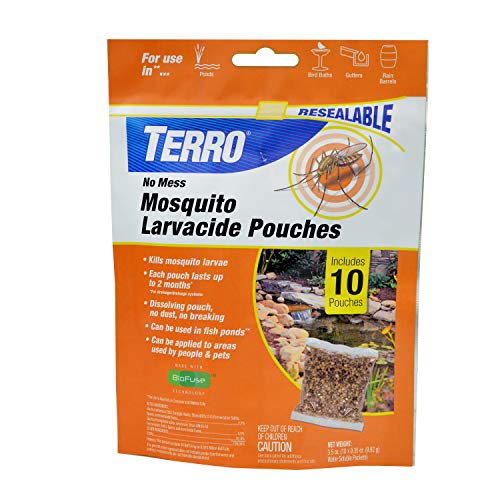
KILLS MOSQUITO LARVAE: TERRO T1210 kills mosquito larvae when added to stagnant water

Kills Mosquito Larvae Before They're Old Enough To Bite

MOSQUITO LARVAE KILLER - Mosquito Beater is a highly selective microbial larvicide, effective against mosquito larvae in standing water. It kills developing mosquitos upon ingesting before they become breeding, biting adults.
3. Use Mosquito Traps

CO2-producing traps draw mosquitoes by mimicking the breath that tells them a warm meal is nearby.
A propane-powered unit running for a few weeks at the start of breeding season can knock the population down sharply, though it will not clear the yard entirely.
Placement matters more than brand: set it upwind of where you sit, between you and the marshy edge or neighbor’s neglected gutter, so the insects meet the trap before they meet you.
MosGone and similar attract-and-kill devices work on a different logic. You fill the trap with water and a treatment tablet, then station several around the perimeter.
The solution breeds an odor that lures egg-laying females, and the larvae die in the water before they can fly.
You will not catch every adult in flight, but you can stop the next generation, since mosquitoes will deposit eggs somewhere; better your treated trap than the birdbath you missed.
Realistic expectations run to reduction, not elimination. One trap type intercepts adults seeking blood, the other intercepts mothers seeking nursery water.
Either helps most when started early and kept running, and either falls short when treated as a single purchase rather than a season-long habit.
Recommended Products

Covers up to 16,000 sq. ft. for worry-free protection

EASY MOSQUITO CONTROL: Quickly target standing water with these mosquito dunk tablets. Each tablet treats up to 100 sq ft of water surface for up to 30 days. Safe for use around pets and wildlife.

Quick mosquito knockdown: Quickly kills mosquitoes & prevents spiders from building webs while helping clear outdoor spaces of unwanted insects so you can enjoy your yard, patio and other outdoor areas
4. Install Outdoor Fans

Mosquitoes are weak fliers, and even a modest breeze is enough to knock them off course.
A fan pointed across your patio seating area creates a wall of moving air they struggle to push through, which means you can sit outside without constantly swatting at your ankles.
I learned this the hard way after buying a citronella candle that smelled nice and did almost nothing; the fan I already owned worked better in ten minutes.
Placement matters more than power. A floor or wall-mounted fan sweeping across the seating zone at ankle-to-waist height catches mosquitoes where they hover, since they tend to fly low to avoid wind.
For a typical backyard conversation set or dining table, a standard 18–20 inch oscillating fan covers enough ground without needing anything industrial.
Two fans set at angles work better than one giant unit if your space is wider than about fifteen feet.
This protects only the zone under airflow, not the whole yard. Your grill twenty feet away or the garden path to the garage stays untouched.
I treat fans as local relief for the spots where I actually sit, not as yard-wide defense.
Pair them with the water and trimming steps covered elsewhere, and the combination gets you usable outdoor space without pretending you have solved the whole property.
Recommended Products

4200 volt rated high voltage grid: Physically captures flying biting pests including mosquito, Aedes, gnats, midges and moths, best utilized in low light dark conditions after sundown

Bait the Buzz. Beat the Bite — Ever swatted your way through an entire dinner outside, or finally given up and hauled everything back inside? Mosquitoes follow light, body heat, and CO2 in your breath — three trails this bug zapper leads straight to the grid. 365nm UVA catches their attention. 15W warmth and a whisper of CO2 pull them closer. Then steady 110V power unleashes 4200V at the grid — strike after strike, till sunrise. The next buzz you hear ends with a zap — not another bite on you.

Insect repellent coils for porches, patios and other areas with minimal breeze
5. Talk to Neighbors

Mosquitoes do not respect property lines. A female mosquito can lay hundreds of eggs in as little as a bottle cap full of stagnant water, and once those adults take flight, your own yard being spotless stops mattering much.
Most neighbors are not intentionally breeding mosquitoes. The well-kept house down the street can still hide a kid’s play structure full of rainwater, a hollowed-out tree stump holding a pool, or plant saucers with two inches of standing water.
People often do not know these spots exist.
Ask them to pour out standing water, not to overhaul their yard. That is the request that gets results.
Approach it as information sharing rather than accusation. Mention what you found in your own yard first, then note that pooling spots are easy to miss.
If they have irrigation-heavy clay soil like much of Northern Utah, water pools faster than they might expect, and overlooked pockets multiply from there.
If the conversation goes nowhere, you have still cut the problem in your own space as far as it can go. That matters, but it is rarely enough alone.
Recommended Products

KILLS MOSQUITOES ON CONTACT: Spray areas infested with annoying flying insects

Repels insects for up to 6 hours
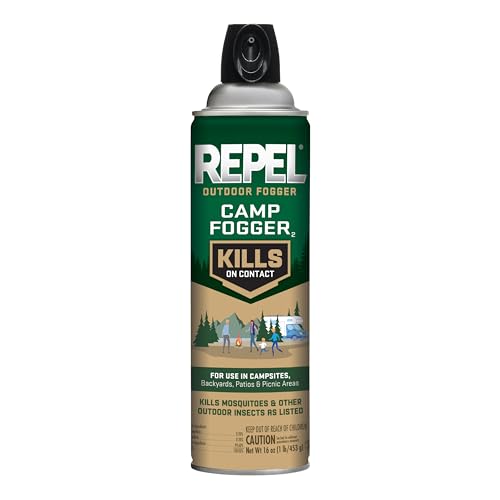
KILLS MOSQUITOES: Outdoor camp fogger kills mosquitoes and other listed outdoor insects on contact.
6. When to Call Professionals

Perimeter barrier treatments are the most reliable line of defense when mosquitoes keep winning despite your own efforts. A technician applies micro-encapsulated formulas to the undersides of leaves, dense foliage, and shaded structures where mosquitoes rest during daylight hours.
The treatment kills on contact and drastically reduces the evening population before you step outside.
Misting systems offer broader coverage for yards that stay infested. A typical professional system handles about 4,000 square feet of property, releasing scheduled bursts along fence lines and landscaping borders.
Monthly service visits keep the reservoir filled and the nozzles clear; some companies will also treat the day of a specific event if you call ahead.
For a gardener working within $500–800 annually, the math gets tight fast. A single barrier treatment might run $70–150, while misting installation plus season-long maintenance can consume most or all of that budget in the first year.
My own take: start with one targeted application in late spring, after you’ve already emptied every saucer and trimmed every overgrowth yourself. If you still lose an hour to bites every evening, then the recurring service is worth the reallocation.
Otherwise, that money stays better spent on plants that outlast the season.
Recommended Products

Formulated to release effective levels of BTI for a period of 30 days Or More

Brand New in box. The product ships with all relevant accessories

Quantity of (4) 20 packs (80 Dunks Total) : Mosquito Dunks Biological Mosquito Control
Natural Repellents That Actually Work

Citronella, lavender, and marigolds all show up on every list of mosquito-repelling plants, but the gap between growing them and actually keeping mosquitoes away is wider than most garden-center tags admit.
The oils that mosquitoes avoid are concentrated in the leaves and flowers; a plant sitting in a pot releases only trace amounts into the air around it.
Expect a planted repellent to cover maybe two to three feet, not a whole patio. That means placement matters more than plant choice.
Tuck them right beside seating, along the edge of a dining table, or in window boxes inches from where you sit, not scattered across the yard where the effect dissipates before it reaches you.
The candles and torches work differently. They burn concentrated oil, so the scent radius is larger, though still limited.
One person on a 24 by 15 foot patio uses four at once, one on each side plus two near the table, and that only works for the immediate seating area.
Those same candles do nothing to stop mosquitoes from breeding in standing water ten yards away. The plants and the candles share an ingredient, but they are not interchangeable tools.
If you are choosing between them, grow the plants for low-level border scent and still budget for candles or sprays where you actually need to be left alone.
Recommended Products
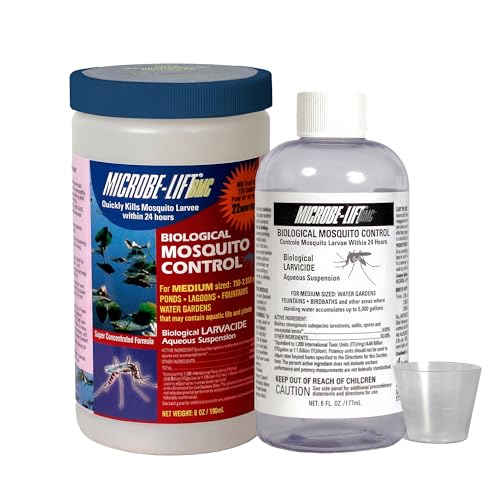
THOROUGH MOSQUITO CONTROL: EPA registered product that kills developing mosquitoes including those which may transmit equine encephalitis & heartworm disease to dogs & cats; Limit the spread of West Nile Disease with effective mosquito control using BMC

8oz container with shaker top

THOROUGH MOSQUITO CONTROL: EPA registered product that kills developing mosquitoes including those which may transmit equine encephalitis & heartworm disease to dogs & cats; Limit the spread of West Nile Disease with effective mosquito control using BMC
What Attracts Mosquitoes to Yards

Mosquitoes find a backyard through a short checklist of signals, and the first is standing water. A female lays eggs on the wet inner walls of containers, and a single batch runs about 100 eggs.
The larvae hatch once water covers them, feed, pupate, and the cycle repeats.
A bottle cap of stagnant water is enough to start the next generation, so the sources worth worrying about are smaller than most people guess: clogged gutters, plant saucers, toys left in the yard, the wrinkle in a tarp that holds rain.
Overgrown grass and dense beds give adults a place to rest through the heat. They also hide near patio furniture, carports, garages, any dark humid pocket close to the ground.
The rest of the attraction is you. Body heat, the carbon dioxide you exhale, and blood type all factor in.
Type O draws mosquitoes more strongly than other blood types, which is not something you change but something you plan around.
Knowing this shapes what to tackle first. Water is the only factor you can eliminate outright, and it breaks the cycle rather than just pushing adults elsewhere.
Vegetation you can thin. The human signals you manage with timing, clothing, and repellent, because the yard will never be fully invisible to a mosquito that can fly in from a neighbor’s property.
Recommended Products

FAST ACTING CONTROL: Kills mosquitoes and other flying insects on contact for quick relief in outdoor spaces

AUTOMATIC YARD CARE: the patented Sprinkler Magician system works through your existing sprinklers to automatically apply a whole range of products to all lawns and gardens. From our potent Mosquito Magician concentrate, to natural fertilizers, and even animal repellents, this system will automatically and accurately manage your entire yard!

INSECT KILLER - This pest control is great for use on mosquitoes, flies, gnats, hornets, crickets, cockroaches, moths, spiders, scorpions, silverfish, & other listed insects.
Health Risks Worth Knowing

Mosquito bites in the United States carry more risk than an itchy welt. West Nile virus remains the most common mosquito-borne disease here, with cases peaking from summer through early fall across the lower forty-eight.
I used to brush off August evenings as too hot for real danger; that changed after a neighbor in my county spent two weeks in the hospital with neuroinvasive West Nile.
The virus shows up in every continental state, though the Southwest and Great Plains see the heaviest activity.
Zika and dengue are different stories. Both have established footholds in Puerto Rico and the U.S. Virgin Islands, and southern Florida and Texas occasionally record local transmission during warm months.
The mosquitoes that spread them, Aedes aegypti and Aedes albopictus, breed in the smallest water pools, which makes backyard control especially urgent in those zones.
The EPA notes that about 200 mosquito species live in the United States, and while most bites only trigger an allergic reaction to saliva, the serious diseases can lead to encephalitis, meningitis, or microcephaly in developing pregnancies.
Risk is not evenly distributed by geography or season, but the overlap of peak mosquito activity and peak virus transmission means June through September is when backyard protection matters most.
Recommended Products

4200V Instant Mosquito Killing - Our Our outdoor mosquito repellent packs a serious punch. The 360° surrounding mesh ensures mosquitoes don’t stand a chance—once they get close, they’re zapped in just 0.01 seconds. The result? A satisfying sizzle and instant elimination. Let’s just say, they come for the buzz, but leave as crispy confetti.
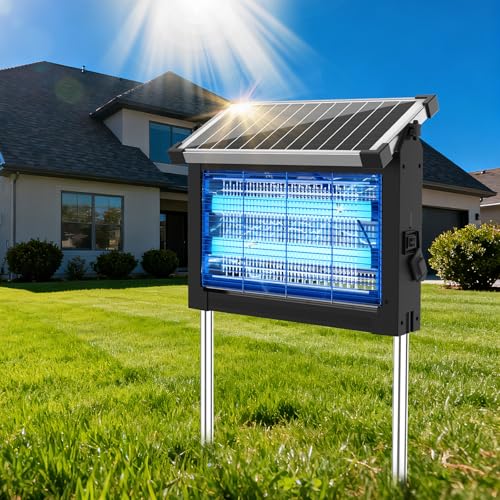
Effective Insect Control with Wide Coverage: OnBeam upgraded solar bug zapper outdoor features 2 high-efficiency LED bulbs light (365-395 nm wavelength) that attract and zap flying insects like mosquitoes, gnats, moths, flies, wasp and more. Equipped with a powerful 4,500V shock grid, this portable exterminator kills pests instantly. With a coverage area of up to 1 acre, this outdoor bug zapper is perfect for protecting your home, garden, patio, or outdoor spaces from annoying insects

Outdoor Bug Repellent for Patio: Our portable bug zapper combines expertise in pest control with modern outdoor style! With a flickering flame LED, the torch looks like an open flame without the hazard of one.
Frequently Asked Questions
Recommended Products

KILL & REPEL BUGS. Plant powered pest protection that works. A flea and tick yard treatment and preventative, this pest repellent spray is powered by natural essential oils and is proven to protect your pets and family from fleas, ticks, and mosquitoes.
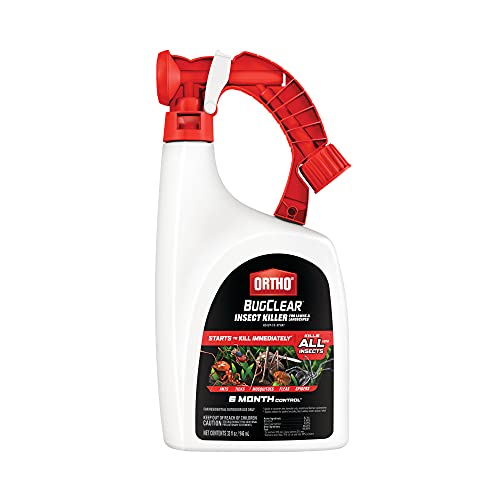
OUTDOOR BUG KILLER: Use Ortho BugClear Insect Killer for Lawns & Landscapes Ready-To-Spray mosquito spray for yards to kill 235 listed bugs, including ants, ticks, armyworms, mosquitoes, fleas, spiders and periodical cicadas
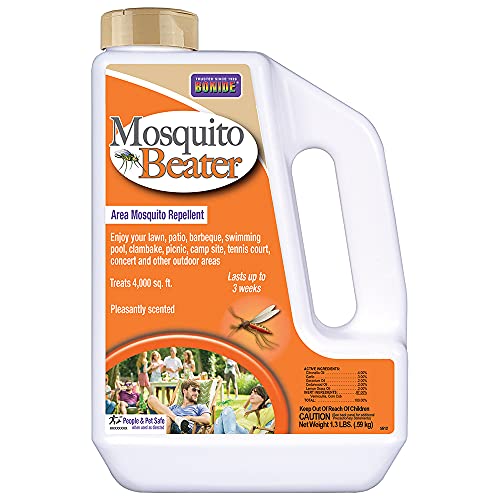
Mosquito Beater Ready-to-Use Granules from Bonide effectively control mosquitoes; with Mosquito Beater Granular Repellent you can enjoy your surroundings
How do I get rid of mosquitoes in my backyard?
Eliminate standing water and manage landscaping. A female mosquito lays eggs in as little as a bottle cap of water, so pour out plant saucers, buckets, toys, and clear clogged gutters weekly.
Then cut grass short, thin dense shrubs, and trim perimeter weeds to remove the cool, shaded spots where adult mosquitoes hide during the day.
What attracts mosquitoes to my yard?
Standing water and overgrown vegetation are the main draws. Females lay eggs on wet inner walls of containers, and even a bottle cap of stagnant water can start a new generation.
Tall grass, thick bushes, and weeds along fences give adults shade to survive the heat. Your body heat and exhaled carbon dioxide also pull them in once they are nearby.
What are the best natural repellents for mosquitoes?
Citronella, lavender, and marigolds work only at very short range, covering about two to three feet from the plant. Place them right beside seating or in window boxes inches from where you sit.
For broader coverage, citronella candles and torches burn concentrated oil with a larger scent radius, though you will need several to protect even a small patio area.
What smell do mosquitoes hate the most?
The concentrated oil from candles or torches creates a larger scent barrier than growing the plants alone.
What keeps mosquitoes away from your backyard?
A combination of removing standing water, trimming vegetation, and using physical barriers. Outdoor fans create a wall of moving air that weak-flying mosquitoes cannot push through; set a floor or wall-mounted fan to sweep across seating at ankle-to-waist height.
For broader reduction, CO2 traps placed upwind of seating catch adults, while attract-and-kill devices lure egg-laying females to treated water where larvae die.
What is a mosquito’s worst enemy?
A Mosquito Dunk that kills larvae for 30 days in water you cannot empty is the closest to a targeted countermeasure, though it supplements rather than replaces tipping out containers.