Most outdoor furniture cleans up in under an hour with soap and water, but the material decides whether you reach for a soft sponge or ruin the finish with a pressure washer.
White HDPE poly is the break point: it needs a 1:2 bleach solution that would shift colored resin into unpredictable tones, and that single distinction changes every tool you pull from the garage.
1. HDPE Poly

HDPE poly furniture cleans up more forgivingly than most people expect on their first try.
For colored pieces, Berlin Gardens Heavy Duty Xtreme Clean works straight from the bottle, or a generic composite deck cleaner from any big-box store does the same job.
White poly is the exception where bleach belongs: mix 1/3 cup outdoor bleach into 2/3 cup water and let it sit ten minutes before scrubbing.
A soft bristle brush lifts the grime without chewing the surface, and warm water rinse finishes it. For stains that laugh at that treatment, reapply the cleaner, wait another ten minutes, then hit it with a 1500 PSI pressure washer.
Keep the nozzle back 8–12 inches from the surface; closer than that and the spray mars the texture.
Recommended Products
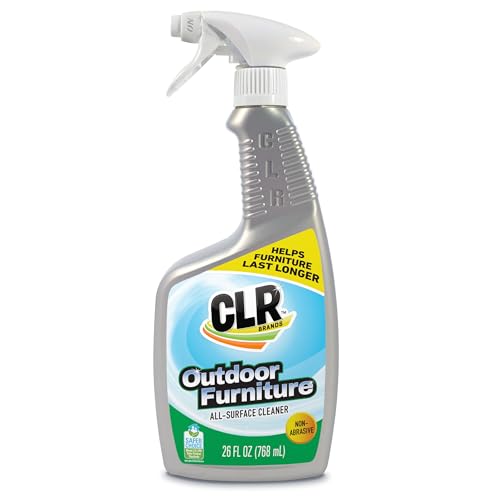
HUNDREDS OF USES: Tackle the whole yard with this powerful outdoor furniture cleaner. Formulated for use on patio, lawn and deck furniture, it is an effective and versatile product for outdoor furniture - from upholstery to plastic play sets.
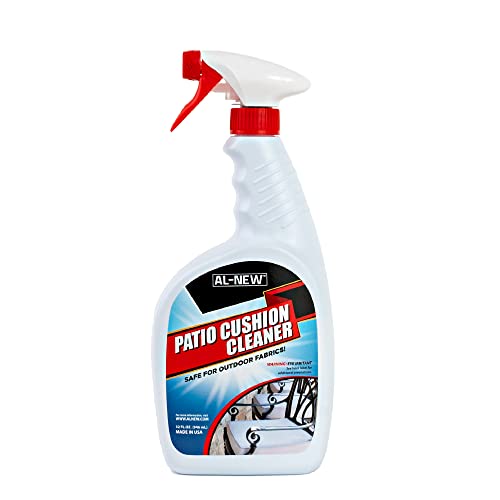
Best Way to Clean Outdoor Patio Cushions, Fabric Cushions, Patio Furniture Covers, Sunshades & Sail Cloth, Fabric Awnings, Umbrellas & More!

FURNITURE PROTECTANT AND SPRAY: Furniture protectant creates a protective barrier on contact with simple spraying action; Removes light dust, dirt, salt spray, and grime
2. Cast Aluminum

Cast aluminum frames are the workhorse of most patio sets, and they clean up with nothing more than mild soap and warm water.
I keep a soft sponge and a bucket under the sink for this, because anything abrasive, even a scrub brush with stiff bristles, will scratch the powder-coated surface that brands like Hanamint and Castelle use to protect the metal underneath.
Rinse with clean water, then dry with a cloth immediately. Water spots are the real enemy here, and they show up fast if you leave the frame to air-dry, especially in direct sun.
I learned that the hard way on a set I left sitting too long after a storm. The spots wiped off, but only after extra work I could have skipped.
One detail most people miss: water collects inside the hollow legs. Remove the glides or foot caps from the bottom and drain it out before you put the furniture away.
Trapped moisture leads to oxidation from the inside, and by the time you notice white dust forming at the seams, the damage has already started.
Recommended Products

MULTIFUNCTIONAL CLEANING BRUSH: High-quality soft household cleaning brush bristles can easily clean dirty parts of clothes, such as collars and cuffs without damaging the fabrics, and can also be used to clean stains on tiles and countertops, making home cleaning easy.
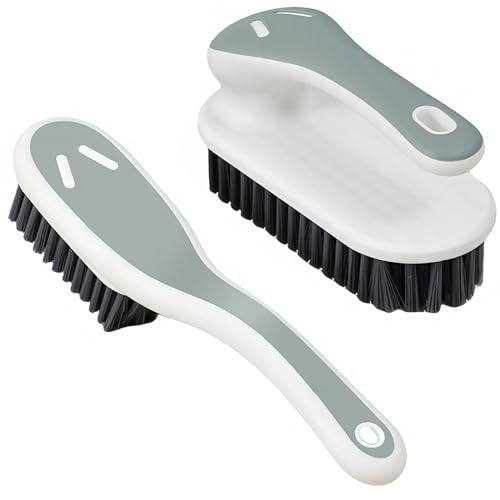
MULTIFUNCTIONAL CLEANING BRUSH: High-quality soft household cleaning brush bristles can easily clean dirty parts of clothes, such as collars and cuffs without damaging the fabrics, and can also be used to clean stains on tiles and countertops, making home cleaning easy.

【Quality & Soft Bristles】The shoe brush is made of pp and nano soft bristles, wear-resistant and flexible, do not hurt the surface of clothes, shoes and boots, can be used for delicate fabrics.
3. Wrought Iron

Wrought iron furniture looks indestructible until you see what trapped moisture does to it.
Water that sits on the frame or pools in a scroll joint starts the rust cycle fast, and once that begins, the metal keeps eating itself from the inside out.
Mild dish soap and warm water are all the chemistry you need. A soft sponge or cloth lifts the grime; rinse it clean, then dry immediately with a cloth before water spots get a chance to settle.
Skip the power washer. The pressure forces water into seams and crevices where it sits, and it strips protective finishes you didn’t know you were losing.
Harsh chemicals chew through paint and primer the same way, so leave them on the shelf.
For rust that has already started, a wire brush or sandpaper scours the surface back to bare metal. Follow with rust-resistant primer and paint, or the spot comes back.
Twice a year, a thin coat of car wax on the frame adds a barrier against humidity and rain. Some people skip this and get away with it in dry climates.
In humid seasons, the wax is what keeps the chair from becoming a restoration project.
Recommended Products


Outdoor Mold and Mildew Stain Cleaner Helps break down and lift stubborn surface stains caused by mold, mildew, algae and dirt on decks, fences, brick, masonry, siding and stucco.

DEEP CLEANING ACTION: The Pink Stuff Bathroom Foam Cleaner is specially formulated to tackle tough bathroom stains and grime, leaving your bathroom surfaces sparkling clean with minimal effort
4. Wicker

Wicker furniture looks delicate, but the weave is tougher than most people assume. The real risk comes from water forced into the gaps, where it swells natural fibers or leaves synthetic ones smelling musty for days.
Skip the pressure washer entirely, even on low settings; the stream drives dirt deeper instead of lifting it out, and it can fray rattan or split bamboo where the weave bends.
Start dry. A soft brush, something like an old vegetable brush with flexible bristles, loosens pollen and dust from the cross-points without snagging.
Work top to bottom so grime falls onto areas you have not cleaned yet.
For the wash, a few drops of mild dish soap in warm water is enough. Dip the brush, shake off the excess, and scrub gently across the weave rather than jamming bristles straight through.
An old toothbrush reaches the spots where four strands meet, the places that collect the gray film of oxidized pollen. Rinse with a damp cloth, not a hose, and blot dry with a towel.
Sun-drying finishes the job. Set the piece in open air, turned once so both sides see light and moving air.
Mold starts where wicker stays damp and dark, and fifteen minutes of turning now saves a afternoon of vinegar treatments later.
Natural rattan and bamboo need this care more often, every few weeks in humid summers. Resin wicker forgives more, though the same soap and brush routine still keeps the surface from chalking in strong sun.
Recommended Products

Restores Original Brilliance Fast - Restore faded and weathered aluminum and painted metal surfaces in seconds. This aluminum cleaner and brightener revives oxidized and dull-looking patio furniture, garage doors, and outdoor fixtures with rich color and like-new shine—no scrubbing, sanding, or repainting required

OUTDOOR RESTORER: Penetrates deep to restore faded & weathered outdoor surfaces.

Goodbye Rust: Remove rust stains outside the home with a long-standing heavy-duty rust removal. The unique cleaner works quickly to dissolve rust stains on contact for outdoor applications.
5. Resin

Resin furniture can mimic wood, wicker, or something more contemporary, and it asks for very little upkeep. A soft brush, mild soap, and warm water usually lift the grime without much pressure.
For mold or mildew, a mix of equal parts water and white vinegar clears the growth. Let any cleaner sit about ten minutes, scrub gently, and rinse thoroughly with warm water.
A 1500 PSI pressure washer can handle stubborn spots, but keep the tip 8 to 12 inches back or the surface texture mars.
Over time, resin weathers to a matte, slightly chalky finish. The discoloration tends to read as a general dulling rather than patches, and it happens faster on pieces left out year-round.
Drying with a soft cloth after rinsing helps preserve the original sheen, though nothing fully stops the fade in direct sun. Bleach can work, but only on white furniture, mixed at one part Outdoor Clorox Bleach to two parts water.
Skip it entirely on colored resin, or the tone shifts in unpredictable ways.
Recommended Products

POWERFUL CLEANING ACTION: Formula that loosens and dissolves greasy, grimy messes on contact ensuring easy removal with minimal effort

Professional concentrate cleans decks, siding, driveways, and patios - perfect for homeowners preparing for BBQs, real estate agents staging homes, or contractors finishing jobs.
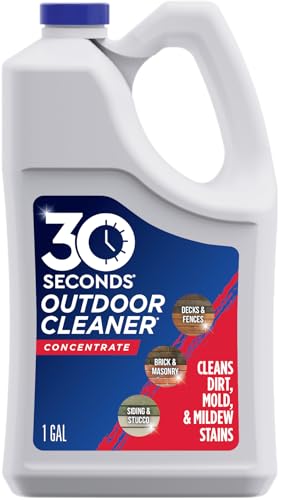
REMOVES STAINS FROM ORGANIC GROWTH ON YOUR OUTDOOR SURFACES: 30 SECONDS Outdoor cleaner cleans stains from mold, mildew, dirt and grime
6. Marine Grade Polymer

Marine grade polymer, or MGP, is a dense engineered resin built to handle salt air and heavy moisture without splitting or corroding. The material is non-porous, which means dirt sits on the surface rather than soaking in.
That surface still needs the right treatment, though.
Clean it with mild soap and warm water, applied with a soft cloth or sponge. Nylon scrub pads work only if you use a light hand; aggressive scrubbing will mar the finish.
Rinse with warm water afterward and let it air dry or towel it off.
Two things will wreck it. Teak oil seems like a logical conditioner for outdoor pieces, but on MGP it stains the finish permanently rather than nourishing it.
Heat above 180°F does similar damage, softening or distorting the polymer. Keep the pressure washer away, and set hot dishes down on trivets, not directly on the armrest.
Recommended Products

Ergonomic Design: The peanut-shaped wood body of this hand scrub brush offers an ergonomic grip, ensuring comfortable use during extensive cleaning sessions. Ideal for those seeking a reliable bristle brush for cleaning various surfaces efficiently.

The hand broom cleaning brush is made of dense and thick soft bristles. The bristles are not easy to fall off, not easy to deform, durable and soft in texture.
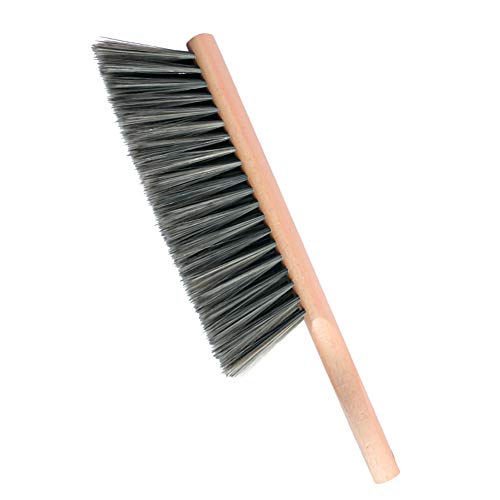
Dust Removal: Faxtail hand brush effortlessly removes bed hair, table crumbs, sawdust, wood chips, fine dust in one sweep. Work perfect in counter, shop, woodworking, reloading bench, camping RV and student dorm room, bed. Recommended by woodworkers & professionals
7. Teak

Teak turns gray whether you want it to or not.
A weathered teak chair wiped with mild soap and warm water will surprise you: the suds run dark with airborne grime that settles into the grain over a season or two.
A soft plastic brush lifts that film without fighting the wood; metal brushes scratch the surface and leave marks you will notice every time you sit.
If you want the honey brown back, the two-step route is a teak cleaner followed by a brightener. That pairing strips the gray and pulls the original golden hue forward.
I have left pieces to weather naturally and I have restored them, and the choice is honestly just aesthetic. The wood survives either way.
For keeping the color you just paid to recover, Summer Classics Teak Protector goes on after the wood is fully dry.
It slows the return of gray and buys resistance against the food drips and leaf tannins that stain bare teak.
A separate shield layer repels water more directly, though on small balcony sets I usually skip that second coat and touch up the protector once a season instead.
Do not use either product on Oyster Teak finishes; the chemistry strips that surface in ways you cannot patch.
Recommended Products

Easy to use- just apply with sponge, spray, or brush

[Waterproof Design & UV Protection] Unlike standard splash-proof, Smiry outdoor cushion covers are engineered with a premium TPU membrane backing and the top fabric is processed with a waterproof treatment effectively blocks daily spills, morning dew, and light rain. Additionally, the UV-resistant treatment helps delay color fading from daily sun exposure

Convenient 2 Pack for Outdoor Cleaning Includes two 64 oz hose end bottles for ready to use cleaning. Keep one in the garage and one near your garden hose for quick and easy access.
Cleaning Outdoor Fabrics

Outdoor fabrics collect pollen, bird droppings, and the occasional melted popsicle faster than you’d expect. Hit stains before they set.
Mild detergent and warm water handles most fresh marks; for anything stubborn, a dedicated fabric cleaner made for outdoor use is worth keeping under the sink.
Mold and mildew demand stronger medicine.
Mix 1/4 cup dish soap and 1 cup bleach per gallon of water, spray it onto the spotted areas, and let the sun work with you for about fifteen minutes before scrubbing gently with a soft brush.
Rinse thoroughly and let the cushions air dry completely. Damp stuffing is how you get the problem back in a week.
For routine washes, 1/4 cup Dawn in a gallon of warm water cuts grime without attacking the finish. Scrub with a rag or soft brush, paying extra attention to seams where mildew likes to start.
Storage matters as much as washing. Waterproof storage boxes for cushions save you from that last-minute scramble when a storm rolls in.
The cushions stay dry, the fabric lasts longer, and you spend less time with the bleach bottle.
Recommended Products

Goodbye Rust: Remove rust stains around the home with a heavy-duty rust removal product trusted for over 60 years. The unique cleaner gel clings to dissolve rust stains on contact for difficult-to-reach places.
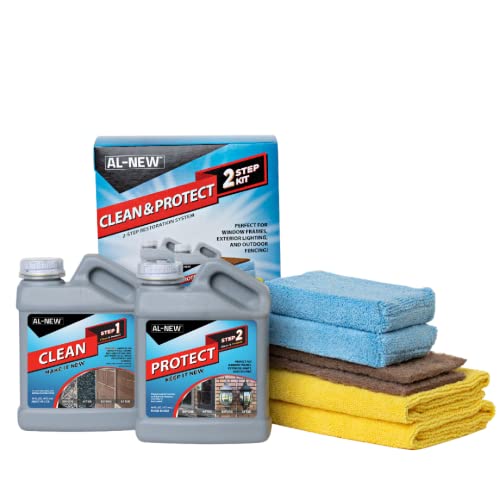
Step 1 Clean: Easy to Use, Just Wipe On to Restore Color, Shine & Luster

This steel weld cup replaces a foot welded onto wrought iron patio furniture. Inside diameter measures 1 1/2".
Preventive Maintenance

A thorough cleaning at the start of the season and again at the end is the baseline that keeps furniture from quietly deteriorating.
I learned this the hard way with a set of mesh chairs I left unchecked through two seasons; by the time I noticed, pollen and leaf litter had worked into seams that never fully cleared.
Spot cleaning as it happens saves more labor than the full scrub later.
A damp cloth and a quick shake of cushions weekly handles most of what accumulates, and diluted dish soap lifts the rest without inviting the damage that harsher chemicals or abrasive pads guarantee.
Covers or storage when the furniture sits idle reduce how often you repeat even this light work. The math is simple: two proper cleanings a year, attention in between, and the replacement cycle stretches out by years.
Recommended Products

REMOVE TOUGH STAINS: Home Armor Pressure Wash Concentrate blasts away stains from dirt, grime, algae, mold and mildew with professional strength.

REMOVE TOUGH STAINS: Home Armor Outdoor Cleaner+ powers away dirt, grime, algae, mold and mildew stains. No scrubbing required.

EFFECTIVELY REMOVES MOLD & MILDEW STAINS – Designed to eliminate tough outdoor mold, mildew stains, dirt buildup and organic staining from patio cushions and outdoor furniture fabrics.
Seasonal Storage

Breathable covers make the difference between furniture that lasts and furniture that grows green fuzz.
The ones worth buying let air pass through while blocking rain and snow, because trapped moisture under a non-breathable tarp is exactly how mold gets started.
I learned this the expensive way two winters ago, when I wrapped a set of mesh metal chairs in a heavy plastic cover I found on clearance.
Store cushions somewhere dry and ventilated, or come spring every cushion smells like a basement and the frame has spots that need an afternoon of scrubbing with a mix of dish soap and bleach, a quarter cup of soap to a cup of bleach per gallon of water.
Store furniture in a garage or shed if you can, especially softer woods like pine or cedar that warp once damp sets in. Metal and plastic hold up better under a cover outside, provided that cover actually breathes.
Teak is the odd one out: covering it too tightly traps moisture against the natural oils, so it often does better left open to the air with just the snow brushed off regularly.
Recommended Products

UNIVERSAL SCRUB BRUSH – Handheld nylon scrub brush with firm light-yellow bristles designed for everyday scrubbing on tile, grout, concrete, outdoor steps, entry mats, mudrooms, utility areas, and other durable surfaces.

Durable 8-Inch Scrubbing Brush: Made with long-lasting, acid-resistant fibers for longevity during indoor and outside use cleaning outdoor furniture , outdoor fixtures like bird baths, or for scrubbing dirt, dust, and debris

SOFT AND GENTLE: Soft Bristle Brush will deep clean without damaging the surface. It’s the perfect upholstery cleaning brush as the soft bristles will penetrate into any type of fabric, loosening and removing any dirt.
Frequently Asked Questions
How do I clean outdoor furniture fabric?
Mix 1/4 cup Dawn dish soap in a gallon of warm water, then scrub with a rag or soft brush. Work the cleaner lightly into the fabric, rinse thoroughly, and let it air dry completely before storing.
Damp stuffing brings mildew back within a week, so patience here pays off.
Can I use bleach to clean patio furniture?
Bleach works only on white HDPE poly and white resin furniture, mixed at 1/3 cup outdoor bleach to 2/3 cup water. Skip it on colored pieces entirely, or the tone shifts unpredictably.
For outdoor fabrics with mold, a mix of 1/4 cup dish soap and 1 cup bleach per gallon of water is the exception that works.
How often should I clean outdoor furniture?
Give everything a thorough cleaning at the start of the season and again at the end. Spot clean as spills happen with a damp cloth and diluted dish soap.
That rhythm, plus covers or storage during idle months, stretches the replacement cycle by years.
Is Dawn good for cleaning outdoor furniture?
Yes. A 1/4 cup of Dawn in a gallon of warm water cuts grime on frames and cushions without attacking finishes.
It is less abrasive than commercial cleaners and handles mildew buildup when you scrub with a soft brush or rag.
Can I use vinegar to clean outdoor wood furniture, and if so, how?
For resin furniture with mold or mildew, mix equal parts water and white vinegar, let it sit about ten minutes, then scrub gently and rinse.
What is a good homemade cleaner for patio furniture?
For most materials, a few drops of mild dish soap in warm water is all you need. For resin mold, equal parts water and white vinegar works.
On white poly or resin, 1/3 cup outdoor bleach mixed into 2/3 cup water handles stains other cleaners cannot touch.