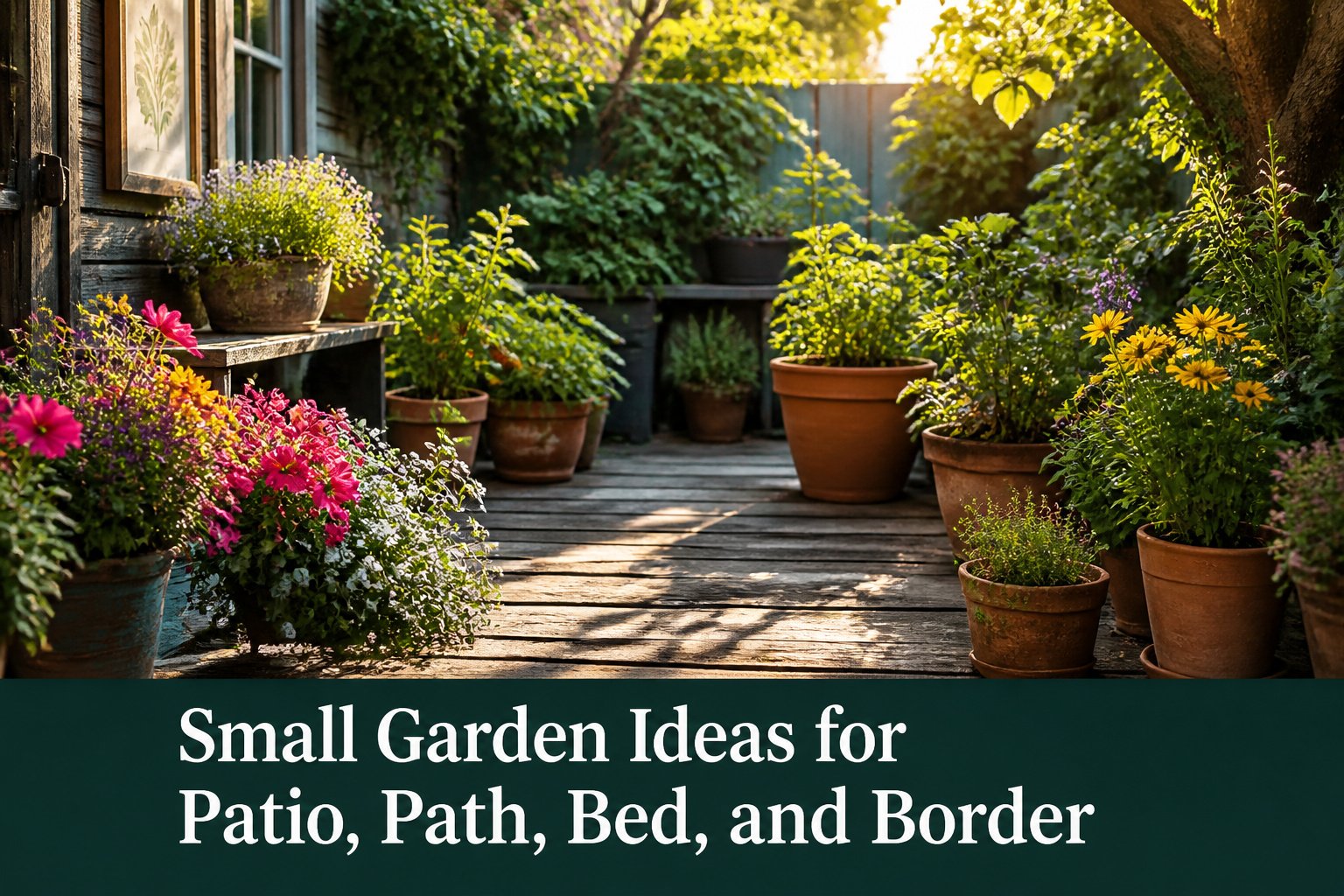
Small garden ideas for small garden spaces run from a $30 cattle-panel arch to a single fig in a 20-inch terracotta pot, and the right choice depends on one thing: whether you own the ground beneath it or will need to roll everything away when the lease ends.
Renters should skip the buried drip lines and gravel paths and put every plant in a 14-inch pot that can chase the sun from April to June.
Homeowners can spend the same money once on a permanent water line and a native wildflower mix matched to their zip code, because the generic national blends are where the invasive weeds hide.
1. Perennial Herbs for the Kitchen and the Border

Thyme, oregano, and sage are the three perennial herbs that earn their keep in a small garden.
Each survives winter in USDA Zone 8a and colder, returning on their own roots while annual basil demands fresh seed or new starts every spring.
A single $12 herb start, bought in early spring, typically yields enough fresh leaves through fall to replace three to four dollars of grocery store bunches.
By the first hard frost, the plant has paid for itself; anything after that, including the second and third years of growth, is savings against a tight $500–800 annual garden budget.
These three share a preference for lean soil and sharp drainage, which makes them natural choices for the edge of a raised bed or the strip along a patio where pavement bakes the ground.
Thyme spreads low and flat, oregano mounds to about twelve inches, and sage grows woody enough to hold shape through light snow. All three want full sun and tolerate the dry spells that kill fussier plants.
The culinary trade-off is straightforward. Fresh thyme and oregano beat dried versions in any slow-cooked sauce; sage leaves fried crisp in butter finish a winter squash dish that justifies the space alone.
None need staking, trellising, or the succession planting that eats time in a small plot. Plant once, harvest for years, and spend the saved money on the one or two vegetables you do grow from seed.
Recommended Products

🌱 Perennial Favorites – Includes Chives, Greek Oregano, Sage, and Thyme for a garden that comes back year after year

Indoor Herb Garden: Grow your own indoor herb garden with our 5 variety pack of herb seeds. This kit includes homesteading essentials for a prolific kitchen garden.

HERBS ESSENTIAL SEED VARIETY PACK: Fresh flavors at your fingertips! This pack includes 5 kitchen essentials, from classic Genovese Basil to fragrant English Thyme and Italian Oregano. Perfect for sauces, soups, and homemade meals!
2. Edible Plants That Earn Their Square Footage

Strawberries spill out of a hanging basket just as prettily as any trailing petunia, and you get the bowl of fruit at the end.
Blueberries carry that same double value: spring flowers, fall color, and berries in between, though they will sulk or die in neutral or alkaline soil. A cheap pH test from the hardware store saves the cost of replacing two bushes.
I learned that after watching leaves yellow for a full season before I bothered to check. Grapes on a patio arbor give shade and something to snack on while you water; the woody trunk looks architectural even in winter.
All three ask for sun, some support, and a little patience, but they return it in food you did not have to carry home.
Recommended Products

ORGANIZED 10 GRID PLANTING: Modular raised garden bed planter with 10 individual growing compartments keeps herbs vegetables flowers separated for easier crop rotation gardening includes plant markers liners ideal for patio balcony backyard herb garden
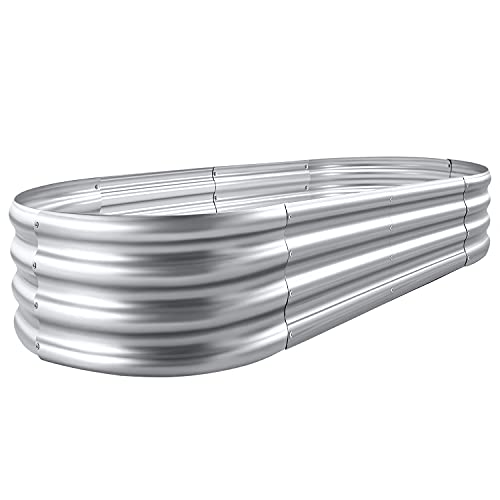
Each raised metal garden bed size: 4×2×1ft ,7.14Cu
3. Colorful Flowers for Pollinators and the Gardener

Color in a small garden needs to work harder than in a large one, because every square foot is on display.
I plan my flower sequence so that something is always blooming, and I lean on a few perennials that have proven reliable in my own beds.
Salvia nemorosa ‘Caradonna’ carries deep purple spikes from late spring into midsummer, and the stems stay upright even in the wind that whips across my patio.
I pair it with Salvia microphylla ‘Cerro Potosi’, a brighter magenta bloomer that picks up just as the first salvia starts to tire. Together they bridge the gap before asters and late wildflowers take over in August.
Bistorta amplexicaulis ‘September Spires’ lives up to its name, sending up rose-pink wands when most other perennials are looking ragged. I added it after watching my midsummer garden go dull in 2021, and the pollinators found it within days.
The bees work the salvia in the cool morning, then shift to the bistorta and Linaria purpurea as the day warms.
Common plants are common for good reason. I grow newer, more unusual things too, but the old standards are the ones that keep the garden from going quiet when it matters most.
Recommended Products

4 pack 13" flower pot stand, 4 pack 14"Plant saucer, Suitable for grow bags 5 gallon and Flower pot under 13 inches

SELF-WATERING TECHNOLOGY: These garden flower pots feature a convenient internal disk that allows you to go for longer periods of time without watering plants.

CLASSICO Color is perfect for table and patio plants, indoors and out
4. Wildflowers for the Lazy Corner

Some corners of a small yard resist every plan you draw. The strip behind the garage, the triangle where the fence meets the alley, the spot the hose drags across twice a week.
These are the places where a bag of native wildflower mix earns its keep better than anything you hand-plant and stake.
I learned the hard way that not every mix labeled "wildflower meadow" deserves the name.
The first one I scattered looked promising for about six weeks, then sent up a stand of something aggressive that my extension office later identified as a regional invasive. Pulling it out took two afternoons I had not budgeted.
The problem was the bag: a generic national blend with no state origin listed, packed with species that behave themselves somewhere else.
Now I buy only from regional native plant societies or suppliers that list the exact species and their local ecotype. The cost runs roughly the same, sometimes less.
The difference is the pollinator traffic. A mix matched to your zip code brings in bees and butterflies you will not see on generic cosmos, and the plants return on their own once established.
Water the first season to get them rooted, then let the corner go. By year two, the lazy spot is the one you stop trying to improve because it already works.
Recommended Products

PREMIUM WILDFLOWER SEED MIX: Contains 24 prairie wildflower varieties; High germination rate with non-GMO USA-sourced seeds; Perfect for midwest regions including Indiana, Missouri, Michigan, and Pennsylvania; Creates stunning flower mix for all gardens

🌼 “American Meadow Magic” Wildflower Seed Mix: Our signature PlantMe blend features 25 diverse wildflower varieties, specially curated to create a stunning, natural meadow right in your own backyard. Experience the magic of a flourishing, colorful ecosystem.

COMPLETE GARDEN VALUE: Contains 87,500+ seeds (2oz) of premium wildflower seed mix; Perfect for creating meadows, butterfly gardens, or cottage-style beds; Includes 22 varieties of Texas wildflowers for continuous blooms; Economical bulk wildflower seeds for large and small projects
5. Small Trees for Vertical Structure and Fruit

A potted fig on a south-facing patio gives you something to look up at without eating the floor space you actually use.
I keep mine in a 20-inch terracotta pot that weighs enough to stay put in wind but still rolls on a dolly when frost threatens. Hardiness is the sticking point.
In Zone 8a, a cold winter will kill the above-ground wood clean to the soil line. The first time it happened I assumed the plant was gone and nearly dug it out.
By May, suckers were pushing from the root crown, and by August I had a 3-foot bush again with a small late crop. Now I do not panic; I wait.
Bay laurel and citrus work the same way in tight spots, though they ask for a different tradeoff. Bay tolerates shade that would make a fig sulk, and its clipped dome fits under eaves where a roof overhang steals rain.
Citrus wants the sun and the heat, and the dwarf varieties stay small enough to haul indoors for the coldest months.
I have overwintered a Meyer lemon in an unheated garage with a shop light, watering barely enough to keep the roots from desiccating.
It dropped most of its leaves and looked half-dead by March, but it greened up again once nights stayed above 50°F.
For a beginner, the lesson is the same across all three: dieback is not death. Give the root ball time to show you what survived before you replant.
Recommended Products

MAXIMIZE YIELD IN ONE HANGING BASKET – Designed for growing hanging strawberries, herbs, vegetables, and flowers with bigger, fuller results than traditional hanging planters. Ideal for patios, balconies, porches, and small spaces.

Grow More in Less Space – Innovative side-planting pockets plus a spacious top opening let you grow flowers, herbs, or strawberries out the sides and the top for a full, cascading display. Includes zinc-plated chain (packed between the pots when shipped).
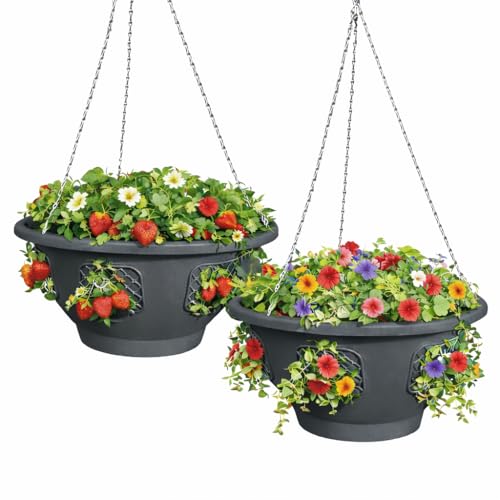
MAXIMIZE YIELD IN ONE HANGING BASKET – Designed for growing hanging strawberries, herbs, vegetables, and flowers with bigger, fuller results than traditional hanging planters. Ideal for patios, balconies, porches, and small spaces.
6. A Water Feature the Size of a Dishpan

A water feature in a small garden does not need a pump, a liner, or a weekend of digging. A galvanized dishpan buried to its rim holds enough water to matter.
I set mine where morning sun hits it, and within a week the first birds were using it like a public bathhouse. Change the water weekly, or mosquito larvae will turn it into a nursery.
That is the whole job; no filter, no hose bib, no electricity. A few flat stones half-submerged give insects a landing pad so they can drink without drowning.
In winter I tip the pan and store it, though a neighbor leaves hers filled and the ice cracks it every other year. Standing water sounds like trouble, but the weekly swap takes less time than watering a single tomato.
The sound of birds splashing carries farther than you would expect from something the size of a casserole dish.
Recommended Products

ITALIAN HERB SEED COLLECTION - Plant basil (Ocimum basilicum), oregano (Origanum vulgare), thyme (Thymus vulgaris), sage (Salvia officinalis), and flat leaf parsley (Petroselinum crispum)

50+ WILD ZAATAR OREGANO SEEDS – Each packet contains 50+ Wild Zaatar Oregano seeds (Origanum syriacum), a distinctive Mediterranean herb also commonly known as Syrian oregano and zaatar oregano.

COMPLETE GROWING KIT: No extra supplies needed! Comes with 20 peat growing cups, 20 compact soil discs (expanding coco coir pellets), and 20 plant markers, making this an ideal beginner-friendly kit for indoor gardens, outdoor planters, raised beds, balconies, or windowsills.
7. Pathways That Define the Space

A path that forces you to step into the bed to reach the back of it will undo every other choice you make.
Gravel, brick, or stepping-stone routes create the structure a small garden lacks on its own, and they keep your feet out of soil you have already prepared. The material matters less than the placement.
I have seen a narrow brick run look finished where a wider gravel strip looked forgotten, and the difference was only where the edges sat against the planting.
Twenty-four inches is the width that lets a wheelbarrow pass without scraping leaves off both sides at once. Anything narrower turns every load of compost into a negotiation.
In my own beds, I laid paths last, after I knew where I actually walked, and I ended up moving two of them the following spring.
The ones that stayed were the ones that let me reach every plant without once crossing into the bed itself.
That accessibility rule, reach every plant from the path, sounds obvious until you find yourself stretching across three feet of damp soil to deadhead the one stem in the corner.
Recommended Products

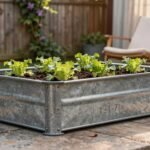
More suitable raised garden bed size and Volume:67"L x 20"W x10"H, 7 Cu. Ft. You can cultivate plants, like vegetables, flowers, herbs in your patio, yard, garden, and greenhouse.

【Raised Garden Beds Outdoor】: GRASQUILINE’s galvanized raised garden bed features enhanced rust and corrosion resistance, ensuring years of durable use even in harsh outdoor environments and humid climates — so you never have to worry about premature wear.

Raised Garden Bed - Add a new level of convenience to your gardening experience with the Galvanized Raised Garden Bed. Enjoy expanded yield and a more assembled garden layout with this garden accessory, each sized at 120 cm X 60 cm x 30 cm.
8. Vertical Gardening on What You Already Own

Trellises and fence-mounted planters turn the walls you already have into growing space without stealing a square foot from the ground. A cattle panel arched between two raised beds is the single best return I’ve found for a small garden.
The panel itself runs about $30, and if you have two T-posts or old fence posts already, the whole structure stays under $40.
In summer, the arch carries indeterminate tomatoes up and out of the way, the fruit hanging clear for picking and the leaves getting better air than they would on the ground. Come fall, the same wires hold drying beans.
The pods hang in bunches where the breeze reaches them, and they rattle when they’re ready. One arch, two crops, zero extra footprint.
Wall-mounted planters work the same way on a balcony rail or a garage wall, though they dry out faster and need checking more often than anything in the ground.
Recommended Products
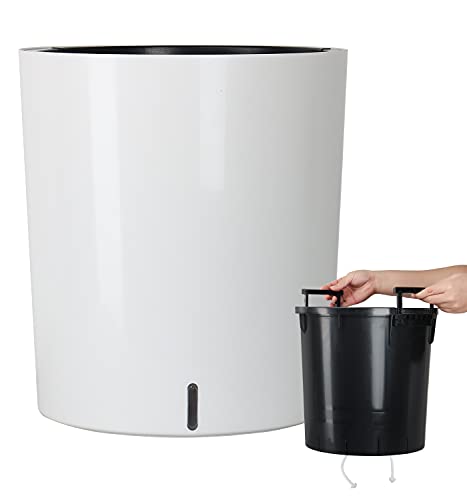
Designed with two layers inside and outside pot, the outer pot is made of high-polished high-quality PP plastic.
Low-Maintenance for Busy Lifestyles: Built-in reservoir and funnel auto-deliver water to roots—perfect for出差 or late nights, your plants stay hydrated without daily care.

SELF-WATERING TECHNOLOGY: These houseplant pots feature a simple self-watering disk that makes it easy for you to leave plants unattended with no mess, leaks or spills.
9. Container Gardening for the Renter or the Undecided

A 14-inch pot will carry one determinate tomato through the season, and that single number has saved me from buying either too small a container or one I cannot lift.
Garden soil in a pot collapses into mud, then concrete, then an airless mass that drowns roots; potting mix is the only thing that belongs in a planter.
The difference shows up in about three weeks, when the seedlings in garden soil stall and the ones in mix keep pushing out new leaves.
Mobility is the real advantage here. A pot on casters or a lightweight resin planter can chase the six hours of sun that shifts from the east side of my patio in April to the west wall by June.
When I move, the whole garden comes with me, soil, stakes and all. For renters, that portability turns a lease into a growing season rather than a reason to wait.
Recommended Products

Bulk quarter pound bag contains over 60,000 fresh seeds; Enough to cover over 400 square feet

PREMIUM CALIFORNIA WILDFLOWER MIXTURE. Elevate your garden with Sweet Yards California Wildflower Mixture, a bulk 1-ounce packet bursting with over 7,000 native seeds. This open-pollinated and non-GMO mix is thoughtfully curated for maximum beauty and biodiversity.

17 Northeast Native Wildflower Seeds - This premium wildflower seed mix features Blue Wild Indigo, Eastern Columbine, Gayfeather, Golden Alexander, Joe-Pye Weed, Black-Eyed Susan, and Aster. Native flower seeds selected for Northeast meadows.
Stacking Functions in One Bed

Every plant in a small bed should earn its keep twice, or three times over. My favorite example sits in a corner bed that gets maybe six hours of sun.
Three dwarf blueberry bushes anchor it: berries in July, yes, but also bell-shaped white flowers in April and wine-red leaves by October. Between the stepping stones that let me reach the back row, I planted creeping thyme.
It handles the foot traffic, smells sharp when bruised, and the sprigs go into roasted chicken all winter.
The real trick is the north edge, where a short bamboo trellis holds snap peas in April and May.
They climb vertical space the blueberries haven’t filled yet, fix a little nitrogen into the soil as they grow, and the pods are gone by June, right when the expanding blueberry foliage needs the light.
One bed, seven functions, no square inch idle for more than a few weeks. The only mistake I made was spacing the bushes too far apart their first year, thinking they’d get bigger than they do.
Dwarf means dwarf; two feet apart would have saved me a season of weeds.
Recommended Products

MAXIMIZE YIELD IN ONE HANGING BASKET – Designed for growing hanging strawberries, herbs, vegetables, and flowers with bigger, fuller results than traditional hanging planters. Ideal for patios, balconies, porches, and small spaces.

Unique Contoured Design: With its distinctive curved shape, our modern 4 pack 10 inch hanging planters set is an excellent choice for both indoor and outdoor decor. It adds a touch of natural green beauty to your bedroom, living room, courtyard, porch, and garden.

You Will Get-You will receive 5 packs of 3-gallon hanging strawberry grow bags together with 5 metal S-hooks. Each bag measures 8 × 14 inches and features 6 triangular 3D planting pockets, plus a drainage hole at the bottom for upside-down planting. Sufficient quantity easily satisfies all your gardening demands.
Soil Health Without the Science Degree

A 2-inch layer of compost spread over the bed each spring feeds the soil without the drama of digging.
I stopped turning my soil three years ago after reading that every spade thrust tears through fungal networks, and the plants have looked less shocked at transplant ever since.
The first season the surface stayed a little crusty and I worried I’d made a lazy mistake.
By the second spring, earthworms were surfacing every time I lifted the mulch to tuck in a seedling, which is the only proof I needed that the biology had found its own balance.
No-till means living with last year’s root channels and trusting the freeze-thaw cycles to do the loosening. In a small garden, this approach also saves the back and keeps the bed edges from collapsing into the path.
What I Plant When the Light Is Wrong

The light in a small garden rarely stays put.
A bed that reads full sun in March sits under six hours of shade by June once the neighbor’s maple leafs out, and that shift is where most of my early-season plantings have gone wrong.
March is when I start peas, shoving them into soil that still carries winter chill because they germinate fine at forty degrees and finish before the canopy closes.
By May the same spot is dim enough that lettuce bolts in a week, so I switch to a bolt-resistant variety like ‘Summer Crisp’ and move it to the brightest edge I can find, usually the strip along the garage wall that catches late afternoon.
October goes to garlic, planted in that now-open shade line because garlic wants cold months to root and does not need much light until spring stretches it tall again.
None of this is a full calendar, and I am not offering one.
What I am offering is the habit: walk the same path at 9 a.m., noon, and 4 p.m. once a month, note where the light lands, and match the plant to the window you actually have, not the one the seed packet assumes.
Wildlife I Did Not Plan For

The strawberries looked perfect one evening and were stubs by morning. Rabbits had found the low border bed I’d tucked against the patio, and they worked through the row with methodical patience.
A 12-inch chicken-wire fence, staked tight to the ground, stopped them the following spring. The mesh is small enough that young rabbits cannot push through, and the height catches adults mid-hop before they clear it.
That same fence line, threaded with the native asters and penstemon I’d added for pollinators, began drawing predatory wasps by midsummer. They hunted the kale bed ten feet away, and caterpillar damage dropped to almost nothing by August.
I had not planned for wasps, and I certainly had not planned to appreciate them.
A shallow water feature helps this along more than I expected. The small basin near the asters gives wasps a place to drink without drowning, and they linger in the garden instead of passing through.
Between the native flowers, the water, and the low fence, the space now hosts a small food web I only accidentally designed. The rabbits still visit the lawn.
The strawberries, at least, are mine.
Designing Around What You Cannot Move

The first thing to map in a small garden is not what you want to plant, but what you cannot move.
Electric outlets and hose bibs sit where the builder put them, and they will dictate more of your layout than any design principle in a book.
I learned this after planting a fig against the sunniest wall of my patio, only to realize the hose bib stopped fifteen feet short.
Figs need steady water through summer fruiting, and dragging a hundred-foot hose across the patio every other day turned a pleasure into a chore. The plant survived, but I did not enjoy it.
The fix was a drip line run from the nearest hose bib, snaked behind containers and held with landscape staples. It cost an afternoon and about thirty dollars in parts, and it waters that fig on a timer now.
Sun and shade matter just as much, and they are equally fixed.
Spend a day marking where light falls at 9 a.m., noon, and 4 p.m. Paint on grass or paving works fine; you are not making art, you are making a record.
Sort your plant list by height and by light requirement before you buy anything. Tall plants go north or east of shorter ones so they do not steal afternoon sun.
Trees and buildings cast shadows you cannot prune away. Work with them, or work around them with a hose you can actually reach.
Frequently Asked Questions
What are some good plants for a small garden?
Perennial herbs like thyme, oregano, and sage return every year without replanting and thrive in lean soil along patio edges or raised bed borders. Edible plants such as strawberries, blueberries, and grapes add color while producing food.
For flowers, Salvia nemorosa ‘Caradonna’ and Salvia microphylla ‘Cerro Potosi’ give you purple and magenta blooms from late spring through midsummer, while Bistorta amplexicaulis ‘September Spires’ sends up rose-pink wands when most other perennials have faded.
How do I attract wildlife to my garden?
Plant native wildflowers matched to your zip code rather than generic national mixes, since regional ecotypes draw bees and butterflies you will not see on common cosmos.
A shallow water feature the size of a galvanized dishpan gives birds and predatory wasps a place to drink without drowning; change the water weekly to avoid mosquito larvae.
A 12-inch chicken-wire fence staked tight to the ground can also help by stopping rabbits, which in turn encourages predatory wasps to hunt the area for caterpillars.
What is function stacking in gardening?
Function stacking means every plant and structure earns its keep two or three times over in a single bed.
One example is dwarf blueberry bushes that give white flowers in April, berries in July, and wine-red leaves by October, with creeping thyme between stepping stones for foot traffic tolerance and kitchen harvests, plus snap peas on a short trellis that fix nitrogen and use vertical space the bushes have not filled yet.
No square inch should sit idle for more than a few weeks.
What is the ideal layout for a small garden?
Map what you cannot move first: electric outlets, hose bibs, and fixed sun and shade patterns. Paths should reach every plant without stepping into the bed itself, and 24 inches is the minimum width for wheelbarrow passage.
Tall plants go north or east of shorter ones so they do not steal afternoon sun, and drip lines snaked from the nearest hose bib save you from dragging hoses across patios all summer.