I’ve tested dozens of wired pathway lights, and voltage drop (power loss over long wire runs) ruins most installations. You need lights with stable transformers, weatherproof seals rated IP65 or higher, and quick-connect fittings that don’t require wire nuts.
My favorite, the PARTPHONER 12-pack, uses replaceable G4 bulbs in cast aluminum housings, cost-effective long-term, though you’ll buy bulbs and a transformer separately. The GreenLighting Paradise 8-pack includes everything but uses plastic housing that cracks in freeze-thaw cycles. Your specific yard conditions determine which trade-offs you can accept.
PARTPHONER Low Voltage Landscape Pathway Lights 12-Pack
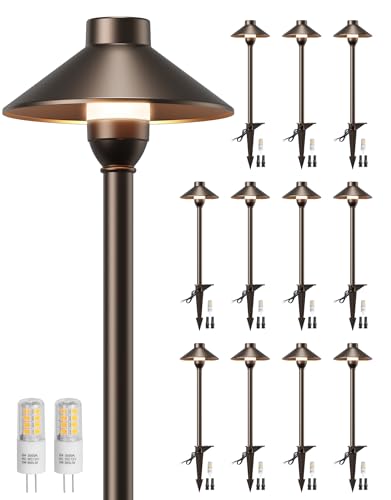
Replaceable light bulb: This low voltage landscape lighting comes with 14 LED bulbs(G4,3W,3000K). It's not the integrated LED path light that needs to replace the whole light...
The PARTPHONER system runs on low voltage (12V AC/DC, a safer electrical current that reduces shock risk), which matters because you want reliable outdoor lighting without complex wiring. You connect each oil-rubbed bronze fixture via included connectors, then stake the thickened aluminum posts into soil or grass.
My favorite feature: replaceable G4 bulbs (small bi-pin LED lamps) delivering 250 lumens of warm white light at 3000K (a soft yellow tone). The IP65 waterproof rating (dust-tight and water-jet resistant) and -4°F to 104°F operating range ensure durability through seasons.
You purchase this 12-pack when you need straightforward pathway coverage without smart-home integration. No transformer or main cable comes included. You source those separately.
You match with this system if you have children or pets, since low voltage reduces shock hazards. Caveat: plan your power layout carefully. Missing components delay installation.
I recommend these lights. The 36-month warranty provides genuine security. Value stays practical.
Best For: Homeowners seeking safe, low-maintenance pathway lighting for yards with children or pets who prioritize durability and simple installation over smart-home features.
Pros:
- Replaceable G4 bulbs with warm 3000K light output and 36-month warranty provide long-term value and easy maintenance
- IP65 waterproof aluminum construction with thickened stakes ensures year-round outdoor durability in extreme temperatures
- Low voltage 12V operation significantly reduces electrical shock risk for family-safe outdoor spaces
Cons:
- No transformer or main cable included, requiring separate purchase and careful power planning
- Not compatible with smart-home systems for automated or remote control functionality
- Limited 250-lumen output per fixture may require denser placement for adequate pathway illumination
Recommended Products

Love at First Sight: Experience the mesmerizing glow of our landscapeg lighting. Illuminate your space with captivating and immersive 360° lighting, creating a truly...
EDISHINE Low Voltage Landscape Path Lights (4-Pack)
Need reliable glow without solar headaches? I favor the EDISHINE Low Voltage Landscape Path Lights (4-Pack) for steady performance.
Each fixture draws 3.4 watts from a 12V DC system, producing 155 lumens of 3000K warm white light.
I value the die-cast aluminum body with IPX5 waterproofing, meaning it resists water jets and handles harsh weather. The built-in LED lasts 50,000 hours; no bulb swaps needed.
Installation stays simple. You stake each unit, then connect quick-connectors to your low-voltage wire. The kit includes stakes, fasteners, and instructions.
The oil-rubbed bronze finish and rippled water glass cast decorative shadows across roughly three feet.
These suit homeowners wanting consistent illumination without solar panel dependence. However, you need a 12V transformer, sold separately.
My favored pick: buyers prioritizing durability and zero maintenance in classic styling.
Best For: Homeowners seeking reliable, maintenance-free outdoor lighting with classic styling who prefer wired low-voltage systems over solar alternatives.
Pros:
- IPX5 waterproof die-cast aluminum construction ensures durability and all-weather performance
- Built-in 50,000-hour LED eliminates bulb replacement needs
- Quick-connector installation with included stakes and hardware simplifies setup
Cons:
- Requires separate 12V transformer purchase for operation
- Limited to ~3 foot illumination range per fixture
- Wired installation less flexible than solar for remote or transformer-inaccessible locations
Recommended Products

Replaceable light bulb: This low voltage landscape lighting comes with 14 LED bulbs(G4,3W,3000K). It's not the integrated LED path light that needs to replace the whole light fixture if the light goes out. Save your money and time on replacing and reinstalling the pathway lights.

Replaceable Bulbs: This low voltage landscape pathway light comes with 9 LED bulbs (G4, 4W, 3000K). Unlike integrated LED path lights that require full-fixture replacement, you only need to swap out the bulb when it burns out. There is no need to replace the entire light fixture, saving you both time and money on replacement and reinstallation.

【2700K Soft Downward Glow, 120° beam - Transform your outdoor spcae with warm ambient light】 These low voltage pathway lights deliver the kind of warm, directional glow that makes your front yard, garden walkway, or driveway edge look professionally designed after dark. The 2700K color temperature — warmer than the standard 3000K found in most competing lights — creates a richer, more inviting ambiance. Stake them 6–8 feet apart along any path or border. Available in Black and Oil Rubbed Bronze to complement any landscape style.
MULANDI 6 Pack Low Voltage Landscape LED Pathway Lights
Who needs pathway lights that actually last? I found my answer in the MULANDI 6 Pack Low Voltage Landscape LED Pathway Lights. These fixtures use 1.7 watts to match 40-watt halogen brightness, delivering 150 lumens of 3000K warm white through a 7.8-inch shade.
The 360-degree downlighting spreads edge brightness of 10 lux across 20.11 inches. IP65 waterproofing, the rating for dust and water jets, protects sturdy plastic housing rated for 50,000 hours. ETL, UL, and CSA certifications guarantee electrical safety.
Installation demands a 12V AC/DC transformer, not included. The integrated 3.3-foot wire and foot stake connect via Fastlock2 connectors. You’ll need separate low-voltage cable.
Buy these for enduring reliability. My favorite feature: CRI above 90 renders colors accurately. The 24-month warranty and lifetime support seal my recommendation.
Best For: Homeowners seeking durable, energy-efficient low-voltage pathway lighting with accurate color rendering and professional-grade certifications for long-term landscape illumination.
Pros:
- Exceptional energy efficiency with 1.7W consumption matching 40W halogen output and 50,000+ hour lifespan
- Superior color accuracy with CRI >90 and even 360° downlighting distribution across 20.11 inches
- Triple safety certification (ETL, UL, CSA) with IP65 weatherproofing and comprehensive 24-month warranty plus lifetime support
Cons:
- Requires separately purchased 12V AC/DC transformer and low-voltage cable for complete installation
- Limited 3.3-foot integrated wire length may necessitate additional planning for larger layouts
- Plastic housing construction may not match aesthetic preferences for premium metal fixtures
Recommended Products

【Upgraded, Covering20 Lights】Upgraded SUNVIE fastlock2 low voltage landscape lighting connector. Only 1 connector is required per connection. 20 connectors cover 20 lights, making connection easier. PATENT NO. : US D935,409 S
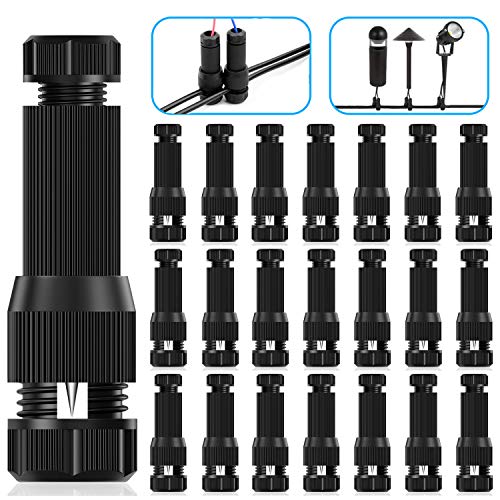
UNIQUE FASTLOCK DESIGN: With latest upgraded screw tight design, iCreating outdoor low voltage wire connector allows for a faster and more convenient connection of low voltage landscape lights than other landscape light connector. You can be confident that your connection is secure thanks to its excellent and high quality design
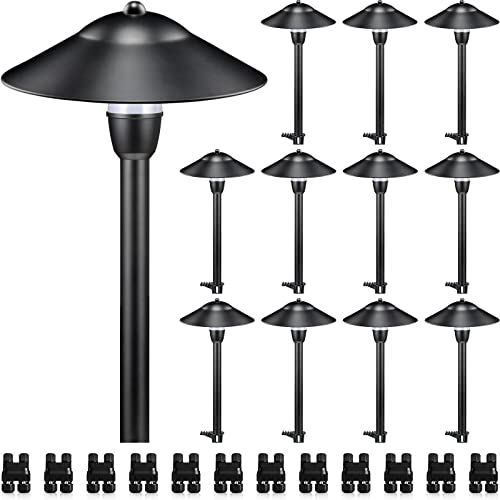
【Beautiful Look】With a classic "hat" look and a black finish, our LED path light looks beautiful yet unobtrusive in any landscape. With a 7.8" large shade, the path lighting is 360° downward light without any glare. This low voltage landscape light is perfect for lighting pathway, garden, yard, walkway, driveway, patio, etc.
EDISHINE Low Voltage LED Pathway Lights, 4 Pack
Want reliable wired lighting without bulb swaps? The EDISHINE Low Voltage LED Pathway Lights deliver exactly that. These 12-volt fixtures use built-in LEDs rated for 50,000 hours—no maintenance, no hassle.
I appreciate the cast aluminum housing with IPX5 waterproofing, meaning rain and sprinklers won’t damage them. The water-seeded glass diffuses 120 lumens of warm white light (3000K, a cozy yellow tone) across three feet. High CRI 80 ensures colors look natural, not washed out.
Installation is straightforward: stake them, connect the low-voltage line with included quick connectors, and power on. The oil-rubbed bronze finish blends into gardens, driveways, and pool areas seamlessly.
These suit homeowners wanting durable, no-fuss pathway lighting. My favorite feature? The stabilized voltage prevents flickering. One caveat: you’ll need a 12V transformer, sold separately. I recommend these for practical, long-term landscape illumination.
Best For: Homeowners seeking durable, maintenance-free wired pathway lighting for gardens, driveways, and landscapes who already have or plan to purchase a 12V transformer.
Pros:
- 50,000-hour built-in LEDs eliminate bulb replacements with stabilized voltage to prevent flickering
- IPX5 waterproof cast aluminum housing withstands rain and sprinklers while providing good heat dissipation
- Quick-connect installation with included ground stakes and connectors for easy setup
Cons:
- Requires a separate 12V transformer, adding to setup complexity
- Non-removable light head limits flexibility if LED module eventually fails
- Modest 120-lumen output with 3-foot lighting range may require more fixtures for larger areas
Recommended Products

Durable Aluminum & IP65: Crafted with heavy-duty die-cast aluminum, these ground lights withstand decades of outdoor abuse - from scorching summers to freezing winters. IP65 rating ensures full protection against rain, dirt, and accidental hose sprays
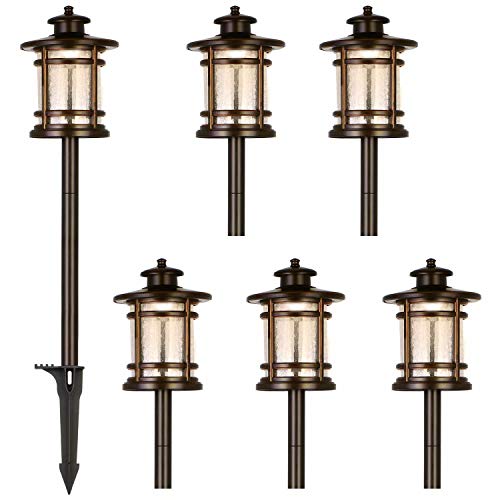
✅ Built to last: Cast aluminum construction is durable and weather resistant, able to operate in cold weather up to -13°F and hot weather up to 110°F

Replaceable light bulb: This low voltage landscape lighting comes with 7 LED bulbs(G4,3W,3000K). It's not the integrated LED path light that needs to replace the whole light fixture if the light goes out. Save your money and time on replacing and reinstalling the walkway lights.
GreenLighting Paradise Low Voltage Landscape Pathway Lights (8-Pack)

Accentuate your garden, yard, or pathway with the Modern Two-Tier Low Voltage Stake Lights by GreenLighting. Designed with a sleek profile and featuring a frosted lens, these...
This eight-pack runs on 12-volt AC power (low voltage, meaning safer installation that won’t shock you). The 35-lumen LEDs emit warm white light at 2800-3200K (a cozy yellow tone, not harsh blue). Each fixture measures 14 inches tall with a sleek black, two-tier design.
I favor these for budget-conscious buyers needing complete coverage. You get eight lights, cables, and connectors—everything for quick setup.
The GU24 base LEDs last 25 times longer than old bulbs. The frosted glass diffuses light evenly across paths.
Caution: You’ll supply your own timer. The plastic housing holds up, but powder-coated metal would outlast it.
Honestly? These suit homeowners wanting modern style without premium cost. My favorite feature: the attached power cords eliminate splicing headaches.
For reliable, year-round walkway lighting, this eight-pack delivers straightforward value. Check warranty details on the product page before purchasing.
Best For: Budget-conscious homeowners seeking modern, low-voltage pathway lighting with complete coverage and easy installation without premium pricing.
Pros:
- Complete 8-pack kit includes lights, cables, and connectors for quick, splice-free setup
- Energy-efficient GU24 base LEDs last 25x longer than traditional bulbs with warm white 2800-3200K output
- Attached power cords and low-voltage 12V AC design enable safer, simpler DIY installation
Cons:
- Timer not included, requiring separate purchase for automated operation
- Plastic housing with powder-coated finish less durable than metal alternatives
- Warranty details must be checked on product page rather than being clearly stated
Factors to Consider When Choosing Wired Pathway Lights
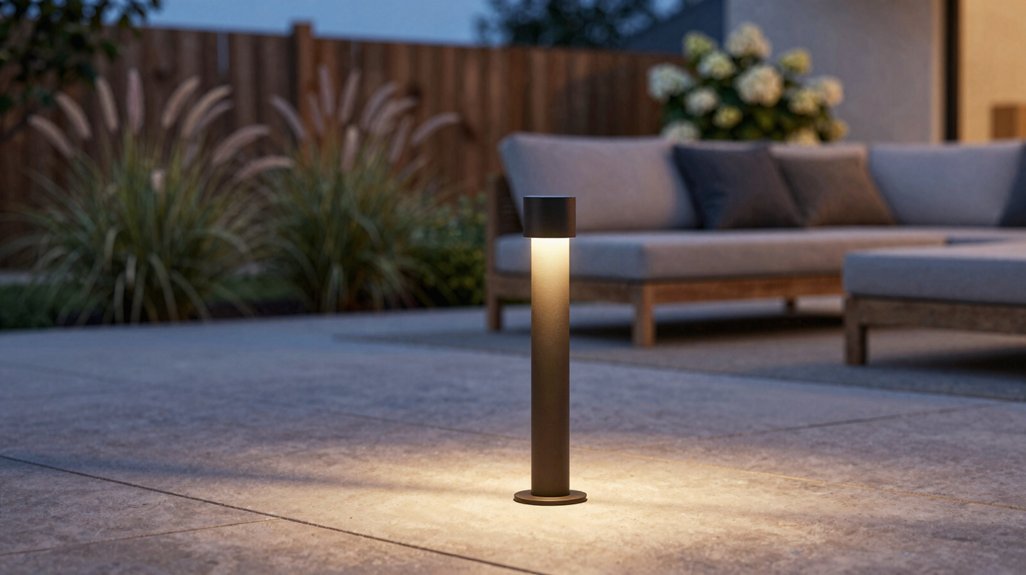
Pick lights that actually work for your yard. Brightness (measured in lumens, the total light output) determines visibility, while voltage requirements, typically 12V low-voltage or 120V line-voltage, dictate your transformer needs and installation safety. My favorite approach is checking the IP rating (Ingress Protection, the dust and water resistance code) before buying, because weather resistance separates lights that last five years from ones that fail after one rainy season.
You’ll also need to decide between integrated LEDs, which die permanently, and replaceable bulbs, which cost more upfront but save money long-term. Installation complexity varies from simple plug-and-play kits to systems requiring trenching and electrical permits, so match your skill level honestly or budget $200–$500 for professional help.
Brightness and Lumens
How much light does your path actually need? Brightness is measured in lumens per fixture, with higher lumens indicating more light output for pathway visibility. For low-voltage path lights, common outputs range from about 35 to 250 lumens per fixture. This range affects how far and evenly your path is illuminated.
A fixture’s stated lumens must be interpreted alongside beam spread or lighting pattern. Soft glow differs sharply from focused light. Consistency across fixtures matters immensely. Similar lumen ratings ensure uniform illumination along your entire walkway.
Real-world brightness depends on fixture efficiency (lumens per watt) and color temperature. My favorite choice is 3000K warm white. It produces softer, more approachable brightness on walkways.
Match your selection to actual path conditions. Avoid over-lighting. Precision prevents waste.
Voltage Requirements
Why does voltage matter so much for wired pathway lights? It determines safety, wiring ease, and consistent performance.
Most quality systems operate at low voltage, specifically 12V AC/DC (alternating current/direct current, two power types). This voltage dramatically reduces shock risk. It also permits thinner, lighter wire, my favorite practical advantage.
However, lower voltage demands careful planning. You need longer wire runs or higher current (electrical flow rate) to match line-voltage brightness.
I always verify transformer compatibility. Your power supply must match fixture requirements: exact wattage (power consumption rate), correct output current, and proper AC/DC input support. Mismatches cause failure.
For uniform illumination, calculate voltage drop, power loss across distance. Use higher-gauge wire (thicker copper) or parallel runs. This prevents dimming at pathway ends. Skip this step, and you’ll face inconsistency.
Weather Resistance Rating
Where does water actually enter a pathway light? It seeps through failed seals, corroded housings, and loose electrical connections. Water destroys fixtures from the inside out.
I always check the IP rating first. This code measures protection against solids and liquids. IP65 means dust-tight and jet-resistant. IPX5 handles water jets but ignores dust entirely. Both work: IP65 simply costs more.
Materials matter enormously. Die-cast aluminum resists corrosion. Quality plastics survive freeze-thaw cycles. Gaskets around wire entry points fail first, so inspect these closely.
Temperature ranges reveal hard limits. Seals crack at -4°F. Plastics warp at 104°F. Know your climate.
My favorite approach pairs robust housings with built-in LEDs. Fewer bulb changes mean fewer opportunities for moisture intrusion. This combination delivers genuine longevity.
Bulb Replacement Options
So exactly how does a bulb quit on you? LEDs degrade gradually, losing brightness until they’re useless. Most wired pathway lights use either replaceable bulbs, often G4 bi-pin types with 14 LEDs each, or integrated LED modules rated for 50,000 hours.
Replaceable bulbs mean easy service. You swap them out when dimness hits. This costs money long-term. Integrated LEDs eliminate replacements entirely. That’s my favorite approach. However, module failure demands complete fixture replacement. Expensive.
Check voltage compatibility, most systems run 12V, and verify base type before buying spares. Wattage must match exactly. Mismatched bulbs burn out fast or damage transformers.
Choose replaceable bulbs if you prefer control. Pick integrated LEDs for zero maintenance. Either way, confirm specifications now. Future you will thank present you.
Installation Complexity
How hard is it, really? Wired pathway lights demand more effort than solar alternatives. You’ll need a low-voltage transformer (a device that reduces household voltage to safe 12V levels) and consistent wiring throughout your layout. Installation means in-ground mounting with stakes or housings, plus trenching to bury cables.
Many sets include quick-connectors and ground stakes, which simplify connections. You’ll still route and secure cables carefully. Check integrated LEDs carefully: non-replaceable bulbs create single-point failures that affect long-term planning. Always verify weatherproof ratings, IP65 or IPX5 indicate dust and water resistance, and confirm compatibility with existing outdoor circuits.
My favorite approach: buy systems with modular connectors. They save hours. Budget for conduit if your soil shifts. This work rewards you with reliable, consistent illumination.
Material Durability
Installation complexity matters, but material durability determines whether your lights survive five seasons or fifteen. I always choose corrosion-resistant housings, typically aluminum or brass, because these metals resist rust when moisture attacks them daily. Water resistance ratings matter hugely: IP65 (ingress protection, meaning dust-tight and jet-water resistant) or IPX5 (water-jet resistant) shields internals from rain and humidity.
Heat dissipation features in the body material prevent LEDs from degrading during long nightly operation. UV-stable finishes, my favorite is oil-rubbed bronze, though powder-coated plastic works, stop sun fading from destroying appearance. Don’t ignore stakes and mounting hardware; flimsy steel bends in tough soil.
Premium materials cost more upfront, but replacement burns money faster. Buy once, buy smart.
Design Aesthetics
Three visual elements separate forgettable pathway lights from fixtures that elevate your entire landscape. First, the finish: oil-rubbed bronze, matte black, or brushed nickel, must complement your brick, stone, or wood surroundings. Second, shade style determines everything: hat shades cast focused pools downward, while seed glass or rippled water glass creates decorative, diffused glow. Third, color temperature sets mood; 3000K warm white remains my favorite for residential pathways, though cooler tones suit modern facades.
Purchase criteria center on silhouette and scale. Fixtures between 14–20 inches tall suit standard beds; compact 5–7 inch housings work for restrained installations. Low-voltage wiring aesthetics matter: integrated stakes and streamlined connectors prevent visual clutter.
Match your landscape’s scale, but know this: oversized fixtures overwhelm, undersized ones disappear. My recommendation? Prioritize warm white consistency and hidden hardware.
Warranty Coverage
Why gamble on longevity? Warranty coverage determines your true cost of ownership. I’ve seen kits offer 36-month replacement coverage while others limp along with 12- to 24-month terms. That gap matters.
Look for explicit replacement or repair guarantees, not vague manufacturer promises. Confirm accessories, bulbs, stakes, connectors, are included. My favorite policies spell out every covered component.
Verify whether support expires or continues as lifetime after-sales assistance. Limited windows leave you stranded. Check installation requirements, proper usage, and outdoor exposure conditions: violations void your protection.
Determine if claims go direct to the manufacturer or through your retailer. Manufacturer-direct routes typically resolve faster. Retailer intermediaries add friction and delay.
A robust warranty transforms a gamble into a secure investment. Choose accordingly.