Right blades cut clean, wrong blades crush stems, and dull blades waste your strength. I evaluate loppers by four metrics: cutting mechanism (bypass slices live wood, anvil crushes dead wood), jaw capacity (the maximum branch diameter it opens to), handle leverage (longer equals more power, heavier equals more fatigue), and steel grade (Boron-treated lasts longest).
My favorite pairing matches medium-duty bypass for living branches under 1½ inches with extendable poles for tight spots. You need to know which two tools actually justify their price tags, and which three disappoint under real orchard conditions.
Fiskars 28″ Heavy Duty Bypass Loppers for Tree Trimming

IDEAL BRANCH TRIMMER: 28" Steel blade garden bypass lopper that glides through up to 1.5" thick branches for easy cuts; Works well for trimming tree branches to maintain your...
The Fiskars 28″ Heavy Duty Bypass Loppers solve a single question for buyers: how do you cut thick branches without expensive power tools?
The mechanism is straightforward. These bypass loppers (scissors-style cutters with two curved blades) use leverage from 28-inch handles to slice branches up to 1.5 inches thick. The low-friction coating prevents sap buildup and rust. Steel blades stay sharp through seasons of use.
Purchase criteria favor practical gardeners. You get rust resistance, shock-absorbing grips, and a lifetime warranty. No power cords. No fuel. Just reliable cutting force.
These match homeowners maintaining mature trees. My favorite feature: the non-slip handles.
One caveat—branches near 1.5 inches require firm pressure. Build strength into your routine.
I recommend these for gardeners prioritizing durability over speed. Just clean, precise cuts season after season.
Best For: Homeowners maintaining mature trees who prioritize durability, precision, and fuel-free operation over cutting speed.
Pros:
- Lifetime warranty and rust-resistant steel blades ensure long-term reliability
- Low-friction coating prevents sap buildup and reduces maintenance
- Shock-absorbing, non-slip handles provide comfort and control during extended use
Cons:
- Requires significant hand strength for branches near maximum 1.5-inch capacity
- Manual operation slower than power tools for large pruning jobs
- Limited to branches 1.5 inches or smaller, restricting use on thicker limbs
Recommended Products

IDEAL TREE BRANCH CUTTER: 32" Steel blade bypass lopper that glides through up to 2" thick branches for easy cuts; Tree Pruner that works well for trimming tree branches to maintain your yard and garden

IDEAL BRANCH TRIMMER: Fiskars 28-Inch Power-Lever Bypass Garden Lopper glides through branches up to 1.75" thick for easy cuts; Works well for trimming tree branches to maintain your yard and garden and encourage overall plant health and appearance
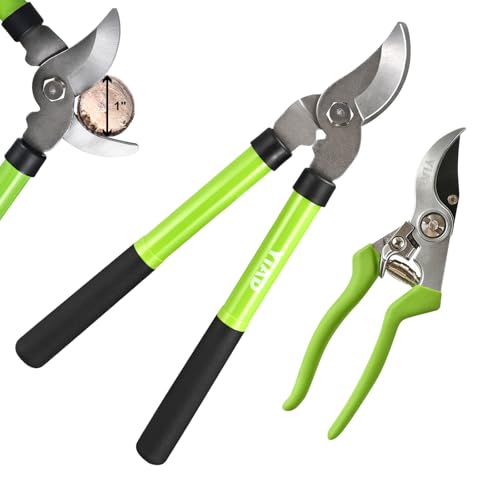
🌿【SK-5 Hardened Steel + Teflon Coating】: Blades forged from premium SK-5 high-carbon steel with multi-stage heat treatment—3X stronger cutting power than standard stainless steel. Teflon coating prevents sap buildup and rust, even in rain and humid conditions. Clean cuts through branches, limbs, trees, shrubs, hedges, and rose bushes without bark tearing. Perfect for detailed garden work and yard tasks—an excellent choice for both beginners and experienced gardeners.
AIRAJ 16-24″ Extendable Loppers for Tree Trimming

Adjustable and Durable Handle - Extendable Loppers: The lopping shears are adjustable from 16 inches to 24 inches, allowing you to handle tall branches easily. The iron arm...
Looking for loppers that grow with your needs? The AIRAJ 16-24″ Extendable Loppers expand from 16 to 24 inches, giving you reach without sacrificing control.
The iron arm resists bending under load. SK5 steel blades with Teflon coating cut clean through 1.5-inch branches and stay sharp season after season. The by-pass design slices rather than crushes, which means faster healing for your trees.
I appreciate the sweat-resistant grip. The ergonomic angles reduce fatigue because the lever principle distributes force efficiently. You work longer with less strain.
These suit home gardeners and pros who need adjustable reach. My only caveat: extension adds weight. You trade maneuverability for range.
For versatile cutting at a modest investment, these deliver. My favorite feature is the grip security when conditions get tough.
Best For: Home gardeners and professionals who need adjustable reach for pruning branches up to 1.5 inches while prioritizing comfort during extended use.
Pros:
- Extendable 16-24 inch handles provide customizable reach without sacrificing cutting power
- SK5 steel blades with Teflon coating maintain sharpness season after season
- Ergonomic, sweat-resistant grip reduces fatigue and supports longer work sessions
Cons:
- Extended position adds weight that reduces maneuverability
- No mention of replacement blade availability
- 1.5″ cutting capacity may limit use on thicker, mature branches
Recommended Products

Fiskars Ratchet Lopper compounds force with a series of easy squeezes for maximum cutting power with very little effort

CHOPS THROUGH 2-INCH BRANCHES EFFORTLESSLY: The compound action mechanism multiplies your cutting power for fast removal of dry, dead and woody growth. This anvil-style blade is built for the toughest preparatory cuts and cut-to-length work, making heavy-duty pruning dramatically easy through extra leverage.

IDEAL BRANCH TRIMMER: Fiskars 15-Inch Anvil PowerGear Super Pruner glides through branches up to 1.25" thick for easy cuts on dry, dead growth; trim tree branches to maintain your yard and garden and maintain overall plant health and appearance
GARDEN GURU Bypass Loppers Tree Trimmer (15-Inch)

CUT, TRIM & PRUNE: With these 15 inch bypass loppers, cutting and trimming your branches, hedges, shrubs, bushes and trees is easy, thanks to High Carbon Steel Blades and...
Want precision without the bulk? The GARDEN GURU 15-Inch Bypass Loppers deliver exactly that. I find this tool exceptional for controlled, close-to-body trimming.
These loppers cut branches up to 1-1/2 inches thick using hardened high-carbon steel blades forged with manganese steel, a metal alloy that strengthens the cutting edge.
The 15-inch handles intentionally improve your cutting angle and balance. You gain precision. You lose arm strain.
The comfort grips fit small and large hands equally well. I appreciate the lightweight build for extended sessions without fatigue.
The lifetime warranty proves Garden Guru trusts their heavy-duty construction. Plus, they’re carbon neutral certified.
My favorite endorsement: this is the lopper for gardeners who hate bulk. One caveat—hard-to-reach branches need a longer tool. Buy these for detail work. You’ll prune like a pro.
Best For: Gardeners who prioritize precision and control for close-to-body trimming and detail work over reach and bulk.
Pros:
- Lightweight, well-balanced design reduces arm strain during extended use
- Hardened high-carbon manganese steel blades deliver smooth, clean cuts up to 1-1/2 inches
- Shorter 15-inch handles improve cutting angle and precision
Cons:
- 15-inch length limits reach for hard-to-access branches
- Not suitable for tasks requiring extended reach or leverage
- Cutting capacity capped at 1-1/2 inches limits use on thicker branches
Recommended Products
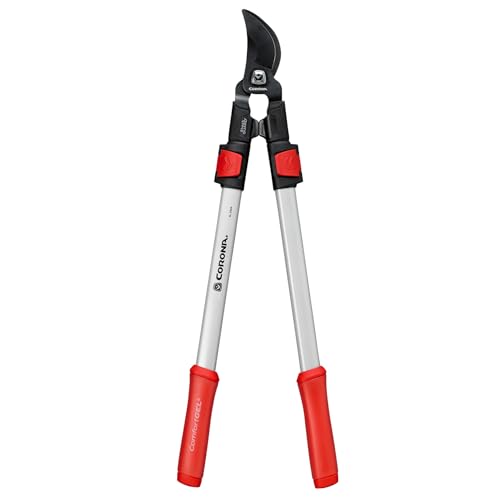
Extendable handle lopper with specially coated nonstick blade

1-1/2-inch Cut Capacity for Thick Branches – Easily cuts live branches and woody stems up to 1-1/2-inch thick for efficient tree and shrub pruning.

CUT, TRIM & PRUNE: With these 16 inch gear action loppers, cutting and trimming your branches, hedges, shrubs, bushes and trees is easy, thanks to Gear Action High Carbon Steel Blades and Comfortable Grips. Keep your bushes and trees healthy and pretty!
Corona Tools X Series Pro Bypass Lopper

2-1/4″ Cutting Capacity for Thick Branches – Designed to handle large limbs and dense woody growth, making it ideal for pruning trees, trimming shrubs, and tackling tough...
Corona’s X Series Pro Bypass Lopper tackles 2-1/4″ branches with a precision bypass blade, the scissor-style cutting action I prefer for live wood because it prevents crushing damage and speeds plant recovery. The mechanism slices cleanly through thick growth without tearing fibers.
This matters. Healthy cuts heal faster.
Buy this lopper if you need serious capacity. The 32.5-inch aluminum handles deliver leverage I find essential for orchard work and overgrown hedges. The ergonomic grips reduce fatigue during long sessions.
My favorite feature: the pro-grade construction withstands repeated abuse without flexing.
This tool suits homeowners with large properties and professional landscapers equally. The caveat: the 24-inch handle length demands adequate storage space. Shorter gardeners may find full extension awkward.
I recommend the AL16249 for anyone prioritizing cutting power over compact storage. It performs. It endures. The red finish resists corrosion, and Corona’s reputation ensures replacement parts remain available. For heavy-duty pruning, this lopper earns its place in my shed.
Best For: Homeowners with large properties and professional landscapers needing heavy-duty cutting power for branches up to 2-1/4 inches.
Pros:
- Precision bypass blade delivers clean, healthy cuts that promote faster plant recovery
- Ergonomic 32.5-inch aluminum handles provide excellent leverage and reduce fatigue during extended use
- Pro-grade construction withstands repeated heavy use without flexing or failing
Cons:
- 24-inch handle length requires adequate storage space
- Full extension may be awkward for shorter gardeners
- Less portable than compact alternatives due to overall size
Recommended Products

DELIVERS 1 3/4" CLEAN CUTS EFFORTLESSLY: This telescopic extendable anvil lopper is designed for fast, powerful cuts through dry, dead and woody growth. The compound action mechanism triples your cutting power with a unique cutting action, making heavy-duty pruning dramatically easy.
IDEAL BRANCH TRIMMER: 28" Steel blade garden bypass lopper that glides through up to 1.5" thick branches for easy cuts; Works well for trimming tree branches to maintain your yard and garden, and to encourage overall plant health and appearance

Tree Trimmer Heavy Duty: AIRAJ telescoping loppers with 6-speed adjustable aluminum handle, extending from 27 -41 inches, easily reaching high branches for versatile yard and tree trimming.
FELCO F211-50 Swiss Made 20″ Gardening Loppers

LIghtweight Aluminum Handles Micrometric Adjustment Mechanism for Easy Blade Replacement Carbon Steel Blades for Maximum Edge Retention Phalate to Free Durable Grips All...
The FELCO F211-50 delivers Swiss precision for gardeners who demand professional-grade tools. This 20-inch lopper pairs carbon steel blades—metal hardened for edge retention—with featherlight aluminum I-beam handles, the ribbed structure that resists bending under load. I adjust the micrometric mechanism to maintain blade alignment; this dial-calibrated system eliminates guesswork. The curved bypass design slices cleanly through living wood.
Buy this for maintainability. Every part detaches and replaces. I service my FELCOs for decades rather than discarding them.
These suit pruners wanting stamina. The balance reduces fatigue.
My favorite investment. Buy once, prune forever.
Best For: Dedicated gardeners and professional landscapers seeking a precision, long-lasting cutting tool who prioritize quality craftsmanship and are willing to invest in maintainable equipment for decades of use.
Pros:
- Replaceable parts and micrometric adjustment system enable decades of service rather than replacement
- Carbon steel blades with curved bypass design deliver clean, precise cuts through living wood
- Lightweight aluminum I-beam handles provide excellent balance and reduce fatigue during extended use
Cons:
- 20-inch length may limit leverage for cutting very thick branches compared to longer-handled loppers
- Investment in maintenance and replacement parts required to achieve full lifecycle value
Fiskars Power-Lever Extendable Hedge Shears (25″-33″)

GARDENING ESSENTIAL: Steel blade plant shears with extendable handles ideal for a variety of pruning tasks like making high or hard-to-reach cuts, trimming flower stems,...
Why struggle with overgrown hedges? I extend these shears from 25 inches to 33 inches and reach high branches without a ladder. The Power-Lever mechanism, a compound lever system that multiplies cutting force, slices through thick stems with minimal effort.
The self-sharpening serrated steel blades maintain their edge through repeated use. A low-friction coating prevents sap buildup and resists rust.
The 10-inch blade length handles detailed work and bulk cutting equally well.
These suit gardeners maintaining tall hedges or pruning flower stems overhead. They’re not replacement loppers for thick branches; the blade geometry favors precision over raw power.
My favorite feature is the non-slip grip that stays secure when my hands tire. Fiskars backs this with a lifetime warranty. For high-reach maintenance, this is simply reliable.
Best For: Gardeners who need to prune high or hard-to-reach hedges, shrubs, and flower stems without using a ladder.
Pros:
- Extendable handles (25″–33″) provide safe reach for overhead pruning without ladders
- Power-Lever compound mechanism multiplies cutting force for easier slicing through thick stems
- Self-sharpening serrated blades with low-friction coating reduce maintenance and prevent sap buildup
Cons:
- Not suitable for thick branches that require loppers due to precision-focused blade geometry
- Limited to lighter-duty cutting tasks rather than heavy pruning applications
- Maximum 33″ reach may still require stretching or additional tools for very tall hedges
Recommended Products

Cut Live Branches Up to 1.5 Inches Thick: This bypass tree trimmer is perfect for trimming green wood, helping you keep your yard tidy, promote healthy plant growth, and enhance the beauty of your outdoor space


【Product Information】 Garden loppers pruning heavy duty weight 2.2 lbs,overall length 23",divided into 7-inch blade and 16-inch handle. branch cutter can cut up to 2 inches of wet and dry wood
Spear & Jackson Heavy Duty Telescopic Anvil Loppers

Ratchet action gives easy cutting in short steps - ideal for cutting thicker, harder branches SK5 carbon steel upper blade for lasting sharpness PTFE coated blade for rust...
Need reach without the strain? The Spear & Jackson Razorsharp Heavy Duty Telescopic Ratchet Anvil Loppers deliver exactly that. I extend these handles from 28 to 40½ inches when branches sit just out of reach.
The ratchet action—an incremental cutting mechanism—breaks thick, hard wood into manageable bites. SK5 carbon steel, a high-grade blade material, holds its edge. PTFE coating prevents rust.
You’ll appreciate the tubular aluminum construction. It’s light yet strong. Soft grips reduce hand fatigue during extended pruning sessions.
The locking catch secures blades for storage. This tool handles demanding cuts ordinary loppers cannot manage.
My favorite feature: the 10-year guarantee. Spear & Jackson stands behind their product completely.
Purchase if you prune mature trees regularly. Skip if you only trim soft new growth—bypass loppers suit that task better. I recommend this for serious gardeners needing mechanical advantage.
Best For: Serious gardeners and homeowners with mature trees who need extended reach and mechanical advantage for cutting thick, hard branches that ordinary loppers cannot handle.
Pros:
- Extendable telescopic handles (28–40½ in) provide excellent reach for high or distant branches without requiring a ladder
- Ratchet action mechanism multiplies cutting force through incremental bites, making thick wood manageable with less physical strain
- Premium materials (SK5 carbon steel blade, PTFE coating, tubular aluminum) ensure lasting sharpness, rust resistance, and lightweight durability backed by a 10-year guarantee
Cons:
- Anvil-style cutting crushes rather than slices, making it unsuitable for trimming soft new growth where clean cuts matter
- Telescopic mechanism adds complexity and potential failure points compared to fixed-handle loppers
- Ratchet action requires multiple pumping motions per cut, slowing workflow compared to single-stroke tools for thinner branches
Recommended Products
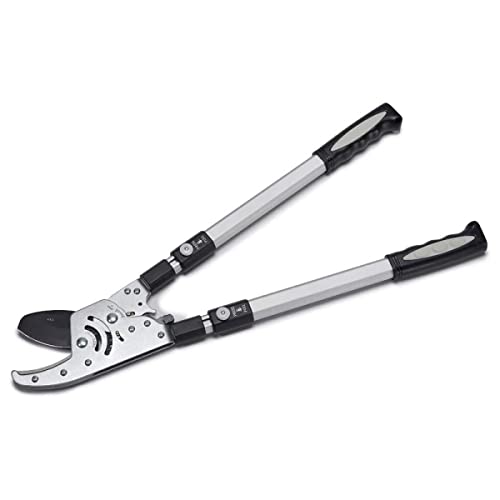
HEDGE CLIPPERS FOR DRY WOOD - These heavy-duty garden trimmers feature 6 pin-locked position stops and rubber grips. This style of garden cutter is designed for dry wood, great for prepping kindling as well as trimming dead branches and tree limbs.
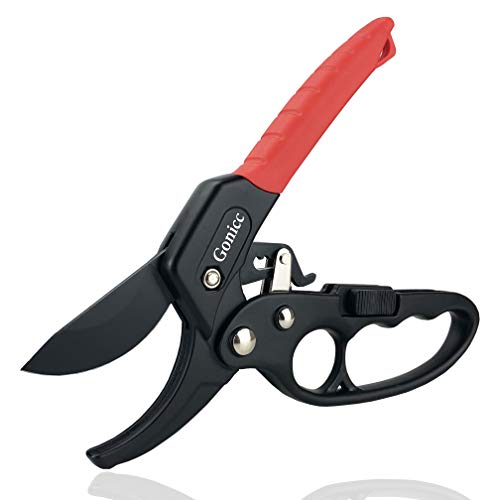
Premium SK‑5 Steel Blades - Our garden shears feature professional-grade SK‑5 steel blades built to the highest quality standards, delivering clean, precise cuts every time. Perfect for trimming light tree branches, rose bushes, shrubs, and hedges with ease.
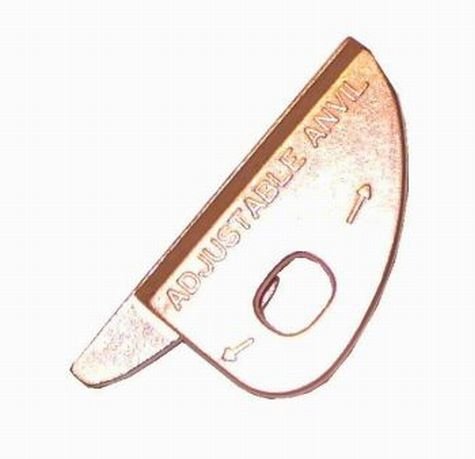
Package Dimensions :1.3 Cm L X3.6 Cm W X4.4 Cm H
Factors to Consider When Choosing Lopping Shears
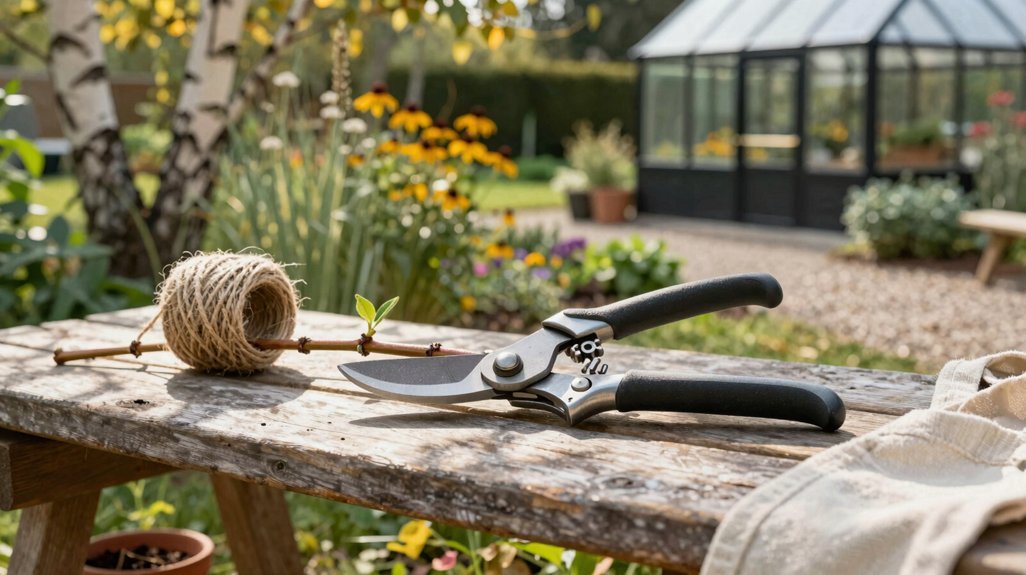
I evaluate lopping shears through four lenses. The blade’s metal composition, typically carbon or stainless steel, determines how long the edge stays sharp under friction. The cutting capacity, measured in maximum branch diameter, must match your actual pruning targets.
I always check handle length options first. Telescoping poles extend your reach, but shorter handles control cuts better, because my favorite feature is balanced weight distribution, not raw power, since fatigue ruins precision faster than dull blades.
You’ll need grip comfort design with shock-absorbing bumpers if you’ve got arthritic hands; otherwise, thick rubber pads suffice.
Recommended Products

High-Quality Carbon Steel Blade: Crafted from durable carbon steel, offering sharpness and strength for effective pruning.

ULTRA SHARP BLADE: Yesker garden loppers have upper and lower blades made of different high-quality materials. The upper blade is made of 65Mn high-carbon steel, heat-treated to HRC52-56, and has a black TEFLON surface. The lower blade is made of 50# steel, heat-treated to HRC44-48, and has a chrome-plated surface. It is durable, rust-resistant, and corrosion-resistant, ensuring smooth and efficient pruning every time. This is a perfect tree trimmer tool that can easily meet your pruning needs

High-Quality Carbon Steel Blade: Crafted from durable carbon steel, offering sharpness and strength for effective pruning.
Blade Material Quality
How exactly does blade steel affect your cuts? Harder steel, like high-carbon or SK5 (a Japanese tool steel), holds an edge longer through dense branches. Softer metal dulls fast: you work harder.
I prioritize PTFE-coated blades for one reason: reduced friction. Sap gums less, rust forms slower, and I sharpen less often. It’s my favorite efficiency hack.
Bypass designs with hardened blades slice live wood cleanly. Clean cuts heal faster. Anvil styles crush; they damage living tissue. Pick bypass for trees.
Pair that premium blade with forged or machined steel construction. Thin, weak metal bends under torque. I’ve ruined cheap loppers this way.
Finally, choose replaceable blades. Sharpening restores them, so you avoid full replacement. This saves money long-term.
Cutting Capacity Range
Why does cutting capacity matter so much? It determines the maximum branch diameter your loppers can cleanly sever, typically ranging from 1/2 inch to over 2 inches across most models.
Bypass loppers, my favorite for live wood, employ scissor-like dual blades that slice cleanly through branches up to 1.5 inches. Professional-grade models exceed this limit substantially.
Anvil loppers press a single blade against a flat surface, which compresses wood fibers and demands greater force at identical diameters.
Cutting capacity depends on blade quality, pivot strength, and overall tool robustness, not merely the manufacturer’s maximum rating. Telescopic handles improve leverage, letting you reach the upper end of your tool’s range with cleaner results.
Purchase for your actual needs, not aspirational ones. Exceeding rated capacity damages blades. I recommend 1.5-inch capacity for most homeowners. Upgrade only for established fruit trees or hardwoods.
Handle Length Options
What determines how much power you can apply to a cut? Handle length. Longer handles give you greater leverage, letting you slice through thicker branches with less wrist strain. Shorter handles deliver better control for close-in pruning and tight spaces. That’s the trade-off.
Extendable loppers, my favorite versatility solution, adjust typically from 16 to 24-plus inches. Telescoping handles let one tool cover multiple tasks. You’ll cut costs by avoiding redundant purchases.
Match handle length to your height and reach needs. Too long causes fatigue; too short limits power. I always balance required reach with comfort for extended use.
Adjustable models dominate my recommendations. They adapt when you’re reaching overhead or working in confined beds. Single-tool flexibility matters for practical gardeners.
Grip Comfort Design
Grip comfort separates good lopping shears from great ones. Non-slip handles maintain control during extended pruning. I won’t compromise here.
Ergonomic design, shaped to fit your hand naturally, reduces fatigue significantly. Palm-friendly materials improve precision on delicate cuts. My favorite feature is moisture-resistant grips, textured or rubberized surfaces prevent slipping in humid conditions.
The grip placement matters immensely. It must complement lever action, maximizing leverage without forcing you to squeeze harder. This mechanism transfers power efficiently.
Shock-absorbing cushions dampen vibration transmission. Your hands stay comfortable through long trimming tasks. I specifically recommend cushioned grips for anyone pruning mature trees.
Purchase shears with these three criteria: non-slip texture, ergonomic shaping, and vibration dampening. Avoid smooth plastic handles entirely, they fail when sweaty.
Weight And Balance
Every ounce of weight placement determines how long I’ll prune without exhaustion. Well-balanced loppers reduce fatigue because weight distributes evenly, minimizing strain on my wrists and forearms. Heavier models generate more momentum for thick branches, but they’ll punish my hands during extended sessions.
Shorter handles deliver superior control and balance for close-in trimming. Longer handles provide leverage for larger cuts. Telescoping features shift weight dynamics along the tool’s length as I extend or retract them, requiring readjustment of my grip.
Ergonomic designs with non-slip grips maintain stable balance when my palms sweat. This prevents dangerous slips.
I prioritize balanced 2-3 pound models with fixed handles for most tasks. My favorite combination: moderate weight with rubberized grips. Avoid top-heavy loppers entirely. Test the balance point before purchasing.
Durability Features
Blade-quality engineering separates tools that last seasons from those that fail mid-cut. I always examine the steel composition first. High-carbon or SK5 steel blades hold their edge through heavy cutting cycles. Rust-resistant coatings, including stainless finishes, prevent corrosion when I leave tools in damp conditions.
Reinforced handles matter equally. Aluminum or steel construction resists bending during leverage cuts on thick branches. I specifically seek forged components in heavy-duty designs. These pro-grade elements tolerate frequent pruning without fatigue failure.
I treat lifetime warranties as durability proof. Manufacturers only extend guarantees when they’re confident in build integrity.
My favorite models combine SK5 edges with aluminum handles, premium construction at mid-range pricing. Avoid budget loppers with unstamped steel; they deform permanently. Invest once. Replace never.
Maintenance Requirements
How much upkeep are you willing to commit? I oil the pivot (the central screw joint) and blades after every heavy session. This prevents rust and keeps cuts smooth. You’ll need to sharpen blades periodically or replace them entirely when cuts tear instead of slice. Clean sap, dirt, and resin immediately after use. Store your shears dry.
I inspect handles, grips, and fasteners monthly: tighten anything loose. Check coating wear and blade alignment; re-align when cuts bind. My favorite maintenance routine takes ten minutes. It extends tool life dramatically. Neglect these steps and you’ll replace shears yearly. Choose models with accessible pivot screws and replaceable parts. Your pruning quality depends on this discipline.