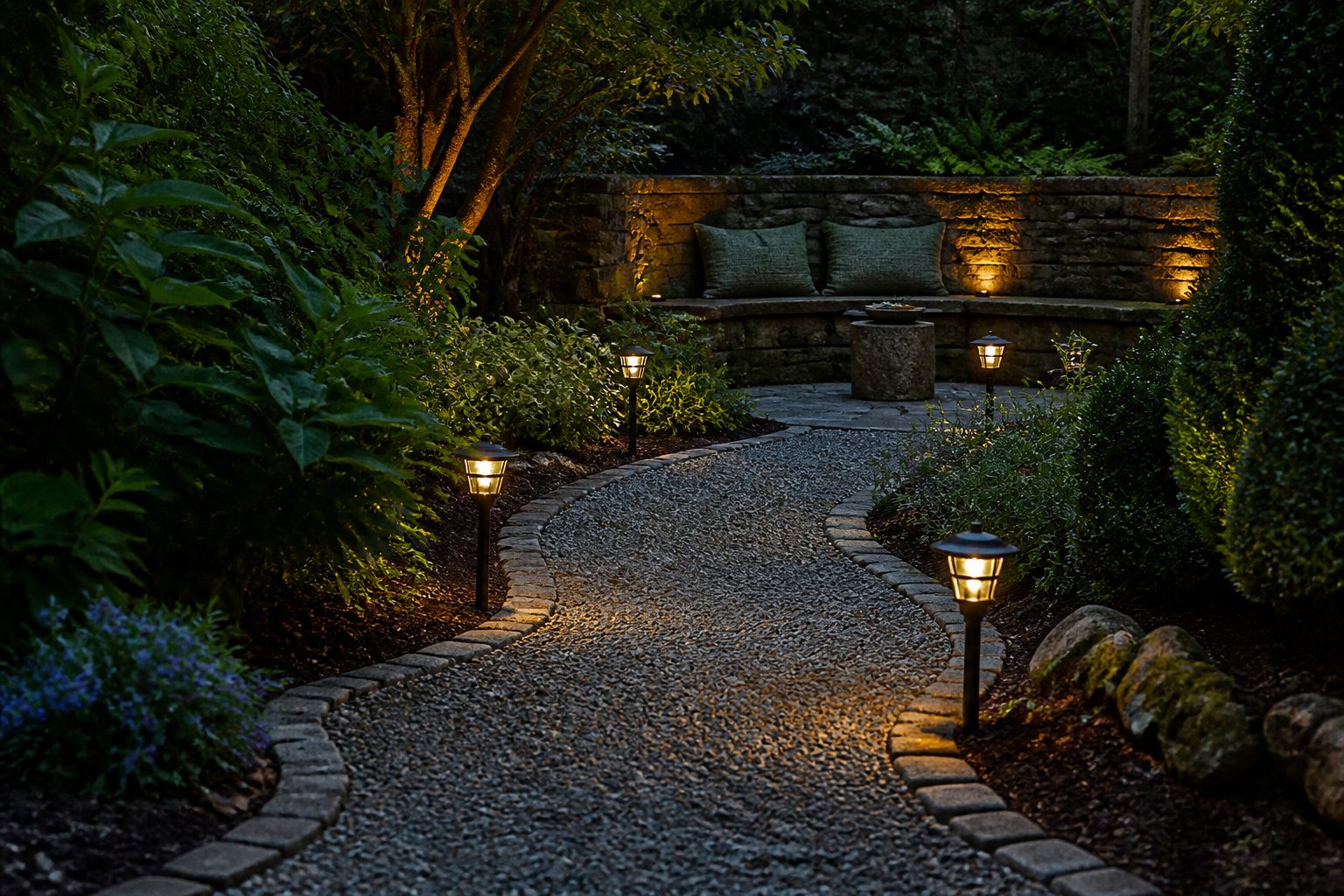
Outdoor lighting ideas range from a $15 string light set to a $7,500 professionally wired system, and the right choice depends on whether you are willing to dig a trench or just push a stake into soil.
Solar path lights and plug-in strands need no permit and no electrician; anything touching pool water or buried cable does.
I learned the hard way that a "waterproof" IP65 strip fogged inside a week underwater, while IP68 fixtures are the only kind that belong below the surface.
1. Pathway Lighting

Path lights do the one job every guest notices: they keep a walkway from becoming a trip hazard after dark. Space them 8–10 feet apart, alternating sides so the light pools overlap without turning the path into a runway.
I tend to start at the driveway and work toward the door, because that is the route people actually walk, not the one the drawing suggests they should.
LED fixtures in this role last 50,000 to 100,000 hours, which at typical evening use is fifteen to twenty-five years before you think about replacement.
Solar options skip the wiring entirely, though their brightness shifts with the season; low-voltage LED runs steady on a transformer and usually needs no permit.
Either way, aim for 50–100 lumens per fixture, enough to show the edge of a step without blasting the eyes.
Recommended Products

INNOVATIVE DESIGN: Solar pathway lights adopt an integrated lamp head design, using highly transparent acrylic material and surface-cutting technology, making the lamp head present a diamond-like effect. The light projects 3 ft radius wide-coverage starburst patterns onto the ground at night. This lighting effect is design for decoration.

Upgrade your outdoor lights experience with our exceptional solar lights. Featuring Edison style LED lamp bulb and high-transmittance lampshades, our solar sidewalk lights surpass most others on the market. Not only are they classic looking, but they also create a stunning dappled effect with their pattern. Combining functionality and aesthetics, these solar-powered lights are your choice for outdoor lighting and decor. Makes a practical yet elegant gift for parents, grandparents, and neighbors.

【3000K Warm White Light & Solar Lights】U.S. PATENTS INTELLECTUAL PROPERTY PROTECTION. Our upgraded LED filament bulb emits a warm white glow, surpassing the brightness of other solar lights. With a transparent glass lampshade that enhances light transmittance, these lights create a unique and captivating outdoor lighting landscape. These solar lights adorn your home or garden with warm white LED illumination, providing ample brightness without causing glare.
2. String Lights

A decent set of outdoor string lights runs $15 to $50, which puts them in reach even when the budget is tight.
I hang mine two ways: a main overhead run from roofline eye bolts or sturdy gutter hooks, and a lower perimeter strand on fence posts using screw-in hooks or adhesive ones rated for exterior use.
The overhead layer gives you enough light to actually use the patio; the perimeter line softens the edges so the space does not feel like a lit stage.
Smart string lights with app control have changed how I use them. Scheduling turns them on at dusk without a timer box, and dimming from my phone beats walking outside to find a physical switch in the dark.
Govee makes a reliable affordable set; if you are already in the Philips Hue ecosystem, their string lights cost more but the app integration is smoother. Control without clutter is what matters.
Two layers, one app, and the patio is usable after dark without looking like a carnival.
Recommended Products

Bright and Attractive design - When night falls, your yard illuminated by a brilliant starlight pattern, like a dreamy star falling to the ground, creating an extremely romantic atmosphere for your strolls. Outdoor solar lighrts not only illuminate yards and sidewalks keep people from tripping, they are an added decorative element to the yard landscape.

2X Brighter Solar Lights: Experience superior lighting with our upgraded solar pathway lights. Equipped with a precision reflective lens, solar lights outdoor pathway deliver focused, high-intensity brightness—covering a wider area than standard outdoor solar path lights. The 3500K warm white color temperature of these solar path lights provides a crisp, inviting glow that enhances visual comfort without being harsh on the eyes.The modern, minimalist design isn't just about good looks; pathway solar lights seamlessly complement any outdoor setting, from gardens and walkways to driveways and patios

Brighter Focused Solar Light: Equipped with upgraded high-precision reflector lenses, these solar pathway lights deliver up to 60 lumens of concentrated illumination for clearer, more defined light output. Compared with other outdoor solar lights, our solar lights outdoor are brighter and built to last longer. The warm white 3000K glow is clear and pleasant, creating a bright and comfortable outdoor atmosphere for walkways, patios, and yards.
3. Uplighting for Trees

Ground-level wash lights aimed up a trunk do something moonlight never manages: they catch the ridges in bark and the architecture of branches overhead, turning a tree you ignore by day into something that holds the yard at night.
Set fixtures 2–3 feet from the trunk, angled upward, and the beam grazes the surface enough to read texture rather than flattening it into a bright blob.
A narrow 15–25 degree spot suits a tall columnar tree; a 30–60 degree flood works better for the spreading canopy of an oak or maple.
Multi-trunk specimens need multiple fixtures, each positioned to reveal a separate stem, or the center collapses into shadow and the tree reads as half its real shape.
I learned the hard way that three well-placed uplights outperform six scattered ones. The eye goes to contrast, not coverage.
A single dark gap where a fixture is missing draws more attention than the lit areas themselves, and every added light dilutes the drama you’re paying for in watts and wire.
Recommended Products

16 Million Colors & Multiple Scenes: Transform your holiday decorations with smart Christmas lights that offer an incredible 16 million colors and various modes. The length of the lights is 98 FT,the lead wire is 13.1 FT, total length is 111 FT, and the bulb spacing is 3.9 inches. Perfect for enhancing the atmosphere during Christmas, Halloween, 4 of July, Easter, Valentine's Day, St. Patrick's Day, Thanksgiving, New Year, weddings, and birthdays.

【Convenient Smart App Control】Use addlon smart outdoor string lights to become a professional ambiance creator. Just app control, outdoor lights can adjust brightness, set timer and choose different lighting effects. One-step connection design of patio lights allows you to simply download the app and click to connect, no need to log in or provide complex information.
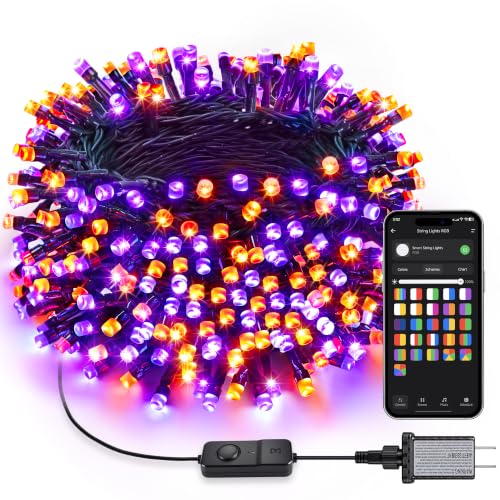
16M Colors & 170+ Scenes: Create vivid RGB effects or customize your own DIY look with the app—perfect for Christmas, Halloween, Thanksgiving, birthdays & parties. One smart LED string light for year-round indoor/outdoor decor
4. Wall Lighting

Vertical walls catch light in a way flat ground never does.
Stone, brick, or stucco throws texture back at you once you graze it with a beam, which is why I think wall washing belongs on the list of outdoor lighting ideas that actually change how a space feels after dark.
The fixtures sit 12–18 inches out from the surface, spaced roughly 3–4 feet apart, and the angled light rakes across instead of punching straight in. That grazing effect turns a blank garage wall into something you want to look at.
Sconces and downlights mounted directly on the wall do the opposite job. They push light downward or wash it sideways, and because the source sits above eye level for anyone seated nearby, the glare drops away.
You notice the patio more and the bulb less. Recessed step lights work the same trick on retaining walls and stair risers, casting downward to show edges without throwing light back into your face.
Two ways to play this: keep the fixtures off the wall and graze for drama, or mount them on the wall and soften the scene for sitting.
The first wins if you have texture worth showing; the second wins if you are trying not to blind your guests.
Recommended Products

120V AC TO 12V DC TRANSFORMER - The 100W landscape lighting transformer convert 120V AC to 12V DC safe voltage, achieving energy-saving life and away from the danger of electricity. Landscape Transformer offers a dependable solution for all your outdoor LED low voltage lighting system, such as LED landscape lights, spotlights, in-ground,step, pathway lights, etc. (Please note the transformer not for Halogen light
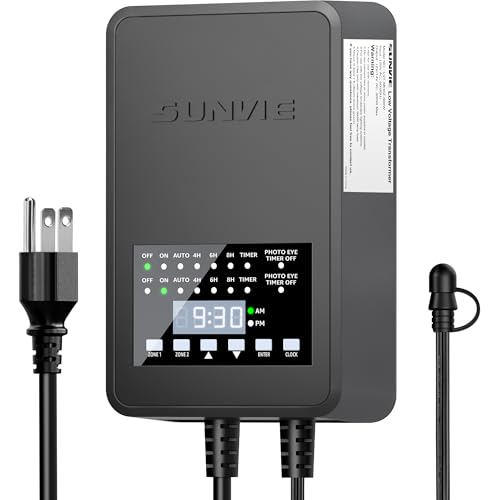
LOW VOLTAGE TRANSFORMER WITH EXTERNAL PHOTOCELL SENSOR - The low voltage transformer convert 120V household AC voltage to 12/14V safe AC voltage, compatible with all 12/14V LED and halogen landscape lighting system. Removable and replaceable photocell sensor come with 6.8ft UL listed sensor cord allow you to install landscape light transformer indoor or outdoor where you want.

COMPATIBLE WITH ALL LOW VOLTAGE LIGHTINING SYSTERMS - The 200W low-voltage transformer converts 120V household AC voltage into 12V/14V safe AC voltage, providing stable and safe voltage and current levels. Compatible with all 12V/14V low voltage LED and halogen landscape lighting systems. Widely used in outdoor landscape lighting, path lights, spotlights, deck lights, string lights, etc.
5. Flood Lighting

Motion-sensor floodlights mounted near garage doors and dark corners give you security lighting only when something moves, which keeps the night quieter and your electricity use lower than lights burning all evening.
Modern sensors let you dial in both sensitivity and how long the fixture stays on after triggering, so a passing cat does not flood your yard for ten minutes.
Beam spread is the detail that separates a useful install from a neighborhood nuisance. A wide throw lights the ground you walk on; a narrow 15°–30° beam angles up to graze siding or a tree trunk for effect.
Aim the fixture so the brightest cone hits your driveway or path, not your neighbor’s bedroom window. The cutoff matters more than wattage.
Wired flood installs sometimes mean running cable through walls or tapping an exterior circuit you are not sure about.
If the box is full or the run crosses buried lines you did not put there, an electrician’s hour is cheaper than a mistake you cannot see in the dark.
Recommended Products

【360° FULL-ANGLE BRIGHT ILLUMINATION】 Featuring 360° all-around bright glow, they outperform conventional uplights and spotlights. These lights beautify your yard, highlight tree silhouettes and elevate landscape ambiance

【Warm Tip】:Powered by US standard plug‑in adapter, this light is NOT solar‑powered.

Brighter and Larger Illumination Area: Our 12V low voltage flood lights integrated 9W 950LM LED beadsap, the lens of wired LED flood lights is composed of 12 15-degree small-angle lenses, which can illuminate a longer distance. At the same time, this led floodlights outdoor forms a larger 60-degree lighting area, achieving a higher, brighter, and larger lighting area. This type of uplight is more suitable for spotlights that require a wide range of flood light, perfect for tall palm trees, tall flags, and dense shrubbery
6. Garden Lighting

Spotlights on shrubs need to sit far enough back that the beam grazes the foliage rather than blasting it head-on.
I learned this after installing a fixture too close to a hydrangea and watching the leaves turn into one flat white disc.
Well lights, set flush into the soil, do the opposite job: they throw light upward through ground cover so the plant reads as a low, glowing mound against the dark.
The darkness between these pools of light is what lets each shape stand alone. Flood the whole bed and you get a parking lot; leave gaps, and the eye travels from one form to the next.
Water features follow the same rule. Submersible fixtures beneath moving water catch the spray and send it shimmering; for still ponds, angle lights from the edges to keep glare off the surface and let surrounding plantings pick up the reflection.
Warm white at 2700K keeps things calm, while mixing up to 3000K adds depth. My preference is the mix, but only if you vary it fixture by fixture, not bulb by bulb in the same housing.
Wet-location ratings matter here more than anywhere. IP65 handles splashes; IP68 is the safer call for anything that sits underwater.
Recommended Products

【Long-Lasting Battery & Extended Runtime】Equipped with a high-capacity rechargeable battery, these solar pathway lights store more energy for all-night illumination(12-14 hours) — keeping your path bright from dusk till dawn

PATENT PRODUCT: US patent pending form 2023. The Ghost design with lights is really pretty for Halloween decorations.

【STUNNING DESIGN】Our solar lights features a unique integrated lamp head design with a transparent lampshade. The 7000K cool white LED lights emit a bright and delicate glow that will enhance the beauty of your driveway, walkway, garden, deck, or patio
7. Pergola Lighting

A pergola roof blocks moonlight and streetlight the same way it blocks sun, so the space underneath goes dim and flat after dusk.
The canopy needs its own light layer if you want to eat dinner there without leaning into candles.
Integrated downlights recessed into the beams give you task-level brightness over a table, and dimmers let you pull it back when the plates are cleared.
Pendant fixtures hung at eye level, like the Hampton Bay 1-Light Bronze Outdoor Pendant with its plug-in cord and included filament-style LED, turn the structure into a room that happens to be outdoors.
For softer coverage, string lights woven through the rafters fill the gaps between structural lights without adding harsh points overhead.
The mistake is treating the pergola as already lit because it is open-air. Without a dedicated layer, you end up with a dark pit at the center of your yard.
Recommended Products

Our Solar Outdoor Lights is the perfect solution for adding beauty and illumination to your garden. Warm white solar lights provide a cozy ambiance and sufficient brightness, illuminate your pathway, walkways or yard

3 LIGHTING MODES FOR ALL-NIGHT ILLUMINATION: Solar motion lights outdoor have 3 lighting modes to choose from, constant light mode (40 Lumens); Motion sensing mode (30 to 300 Lumens/25 to 200 Lumens), when someone passes by, intelligent infrared detection can sense wide-angle distances of 26ft and 160°.

Upgrade Outdoor Solar lights for pathway garden: Designed with a high-transmittance shade and a retro-style bulb, solar path lights cast a distinct, intricate Pattern on your walkways. This captivating light design upgrades your garden's aesthetic into a work of art, ensuring safety while making your home a neighborhood envy
8. Pool Lighting

Underwater LEDs turn a pool from a dark void into something you actually want to look at after dinner.
The fixtures sit in niches or clip to the wall, and the ones rated IP68 are the only kind that belong below the waterline; IP65 handles splashing on the deck, but full submersion demands the higher seal.
I learned that distinction the hard way when a "waterproof" strip I tried fogged inside a week.
Color temperature matters more than you’d think for water. Warm white around 2700K–3000K flatters skin tones if people swim at night, while cooler 4000K reads cleaner against concrete or tile.
RGB exists, but most nights I leave it alone; the novelty fades, and neighbors notice the disco.
Perimeter deck fixtures, small well lights or rail-mounted washes, keep people from misjudging the edge. They should also carry wet-location ratings, though usually IP65 suffices above the waterline.
Near any pool, 12-volt systems aren’t just preference; they’re the standard that keeps a stray fixture from turning a wet hand into a circuit.
Transformers step the house current down at the equipment pad, and every fixture from niche to path light runs on that lower voltage.
The wiring is simpler, the shock risk drops, and most LED pool kits ship ready for 12V anyway.
Recommended Products

Vibrant Color and Combination Options for Every Occasion: This 66‑foot smart LED string light comes with 200 LEDs, with 3.94‑inch spacing between each bulb. The cord from adapter to the first LED is 13 feet, bringing the total length to 79 feet. It works perfectly both indoors and outdoors. With 16 million colors and multiple built‑in lighting modes, you can match any holiday or season. Go with orange, purple, or green for Halloween. Choose warm orange for Thanksgiving and fall decor. For Christmas and other festivities, pick red, green, warm white, cool white, blue, or multicolor. It's a great fit for Halloween and Christmas decorations indoor outdoor
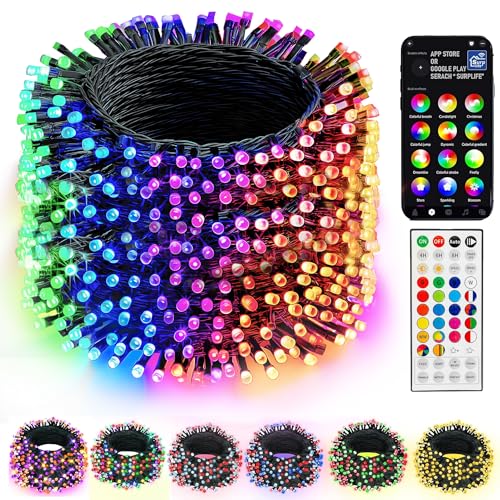
16 Million Colors and Diverse Scenes: Elevate your festive ambiance with our smart Christmas lights, boasting an astounding 16 million colors and versatile modes. These lights measure 164 FT in total length, with a 16.5 FT lead wire. The overall length is 180 FT, and the bulbs are spaced 3.9 inches apart. They are perfect for enhancing the atmosphere during holidays such as Christmas, Halloween, the 4th of July, Easter, Valentine's Day, St. Patrick's Day, Thanksgiving, New Year’s
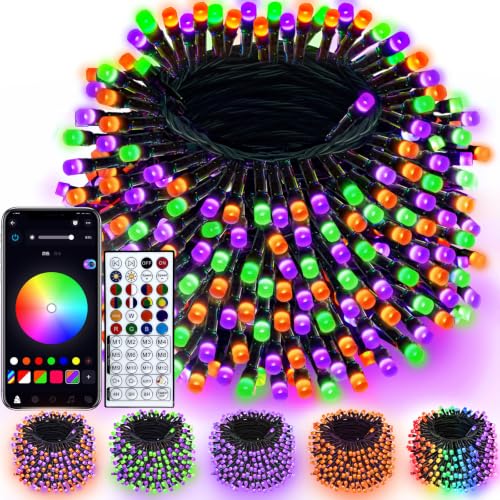
Multiple Lighting Modes: Our Halloween muti-colored RGB string lights outdoor offer 16 million color choices and 40 vibrant scene modes, easily meeting your diverse lighting needs from partying to festive warmth. One-touch switching, whether you are looking for personalized colors or preset lighting effects, you can adjust the flashing frequency and brightness as you like to create the perfect atmosphere, ideal for home, decoration and festivals, celebrations.
9. Lanterns

Battery lanterns and solar lanterns sit on tables, clip to steps, or hang from shepherd hooks without a single wire to run.
That portability is what makes them the first lights a renter should buy, and the last ones a homeowner wants to give up.
Last summer I kept three solar lanterns on the patio railing; when the conversation drifted to the fire pit, I carried them over and set them on the ground. No electrician, no extension cord snaking across the yard.
The gap they fill is real. Wired fixtures stop where the conduit stops.
A lantern goes where the dark corner actually is, or where the new seating arrangement ended up, or up in the tree branches for that hanging-orb effect.
Battery-powered metal lanterns give you the same traditional look as a wired sconce, just without the permanence.
Solar handles its own charging, though you get dimmer output and a shorter evening; battery models stay bright until you switch them off, but you feed them AAs or a USB charge.
For a $500-800 annual yard budget, either beats trenching cable.
Recommended Products

Low-Voltage Transformer with Photocell Sensor: ETL-certified 300W low-voltage transformer safely converts 120V AC to 12/14V AC, ensuring stable power for outdoor LED and halogen lights, including path, spot, deck, and string lights, enhancing outdoor night-time charm

[Dusk to Dawn Sensor] Connected to this dusk till dawn transformer, the landscape lighting will turn on automatically at dusk and off at dawn; 60W, convert 120V AC household voltage to 12V DC safety voltage, providing a safer and more practical electrical current level, don't worry about forgetting the switch, energy saving(Please note the transforemr not for Halogen light)

[Built-in Dusk to Dawn Sensor] Landscape lighting that is connected to this transformer will automatically switch on at dusk and off at dawn. By converting household voltage from 120V AC to 12V AC safety voltage using 120W, a safer and more useful electrical current level is produced. Tip: Do not use with a dimmer switch.
10. Smart Lighting Systems

Smart lighting systems turn a yard full of separate fixtures into something you actually use, because walking outside to flip four different switches gets old fast.
One button on your phone can dim the path lights, brighten the patio, and turn off the uplights you left on last night, all at once.
App and voice control are the entry points.
Scheduling matters more than I expected at first: set the deck lights to fade up at sunset and the security floods to hit full brightness at 11 p.m., and the system starts earning its keep without you touching it again.
Dimming is what makes the difference between lighting you tolerate and lighting you want to live in.
Most smart systems handle all three, though the better ones let you set scenes that combine them, a "dinner" scene versus a "locking up" scene.
Replacing every fixture is unnecessary. Smart switches wired to existing outdoor circuits handle hardwired floods and sconces.
For lamps, post lights, or string fixtures on standard sockets, smart bulbs drop in instead.
The LED bulbs that work with these systems draw a fraction of the power of what they replace, and scheduling keeps them off when no one is out there to see them.
The upfront cost runs higher than timers or basic motion sensors, but the flexibility is hard to match once you have lived with it for a season.
Recommended Products

𝐒𝐨𝐥𝐢𝐝 𝐁𝐫𝐚𝐬𝐬 𝐂𝐨𝐧𝐬𝐭𝐫𝐮𝐜𝐭𝐢𝐨𝐧: Made from brass, outside landscape flood lights resist rust, oxidation, corrision and high temperatures. These sturdy ETL certified wall wash lights can perfectly blend into your landscape and make a decorative effect

High enough shield, won't blind you when you walk by

Brighter and Larger Illumination Area: Our low voltage flood lights integrated 9W 950LM LED beadsap, the lens of wall washer lights is composed of 12 15-degree small-angle lenses, which can illuminate a longer distance. At the same time, these led wall washer lights outdoor use form a larger 60-degree lighting area, achieving a higher, brighter, and larger lighting area. This type of uplight is more suitable for spotlights that require a wide range of floodlight, perfect for tall palm trees, tall flags, and dense shrubbery
LED and Solar Energy Efficiency

LED bulbs carry a rated lifespan of 25,000 to 50,000 hours, which against traditional incandescent or halogen options means years of evening use before replacement.
For a small patio running six fixtures, that longevity translates to fewer bulb purchases and less time on a ladder swapping them out.
Solar fixtures add a different kind of savings. A photovoltaic cell charges through the day and triggers automatic illumination at dusk, so the lights draw nothing from your household meter and need no timer programming.
The upfront cost per fixture runs higher than a basic low-voltage LED path light, but the payback math shifts quickly when you factor out wiring, a transformer, and the electricity itself.
For a compact patio setup of four to six solar path lights versus an equivalent low-voltage LED kit, the break-even point typically lands in the second or third season of use, depending on local utility rates and how many hours you run them nightly.
Either route keeps a $500–$800 annual yard budget intact for plants, soil, or the next project rather than burning it on operating costs.
DIY Install or Call a Pro

Solar path lights and plug-in string lights sit at the easy end of the spectrum. The stakes push into soil by hand; the strands hang from hooks or a tension wire you can eyeball level.
No trenching, no load calculations, no permit. A small patio or balcony owner can safely handle these alone, and the whole outlay usually stays under a couple hundred dollars.
Buried cable, a transformer, and anything touching pool water are different. Pool bonding and underwater fixtures require a certified electrician by code, and for good reason: water and line voltage are an unforgiving mix.
Even on dry ground, a low-voltage system with multiple zones and a buried transformer benefits from someone who sizes the load properly and knows the local amendment to the NEC.
Professional installation runs $2,500–$7,500, roughly two to three times what a DIY kit costs.
The trade is warranty coverage on labor and materials, commercial-grade fixtures, and a design that actually lights what you meant to light rather than whatever the box happened to include.
A homeowner in suburban Atlanta spent about $1,200 over two years replacing DIY fixtures before hiring a pro who rebuilt the system for $3,500. Maintenance dropped to nearly zero after that.
My own threshold: if the project adds a new circuit or goes in the ground, I call. If it sits on a shelf or pokes six inches into a planter, I don’t.
Safety and Security Basics

Path lights spaced 8–10 feet apart, alternating sides, keep walkways visible enough to stop a twisted ankle without turning the yard into a runway.
I lean toward low-profile fixtures for smaller spaces; bollards read dramatic in photos but can feel oversized on a narrow city walk.
Flood lighting fills the gaps path lights leave. A single bright wash over the driveway or back door removes the deep shadows where someone could move unseen.
Layering matters: a dark corridor running straight from street to door is an invitation, even when the porch itself is lit.
I break that line with a motion sensor near the garage or a side gate, so no route stays completely black.
Motion sensors also solve the all-night glare problem.
Modern units let you dial in sensitivity and how long they stay on, so a cat at 2 a.m. does not flood the bedroom with light, but a person at the door gets full brightness.
LED fixtures in this role typically last around 50,000 hours, which means years of not climbing a ladder to swap bulbs.
Frequently Asked Questions
How do I hang outdoor string lights?
Use eye bolts or sturdy gutter hooks along a roofline for an overhead run, and screw-in or adhesive exterior hooks on fence posts for a lower perimeter strand.
The overhead layer gives you enough light to use the patio; the perimeter line softens the edges so the space does not feel like a lit stage. Most sets cost between $15 and $50.
What is the best way to light a patio?
Layer two levels of string lights: an overhead run for usable brightness and a lower perimeter strand for softer edges. Add smart controls so you can dim or schedule from your phone without walking outside to find a switch.
The combination keeps the space from feeling like a carnival or a dark stage.
How far apart should pathway lights be placed?
Space them 8–10 feet apart, alternating sides so the light pools overlap without turning the path into a runway. Start at the driveway and work toward the door, following the route people actually walk.
Aim for 50–100 lumens per fixture, enough to show the edge of a step without blasting the eyes.
What are the latest trends in outdoor lighting?
Smart outdoor lights and layered lighting are the biggest trends right now. Smart string lights with app control let you schedule, dim, and change scenes from your phone.
Layering means combining overhead lights with perimeter strands, or mixing task lighting with ambient sources so the space works for dinner and relaxation both.
What is the average cost of landscape lighting?
A full professional installation averages $2,000 to $4,500, with solar-powered designs or pro-grade systems running $5,000 to $6,000. DIY string lights run $15 to $50, and path light bundles of six to ten fixtures cost $20 to $100.
Professional installation with warranty coverage and commercial-grade fixtures typically runs $2,500 to $7,500.
What is the best type of lighting for outdoor use?
The best schemes combine multiple types: pathway lighting for safety, accent lighting for trees and walls, and ambient string or pergola lights for warmth. LED fixtures last 50,000 to 100,000 hours, and 12-volt systems near pools keep shock risk low.
Match the fixture to the job rather than relying on one source for everything.
What are some DIY ideas for outdoor lighting?
Solar path lights and plug-in string lights are the easiest entry points: push stakes into soil by hand or hang strands from hooks and tension wire.
Battery and solar lanterns move anywhere without wiring, making them ideal for renters or for lighting dark corners a fixed fixture cannot reach. These projects usually stay under a couple hundred dollars and need no permit.