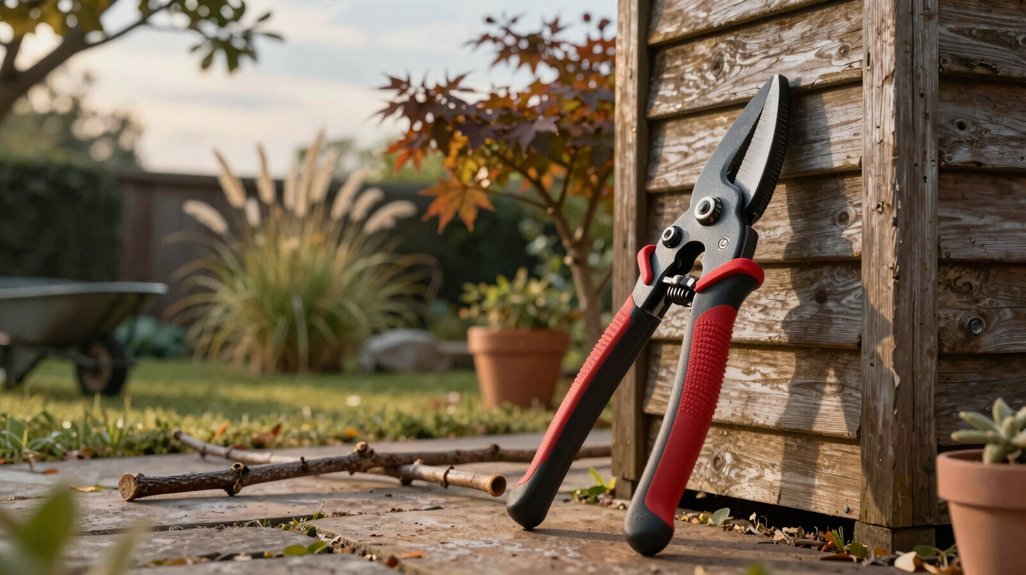
I snapped a dead oak branch three inches thick last autumn with Fiskars’ PowerGear loppers, and the ratchet mechanism, gears that multiply your hand force, made it feel like cutting butter.
Heavy-duty loppers pair long handles with compound leverage systems to slice thick limbs you cannot reach with hand pruners. Choose bypass blades for live growth, anvil blades for dead wood. You need telescoping handles for high branches; you sacrifice some control.
My favorite remains the Power-Lever system: pure mechanical advantage, no gimmicks. More on that.
Fiskars 32-Inch Heavy Duty Tree Loppers

IDEAL TREE BRANCH CUTTER: 32" Steel blade bypass lopper that glides through up to 2" thick branches for easy cuts; Tree Pruner that works well for trimming tree branches to...
The Fiskars 32-Inch Heavy Duty Tree Loppers operate on a simple mechanical principle: PowerGear2 technology multiplies your leverage, meaning the cam mechanism and modified gears generate extra cutting force exactly when you need it—at the middle of branches, where wood fiber resists most.
This bypass-style cutter, a blade design where two sharpened edges pass by each other like scissors, handles branches up to two inches thick.
I judge loppers by three standards: cutting capacity, durability, and fatigue reduction. This model excels at all three.
The fully hardened steel blade wears a low-friction coating—this polymer layer prevents sap buildup and fights rust. You’ll work longer.
Ergonomic rounded handles with SoftGrip, rubberized cushioning, reduce hand strain. My favorite feature: the lifetime warranty. It signals serious build quality.
Casual pruners need look elsewhere. This tool rewards committed gardeners. I recommend it for homeowners maintaining mature trees monthly. It delivers professional force without professional weight.
Best For: Committed homeowners and gardeners who maintain mature trees monthly and need professional-grade cutting power without excessive weight or fatigue.
Pros:
- PowerGear2 technology with modified gears and cam mechanism multiplies leverage specifically at the toughest middle point of branches, making 2-inch cuts require noticeably less effort than traditional loppers
- Fully hardened steel blade with low-friction coating resists sap buildup, rust, and wear for extended usable lifespan
- Ergonomic rounded SoftGrip handles significantly reduce hand strain during extended trimming sessions
Cons:
- 32-inch length and heavy-duty construction may prove unwieldy for casual or occasional pruners with smaller hands or lighter needs
- Premium build and technology come at a higher price point than basic lopper alternatives
- Bypass blade design requires proper alignment maintenance and is less suited to dead, dry wood than anvil-style cutters
Recommended Products

IDEAL BRANCH TRIMMER: Fiskars 28-Inch Power-Lever Bypass Garden Lopper glides through branches up to 1.75" thick for easy cuts; Works well for trimming tree branches to maintain your yard and garden and encourage overall plant health and appearance

IDEAL BRANCH TRIMMER: 28" Steel blade garden bypass lopper that glides through up to 1.5" thick branches for easy cuts; Works well for trimming tree branches to maintain your yard and garden, and to encourage overall plant health and appearance

2-1/4″ Cutting Capacity for Thick Branches – Designed to handle large limbs and dense woody growth, making it ideal for pruning trees, trimming shrubs, and tackling tough landscaping jobs.
Fiskars 28-Inch Power-Lever Garden Bypass Lopper
IDEAL BRANCH TRIMMER: Fiskars 28-Inch Power-Lever Bypass Garden Lopper glides through branches up to 1.75" thick for easy cuts; Works well for trimming tree branches to...
Who needs raw cutting force without the arm strain? I recommend the Fiskars 28-Inch Power-Lever Garden Bypass Lopper for gardeners who want mechanical advantage in a compact frame.
This tool uses compound lever technology—multiple pivot points that multiply your hand strength—to slice through branches up to 1.75 inches thick. That’s impressive capacity from a 28-inch tool.
The precision-ground steel blade cuts cleanly because low-friction coating reduces drag and prevents rust. I appreciate how the steel stays sharp through seasons of heavy use.
SoftGrip touchpoints on rounded handles give control without blisters. You work longer with less fatigue.
I match this lopper to homeowners with smaller hands or limited storage space. The shorter length sacrifices reach, so you’ll need a ladder for high branches.
My favorite feature: the Power-Lever system truly delivers noticeable mechanical advantage. You’ll feel the difference immediately.
Best For: Homeowners and gardeners with smaller hands or limited storage space who want mechanical advantage for cutting branches up to 1.75 inches thick without excessive arm strain.
Pros:
- Power-Lever compound lever technology multiplies hand strength for noticeably easier cutting through thick branches
- Precision-ground steel blade with low-friction coating stays sharp through heavy use while reducing drag and preventing rust
- Ergonomic rounded handles with SoftGrip touchpoints provide comfort, control, and reduced fatigue during extended use
Cons:
- 28-inch length sacrifices reach compared to longer tools, requiring a ladder for high branches
- Compact frame limits extended reach for taller users or overhead cutting applications
- Smaller size may not provide adequate leverage for users needing to cut at full 1.75-inch capacity repeatedly
Recommended Products

IDEAL TREE BRANCH CUTTER: 32" Steel blade bypass lopper that glides through up to 2" thick branches for easy cuts; Tree Pruner that works well for trimming tree branches to maintain your yard and garden

IDEAL TREE BRANCH CUTTER: 32" Steel blade bypass lopper that glides through up to 2" thick branches for easy cuts; Tree Pruner that works well for trimming tree branches to maintain your yard and garden
BLACK+DECKER Electric Lopper Chain Saw (LP1000)
What makes a lopper truly heavy-duty? Power meets precision. The BLACK+DECKER Electric Lopper Chain Saw (LP1000) delivers both with its 4.5 Amp motor, which drives fast, efficient cuts through limbs my hand tools barely scratch.
I favor its clamping jaws—mechanical grips that secure wood—because they grab and cut in one scissor-like motion. The 6-inch bar (the metal guide holding the cutting chain) tackles branches up to 4 inches thick. Metal guards shield me from the chain itself.
The corded design means unlimited runtime, though I’m tethered to an outlet. This tool suits gardeners pruning extensively without arm fatigue. Caution: cord dependence limits reach. My favorite feature? That seamless grab-and-cut action.
Best For: Gardeners who need to prune extensively without arm fatigue and want a powerful, corded tool for cutting branches up to 4 inches thick.
Pros:
- Clamping jaws provide secure wood grip and cut in one scissor-like motion for effortless operation
- 4.5 Amp motor delivers fast, efficient cuts through thick limbs that hand tools struggle with
- Metal guards protect user from the cutting chain for improved safety
Cons:
- Corded design limits mobility and reach, tethering user to an outlet
- Unlimited runtime comes at the cost of portability and convenience
- Dependence on electrical access restricts use in remote yard areas without extension cords
Corona X Series Pro Bypass Lopper 2-1/4″ Capacity
2-1/4″ Cutting Capacity for Thick Branches – Designed to handle large limbs and dense woody growth, making it ideal for pruning trees, trimming shrubs, and tackling tough...
Heavy-duty tree loppers demand reliable cutting power for thick branches up to 2-1/4 inches. The Corona X Series Pro Bypass Lopper, model AL16249, delivers exactly that.
I rely on its scissor-style cutting action—two blades passing each other like scissors—to slice cleanly through live wood without crushing fibers. Clean cuts heal faster. Healthier plants follow.
This 32.5-inch tool suits my needs when I prune trees, trim shrubs, or clear overgrowth in large gardens and orchards. The precision bypass blade, a curved blade that hooks and holds branches while a sharp counter-blade slices, reduces damage substantially.
Pro-grade construction withstands repeated professional use without failing. The ergonomic 24-inch handles provide leverage, my favorite feature for reducing arm fatigue during long sessions. I grip securely. I cut longer.
However, this lopper rewards proper technique. Poor form strains joints. Beginners should practice alignment.
I strongly recommend the Corona AL16249 for homeowners and landscapers needing dependable manual cutting. It’s simply effective.
Best For: Homeowners, landscapers, and professional gardeners who need a heavy-duty manual lopper for cutting thick branches up to 2-1/4 inches in trees, shrubs, and large outdoor spaces.
Pros:
- Scissor-style precision bypass blade delivers clean cuts that promote faster plant healing
- Ergonomic 24-inch handles provide excellent leverage and reduce arm fatigue during extended use
- Pro-grade construction ensures durability and reliable performance through repeated professional use
Cons:
- Requires proper technique to avoid joint strain; not forgiving of poor form
- 32.5-inch overall length may limit maneuverability in tight spaces
- Manual cutting power demands physical effort compared to powered alternatives
Recommended Products
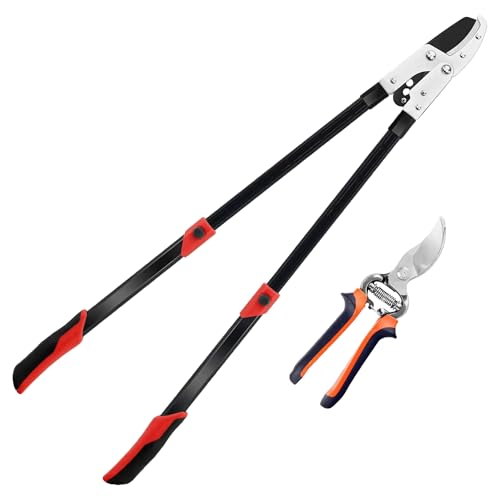
LONG LASTING SHARP: tree branch cutter alloy steel blade with teflon coated and low-friction coating that will long lasting sharp after tough job. Tree pruner is ideal for trimming green living or dry branches, chop through thick branches effortlessly
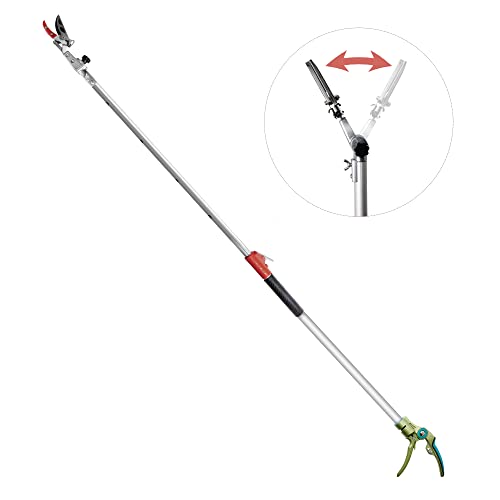
[Helpful Garden Tool] GARTOL brings to you a lightweight and extendable pruning tool to reach out to the least approachable arenas of your garden. You can conveniently get across other plants to remove the fastgrowing brambles and sting nettles without getting scratched or hurt. For gardening lovers, the telescopic pruner cutter head can can be rotated which resolves mobility issues and gives you the pleasure of trimming your garden without bending down or using a ladder to climb and cut them.

Tree Trimmer Heavy Duty: AIRAJ telescoping loppers with 6-speed adjustable aluminum handle, extending from 27 -41 inches, easily reaching high branches for versatile yard and tree trimming.
Spear & Jackson Telescopic Ratchet Anvil Loppers

Ratchet action gives easy cutting in short steps - ideal for cutting thicker, harder branches SK5 carbon steel upper blade for lasting sharpness PTFE coated blade for rust...
This tool is my favorite for gardeners who struggle with thick branches. The ratchet action cuts in short steps, multiplying your force through multiple bites until the branch severs completely.
SK5 carbon steel—the premium grade for edge retention—stays sharp through seasons of abuse. Look for the PTFE coating, a slippery layer that prevents rust and reduces friction during cuts.
The telescoping handles extend from 28 to 40½ inches, letting you reach high limbs without strain. Tubular aluminium keeps weight down while maintaining structural integrity. The locking catch secures blades for storage.
The 10-year guarantee signals confidence. These loppers excel for users with limited hand strength. My recommendation: buy these if you face hardwoods regularly. Skip them if you prune soft green growth exclusively.
Best For: Gardeners who regularly cut thick hardwood branches and those with limited hand strength who need extra cutting power through a ratcheting mechanism.
Pros:
- Ratchet action multiplies force through short, stepped cuts, making thick branch cutting manageable with less effort
- SK5 carbon steel blade with PTFE coating maintains sharpness and resists rust through seasons of heavy use
- Telescoping aluminium handles extend to 40½ inches for extended reach while keeping weight low
Cons:
- Overkill and unnecessary for users who only prune soft green growth
- Multicoloured finish may not appeal to gardeners preferring uniform tool aesthetics
- Anvil design can crush rather than slice, potentially damaging live wood if used improperly on green branches
Scotts 21 in. Anvil Lopper with Teflon-Coated Blade
Gardeners tackling stubborn, dry branches need smart cutting power. This Scotts 21 in. Anvil Lopper delivers precisely that: a high-quality carbon steel blade, Teflon-coated to resist sap buildup and rust, glides through demanding cuts.
An anvil lopper, which crushes branches against a flat surface, excels on dead wood.
For my criteria, the 1.5 in. cutting capacity handles thick limbs efficiently. The Teflon coating reduces friction noticeably; it works.
Ergonomic non-slip grips reduce hand fatigue during extended sessions. This matters.
You’ll match well with this tool if you prune dry, hard branches regularly. The caveat: green wood demands a bypass lopper instead.
My favorite feature remains the Teflon coating itself. It genuinely maintains sharpness longer. I recommend this model for gardeners prioritizing low-maintenance reliability on tough, seasoned growth.
Best For: Gardeners who regularly prune dry, hard, thick branches and prioritize low-maintenance reliability on tough, seasoned growth.
Pros:
- Teflon-coated carbon steel blade resists sap buildup and rust while maintaining sharpness longer
- 1.5-inch cutting capacity efficiently handles thick limbs and demanding pruning tasks
- Ergonomic non-slip grips reduce hand fatigue during extended use sessions
Cons:
- Not suitable for green wood, which requires a bypass lopper instead
- Anvil design crushes rather than slices, limiting versatility for live plant material
- 21-inch size may provide less leverage compared to longer-handled loppers for maximum cutting power
GARDENA Bypass Loppers Shears 31″ Heavy Duty (12007)
Tested at 2.4 pounds with aluminum construction, these loppers answer which tool delivers real cutting power without exhausting my arms.
The integrated gear mechanism, a system of interlocking wheels that multiply force, boosts my cutting strength up to three times. That multiplier matters when I attack green branches that resist cheaper tools.
I judge purchase value by wear and warranty. The precision-ground double-edged bypass blades, sharpened on two sides for clean slicing, carry non-stick coating and a replaceable upper blade. Germany-built quality backs a 25-year manufacturer promise.
Shock protection absorbs impact through special plastic buffers; my wrists thank Gardena.
The ErgoTec handles suit my medium-large hands with soft, non-slip grips. Extended sessions fatigue me far less.
Here’s my caveat: gear mechanisms demand occasional lubrication, and thick deadwood challenges bypass design optimized for live growth.
My favorite feature is the efficiency ratio—minimal effort, maximum output. I recommend this lopper to gardeners prioritizing endurance over raw aggression.
Best For: gardeners with medium-large hands who prioritize endurance and cutting efficiency on live green branches over tackling thick deadwood.
Pros:
- Integrated gear mechanism delivers up to 3x more cutting power with minimal arm fatigue, making demanding pruning tasks manageable
- Replaceable precision-ground double-edged bypass blades with non-stick coating ensure long-term value backed by a 25-year manufacturer warranty
- ErgoTec handles with soft, non-slip grips and built-in shock-absorbing buffers reduce wrist strain during extended use sessions
Cons:
- Gear mechanism requires occasional lubrication maintenance to function optimally
- Bypass blade design is not ideal for thick deadwood, limiting versatility to live growth
- At 31 inches and 2.4 pounds, the tool may feel unwieldy for users with smaller hands or those needing compact storage solutions
Factors to Consider When Choosing Heavy Duty Tree Loppers
I won’t buy heavy-duty tree loppers without checking five critical specs. Cutting capacity limits (the maximum branch diameter the blades can sever) determine whether you’re pruning twigs or chopping limbs, while blade material quality, typically hardened carbon steel or titanium-coated alloys, dictates edge retention and rust resistance. Handle length options directly affect your reach and leverage, leverage mechanism types (compound action or ratchet systems) multiply your force output, and weight and balance determine whether you’ll fatigue after ten cuts or two hundred.
My favorite approach: prioritize leverage mechanisms first, then match handle length to your typical pruning height, but don’t ignore weight. My arms learned that lesson the hard way.
Cutting Capacity Limits
How do you know if a lopper can actually handle your thickest branches? I check the cutting capacity, which is the maximum branch diameter the tool cuts efficiently. Heavy-duty models range from 1.5 to 2.25 inches.
Manufacturers publish precise ratings, 1.75″, 2.0″, or 2.25″, so I match these numbers to my pruning needs. I pay attention to live versus dead wood specs because live wood demands more power. By-pass loppers deliver clean cuts on live growth, while anvil designs tackle tougher, dry branches up to their rated limit.
Longer handles improve leverage. They absolutely help. But they don’t always expand actual capacity.
My favorite approach? I buy slightly above my needs. A 2-inch rating handles my thickest oak limbs without strain. Always verify the spec matches your real branches.
Blade Material Quality
What separates a lopper that lasts seasons from one that fails mid-cut? Blade material determines everything.
Hardened steel, my favorite choice, resists dulling through a low-friction coating that prevents gumming, resinous buildup that slows cuts. Carbon steel delivers superior edge retention for thick branches. Precision-ground edges slice cleanly, reducing plant damage and disease entry points.
Rust-resistant finishes matter enormously. Humidity destroys unprotected blades. I specifically recommend chromium coatings or titanium treatments for outdoor storage.
Bypass blades excel on live wood, branches that bend rather than snap, because their scissor-like action seals wounds. Anvil designs crush rather than cut.
Purchase criteria: verify Rockwell hardness ratings above 54 HRC (a metal strength scale) and evaluate coating thickness. Budget loppers typically lack both.
Warning: carbon steel rusts without maintenance. Oiling matters.
Handle Length Options
Why does handle length matter more than most buyers realize? It directly determines how much force you need and how far you can reach.
Longer handles, 28 to 32 inches, multiply your leverage. You cut thicker branches with less effort. Heavy-duty designs pair these lengths with reinforced joints to prevent flex.
My favorite feature: telescoping handles, which extend your reach for high limbs without ladders.
Shorter handles, 21 to 24 inches, excel in tight spaces. You maneuver precisely around dense growth. The trade-off is reduced power.
Ergonomic grips with soft materials reduce fatigue during long sessions. This matters immensely for extended pruning.
Match length to your task. Choose long handles for power and reach, short for control. I strongly recommend adjustable models for versatility.
Leverage Mechanism Types
Where does the real cutting advantage hide? It hides in leverage mechanism types. Power Gear and lever-based systems multiply my force. I cut thicker branches with less effort.
Compound lever designs, like Power-Lever, outperform straight fulcrum loppers. They deliver sharper cuts on tough wood. My favorite option ratchets me through hard branches in stages. I squeeze, reset, squeeze again.
Gear- or cam-assisted models boost torque mid-branch. That’s where limbs fight back hardest. Non-ratcheting, high-leverage tools use long handles instead. They work, but I must commit more continuous force.
Choose ratcheting systems for arthritis or dense hardwood. Pick compound levers for speed on thick green branches. Avoid cheap gear mechanisms; stripped teeth ruin the tool. I recommend testing the ratchet action in-store. Smooth staging matters.
Weight and Balance
Pure leverage means nothing if I cannot hold the tool steady. Weight and balance make or break my cutting experience.
A lighter lopper reduces my fatigue during long pruning sessions. Heavier models, however, deliver stability for controlled, precise cuts. Balance matters most: poorly distributed weight torques my wrist, but a well-balanced tool glides through thick branches.
The center of gravity (the point where weight concentrates) determines how steady the lopper feels. My favorite designs keep this point low and centered. Handle length shifts leverage and weight distribution; longer arms multiply my force but change how the tool balances in my hands.
Heavier loppers absolutely demand solid grip control. Without it, I lose precision fast.
Personally, I prioritize balance over minimal weight. A slightly heavier, well-balanced lopper outperforms a featherweight wobbler every single time.
Grip Comfort Features
How exactly does the grip shape my pruning performance? It determines my control, stamina, and safety during extended cutting sessions.
Quality loppers feature SoftGrip or similar cushioned handles, materials that reduce vibration and lessen hand fatigue. These cushions absorb shock transmitted from the blade through the handles, protecting my wrists during heavy cuts.
Ergonomic, rounded handles match my hand’s natural grip, maintaining precise control throughout repetitive motions. Non-slip materials prevent dangerous slippage when I’m cutting thick or dry branches.
Lightweight yet sturdy construction, typically aluminum or reinforced composite, reduces strain without weakening the tool.
My favorite designs incorporate shock-absorbing buffers built directly into the handles. These features matter most if you prune frequently or tackle hardwood species. Skip cushioned grips, and you’ll pay with sore hands and compromised accuracy.
Durability Construction
Comfort grips mean nothing if the tool snaps mid-cut. I examine the blade first. Tempered or fully hardened steel resists wear, while low-friction coatings prevent rust. My favorite blades use SK5 carbon steel (a high-grade Japanese steel known for hardness) because they hold an edge through thick branch after thick branch.
I check the handles next. Forged steel or reinforced aluminum withstands torque without bending. Skip hollow tubes that dent under pressure.
The joint matters most. A robust all-metal gear or cam system (mechanical advantage mechanisms) transfers force without stripping. Reinforced pivots outlast plastic components by years.
I demand rust-resistant finishes, protective guards, and reliable locks. These features prevent damage during storage and transport. Bargain loppers fail here. Spend more once. Replace less.
Warranty Coverage Terms
Why gamble on a tool with no safety net? I always prioritize lifetime warranties on heavy-duty loppers, which signal durable construction and a manufacturer’s genuine confidence. My favorite brands cover parts and defects under normal garden usage, but they exclude misuse or accidental damage, so read the fine print.
I verify warranty duration and transferability because some policies extend when you sell or gift the tool. I confirm activation steps too: many require registration or proof-of-purchase for any claim. I review the repair versus replacement process and typical turnaround times before buying.
A strong warranty protects your investment. It reduces long-term costs. Choose loppers with clear, transferable coverage.