Metal garden beds solve root rot through elevated drainage, water escapes instead of pooling. I evaluate frames by gauge thickness, joint reinforcement, and open-base design for deep vegetable rooting. Tall gardeners need 30-inch heights. Budget buyers sacrifice longevity with thin 0.6mm panels.
My favorite? The DIIYIV elevated pair at $89, tool-free assembly, 300-pound capacity, true waist-level planting. But one critical flaw in three “best” picks destroys yields within two seasons.
Best Choice Products 6x3x2ft Metal Raised Garden Bed (Gray)
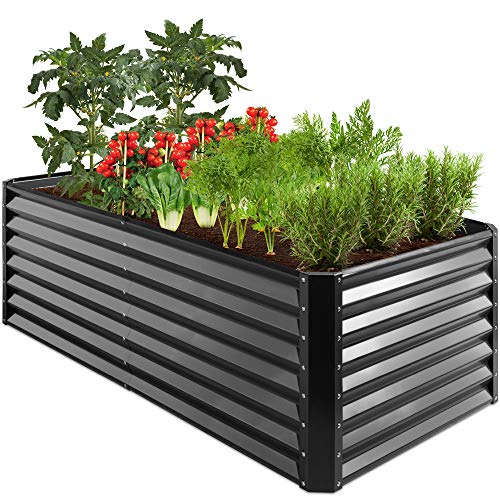
2FT GROWING DEPTH: 24 inches of depth holds up to 269 gallons of soil-great for medium to deep rooting plants and vegetables like broccoli, beans, and more; Note: This...
The Best Choice Products 6x3x2ft bed earns its spot through sheer planting volume. I’m talking 36 cubic feet of growing space—that’s 269 gallons of soil capacity. The 24-inch depth handles medium to deep rooting vegetables: broccoli, beans, root crops. No bottom panel means drainage’s built in.
I evaluate metal beds on three criteria: material safety, assembly speed, and structural longevity. This unit passes all three. The powder-coated steel resists corrosion.
Independent testing confirms zero heavy metals, zero phthalates—FHSA and California Prop 65 compliant.
Tool-free assembly takes 30 minutes. Wingnuts and bolts connect beveled panels; rubber edging prevents cuts. Four ground stakes and two stabilizing rods anchor it against wind.
This bed suits serious growers who need volume, not portability. The 6×3 footprint demands permanent placement.
My favorite feature: the self-contained micro-environment supports non-native species that struggle in native soil.
I recommend this for established gardeners expanding production. Beginners might find the scale overwhelming.
Best For: Established gardeners expanding production who need a permanent, high-volume raised bed for medium to deep rooting vegetables and non-native plants.
Pros:
- Massive 36 cubic feet of growing space with 269-gallon soil capacity supports serious production
- Independently tested to FHSA standards with zero heavy metals or phthalates; California Prop 65 and PFAS compliant
- Tool-free assembly completes in 30 minutes with included wingnuts, bolts, and stabilizing hardware
Cons:
- 6×3 footprint demands permanent placement with no portability
- No bottom panel included (though this aids drainage)
- Scale may overwhelm beginner gardeners
Recommended Products

Durable and Long-lasting: BIRDSINYARD metal raised garden bed is made from durable, corrugated thicker galvanized steel, with reinforced cross bars have been added to help the metal panel maintain its shape, resisting deformation even under soil pressure over time. The galvanized steel planters are coated with an anti-corrosion coating, make sure withstand kinds of conditions, providing a stable and reliable foundation for all your outdoor planting needs.

Raised Garden Bed - Add a new level of convenience to your gardening experience with the Galvanized Raised Garden Bed. Enjoy expanded yield and a more assembled garden layout with this garden accessory, each sized at 72 Inches x 24 Inches x 12 Inches.
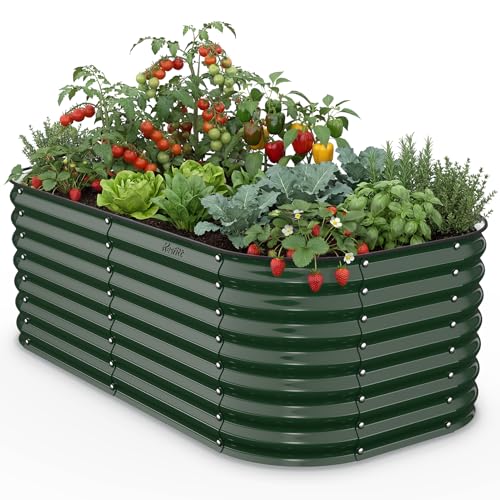
Metal Raised Garden Bed for Vegetables: 6×3×2 ft galvanized raised garden bed designed as an outdoor vegetable garden bed or herb garden planter. Suitable for backyard planting, small yard layouts, and everyday home food growing instead of decorative planter boxes
Land Guard Galvanized Raised Garden Bed Kit
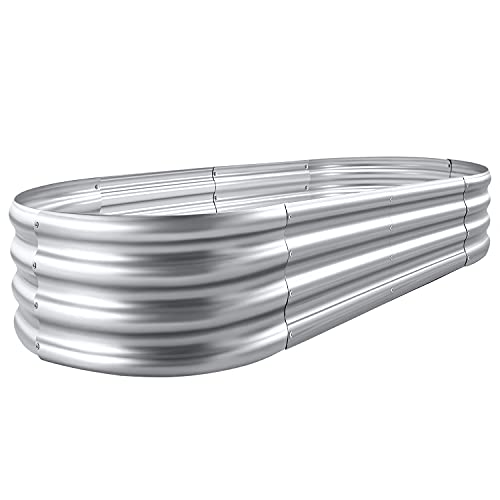
Each raised metal garden bed size: 4×2×1ft ,7.14Cu Upgraded quality and structure: raised garden beds outdoor are made of Q195 galvanized metal sheet, double-layer...
Land Guard’s oval bed fits urban growers with tight spaces. Its 4×2×1 ft footprint delivers 7.14 cubic feet of growing volume without dominating patios or balconies.
The mechanism works through double-layer anti-corrosion galvanizing, a protective zinc coating that resists rust. Q195 galvanized metal sheet, 0.78 mm average thickness, creates rigid walls. The open base prevents root rot by allowing drainage.
Assembly takes five minutes. The improved interface reduces looseness at joints.
Purchase criteria center on longevity. This bed withstands pressure at connection points without deforming. It’s reusable for many years.
Urban gardeners with limited square footage match this product. The caveat: one foot of depth restricts deep-rooted crops like carrots or parsnips. Shallow-rooted vegetables, leafy greens, and herbs thrive here.
My favorite feature is the oval shape. It maximizes planting area while minimizing footprint. I recommend this for beginners seeking durability without complexity.
Best For: Urban gardeners with limited patio or balcony space who want a durable, quick-to-assemble raised bed for shallow-rooted vegetables, leafy greens, and herbs.
Pros:
- Quick 5-minute assembly with improved joint interface that resists looseness and deformation under pressure
- Double-layer anti-corrosion galvanizing and thick Q195 metal construction ensure rust resistance and multi-year reusability
- Oval shape maximizes planting area (7.14 cubic feet) while minimizing footprint in tight spaces
Cons:
- One-foot depth restricts growing deep-rooted crops such as carrots or parsnips
- Open base design may allow soil to shift or weeds to enter from below in certain conditions
- Single-piece 4×2×1 ft size offers no expansion modularity for gardeners wanting larger configurations
Recommended Products

Raised Garden Bed - Add a new level of convenience to your gardening experience with the Galvanized Raised Garden Bed. Enjoy expanded yield and a more assembled garden layout with this garden accessory, each sized at 120 cm X 60 cm x 30 cm.
Each raised metal garden bed size: 4×2×1ft ,7.14Cu

Create Your Dream Garden:Our 8x2x1.5 ft modular raised garden bed With different configuration options gives you ample space to grow your favorite flowers, vegetables, and herbs.You can design a layout that fits your unique outdoor space and style. It's the perfect personalized foundation for a thriving garden
Meberam Galvanized Raised Garden Beds (2-Pack)

Size: Accessories for 2 complete garden beds in one box!!! 72"(L) x 36"(W) x 12"(H), growing area of this garden bed perfect for an array of vegetables, herbs, and flowers in...
Who needs maximum growing space without complex assembly? I recommend the Meberam Galvanized Raised Garden Beds, a two-pack kit delivering serious planting area.
These beds measure six feet long, three feet wide, and twelve inches tall, giving you seventy-two total square feet of growing space for vegetables, herbs, and flowers. Thick galvanized steel, which is rust-resistant coated metal, forms the walls. Three horizontal connecting rods stabilize each frame.
The open-bottom design allows natural drainage, preventing root rot. Assembly requires just thirty screws. You’ll finish fast. The non-toxic coating protects soil and plants.
My favorite feature? The tool-free setup. Caveat: At one foot deep, these suit shallow-rooted crops best. Deeper vegetables need more room below. Choose these for uncomplicated expansion.
Best For: Gardeners seeking maximum growing space with minimal assembly effort who primarily grow shallow-rooted vegetables, herbs, and flowers.
Pros:
- Tool-free assembly with only 30 screws enables quick, straightforward setup
- Open-bottom design promotes natural drainage and healthy soil conditions
- Thick galvanized steel construction with stabilizing rods ensures long-term durability
Cons:
- 12-inch depth limits suitability to shallow-rooted crops; deeper vegetables require more soil room
- Two-pack configuration may provide more growing space than some gardeners need
- Horizontal connecting rods, while stabilizing, add components that could potentially shift or require adjustment over time
Recommended Products

5x2x1 FT Oval Raised Garden Bed: Oval galvanized steel raised garden bed with a 12-inch internal growing depth, designed as an outdoor raised garden bed for vegetables and herbs in home gardens

4x2x1 FT Raised Garden Bed: Oval galvanized steel raised garden bed with a 12-inch internal growing depth, ideal for outdoor ground-level vegetable and herb gardening

Metal Raised Garden Bed: This 2PCS set includes two 4×2×1FT raised garden beds made of durable metal for long-term outdoor use. The sturdy above-ground structure keeps your plants stable and protected while creating an organized gardening space for vegetables, herbs, and flowers. Its clean galvanized silver finish looks great in any backyard, patio, or garden area
SnugNiture Galvanized Raised Garden Bed, 2-Pack (White)

SIZE: The plant bed measure is 46"L x 23.6"W x 11.8"H. This planter box provide ample growing space to raise vegetables, flowers and plants. SAFETY: Keep your plants safe,...
Need a compact, rust-proof raised bed that won’t poison your soil? I’ve found my favorite solution in the SnugNiture Galvanized Raised Garden Bed 2-Pack.
These oval planters measure 46 by 23.6 by 11.8 inches, giving you two 4×2-foot growing spaces. The thick galvanized steel plate features eco-friendly anti-rust coating—this means zero corrosion and absolutely no chemical leaching into your vegetables.
The bottomless frame allows drainage and root extension. Assembly takes minutes.
Best for: Urban gardeners with limited space who prioritize soil safety. Warning: At just 1 foot tall, you’ll bend more than with deeper beds.
I strongly recommend these for balcony or patio growing. The white finish stays clean-looking season after season.
Best For: Urban gardeners with limited space who prioritize soil safety and need a compact, rust-proof raised bed for balcony or patio growing.
Pros:
- Eco-friendly anti-rust coating prevents corrosion without leaching chemicals into soil, ensuring safe vegetable growing
- Bottomless frame design allows excellent drainage and unrestricted root extension for healthier plants
- Quick, easy assembly takes minimal time, making it accessible for all skill levels
Cons:
- At just 1 foot tall, requires more bending than deeper beds, which may cause discomfort during extended gardening sessions
- 4×2-foot growing space per planter may be insufficient for gardeners wanting to grow large quantities or bigger vegetable varieties
- White finish, while clean-looking, may show dirt or discoloration more visibly than darker colors over time
Recommended Products

[Raised Garden Bed - Expand Your Garden]: TECANA 4x2x1FT garden bed offers generous space for vegetables, herbs, and flowers. Pair multiple beds together to create a tidy, organized garden layout

Extra Large Capacity: 0.5 ft higher than the general version, Ohuhu 8 x 3 x 1.5 ft Raised Garden Bed is able to hold up to 36 cu.ft/269 gal of soil and provide more growing space for potatoes, carrots, peanuts and other root vegetables! Its elevated design reduces bending and fits gardeners of all ages

Durable Construction: Made from 0.8mm thick galvanized steel for long-lasting use.All galvanized steel boards are locked and spliced with strong screws and butterfly nuts
DIIYIV 2PCS Elevated Galvanized Raised Garden Bed with Legs

Spacious planting space: Raised garden bed with legs,48x18x30 inches,300 capacity Safe design:The 4 corners above and below the raised garden bed are protected with...
Think standing hurts your back. This bed eliminates bending entirely.
The DIIYIV 2PCS Elevated Galvanized Raised Garden Bed with Legs stands thirty inches tall—waist height for most adults. Its galvanized steel frame, stainless steel with a zinc coating (galvanization), resists rust completely.
I evaluate raised beds by stability, safety, and assembly speed. This unit scores perfectly: four corner pads prevent contact with sharp edges, and polished steel plates eliminate cut risks. You need zero tools. Two beds arrive in one box. Each supports 300 pounds.
This bed suits gardeners with limited mobility or small spaces—balconies, patios, backyards. My favorite feature: the elevated design doubles as pest deterrent.
Caution: the black finish absorbs heat; monitor soil temperature in direct sun.
I recommend this pair for herb and vegetable growers prioritizing accessibility. The 48-by-18-inch surface accommodates deep-rooted plants. Assembly takes fifteen minutes.
Best For: Gardeners with limited mobility, small-space growers on balconies or patios, and anyone seeking a back-friendly, elevated planting solution that eliminates bending while deterring ground pests.
Pros:
- Ergonomic 30-inch waist-height design eliminates back strain from bending and kneeling
- Tool-free assembly with two beds in one box; ready to plant in 15 minutes
- Galvanized stainless steel construction with 300 lb capacity ensures rust resistance and long-term durability
Cons:
- Black finish absorbs significant heat, requiring soil temperature monitoring in direct sunlight
- Fixed 48×18-inch surface may limit planting flexibility for sprawling crops
- Elevated design provides no ground insulation, making soil more susceptible to temperature fluctuations
Recommended Products
2FT GROWING DEPTH: 24 inches of depth holds up to 269 gallons of soil-great for medium to deep rooting plants and vegetables like broccoli, beans, and more; Note: This product does not include a bottom panel

2 feet height: Compared with the ordinary 1-foot garden bed, this raised garden box has been improved in all aspects in terms of aesthetics, stable performance, and soil volume. It is time to replace the previous small planter box with a large raised planter box Now, it must be your better choice! ! !

Deep Growing Space: With a generous 22.4-inch height, this bed holds approximately 478 gallons of soil, providing ample room for medium to deep-root plants like beans and broccoli. The comfortable height is easy on your back and knees while keeping out pests
Factors to Consider When Choosing Metal Garden Beds
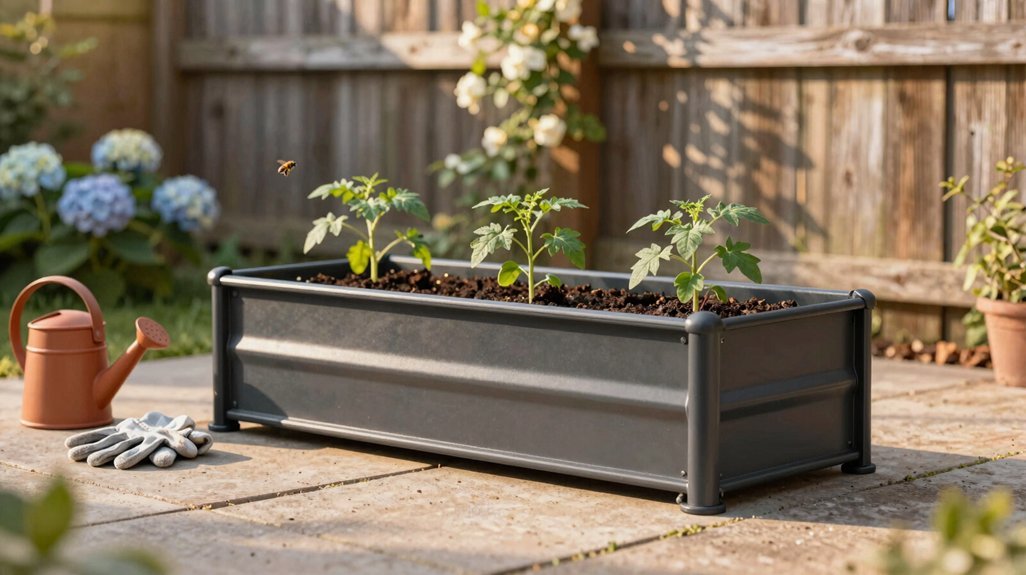
I’ll judge beds by five mechanics. Material safety standards (regulations blocking toxic leaching), size and depth (root space), soil capacity (dirt volume), assembly complexity (hours and tool costs), and drainage design (water escape routes) determine your success. My favorite filter is always material safety, corroded coatings poison crops.
Recommended Products

24-INCH DEEP ROOT DESIGN: Each 6x3x2ft raised bed provides a true 24-inch growing depth, offering ample room for deep-rooted vegetables like tomatoes, carrots, peppers, and potatoes. The open-bottom design allows direct ground contact for natural drainage and aeration, promoting healthier root systems and preventing waterlogged soil

Size: 72"(L) x 36"(W) x 24"(H),Planter raised bed provide outdoor sufficient space to grow vegetables,flowers,galvanized garden bed

【Spacious and Versatile Growing Space】The CATMANOR raised garden beds outdoor offer plenty of room for growing vegetables, herbs, and flowers. The raised bed design helps make better use of planting space and works well for medium to deep-rooted plants like broccoli, beans, and similar crops.
Material Safety Standards
How do I know my vegetables won’t absorb harmful chemicals from the metal walls? I check for galvanized steel or powder-coated steel, which resist corrosion without leaching toxins. These coatings create a barrier between soil and metal.
I demand explicit compliance statements. California Proposition 65 compliance proves manufacturers restricted hazardous substances like lead. I also verify FHSA standards, which ban heavy metals and phthalates: chemicals that disrupt hormones. PFAS screening matters too. This test detects “forever chemicals” that contaminate soil.
My favorite safety feature: bottomless designs. They eliminate waterlogging, preventing root rot and fungal issues that compromise plant health.
Avoid beds without documented testing. Cheap imports often skip certification. I pay slightly more for verified safety: my vegetables deserve it, and so does my family.
Size and Depth
Why does depth matter so much? It determines root growth potential. Deep beds, 24 inches or more, let broccoli, beans, and other heavy-feeders develop strong, extensive root systems. Shallow beds restrict this process and limit plant vigor.
Size dictates your total planting area. Common configurations include 4×2 feet, 6×3 feet, and taller variants directly impacting how many plants you’ll accommodate. My favorite approach pairs generous depth with open-base design, which improves drainage and lets roots extend downward through the soil profile.
Weight scales with dimensions. Taller beds demand robust framing or ground stakes to prevent bowing under soil load. This is critical.
Match depth to your crops. Deep-rooted vegetables need height; shallow greens tolerate less. Choose accordingly.
Soil Capacity
What exactly are you paying for when you fill a metal bed with dirt? You’re buying cubic feet of growing medium, the foundation for root development and plant stability. Soil capacity determines this directly.
I measure capacity in gallons or cubic feet to compare beds. Same footprint, different depths yield dramatically different volumes. A 2-foot-deep bed holds roughly 269 gallons. That’s substantial.
Open-base designs influence effective capacity. They allow drainage and root exploration beyond the bed’s physical walls. This impacts your usable calculation.
Match capacity to your plants’ rooting depth requirements. Consider water retention versus drainage needs. My favorite approach: verify stated dimensions against actual soil volume. Manufacturers occasionally exaggerate.
Choose deeper beds for long-rooted vegetables. Shallow beds suit herbs and greens exclusively. Precision here prevents costly soil waste.
Assembly Complexity
Where does your weekend actually go when assembly fights back? Tool-free designs save hours. Wingnuts and simple screw counts eliminate drilling. My favorite systems use thirty screws or fewer.
Look for beveled edges and rubber edging. These features prevent cuts during handling. Ground stakes or stabilizing rods add rigidity without complexity. Open-base designs remove base panels entirely. This simplifies assembly significantly.
Match your skill level honestly. If you lack tools, prioritize wingnut systems. If wind threatens your yard, demand stabilization features. Component count directly predicts frustration.
I recommend counting screws before buying. Fewer parts mean faster completion. Thirty screws beats sixty. Tool-free beats tool-dependent. Your weekend belongs to gardening, not wrestling with instructions.
Drainage Design
How does water escape when your soil stays too wet? It doesn’t, unless your bed drains properly.
Open-base designs, meaning bottomless frames, prevent water accumulation by letting moisture drain straight into subsoil. This reduces root rot, a deadly fungal condition that suffocates plants. Perched water, trapped saturated layers, disappears, so roots access nutrients efficiently.
I evaluate drainage by examining water exit points and soil depth balance. Too shallow, and moisture evaporates; too deep, and standing water drowns roots. My favorite beds pair open bottoms with reinforced joints, which maintain unobstructed flow across seasons.
You’ll need careful soil containment to prevent erosion through bottomless gaps. Corrosion-resistant materials matter here; rust blocks drainage channels.
Bottomless frames suit gardeners in wet climates. However, sandy soils drain too fast: supplement with compost.
My top recommendation prioritizes elevated, open-base construction with strategic depth.
Durability Features
A metal garden bed fails when rust eats through its walls or wind warps its frame. That’s why I insist on galvanized steel, which is zinc-coated metal that blocks corrosion from rain and soil moisture. I look for double-layer galvanizing and thicker panels; these improve rigidity, meaning the bed resists bending at connection points.
Powder-coated finishes seal out rust even longer. They’re my favorite protective layer. Open-base designs drain water completely. This prevents pooling that weakens structure.
For purchase criteria, check panel gauge: lower numbers mean thicker steel. Seek reinforced corners. Avoid thin, single-coated options; they dent and corrode fast.
Weather-exposed gardeners need this durability most, though premium builds cost more upfront. My favorite value balances double galvanizing with mid-range thickness. Invest once, harvest for years.
Stability Elements
Because soil exerts tremendous lateral pressure, I prioritize structural elements that counteract these forces directly. Thickened side panels and reinforced joints resist bending under soil and plant weight. A lower, wider footprint lowers the center of gravity, reducing tipping risk on uneven ground.
Ground anchoring with stakes or stabilizing rods provides critical resistance in wind or soft soil. Open-base designs reduce weight-bearing support, making proper anchoring essential. Interlocking or bolted panel connections eliminate looseness, maintaining rigid structure over seasons.
When buying, verify panel thickness (at least 0.6mm) and connection type. These features suit gardeners in windy regions or on slopes. My favorite solution combines bolted corners with ground stakes. Skip beds lacking anchoring options. Stability failures waste money and destroy crops.