A patio design idea only works if it matches the square footage you actually have and the way you actually move through it.
The same fire pit that anchors a 15-by-20-foot space will trap guests against the heat on a narrow city lot, and the multi-level split that turns a sloped yard into two rooms will eat a flat 200-square-foot plot alive.
The deciding factor is not style or budget but measurement taken in the right order: circulation first, then furniture, then the feature that still fits.
I learned that the hard way on a 12-by-12-foot pad where chairs could not pull out fully and the host ended up serving from the grass.
1. Small Backyard Patios

A small patio lives or dies by its math. Each person needs 25–30 square feet to sit and move without bumping elbows, which means squeezing six people onto a 10’×15′ slab is already tight.
I learned this the hard way on a job where the client wanted a dining set and a conversation area on a 12’×12′ pad. The chairs couldn’t pull out fully; the host ended up serving from the grass.
Multifunctional furniture fixes what square footage cannot. Storage ottomans swallow cushions and hose nozzles.
A bench with a hinged seat hides the propane tank.
Light colors on walls and pavers bounce daylight back into the space rather than drinking it, and keeping the palette restrained, two tones at most, stops the eye from snagging on clutter.
Vertical gardening draws the gaze up, which reads as air. Wall-mounted planters or a simple espaliered hydrangea against the fence line do the work of a border bed without eating the floor.
The mistake is overloading that vertical layer. One living wall or one trellis, not both, or the patio starts to feel like the inside of a terrarium.
Recommended Products

HIDDEN STORAGE: Removable tops allow you to effortlessly store cushions, pool toys, gardening supplies, and more inside this set of ottomans

HIDDEN STORAGE: Removable tops allow you to effortlessly store cushions, pool toys, gardening supplies, and more inside this set of ottomans
2. Outdoor Kitchens

A corner of the patio is usually the first place I look when a client wants to cook outside.
An L-shaped run tucks in neatly, and Ikea’s modular outdoor kitchen units let you build only what you need without committing to permanent construction.
Mix the cabinets to fit your exact dimensions, add a surface for prep, and you have a cooking area that can move with you.
Built-in island storage works harder in a small footprint than anything freestanding. Overhead lighting, recessed into a covered area above, keeps the space usable after sunset and stretches the season by weeks on either end.
For the $500–800 annual budget, the modular route wins: you buy in stages, replace individual pieces as budget allows, and skip the cost of framing and masonry entirely.
Recommended Products

Scientific Design: Bottom Water Reservoir and Air hole circulation system that provides ample moisture to the plants. This reservoir acts as a constant water source and oxygen, promoting healthy root development and overall plant vitality.


3‑IN‑1 METAL PLANTER BOX Versatile design: This versatile metal planter box functions as an outdoor raised garden bed, a flower trellis, and a privacy screen, perfect for growing climbing plants, vegetables, and vines. It’s an ideal space-saving solution, while adding tasteful privacy to any patio, lawn & garden...
3. Fire Pits and Fireplaces

A fire feature buys you hours on the patio you would otherwise spend inside.
I learned that the hard way after installing a pit too close to the seating on a narrow city lot; guests roasted on one side and froze on the other, and the smoke chased everyone whichever way the wind turned.
Place any fire source at least three feet from chairs, with room to walk behind the seats so people aren’t trapped in the heat.
Fire tables sit higher than bowls or baskets, which means you get a usable surface when the flames are off and a more natural gathering height when they are on.
That elevation also keeps the heat where people actually are, not drifting upward past their knees.
For a compact patio, a table centered on the space or slightly off-center gives you a conversational zone without demanding the square footage a full fireplace eats.
The off-center placement opens one side for circulation, which matters more than it looks on paper when six people try to move between chairs and grill.
Fuel type shapes what you can build. Propane tables need a tank, and hiding it cleanly in a small footprint takes planning; natural gas lines remove that tank but lock you into one spot forever.
Wood-burning pits crackle and throw sparks, which is the atmosphere most people picture, but many municipalities restrict open wood fires and the smoke will antagonize neighbors ten feet away on either side.
Fireplaces read as architecture and dominate a wall, which can anchor a patio that feels adrift.
They also demand more depth for the firebox and clearances, and in a space under twelve feet across they tend to own the whole design rather than serve it.
On that same small lot, I would have been better with the table and the wall freed for planting.
Recommended Products

ISLAND FEATURES - The MAi805-D90BEV Mont Alpi 805 deluxe series 94" x 88" L-shaped premium outdoor kitchen island with 44" gas grill arrives almost fully assembled (modular attachment required) and is made from 304 stainless steel. The 90 degree corner (MA90C) cart comes in a flat pack and requires assembly. The beverage center refrigerator module comes standard with this model together with the faucet and sink. You also get large soft closing drawers right underneath your grill for extra storage and easy access, plus a fully covered back with vents. Your outdoor kitchen also comes with gliding castor wheels for smooth and easy-to-maneuver movement and increased stability.

ISLAND FEATURES - The MAi805-90 Mont Alpi 805 original series 94" x 50" L-shaped premium outdoor kitchen island with 44" gas grill arrives almost fully assembled (modular attachment required) and is made from 304 stainless steel. The 90 degree corner (MA90C) cart comes in a flat pack and requires assembly. The left cabinet with the side burner comes with a roll-out propane tank holder and can be used as storage as well. You also get large soft closing drawers right underneath your grill for extra storage and easy access, plus a fully covered back with vents. Your outdoor kitchen also comes with gliding castor wheels for smooth and easy-to-maneuver movement and increased stability.

Compact 30‑Gallon Outdoor Storage: Ideal size for storing patio cushions, outdoor décor, gardening tools, and other backyard essentials while keeping everything close at hand.
4. Multi-Level Patios

A change of six inches in height is enough to split one patio into two rooms.
I learned this on a sloped side yard where a single step up turned a cramped dining slab into a kitchen level with a lower lounge around a fire pit.
Retaining walls and step treads carry the grade, and each flat plane gets its own job.
Water has to go somewhere, so the base needs a 1–2% slope to keep rain from pooling behind the wall or under the pavers. Clay soil makes this non-negotiable; it holds water like a bowl.
For the $500-a-year gardener with maybe 200 square feet, though, multi-level often eats the space it was meant to save.
Two half-patios need two landings, two railings if the drop is steep, and circulation paths between levels that could have held a chair or a tomato pot.
I have steered clients toward a single flat plane with furniture doing the zoning instead, especially on lots where the existing grade stays within a foot.
The split-level wins when the yard already falls away from the house and fighting it costs more than working with it.
Recommended Products
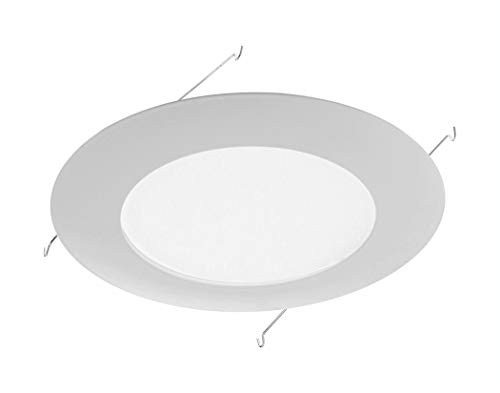
Requires one A19 bulb rated up to 60-Watts Max. (not included)

SLEEK LOW-PROFILE DISC LIGHT: The Juno SlimBasics Low Profile Ceiling Light has an unobtrusive design that features modern edged-trim housing in matte white to blend into any space; It is great for kitchens, hallways, bathrooms, and closets

IC Rated 6 Inch Slim LED Downlight with Junction Box
5. Pergolas and Awnings

Pergolas, awnings, and shade sails each land at a different point on the permanence-to-price line.
A freestanding pergola with pillar columns and footers anchors the patio as architecture; it filters sunlight through a trellis-like roof, extends usable hours into afternoon, and gives climbing vines something to grab.
That structure stays with the property and asks for a commitment in both budget and footprint.
Shade sails weigh far less. A triangular or rectangular polyethylene sail, HDPE fabric with steel D-rings at the corners, blocks 95% of UV while the knitted mesh still lets breeze pass through.
Corners can stretch beyond the patio edge to knit the space into the larger garden, or sit tight to define a single seating area. The cost stays modest and the whole thing comes down for winter.
Awnings sit in between, wall-mounted and retractable, with more coverage than a sail but less presence than timber posts.
In hot climates, any of these options protects furniture from bleaching and keeps container plants from baking in reflected heat off stone or concrete.
The choice comes down to how long you plan to stay and whether you want the shade to read as room or as accessory.
Recommended Products
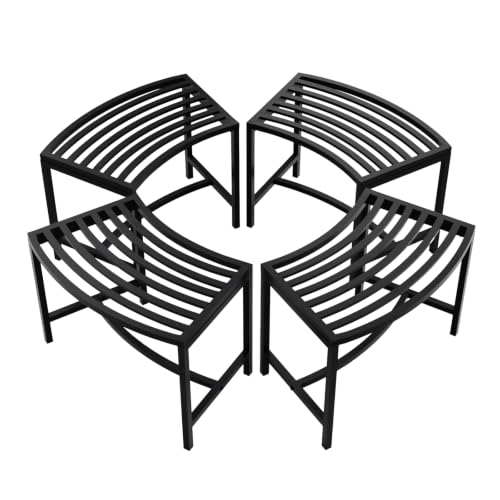
Built to Last: Crafted from heavy-duty iron, our backless patio benches feature a durable, smooth non-toxic finish. The reinforced T-shaped base design provides exceptional stability, safely supporting up to 300 lbs per bench.

[3 IN 1]: OutVue fire pit is equipped with 2 cooking grills, 1 lid and tabletop. When you fix grills and tabletop to the fire pit, you can enjoy the roast and bonfire. When it not make fire and cover the lid, you will get a 36 inch round table to have a meal or coffee for 6-8 persons. OutVue provide a wood fire pit has 3 functions: bonfire, barbecue and table, which can be used all year for your garden, yard, patio. This's also a very thoughtful gift to friends.

Luxury Ceramic Table Surface: This 43-inch fire table boasts a roomy surface that comfortably seats six guests for outdoor get-togethers. Built with four-section premium ceramic panels, the tabletop resists high heat and dampness, and wipes clean in seconds. Delicate stone grain detailing brings upscale flair, and its contemporary silhouette matches backyards, patios, decks, lawns and poolside spaces perfectly.
6. Outdoor Furniture Arrangements

Measure the space before you buy the furniture, not after; that is the difference between a layout that works and one that fights you.
A loveseat that looked compact in the store ate two-thirds of the width, and the chair I added blocked the path from the back door to the garden. We ended up walking through the planting bed every time.
Measure the footprint, then map traffic before you shop. Tape the dimensions out on the floor indoors and walk the route you will take with a tray of drinks, with the hose, at dusk when you are less careful.
On small patios, a slim loveseat paired with a small drinks table leaves room to move, while a full sofa often doesn’t.
Modular sets with storage under the seats solve the clutter problem without demanding extra floor space for bins. Corner and mid-sections slot together to fit odd dimensions, and the cushions lift out of sight.
A three-piece modular set against the railing with the center left open usually solves the traffic problem better than a centered grouping. The difference was the planning order: circulation first, then furniture, then whatever accent piece the budget still allowed.
For a space under roughly 100 square feet, one seating zone is usually all that fits comfortably. Two chairs and a table beat a sofa that turns the patio into a corridor.
Recommended Products

HIDDEN STORAGE: Removable tops allow you to effortlessly store cushions, pool toys, gardening supplies, and more inside this set of ottomans

HIDDEN STORAGE: Removable tops allow you to effortlessly store cushions, pool toys, gardening supplies, and more inside this set of ottomans

STYLISH OUTDOOR OTTOMAN: Perfect for relaxing as a footrest, the design blends seamlessly into any decor-style and function in one compact piece
7. Water Features

The smallest water feature I ever installed was a bowl fountain barely sixteen inches across, set into a corner of a downtown patio where the client wanted the sound of moving water but had maybe twenty square feet of usable floor left after furniture.
It ran on a pump the size of a fist, drew about as much power as a night light, and the burble carried just far enough to cover the hum of the neighboring HVAC unit.
That is the scale that works on these spaces: something you can lift yourself, fed by a reservoir you can empty with a soup pot when the time comes.
Time is the part people misjudge.
The pump on that bowl failed after its second winter, not because it was cheap but because the owner unplugged it for a freeze, forgot to plug it back in, and the stagnant water grew a film of algae that clogged the intake when she finally remembered.
By June she had a mosquito breeder she was too embarrassed to call about. I have seen this arc more often than I care to count: the running feature becomes the neglected feature becomes the standing water problem.
The clients who keep them going are the ones who build the unplugging into a seasonal routine, same as bringing in the hose bibs, not the ones who assume a pump will forgive a month of silence.
If you are weighing this for your own patio, consider whether you want the maintenance or just the sound. A simple recirculating fountain with an accessible reservoir and a pump you can swap without tools is the honest middle ground.
The wall-mounted spouts and disappearing basins look cleaner but bury the mechanics where you cannot reach them without disassembly, and that is where these projects die.
Recommended Products

{Premium Material}: Our garden wall planters bags choosing high-quality felt materials with good air permeability can better store and release water to promote healthy plant growth. It is lightweight, sturdy, convenient, foldable, durable and anti-aging.
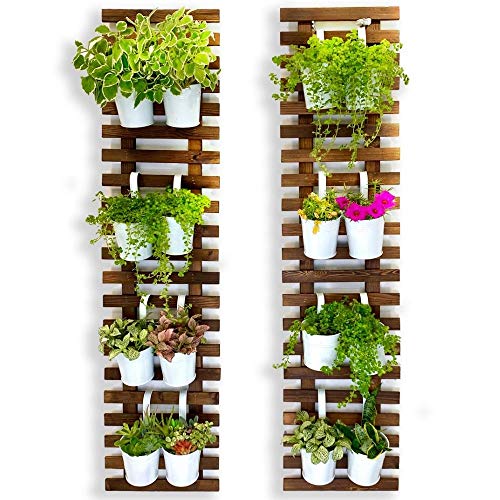
29x120cm (11.4" x 47.2") x 2 pcs. Plants, flowers, pots, decorations are NOT included

🌲【Natural Wooden Fence】 :Wooden lattice wall planter are perfect for climbing plant and provide them enough places to stretch branches. Besides, they can be used as wall-mounted flower pots shelf, garden fences, and home decorations that can hang family photos or string lights.
8. Privacy Walls and Trellises

A solid privacy wall blocks sight lines immediately, but it also blocks the breeze and can make a small patio feel boxed in.
Trellises take longer to fill in, though wisteria or another vigorous climber can create that same verdant cocoon within a couple of growing seasons.
The tradeoff matters more than most people think: if your neighbor’s second-story window looks straight down onto your seating area, only a wall solves it now.
If the exposure is across a fence line, a trellis with layered greenery at ground level and overhead blurs the boundary without stealing the openness.
Weathering is the detail that decides materials. Wood trellises need replacement or repair after a few hard winters in most zones; metal holds longer but heats up in direct sun and can limit what you plant against it.
Solid walls built from natural stone, brick, or concrete stand up longest and give you vertical storage or design elements you would not get from open lattice, though they cost more upfront and eat floor space a pony wall would leave open.
Light-colored materials on any wall surface keep the patio cooler and stop the space from feeling smaller than it already is.
Recommended Products

ISLAND FEATURES - The MAi400-D90BEV Mont Alpi 400 deluxe series 82" x 88" L-shaped premium outdoor kitchen island with 32" gas grill arrives almost fully assembled (modular attachment required) and is made from 304 stainless steel. The 90 degree corner (MA90C) cart comes in a flat pack and requires assembly. The beverage center refrigerator module comes standard with this model together with the faucet and sink. You also get large soft closing drawers right underneath your grill for extra storage and easy access, plus a fully covered back with vents. Your outdoor kitchen also comes with gliding castor wheels for smooth and easy-to-maneuver movement and increased stability.

ISLAND FEATURES - The MAi400-D90 Mont Alpi 805 deluxe series 82" x 50" L-shaped premium outdoor kitchen island with 32" gas grill arrives almost fully assembled (modular attachment required) and is made from 304 stainless steel. The 90 degree corner (MA90C) cart comes in a flat pack and requires assembly. The left cabinet with the side burner comes with a roll-out propane tank holder and can be used as storage as well. You also get large soft closing drawers right underneath your grill for extra storage and easy access, plus a fully covered back with vents. Your outdoor kitchen also comes with gliding castor wheels for smooth and easy-to-maneuver movement and increased stability.

ISLAND FEATURES - The MAi805-BSS90 Mont Alpi 805 black series 94" x 50" L-shaped premium outdoor kitchen island with 44" gas grill arrives almost fully assembled (modular attachment required) and is made from 304 stainless steel. The 90 degree corner (MA90C) cart comes in a flat pack and requires assembly. The left cabinet with the side burner comes with a roll-out propane tank holder and can be used as storage as well. You also get large soft closing drawers right underneath your grill for extra storage and easy access, plus a fully covered back with vents. Your outdoor kitchen also comes with gliding castor wheels for smooth and easy-to-maneuver movement and increased stability.
9. Layered Lighting

Layered lighting turns a patio from a daytime-only spot into something you actually use after dinner.
The three layers matter: overhead light for safety, task light where you grill or read, and accent light to pick out a plant or a wall texture. I treat it like wiring a small room, just without the walls.
Overhead can be recessed hi-hats if you own the structure, or a string of LED café bulbs if you don’t.
Task light is the low-level stuff: a clip-on reading lamp, battery-powered puck lights under a shelf, or a portable lantern on the side table. Accent is where you get playful.
Fairy lights through a railing, a small uplight on a potted tree, a tiki torch you move around.
One layer of light alone always feels flat; two or three at different heights is what makes a patio feel finished after dark.
For renters or anyone without outdoor outlets, battery and solar are the real options, not compromises. Battery puck lights and LED lanterns now run 20–40 hours on a charge, enough for a week of evenings.
Solar has improved, but only where the panel gets direct sun for six-plus hours; shaded patios leave solar dim by 9 p.m. My call: start battery, move to solar only after you map where afternoon light actually lands.
Recommended Products
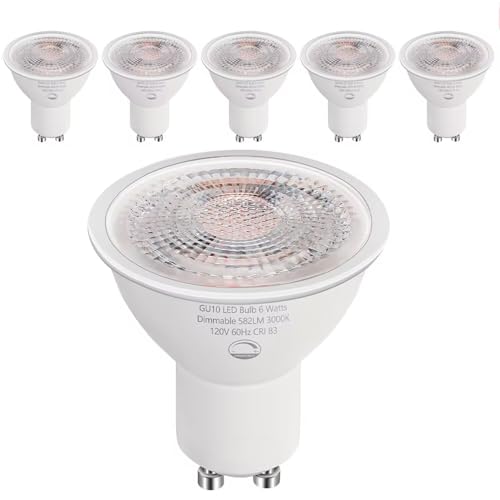
【Warning】 Do not use in candle warmers. This is the wrong type of GU-10 bulbs.

ADJUSTABLE AMBIENCE: Our recessed ceiling lights feature 5 selectable color temperatures (2700K, 3000K, 3500K, 4000K, 5000K), and can easily switch from warm to daylight, feature long-lasting integrated LEDs, and a high CRI of 90 for accurate color rendering

SEALS OUT BUGS AND DEBRIS: Patented recessed light cover snaps over your existing can light as a clear protective barrier, keeping insects, dust, and debris out of ceiling light fixtures while letting full brightness through.
10. Planting and Landscaping Around Patios

Plants soften the hard edges of a patio in a way nothing else manages, but the mistake most people make, and I made early on, is treating greenery as an afterthought rather than part of the structure.
Two or three oversized containers placed deliberately will do more for a small patio than a dozen small pots scattered around.
The sculptural weight of a single large planter, something with real height and architectural foliage, reads as intentional design rather than clutter you accumulated.
For renters or anyone working a balcony, this approach is especially practical. Large containers move with you, and a fiddle leaf fig or rubber plant that lives indoors half the year becomes a summer statement piece outside.
In-ground planting is the other path, though it obviously commits you to the spot.
Either way, the calm people feel when nature sits close to the built environment only arrives when the planting has enough presence to read as nature, not decoration.
The real discipline is stopping before the space feels crowded. A small patio with too many plants loses its function as outdoor room.
One strong grouping at a corner or edge, something overhead if you have the structure for it, creates the sense of enclosure that makes the patio feel removed from everything beyond it. Fewer, larger planters win over volume every time.
Recommended Products
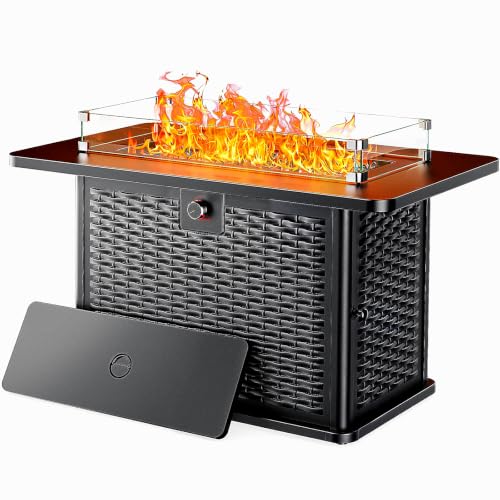
Powerful 60,000 BTU Heating: Enjoy efficient warmth on chilly nights with this high-heat 60,000 BTU output Ciays propane fire pit. The durable 304 stainless steel H-burner creates a denser flame pattern for consistent & effective heating. This gas fire pit will elevate your outdoor experience, reliability and safety.
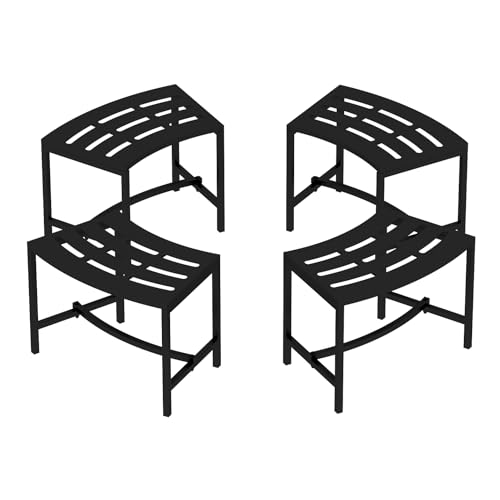
🍧【HEAVY DUTY】Our outdoor backless benches for fire pits are made of heavy-duty iron with a smooth, non-toxic coating. The T-shaped structure makes the fire pit benches more sturdy, with a maximum weight capacity of up to 300 lbs.

2-in-1 Fire Pit Table: Enhance your outdoor space with our versatile propane fire pit table! The removable lid transforms it from a stylish patio dining table to a cozy 60,000 BTU fire pit. It uses a standard propane tank for continuous heating – perfect for extended gatherings. Once the flames are extinguished, the included lid easily converts the gas fire pit table back into a regular table for dining or other uses.
Patterned Pavers and Hardscaping

A herringbone pattern in Unilock Town Hall or Mattoni pavers runs the eye along the diagonal, which stretches a small patio better than a grid ever could.
The interlocking geometry also locks the pavers against shifting, so the surface stays flat through freeze cycles.
I like basketweave for the same reason: the pairs of rectangular units read as texture from a distance, not clutter, and they do not fight the scale of a 10 by 12 foot space the way an overly intricate inlay might.
That line between intentional and confining is real. An inlaid hardscape rug, say a perimeter of travertine or limestone framing a center of patterned porcelain, works when it anchors a seating zone.
It fails when you try two or three competing patterns in the same view. One patterned area per small patio is the limit, and even that wants a border of plain material around it to let the eye rest.
Light-colored pavers help here too; they keep the floor from swallowing light and make the geometry read as air rather than weight.
Porcelain inlays have the practical edge of never fading or needing a wash, unlike actual outdoor rugs. But the cost runs higher than standard concrete pavers, and the install is less forgiving of a subbase that is not perfectly flat.
If the budget is tight and the yard is truly small, a single herringbone field in a neutral tone gives you 90 percent of the visual effect without the inlaid price tag.
Sizing a Patio for How You Use It

A patio measured only by square footage misses how people actually move through it.
Each person needs roughly 25–30 square feet to sit and circulate without bumping elbows, which means a four-person table already demands about 100–120 square feet before anyone stands up to refill a drink.
Add a grill, and you need a clearance zone around it that does not overlap with the dining footprint, or the cook ends up playing musical chairs with seated guests.
I learned this the hard way on a 10-by-12-foot slab I helped lay out for a friend in her first house.
We fit the table, squeezed the grill into the corner, and discovered too late that pulling out a chair blocked the path to the back door. A lounge chair would have been impossible; two people passing each other required choreography.
For six people, you are looking at 150–180 square feet, which you can achieve with a 10-by-15 or 12-by-15 layout.
That sounds generous until you map the actual objects: a four-top with chairs pulled back, a grill with three feet of working space, a single lounge chair with room to walk around it rather than through it.
Draw it to scale, cut paper templates, and walk the spacing on your lawn with stakes and string before you commit to pavers or concrete. The string costs nothing; the regret of a too-small patio lasts years.
Patio Surfaces and What Lasts

Brick, natural stone, and concrete pavers each age differently, and the gap between how they look on day one and year ten is where most patio design ideas fall apart.
I have watched all three fail early for the same reason: a rushed base. Water pools, frost heaves the surface, and cracks follow.
The material matters less than what sits underneath it.
| Surface | Wear pattern | Maintenance | Repair |
|---|---|---|---|
| Brick | Softens at edges, fades to a patina | Occasional sand refill between joints | Lift and reset single bricks |
| Natural stone | Holds color; limestone can spall in freeze-thaw | Low; water absorption stays minimal if sealed | Difficult; matching replacement stone is hard |
| Concrete pavers | Surface color wears; aggregate may show | Sealing every 2–3 years, plus cleaning | Lift and reset; color match varies by batch |
The base is the thing that determines whether your patio lasts fifteen years or five.
Stone demands the most careful sourcing for repairs, brick forgives almost anything, and concrete pavers sit in the middle: durable but needy with that sealant cycle.
Skip the gravel and compaction phase, though, and none of the three will save you.
What I Got Wrong Early

The first patio I ever laid sat under an inch of standing water every spring. I had graded the pavers toward the house because the slope looked level enough to my eye.
Drainage has to be planned before a single stone goes down, not patched after the fact with a siphon pump and regret.
Other lessons accumulated fast:
- A sectional sofa without measuring the concrete pad first is a mistake you pay for in blocked walkways and regret. The delivery crew laughed. The piece blocked the back door by four inches, and I ate the restocking fee. Measure twice, buy once, and tape the footprint out on the ground before you order.
- A dwarf Alberta spruce I planted beside the seating area grew to six feet across in five years. The tag said "slow growing." It was not slow enough. Check the mature spread, not the nursery-pot silhouette, or you will be pruning around your chair every June.
- String lights went up as an afterthought, clipped to a gutter that could not hold the weight. Proper outdoor circuits and mounting points should be roughed in during hardscape, when the walls are open and the trenching is free. Adding them later means extension cords across your dining space or a $400 electrician call for what would have cost $80 in phase one.
Frequently Asked Questions
What are the best materials for a patio surface?
Brick, natural stone, and concrete pavers are the three solid choices, each aging differently over time.
Brick softens at the edges but is easy to lift and reset; natural stone holds color yet can be hard to match for repairs; concrete pavers need sealing every two to three years.
What matters more than the surface material is the base underneath it, since a rushed base leads to water pooling, frost heave, and early cracks no material can survive.
How do I choose the right size for a patio?
Budget roughly 25 to 30 square feet per person for sitting and moving without bumping elbows, so four people need 100 to 120 square feet and six people need 150 to 180 square feet.
Map the actual objects to scale before you build, including chair pull-back space, grill clearance, and walking routes.
Tape the footprint out on your lawn with stakes and string to walk it in real life; string is free, but a too-small patio costs years of regret.
How can I make a small patio feel bigger?
Stick to two tones at most so the eye does not snag on clutter, and choose light colors for walls and pavers to bounce daylight around rather than absorb it.
Draw the gaze upward with one vertical element, a single trellis or one living wall, since raising the sightline reads as air. Multifunctional furniture helps too, storage ottomans and bench seats hide gear without eating floor space.
How do I design a patio layout?
Measure the footprint first, then map traffic before you shop for anything, walking the routes you will actually use with a tray, a hose, and at dusk when you are less careful.
For spaces under about 100 square feet, one seating zone is usually the limit; two chairs and a table beat a sofa that turns the patio into a corridor.
Modular sets with storage under the seats let you fit odd dimensions and keep cushions out of sight.
What are current trends in patio design?
Patterned pavers such as herringbone or basketweave stretch a small patio visually and lock together against freeze-thaw shifting. Shade sails in HDPE fabric, pergolas with climbing vines, and modular outdoor kitchen units are popular for adding function without permanent construction.
Layered lighting, overhead for safety, task-level for grilling or reading, and accent lights for plants or textures, extends usable hours well past dinner.
What are common patio mistakes?
Grading the surface toward the house instead of away from it traps standing water every spring, and drainage must be planned before the first stone goes down.
Buying furniture before measuring the space often blocks doors or turns walkways into obstacle courses.
Planting without checking mature spread means pruning around your chair for years, and skipping proper mounting points for lighting during hardscape leads to extension cords or expensive electrician calls later.
What are the best patio designs?
The best design depends on your yard’s existing conditions and how you will use the space.
A single flat plane with furniture doing the zoning usually wins over multi-level on small lots, since split levels need landings, railings, and circulation paths that eat square footage.
Fire tables centered or slightly off-center create conversation zones without demanding the depth a full fireplace requires, and one strong planter grouping at a corner softens hard edges without cluttering the room.