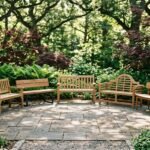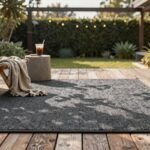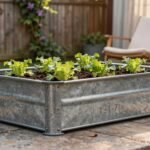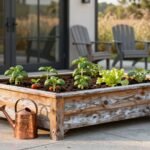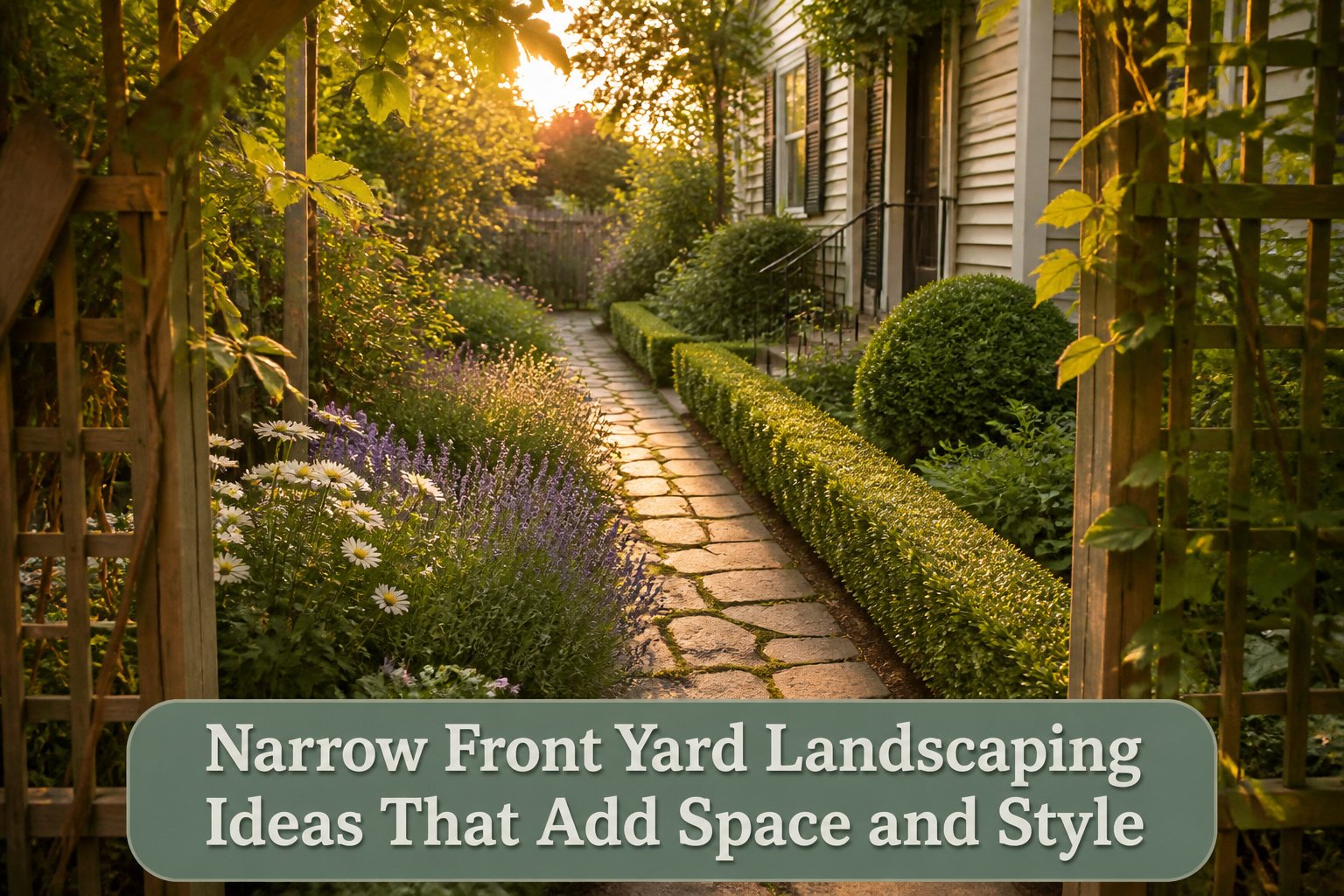
A narrow front yard runs anywhere from a low-effort clover seeding to a full hardscape overhaul, and the deciding factor is how much of the space you actually walk on.
The trap is planting for the width you bought, not the corridor you live in: a one-gallon hydrangea looks sparse now, but two summers later it blocks the path.
The 60 to 90 centimeter setback between planting tiers is the measurement that separates a flat strip from a yard that reads wider than the survey says.
1. Layered Planting

A flat strip of lawn with a few shrubs spaced evenly reads like a hallway. The eye travels straight to the door and stops, and the yard feels exactly as narrow as the property line says it is.
Layered planting breaks that flat plane into three distinct tiers so the eye moves sideways through depth instead of racing forward to a dead end.
The logic is straightforward: low groundcovers or spreading plants sit at the front edge, medium-height shrubs or ornamental grasses step back 60 to 90 centimeters behind them, and taller accent plants anchor the rear.
Each tier catches the eye at a different distance, so the brain registers the space between them as width rather than length. A three-dimensional composition draws visitors in through the entry instead of exposing the full depth in one glance.
In my own reading of narrow yards, the back layer matters more than the front.
A single small palm or architectural plant at the rear gives the middle shrubs something to stand against, and that contrast is what creates the illusion of depth.
Without it, the middle layer floats in space and the eye still reads flat.
The 60 to 90 centimeter setback for the middle tier is the measurement that makes this work; closer than that and the layers blur together, farther and you leave dead ground that reads as emptiness, not depth.
Recommended Products
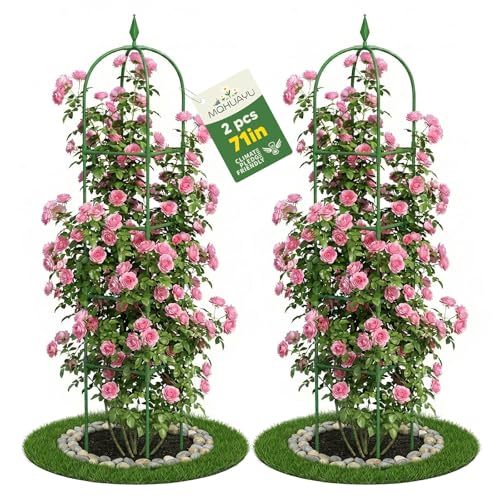
【6 Ft Adjustable Height】This 4-tier garden trellis for climbing plants provides ample space to plant thrive. With removable 4-way connectors, you can easily adjust the height as your plants grow—reaching up to 6 feet tall. It offers the flexibility needed for healthy vertical development

【Sturdy Metal Construction】: Trellis for climbing plants outdoor is crafted from premium steel with a rust-proof coating, maintaining structural integrity through all weather conditions and seasons while protecting your plants and ensuring lasting durability. Even when draped with heavy Halloween cobwebs, hanging ghosts, and glowing pumpkin lanterns, it holds strong through windy October nights.
2. Vertical Elements

A narrow front yard can feel like a corridor if everything stays below knee height. Drawing the eye upward with trellises, wall-mounted planters, or climbing vines adds dimension without eating the few square feet you actually walk on.
I learned this the hard way after cramming too many shrubs along a 6-foot-wide strip and watching the space shrink every time I stepped outside.
Trellises against a fence or the house wall let you grow vertically what would otherwise sprawl. Climbing roses, clematis, or ivy soften the structure and add height where ground space is gone.
Wall-mounted planters or modular vertical systems keep greenery off walkways and driveways, which matters in high-traffic spots. The plants stay visible, the path stays clear, and the yard gains layers it didn’t have horizontally.
Wooden frames or metal grates work as supports, and the choice shapes how integrated the whole thing feels. A mismatched trellis reads as an afterthought; one that echoes the house trim reads as part of the design.
Tomatoes and beans can climb too if you’re mixing ornament with function, though in a front yard I tend toward the decorative vines unless the light is good enough for both.
The air quality boost and privacy screening are side benefits, not the main reason to bother. The main reason is that a vertical element stops the eye from landing on the property line and lets it travel upward instead.
In a space measured in feet, not acres, that shift matters more than any single plant choice.
Recommended Products
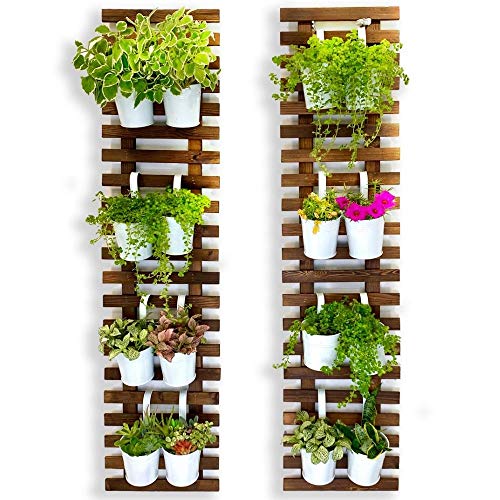
29x120cm (11.4" x 47.2") x 2 pcs. Plants, flowers, pots, decorations are NOT included

Design: Wall mounted flower pots are suitable for indoor and outdoor decoration or office walls, saving space. It is also suitable for indoor plant wall pots and vertical wall flower pots

{Premium Material}: Our garden wall planters bags choosing high-quality felt materials with good air permeability can better store and release water to promote healthy plant growth. It is lightweight, sturdy, convenient, foldable, durable and anti-aging.
3. Pathway Design

A primary path in a narrow yard needs 36 to 48 inches to feel comfortable; secondary routes can drop to 24 to 30 inches without anyone turning sideways.
I learned that width the hard way on a 32-inch walkway that always left guests hesitating at the door, unsure whether to walk single file or risk brushing against wet leaves.
Material sets the maintenance load more than the look. Pavers give a solid surface that stays put after rain but cost more upfront and need a level base.
Gravel drains fast and reads softer against planting, though it migrates and needs a refresher every couple of seasons. Stone splits the difference, irregular enough to look garden-grade but stable underfoot if you choose pieces with one flat face.
I have used all three, and the gravel path to my side gate is the one I sweep back into line most often.
The path does more than carry feet. It divides a planting strip into rooms: a bed on one side, a pocket of ground cover on the other, each given shape by the edge it meets.
Without that line, plants run together and the eye reads clutter. With it, even a four-foot planting depth reads as intentional space rather than leftover margin.
Curving the route slightly, even in a straight lot, stretches the perceived distance from sidewalk to door. A rigid straight shot feels like what it is: the shortest path through a tight spot.
Recommended Products

Note: Garden beds are not included with your purchase of the Wall Trellis.
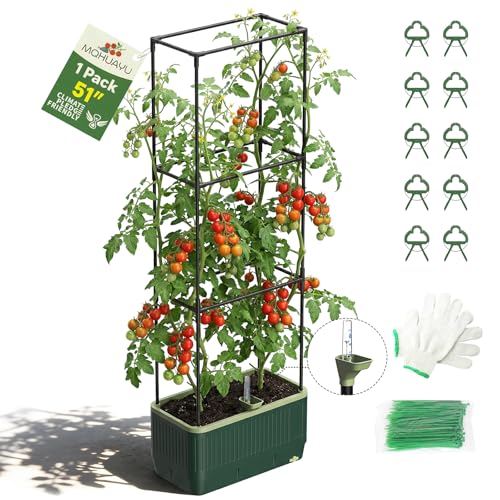
SMART SELF-WATERING & VISUAL GAUGE: Take the guesswork out of watering! Our innovative self-watering system features a deep water reservoir, cotton ropes, and a clear visual water level indicator. You can instantly see when to refill and when it's full, preventing overwatering or root rot. Perfect for busy schedules or weekend getaways, ensuring your plants thrive with minimal effort.
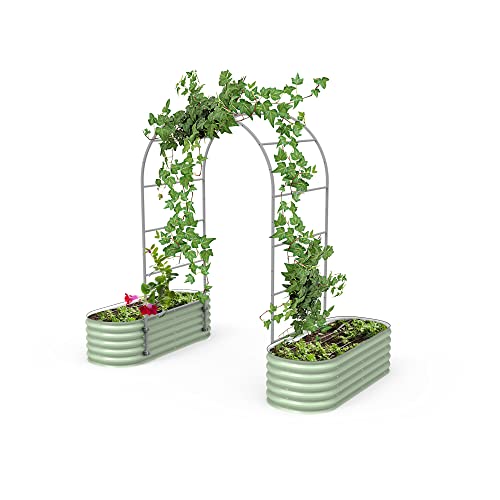
Garden beds are not included with your purchase of the arched trellis.
4. Focal Points

A single focal point does the heavy lifting in a narrow front yard because the eye has nowhere else to wander.
I learned this the hard way after cluttering my own strip with three competing elements: a birdbath, a bright planter, and a dwarf conifer. From the sidewalk it looked like a yard sale, not a garden.
The season after, I pulled everything but a small Japanese maple placed slightly off-center, and the whole space finally felt intentional.
Placement matters more than the object itself. In a tight rectangle viewed mainly from one angle, usually the street or the front walk, the focal point belongs on that sightline but rarely dead center.
Offset by even a foot breaks the corridor effect and lets the yard read wider than it is. Keep the ground around it clean: low groundcover or open mulch, not a crowd of competing perennials.
Size is the common mistake. Sources describe people planting trees too close to the house because they shopped the pot, not the mature spread.
Check the label, then add two feet. A tree that outgrows its spot becomes a maintenance problem, not an anchor.
For renters or the budget-stretched, painted planters or a simple obelisk substitute well, provided the surrounding bed stays minimal enough to let them hold attention.
Recommended Products

Tall Garden Trellis 6.6ft: Diameter: 13.8inch - Make sure the structure is tall enough to support the type of plant you want to grow. Scarlet runner beans and vigorous varieties of morning glories want a support that's 5 to 6 feet tall.You can also adjust the height you need.

Artisans have borrowed one of nature's most simple, beautiful forms with this dramatic, leaf-inspired garden sculpture

Ideal Garden Trellis:Height 6.3 feet(75.6 inches), perfect size to work as plant trellis.The vertical tomato tower obelisk gives flowering vines,vegetables and other planters a sturdy support to climb.Adds dramatic height to your garden with vertical trellising.
5. Low-Maintenance Options

A narrow strip of lawn between sidewalk and foundation is where weekend maintenance goes to die.
Microclover or a clover–fine fescue mix stays green through dry spells, feeds pollinators, and drops your mowing schedule to whenever you feel like it, not every Saturday.
I seeded a clover mix into a 4-foot planting bed two years ago and have watered it twice since.
Native plants finish the job. Serviceberry tops out around 15 feet, small enough to frame a doorway without swallowing it; Eastern redbud hits a similar scale and carries that brief magenta show in early spring.
Both handle the root competition and reflected heat that narrow yards throw at them. Ground covers underneath, something native to your county rather than your continent, fill the gaps weeds would otherwise claim.
Recommended Products

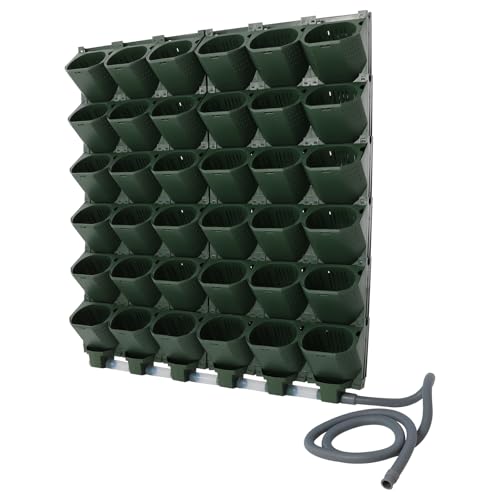
【36 Pocket Vertical Garden】Features 36 individual planting pockets, allowing you to grow herbs, flowers, succulents, strawberries, vegetables, and other plants while maximizing vertical space.

【Eco-friendly Material】This hanging plant bag is made of high quality felt cloth, which is non-toxic, eco-friendly, but sturdy and durable. Felt cloth is breathable and with good drainage ability, which can retain water and release them slowly, creating the perfect soil conditions. This can reduce the risk of corrupt plant roots, which is good for the growth of plants.
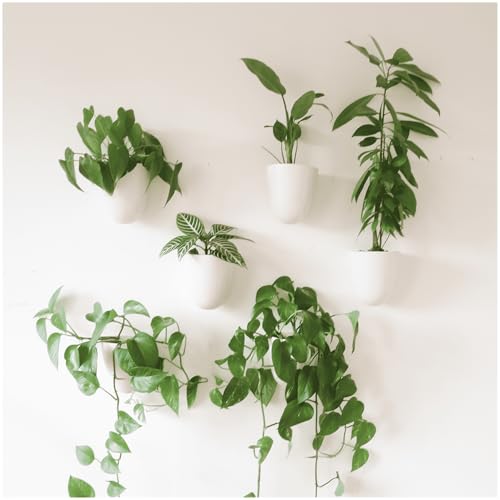
Self-watering system means you can often go weeks without watering plants
6. Use of Planters

Containers give a narrow front yard what a fixed bed cannot: the chance to move the whole display six inches left or frame the door differently next spring.
I learned this after planting a pair of boxwoods too close to my walk and realizing I had committed to that geometry for years. Planters let you test the sightline, then test it again.
For entryways, matching containers flanking the door create the cleanest signal of intention. Place them roughly two to three feet from each side of the frame; closer crowds the walk, farther and the pairing reads as accidental.
In a tight space, scale down before you scale up: a 14-inch pot carries more weight than a 20-inch one that blocks the path.
Fiberglass holds up through freeze cycles without the heft of stone, and self-watering reservoirs like those in the Ziant Hydro Planter buy you a weekend away without the droop.
Uniform containers keep a narrow yard from feeling busy, but a single varied pair can work if the taller one sits behind the shorter, not beside it. The real advantage is rotation.
A spring arrangement of forced bulbs slides behind summer dahlias, then behind autumn grasses, all without a shovel touching the ground. You are still learning what your light and your neighbors’ patience will allow.
Mobility means you are not landscaping in ink.
Recommended Products

【Package included】: This Trellis for Climbing Plants Outdoor comes complete with everything you need to get started: 17pcs metal stakes, 8pcs stainless wire connect pipe, 2 A-shaped connectors, and a 0.9x1.8meter Bird net.

【Rust-Resistant Material】: Cucumber trellis is constructed with high-quality galvanized steel inner pipes and an exterior plastic coating, forming a dual-layer rust-proof barrier to ensure long-lasting durability

[V3 Front Opening]: THICCLY GrowPole version 3 features front opening design. Front opening D-shape moss pole assembles more easily, and allows removal of plants for easy propagation.
7. Decorative Features

Garden art, birdbaths, and sculptures add personality to a narrow front yard without eating the planting space you already fought for.
I learned this the hard way after wedging a concrete angel between two hydrangeas and watching them sulk for two seasons. One or two pieces, placed deliberately, outlasts a crowd every time.
Rocks pull double duty in tight quarters. A fist-sized accent stone anchors a groundcover bed; smaller pebbles fill gaps between stepping stones spaced 18–24 inches apart for comfortable walking.
Drought-tolerant spreaders like wedelia or periwinkle thread through the gaps, softening the hardscape without demanding extra square footage.
The restraint matters more than the object itself. A slim modern water bowl draws birds and masks street noise, but a matching pair flanking your walk turns the entry into a gift shop.
Coordinate textures and tones with your wall color or the nearest foliage, then stop. The narrow yard already has enough edges; the decorative job is to quiet them, not compete.
Recommended Products

✅【0.35'' Thickness】 We've reinforced our garden lattice, increasing thickness by 30% to 0.35'' (0.9cm). A sturdier fence that withstands warping, cracking, and weathering, ensuring long-lasting beauty with less maintenance.
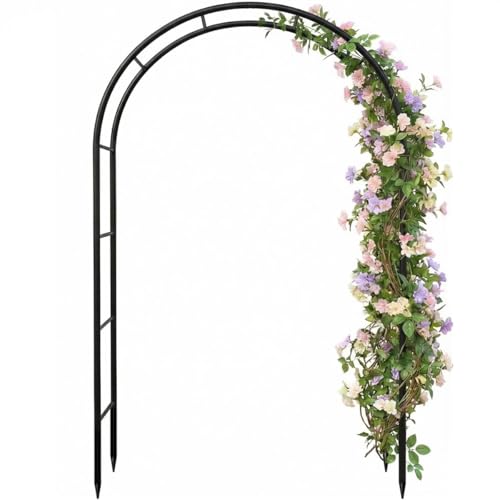
Superior Rust Resistance with Galvanized Metal: Forged from premium galvanized steel, this garden arbor endures intensive salt spray trials, proving its rust resistance surpasses standard metal designs by over 200%. A robust zinc finish guards against weather wear, ensuring lasting resilience. Whether dressing weddings, seasonal fêtes, or anniversary gatherings, it seamlessly weaves romance or festive spirit into every celebration.

STURDY 13 MM Q195 STEEL TUBING: For flower gardeners training roses, clematis and ivy, the Q195 steel frame creates a defined climbing path. Pair it with your preferred plant ties to guide new growth upward for a cleaner vertical display in garden beds and yard borders.
Water Features in Tight Spaces

A bubbling stone or slim modern bowl takes up about the same footprint as a large planter, but it does something no container plant can manage: it gives the yard a pulse.
Water draws the eye, softens street noise, and in a narrow space that otherwise feels like a corridor, that small sound turns the walk from sidewalk to door into an actual experience.
The birds notice too, and their presence does more for the feel of the place than another row of hostas ever would.
Placement matters more than size. Tucked against the house wall or set at the turn where the path meets the porch, a fountain stays out of the traffic line and catches light from the side rather than head-on.
One piece is enough. Two competing water sounds in a space measured in single-digit feet just reads as clutter, and clutter is what already threatens every narrow yard.
The maintenance gap is where most beginners stumble. A small feature needs no pond filter, no fish, no weekly chemical test.
What it does need is a five-minute wipe of the pump intake every two weeks and a full drain before hard frost.
The assumption that water equals high upkeep keeps a lot of people away, but the reality is closer to a birdbath with a power cord: keep it running clean and it runs itself.
Recommended Products

Innovative Space-saving Design: maximize your gardening potential with our stackable wall planter system; Each piece measures 9.45" x 5.71" x 5.51" and features two pockets, The overall dimensions are 47.5"x33"x5.5" offering ample growth space for a variety of plants; Nice for Fence Balcony Wall Decor, these vertical wall planters change limited spaces into gardens effortlessly

INSTANT VERTICAL GARDEN: Transform any space into a lush vertical garden with this ready-to-use wall-mounted planter. Enjoy fresh herbs, vibrant succulents, or beautiful flowers effortlessly – no assembly required! Perfect for small apartments, patios, balconies, or any area where floor space is limited. This sleek indoor wall planter lets you maximize your greenery vertically.
【Smart Timer & Rain Sensor】Equipped with a timer, you can easily set watering intervals (1h-30d) and duration (1s-999m). The intelligent rain sensor (IPX6 water-proof) automatically pauses irrigation on rainy days, preventing overwatering and saving water. Perfect for business trips and holidays.
Seasonal Rotation

Rotating what sits in a narrow front yard keeps the space from going stale by March.
I swap planters, small decor, and annual beds on a rough schedule: cool-season violas and pansies in early spring, heat-tolerant zinnias or celosia once nights stay above 55°F, then ornamental kale or mums when light starts dropping.
Frost-resistant containers, fiberglass especially, let you move the same pots through years of this without cracking. The rotation itself becomes the design; you are not building one static scene but running a small stage.
Uniform containers hold the rhythm even as the plants change, while a single varied piece, moved to the entry or the path edge, marks the shift between seasons.
The cost stays low because you are buying a few packs of annuals and maybe one new pot, not replanting entire beds.
What breaks the plan is forgetting to harden off early purchases or leaving tender starts out on a night that dips.
Check the ten-day forecast before the first swap, and keep a sheet or light row cover folded behind the same pot that will hold the next round.
Recommended Products

Garden beds are not included with your purchase of the arched trellis, please go to our store page and choose garden bed & arched trellis bundle to make your gardening more successful.

Garden beds are not included with your purchase of the arched trellis.To ensure that the product you receive fully meets your needs, please contact customer service before placing an order to learn how to select the correct size.
What I Planted and What Actually Grew

Karl Foerster feather reed grass works in a narrow strip between sidewalk and foundation, but only if you keep it off the property line where it will lean hard for light and look lopsided by midsummer.
It stayed upright, stayed narrow, and gave me three seasons of structure before the February ice flattened it. I cut it back to stubs in March and it came back fine.
I also tucked in three boxwood that a neighbor was dividing. Two made it through that first winter.
The third turned orange and I pulled it by May. Boxwood in a tight space needs afternoon shade in zone 6, and I had placed it where the garage wall radiated heat all August.
The real mistake was creeping thyme between the stepping stones. It filled in too fast, climbed the stones, and by late summer I was cutting it back with kitchen shears every two weeks.
Pretty, but the maintenance defeated the point of a narrow bed I could barely kneel beside. I switched to dwarf mondo grass the next spring.
It spreads slow enough that I only edge it twice a season, and it does not need the shears.
Where I Put the Money

Hardscape eats the first third of a narrow front yard budget, and it is usually the right call.
A straight run of concrete pavers or gravel between the sidewalk and the house costs less than most people guess and buys back usable square footage that planting alone would clutter.
I have watched friends pour their whole spring budget into soil and shrubs, then realize they have no clean path to the door.
Soil amendment is the line item that shrinks most year after year. The first season, you might spend heavily to break up compacted builder’s fill.
After that, a narrow bed needs only top-dressing with compost, maybe a bag or two in fall.
Plan on $80–120 for ongoing soil work after the initial fix, and do not let a garden center sell you a truckload you cannot spread in two hours.
Containers and the plants that fill them split whatever remains. In a tight space, three good pots on the stoop do more than fifteen small ones scattered along the foundation.
I buy one $35–45 container each year, rotate what goes into it by season, and let the perennials in the ground carry the winter.
The math works out to roughly $200 for plants and $120–150 for pots and annual soil refresh, with a little held back for the paver that heaves or the hose bib that leaks.
Microclover Lawn Trial

A narrow grass strip between sidewalk and foundation is mostly weeds by August anyway, so last spring I killed off the remaining turf and seeded a microclover-fine fescue mix instead.
The clover fixed enough nitrogen that I skipped fertilizer entirely, and the fescue filled in the gaps with a softer, thinner blade than the old Kentucky bluegrass.
Mowing dropped to every third week instead of weekly once the clover established.
By mid-August the strip looked deliberately meadow-like, not weedy: low white bloom on the clover, fescue staying under four inches, and no bare patches where the dog always hit the same corner.
The neighbor two doors down asked what seed blend I used, which is the only time anyone on this block has commented on my lawn and meant it as a compliment.
Microclover takes patience at first; the first six weeks look like bare dirt and weeds before the patch fills in.
That first six weeks looked patchy and half-dead while the clover nodulated and the fescue rooted, and I nearly tilled it all under twice.
If you need curb appeal for a sale or an HOA inspection, timing matters: seed in early fall, not spring, so the cool-season germination happens out of sight.
Mistakes That Narrow Yards Magnify

Small front yards magnify every misstep because one element in the wrong place eats up half the usable space. These are the errors I watch for now.
- Overplanting by purchased size. A one-gallon hydrangea looks lost in a four-foot bed, so the temptation is to pack three in. Two years later they are elbowing the walkway. I now measure the mature spread, divide by two, and still leave an extra six inches of breathing room. The visual calm is worth the bare soil at the start.
- Paths that pinch at the property line. My first sidewalk curved outward toward the street to dodge an oak, which squeezed the planting strip against the house to eighteen inches. A straight run with a single gentle bend mid-yard kept both sides usable and the circulation obvious.
- Focal points that block the door. I placed a columnar juniper to anchor the bed, then realized from the street it read as a barrier, not a welcome. Moved it ten feet left so the entry stayed clear; the eye travels to the door first, then rests on the tree. A focal point should guide, not guard.
Frequently Asked Questions
What are small front garden landscaping ideas?
Layered planting, vertical elements like trellises and wall-mounted planters, defined pathways, a single well-placed focal point, and low-maintenance ground covers such as microclover all make a narrow front yard feel larger and more welcoming.
Containers add flexibility, while one or two decorative pieces keep the space from feeling cluttered. A small water feature can soften street noise and turn the walk to your door into an experience rather than a corridor.
How do you organize a small garden?
Divide the space into distinct zones using pathways and planting beds, keeping the primary walk 36 to 48 inches wide for comfortable passage.
Layer plants in three tiers, low groundcovers in front, medium shrubs 60 to 90 centimeters behind, and taller accents at the rear, so the eye reads depth instead of a flat strip.
Clear paths and clean edges around each bed keep a narrow yard from feeling crowded or chaotic.
What plants look best in small front yards?
Compact, multi-seasonal choices like boxwood, Japanese maple, ornamental grasses, and lavender work well, as do native options such as serviceberry and Eastern redbud that handle reflected heat and root competition.
For ground level, microclover or a clover-fine fescue mix stays green with minimal mowing, while native groundcovers suited to your specific county fill gaps without demanding extra space.
How to landscape a very small front yard?
Start with hardscape, a clean path of pavers, gravel, or stone buys back usable square footage and defines planting areas.
Build depth through layered planting with 60 to 90 centimeter setbacks between tiers, add one vertical element to draw the eye upward, and anchor the design with a single focal point placed slightly off-center.
Keep the palette restrained; one or two decorative features and three matching containers do more than a dozen scattered elements.
What is the rule of 3 in landscaping?
The underlying principle is that a narrow yard magnifies every object, so limiting major elements to one or two per category keeps the space from reading as cluttered.
How can I landscape my front yard cheaply?
Spend the first third of your budget on hardscape like a simple gravel or paver path, which costs less than most people expect and immediately improves usability. After initial soil amendment, plan on only $80 to $120 yearly for compost top-dressing.
Buy one good $35 to $45 container each year and rotate inexpensive seasonal annuals through it, letting in-ground perennials carry the winter. Seed microclover-fine fescue instead of laying sod, and skip fertilizer once the clover fixes nitrogen.