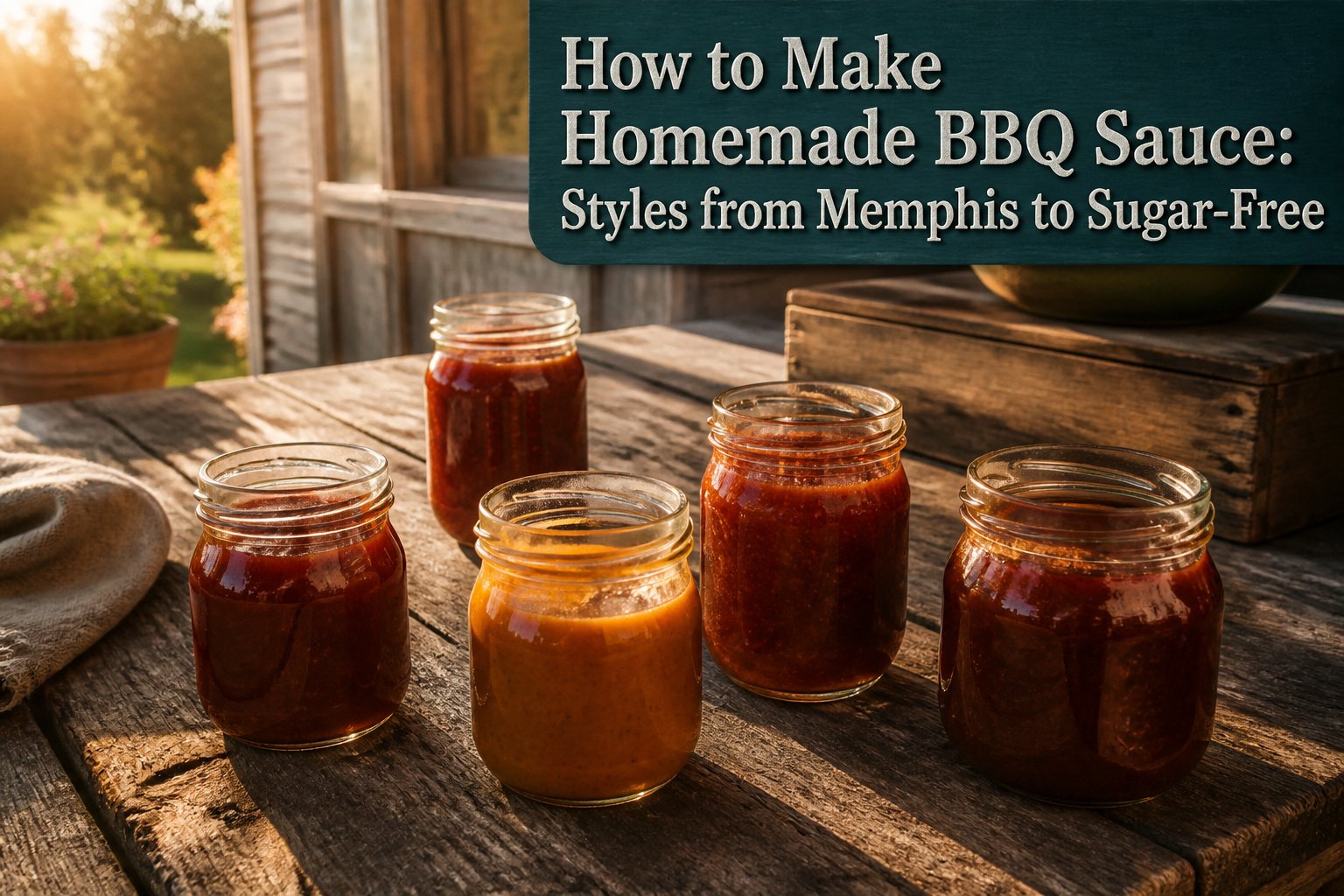
You can make four distinct BBQ sauces at home in under an hour each, from a 2-quart Memphis batch that carries real heat to a sugar-free version that demands a full simmer to cook off the Splenda aftertaste.
The stage most people skip is the simmer itself, pulling the sauce too early before the acids soften and the sugars marry into something cohesive.
1. Memphis BBQ Sauce

Memphis sauce lands on the sweeter side of the ledger, built from a ketchup and mustard base that still carries real heat if you want it.
The batch size is generous: 2 quarts, enough to get through a full season of backyard cooking with some left for gifting. Prep takes 10 minutes, then 20 minutes at a simmer.
The ingredient list runs long but nothing on it is obscure. Six cups of ketchup form the backbone, sweetened with 1 1/2 cups of packed brown sugar and sharpened with 3/4 cup of apple cider vinegar.
Yellow mustard goes in at 1 1/2 cups, which sounds like a lot until it cooks down into that signature tang.
For heat, 1 to 3 teaspoons of crushed red pepper flakes let you choose your own adventure, backed by 3 tablespoons each of onion powder and garlic powder, plus 3 tablespoons of powdered pico de gallo or chile powder if you cannot find the pico.
Tabasco sauce at 1 teaspoon adds another layer you can skip if the flakes are already enough.
The deeper flavors come from 3 tablespoons of black pepper, 1 1/2 teaspoons of celery salt, 3 tablespoons of liquid smoke, and 9 tablespoons of Worcestershire sauce.
If you have drippings from a roast, 1/2 cup of strained and de-fatted drippings stirred in at the end gives the sauce a meatier finish; without them, the sauce still stands on its own.
Everything goes into the pot at once. Simmer over medium-low heat for those 20 minutes, stirring now and then, until the sauce is smooth and hot throughout.
The mustard never quite disappears visually, it stays a little grainy, which is how you know it is homemade.
Recommended Products

BBQ FLAVOR: Add the rich, smooth combination of sweet and tangy Memphis BBQ flavor to your favorite proteins.

TRIO OF FLAVOR: Elevate your BBQ game with this 3-pack featuring Gold Sauce's tangy mustard base with a hint of sweetness, Carolina Sauce's bold tomato tang balanced to perfection, and Smoky’s rich, sweet smokiness for a perfect range of BBQ flavors.

18 oz organic Memphis Madness BBQ sauce
2. Sweet and Tangy Low-Carb BBQ Sauce

A reduced-sugar option still needs acid backbone and depth, or it tastes like diet soda on ribs.
1 cup reduced sugar ketchup, 1 6-oz can tomato paste, and 1 cup apple cider vinegar carry most of the weight here, with 1/4 cup liquid smoke adding the pit character without a pit.
I keep the sweet note small: 2 tablespoons brown sugar equivalent, just enough to round the edges.
The body comes from 2 tablespoons unsweetened cocoa powder, which thickens and deepens flavor without carbs, plus 2 tablespoons New Mexico chile powder and 2 tablespoons smoked paprika for heat and color. Simmer until it coats a spoon.
The result fits lower carbohydrate intake without reading as a compromise, though the vinegar bite is front and center in a way some eaters will love and others will find sharp.
Start with the listed vinegar; double it only if you already know you want that Memphis-level tang.
Recommended Products

ORIGINAL BBQ SAUCE: Our tried-and-true classic is perfect for pulled pork ribs, beef ribs, chicken, burgers and wings. Head Country Original is a perfectly balanced blend of sweet, smooth, savory, and subtle spice, delivering rich flavor without gluten, soy, or common allergens—so everyone can enjoy it.

2 CARBS PER SERVING - Our low carb bbq sauce was made with a health-conscious mindset for all to enjoy. All of the delicious flavor, none of the guilt. A healthy sauce that your taste buds yearn for!

ZERO SUGAR, BOLD FLAVOR: Lillie’s Q Carolina Zero Sauce serves up the classic tangy and apple-infused flavor of Western Carolina barbecue with zero sugar and just 10 calories per serving, making it the perfect guilt-free companion for your favorite dishes.
3. Tangy Vinegar-Forward BBQ Sauce

Cider vinegar brings the sharpness in this style, and the balance is what makes it work.
Two tablespoons of vegetable oil go into a large saucepan over medium heat, then one and a half cups of chopped onion and two tablespoons of minced garlic soften for about three minutes. That step matters.
Raw onion and garlic in ketchup turn harsh over a long simmer; the brief sauté rounds them off.
After that, four cups of ketchup, half a cup of cider vinegar, a quarter cup each of brown sugar and honey, a quarter cup of tomato paste, three tablespoons of Worcestershire sauce, two tablespoons of Dijon mustard, and one tablespoon of chili powder all go in together.
Salt and pepper to taste, then simmer on medium-low for fifteen minutes.
The vinegar is the variable here. Half a cup gives it real bite; the original source notes you can pull back if you do not want that dominance.
The same flexibility applies to sugar.
The base recipe uses a quarter cup of brown sugar plus honey, but an extra six tablespoons of brown sugar shifts the profile toward something closer to Memphis sweetness without leaving the vinegar category entirely.
Let it cool slightly if you want the onion texture; run it through a food processor if you do not.
Recommended Products

Taste the difference in pastas, meatballs, and more with Hunt's vine-ripened tomato flavors

BBQ & NO-TOMATO KETCHUP BUNDLE: Three pack includes 1 No Tomato Ketchup (14 oz), 1 Mastodon BBQ Sauce (13.5 oz), 1 Primal Cherry BBQ Sauce (13.5 oz)

Flavored with a unique blend of spice and sweetness.
4. Sugar-Free BBQ Sauce with Splenda

The sugar-free version demands the most attention to detail of the four styles, because 3/4 cup reduced-sugar ketchup still carries some carbohydrates and the balance can tilt fast.
I start with 1 cup water, 3 oz tomato paste, and that reduced-sugar ketchup as the base, then build with 1 tablespoon each onion powder and garlic powder, 2 tablespoons apple cider vinegar, 1 tablespoon Worcestershire, and 2 tablespoons lemon juice.
The 1/3 cup SPLENDA No Calorie Sweetener replaces brown sugar cup for cup by volume, though it doesn’t caramelize the same way.
Heat drives off the aftertaste that some people notice in raw Splenda, so the full 45 minutes to 1 hour simmer matters more here, not less.
This is the one I make when someone at the table is managing strict dietary needs, and I treat it as a separate recipe rather than an adaptation, because the margin for error is narrower.
Recommended Products

Adds fragrant natural-smoked flavor to meat on the BBQ grill, no smoker needed

Dash or brush it on steaks, chicken, hamburgers, or hot dogs for a tangy outdoor smoke flavor

Enjoy the flavor of mesquite-smoked meats, no smoker needed
Combine and Simmer

- Dump everything into a saucepan and set it over medium-low heat. The Memphis version comes together fast, just 20 minutes of simmering, while the thicker, sweeter sauces need closer to 45–60 minutes to reduce properly.
- Stir every few minutes so nothing scorches on the bottom. The sauce thickens as it cooks and will thicken more once it cools, so pull it while it still coats a spoon rather than clinging like paste.
- Watch for the surface to go from watery and bubbling to slow, glossy blips. That shift means the sugars and acids have married into something cohesive.
- Taste near the end. The flavors mellow and deepen as the liquid reduces, so the sharp vinegar bite you started with softens into something rounded and finished.
Recommended Products

AUTHENTIC EASTERN NC RECIPE - Made by hand in small batches since 1975 using the same family recipe. George's Original is the vinegar-based Eastern North Carolina-style sauce locals affectionately call 'Carolina Holy Water'
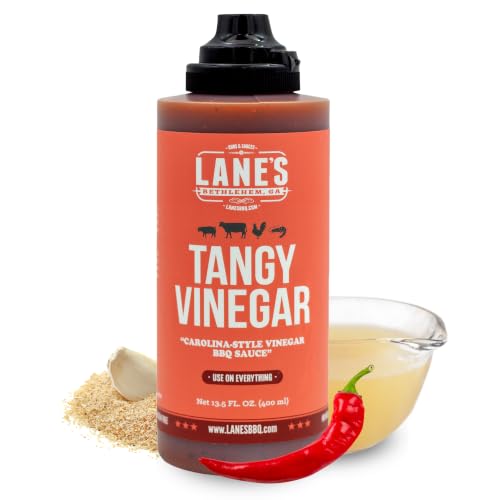
A COMBINATION OF DISTINCT SWEET & TANGY FLAVORS. Our vinegar Carolina BBQ sauce adds a tantalizing burst of flavor with a balance of tanginess, sweetness, and a hint of heat for smoked meats and Carolina-style barbecue.

2019 1st Place Jack Daniels Invitational - Chicken
What Goes Into Every BBQ Sauce

Every BBQ sauce builds from the same four categories, and getting the balance right is what separates a flat bottle from one you want to put on everything.
The base is almost always tomato: ketchup, tomato paste, or a mix of both.
One recipe I kept coming back to uses six cups of ketchup with a cup and a half of tomato paste; another keeps it simpler with just a cup of ketchup and a six-ounce can of paste.
That tomato foundation gives body and a little natural sweetness to build on.
Sweeteners run from brown sugar and honey to Splenda or brown sugar equivalents for low-carb versions.
A copycat Sweet Baby Ray’s style calls for a quarter cup of packed light brown sugar plus molasses and honey; the sugar-free swap uses a third cup of Splenda granulated or ten packets.
The sweetener level is usually what defines the style.
Acids lift everything out of heaviness. Apple cider vinegar shows up in nearly every recipe, anywhere from two tablespoons to a full cup depending on how sharp you want it.
Lemon juice, Worcestershire, and mustard add layered tang rather than straight sourness.
Spices finish the profile: garlic and onion powder, chili powder or New Mexico chile powder, smoked paprika, black pepper, celery salt, liquid smoke. One recipe adds cumin; another uses cocoa powder for depth.
The difference between Memphis sweet and vinegar-forward Carolina is mostly which of these four categories you let lead.
Recommended Products

Includes: 2 Killer Hogs The BBQ Sauce, BBQ Masters Guide & Keychain Bottle Opener. Elevate your grilling game with our signature BBQ Sauce set, the perfect addition to any backyard cookout or barbecue feast.

ELEVATES EVERY GRILL SESSION - The ideal womens gift basket arrives packed with 5 artisan grill rubs from BBQ regions - the perfect culinary present for any grill enthusiast or curious cook

Signature barbeque sauce thats smoky, spicy and sweet, with a vinegar and tomato base
Storing What You Make

Glass jars with tight lids keep homemade BBQ sauce tasting right through a couple of weeks in the refrigerator.
Plastic works too, though it tends to hold onto the garlic and smoke notes and pass them to whatever goes in next. A strip of masking tape and a permanent marker beat trusting memory on when a batch went in.
For longer storage, freezing buys you several months without much change to flavor or texture. Wide-mouth pint jars leave the headspace that keeps lids from cracking as the liquid expands, or you can use freezer bags laid flat to stack.
Thawing overnight in the refrigerator gives the most even result; the microwave works if you stop every thirty seconds to stir so the edges do not scorch.
A separated sauce usually comes back together with a vigorous whisk once it reaches room temperature.
Recommended Products

The package dimension of the product is 3"L x 3"W x 7.2"H

Flavor Fusion: A delicious blend of barbecue sauce and Buffalo wing sauce

2 CARBS PER SERVING - Our low carb bbq sauce was made with a health-conscious mindset for all to enjoy. All of the delicious flavor, none of the guilt. A barbecue sauce your taste buds deserve!
Frequently Asked Questions
How do you make homemade BBQ sauce?
Combine a tomato base like ketchup or tomato paste with sweeteners, acids, and spices, then simmer until the flavors meld and the sauce thickens.
Most recipes need 20 to 60 minutes on the stove depending on how thick and sweet you want the finished sauce. Stir every few minutes to prevent scorching, and pull it while it still coats a spoon rather than clinging like paste.
What are the main ingredients in a barbecue sauce?
Every BBQ sauce builds from four categories: a tomato base, sweeteners, acids, and spices.
Ketchup or tomato paste provides the body; brown sugar, honey, or substitutes add sweetness; apple cider vinegar, Worcestershire, or lemon juice supply the acid; and garlic powder, onion powder, chili powder, and liquid smoke round out the flavor.
Is barbecue sauce just ketchup and brown sugar?
No, a good homemade BBQ sauce needs acid and spice to balance the tomato and sweetness. The recipes above add ingredients like apple cider vinegar, mustard, Worcestershire, and chili powder to create depth.
Without that balance, the sauce tastes flat and one-dimensional.
What can I use instead of brown sugar?
Splenda No Calorie Sweetener works cup for cup by volume in the sugar-free version, though it needs a longer simmer to drive off any aftertaste.
For low-carb diets, brown sugar equivalents at about 2 tablespoons still give a hint of sweetness without the full carbohydrate load.
How long does homemade BBQ sauce last?
Stored in a glass jar with a tight lid in the refrigerator, homemade BBQ sauce stays good for a couple of weeks.
For longer storage, freeze it in wide-mouth pint jars or flat freezer bags; it keeps several months without much change to flavor or texture.