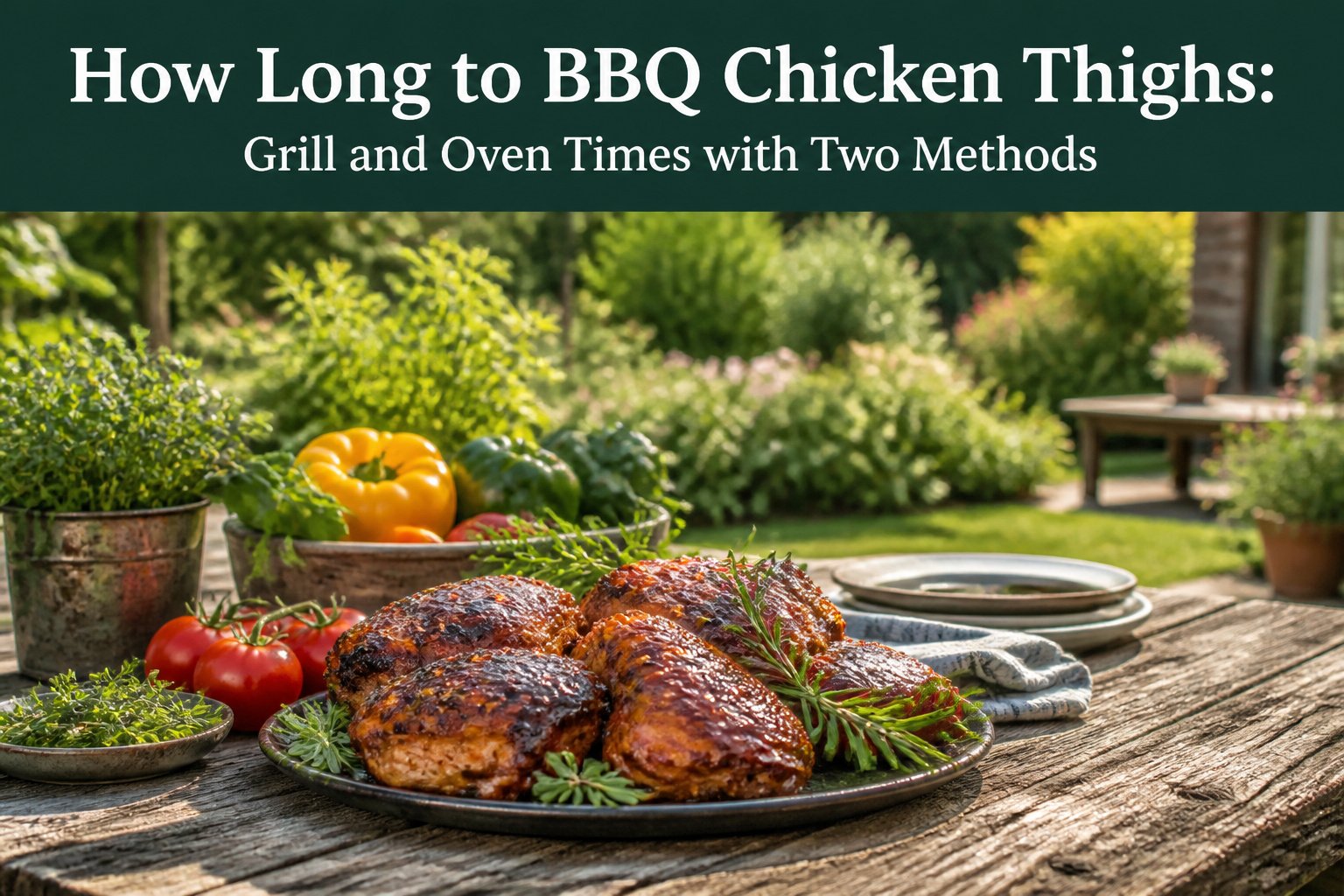
Boneless chicken thighs need 10 to 12 minutes per side on a grill set to medium heat, while bone-in thighs push toward 15 to 20 minutes per side.
The oven changes the math entirely: 25 to 30 minutes at 400°F for boneless, but a full 50 minutes for bone-in.
Either way, the real finish line is 165°F internal temperature, not the clock, and barbecue sauce goes on only in the last few minutes so the sugars don’t scorch before the meat cooks through.
How Long to BBQ Chicken Thighs

Boneless chicken thighs on a grill run 10 to 12 minutes per side over medium heat, while bone-in thighs need closer to 15. An oven set to 400°F changes the math: boneless thighs finish in 25 to 30 minutes, but bone-in need the full 50.
Either way, the pull point is 165°F internal temperature, checked at the thickest part with a meat thermometer.
I wait to brush sauce on until the last few minutes; barbecue sauce scorches faster than the meat cooks through, and charred sugar does not taste like barbecue.
The thermometer matters more than the clock, since thigh thickness varies and grills run hotter in back corners.
Recommended Products

Fast & Accurate: Get precise readings in just 1 second with ±0.9°F accuracy. NSF Certified for trusted food safety, this digital food thermometer features a 4.3 inches food-grade stainless steel meat probe, perfect for grilling, frying, baking, making candy and more

Instant Read Food Thermometer | Our instant read thermometer features a temperature probe and advanced, highly accurate technology with 1-2 seconds response time; Instructions, meat temperature chart, comes pre-calibrated for your convenience, and recalibrating feature if needed.

【Fast & Accurate】Our meat thermometer digital delivers accurate readings within ±1°F in just 1–2 seconds, with a wide temperature range of -58°F to 572°F (-50°C to 300°C). No more waiting over the heat - know your food's exact temperature instantly.
Prepping the Thighs

Bone-in or boneless, chicken thighs need time with salt before heat ever touches them. A dry rub of salt, pepper, and whatever spices match your sauce will begin drawing moisture into the meat and breaking down the surface proteins.
That process starts working in about 30 minutes, which is your floor if dinner is already in motion. The flavor stays surface-level at that speed, though.
Given the choice, the bag goes in the fridge overnight, up to 24 hours, and the difference is real: the salt migrates deep, the spices bloom in the juices, and the skin or exposed meat browns faster because the surface has dried.
Overnight is the move worth planning for. Oil in the marinade helps fat-soluble spices coat evenly and keeps the thighs from sticking to grill grates later.
Patting the meat dry right before cooking, even after a wet marinade, lets that browning happen instead of boiling in its own juices.
Recommended Products
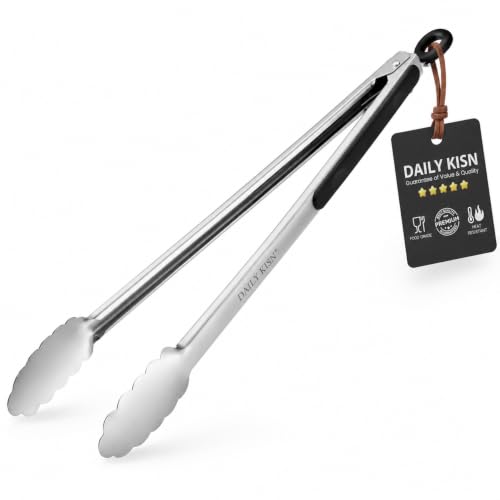
17" Extra Long Grill Tongs: These 17-inch Grill Tongs are essential for barbecuing, cooking, grilling, buffet serving, and camping. They are lengthy enough to protect your hands from heat, making it safer to handle hot food.

Multi-use tool with red soft grip rubber inserts

STRUDY FOOD-GRADE STAINLESS STEEL TONGS - EDDEAS Extra Long BBQ Tongs For Grilling-are made of 1mm thick food-grade stainless steel in one piece for enhanced robustness and heat resistance, rust resistance and easy handling. The overall light weight and ergonomic features are maintained.
Heating the Grill or Oven

A cold grill or oven will turn your chicken thighs into a rubbery disappointment.
I set my grill to medium-high, somewhere between 375°F and 450°F, or my oven to a steady 400°F, and I wait until it is fully there before the meat goes in.
Set the grill to 400°F. That temperature gives you room to work with: hotter for boneless pieces that cook fast, slightly cooler for bone-in thighs that need more time to finish through without torching the outside.
An oven at 400°F does the same job of surrounding the chicken with even heat from the start.
Without that preheat, the thighs sit in lukewarm air or over sputtering coals, sweating instead of searing, and the timing you planned falls apart entirely.
The skin stays soft, the meat turns stringy, and you have lost the one thing that makes barbecue worth doing. I have learned to treat the preheat as part of the recipe, not a suggestion to skip.
Recommended Products

Meets standards for animal welfare, feed, and more, so you can know about what you're buying (and eating)

Meets standards for animal welfare, feed, and more, so you can know about what you're buying (and eating)

Meets standards for animal welfare, feed, and more, so you can know about what you're buying (and eating)
Grilling Boneless Thighs

Boneless thighs are thin enough to cook through before the outside scorches, so medium heat is the right call.
I lay them out with a little space between each one and let them go about 10 to 12 minutes total, turning once somewhere in the middle.
Exact timing varies: one source lands at 10 to 15 minutes per side, another puts the whole cook at 15 minutes. I split the difference and start checking early, because thickness varies.
The internal temperature needs to hit 165°F before they come off. A quick-read thermometer pushed into the thickest part tells the real story; color alone won’t.
Barbecue sauce goes on only in the last few minutes. Brush it on too early and the sugars blacken while the meat is still raw inside.
I wait until the flip side is nearly done, give them one coat, let it set for a minute, then pull them the moment they reach temperature. Sitting on the grill "just a little longer" is how they dry out.
Recommended Products

Just Hang And Leave - Don't have to worry about turning them, this 14-slot chicken drumstick grill rack will make your chicken legs and wings perfectly cooked on all sides evenly and incredibly juicy!

Pack of 1 solid cooking basket | Black Color Solid Cooking Basket | Size 26.5X26.5CM(10.4"X10.4") Sidewall Height 2.5CM(1")
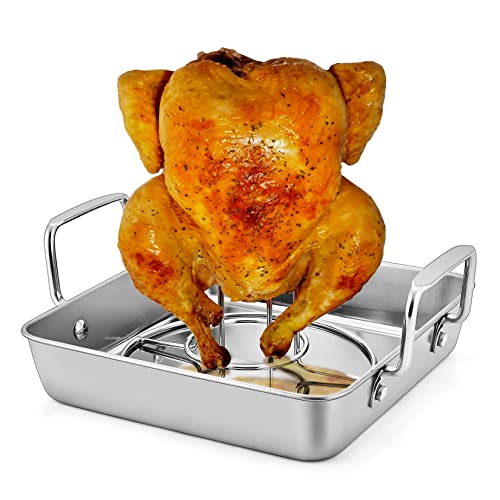
【FOOD SAFETY】 Both the roasting pan and chicken holder are made of pure stainless steel without any toxic coatings, No harmful substance releasing at high temperature, Healthy and safe for your daily baking needs, Great replacement for aluminum and unhealthy coating pans
Grilling Bone-In Thighs

Bone-in thighs need more time than boneless, and the usual "10–15 minutes per side" you see lumped into general chicken advice sells them short.
15–20 minutes per side is the honest range for most bone-in, skin-on thighs, with thicker pieces pushing toward the far end. The bone insulates the center, so the outside can look charred while the interior is still climbing.
I let the thighs cook most of the way through before any sauce touches them.
The source recipes I trust say to brush barbecue sauce on only in the last few minutes, and that matches what I’ve learned from watching the sugar catch and blacken too early.
A quick baste, a few more flips, then pull them when the thickest part reads 165°F on an instant-read thermometer. Without that check, you’re guessing whether the heat has reached the bone.
Recommended Products

Weber OEM replacement part (Diameter: 1-13/16" | Length of the probe is 1-1/2")

Grill Thermometer Replacement for Weber Spirit II 200 & 300 Grills: Fits for weber spirit series, spirit II 200 & 300 series (2007 Y and newer), spirit e210 s210 e220 s220 e310 s310 e315 s315 e320 s320 e330 s330. Replacement Weber original part number: 65040, 67031, 7581.

【Compatible with Weber Most Grills Model】Grill Lid thermometer for GS4 Spirit II 200/300 and Spirit I 200/300 (2007 to Newer), compatible with Weber Q 120, 220, 300, 320 Series Grills (2007 - 2013), 【Note】If replacing a thermometer for a Q lid that has an oval thermometer, this will not fit. Replacement parts for Weber 22" kettles. Replace for 60540 7581 67031 60392 74239.
Baking Boneless Thighs

Boneless thighs are the weeknight shortcut I reach for when the grill is buried under snow or I just do not want to babysit flames. The oven does most of the work.
A 400°F oven and 25 to 30 minutes on a rack set over a foil-lined tray gets the meat to 165°F inside without the bottom stewing in its own juices.
I rub the thighs with oil and a dry spice mix first, nothing wet yet; sauce burns before the chicken cooks through if it goes on too early.
At the 25-minute mark I pull the tray, brush on barbecue sauce, and switch to broil. Four or five minutes under that direct heat chars the sauce into a proper glaze.
Sources split on whether to sauce once or twice. I find one thick layer at the end is enough, but a second brush halfway through broiling builds a stickier coat if you want it.
The rack matters more than the recipe lets on. Without it, the thighs sit in rendered fat and the underside turns soft instead of bronzed.
A cooling rack set inside a sheet pan works fine if you do not own a dedicated roasting rack.
Recommended Products

Temperature Range: 140° to 190°F / 60° to 87°C. Probe Length: 4.75-inches Dial Diameter: 2.375-inches

FAST & ACCURATE INSTANT READ: Get temperature readings in just 2-3 seconds with ±1°F accuracy. Whether you're grilling steaks, roasting turkey, smoking brisket, or baking bread, this digital meat thermometer helps you monitor food temperature quickly and confidently
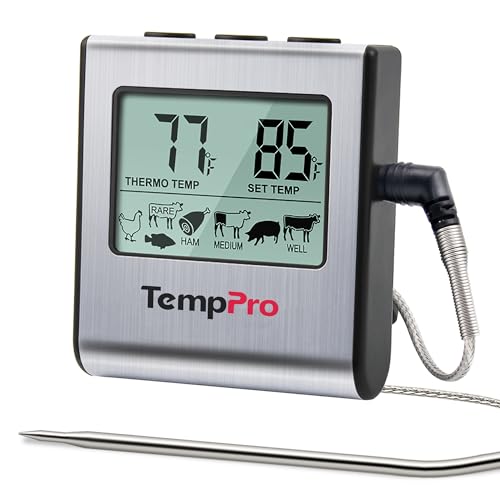
Cook mode with USDA preset temperature settings: TempPro cooking thermometer ideal for meat, oven, smoker or stove top; Programmable alert with preset temperatures for specific foods recommended by USDA; All of the preset temps can be reset to your desired tastes
Baking Bone-In Thighs

Bone-in thighs need the longest oven time of any cut in this guide.
I set mine on a wire rack over a sheet pan and give them 50 minutes at 400°F, skin side up, until the fat renders and the skin turns crisp.
The rack matters here: thighs sitting in their own drippings cook unevenly and the skin stays rubbery in spots.
At the 40-minute mark I pull the pan and baste the skin with whatever sauce I’m using, then slide it under the broiler for three to four minutes.
That last blast tightens the glaze and adds the char you’d get from a grill. The line between bronzed and burnt is narrow under a broiler, so I stay at the oven door and watch.
These thighs hold heat longer than boneless, which means they also need a longer rest. Ten minutes on a cutting board lets the juices settle back into the meat instead of running onto the plate.
The bone buys you some forgiveness against overcooking, but it also means the center takes longer to come up to temperature. Plan the rest of your sides around that full hour from pan to table.
Recommended Products
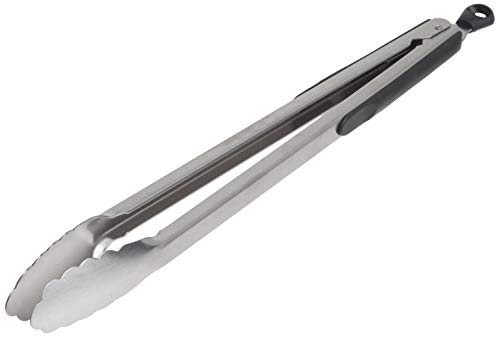
Ideal for grilling and turning large cuts of meat

17" Extra Long Grill Tongs: These 17-inch Grill Tongs are essential for barbecuing, cooking, grilling, buffet serving, and camping. They are lengthy enough to protect your hands from heat, making it safer to handle hot food.

Secure Grip: These tongs for cooking feature cushioned grip handles, offering a secure and comfortable hold, reducing the risk of slips and accidents in the kitchen.
Resting Before Serving

Pulling chicken off the heat at 165°F is only half the finish. The meat needs a few minutes off the grill to let those juices settle back into the fibers instead of running straight onto the cutting board.
Most recipes call for 3 to 5 minutes of resting, and that small window makes the difference between moist thigh meat and a dry, stringy bite.
One suggests 3–4 minutes for boneless thighs, another goes with a flat 5 minutes. In practice, the boneless pieces cool faster and firm up sooner, so the shorter end of that range works fine for them.
Bone-in thighs hold more residual heat and benefit from closer to 5 minutes, though neither source draws that distinction explicitly.
Skip the rest and all that careful timing goes to waste; the juices need a few minutes to settle back into the meat instead of running out onto the cutting board.
The internal temperature will coast up a few degrees as it sits, which is normal, but cut too early and the juices escape before they redistribute.
The result is the same overcooked dryness you were trying to avoid by pulling at temperature in the first place.
I rest mine on a wire rack over a sheet pan so air circulates underneath and the bottom doesn’t steam in its own drippings.
A loose tent of foil keeps it warm without trapping so much heat that it cooks further.
Recommended Products

One 2.5 lb. package of individually frozen Boneless Skinless Chicken Thighs

Meets standards for animal welfare, feed, and more, so you can know about what you're buying (and eating)

Steakhouse Sear At Home: The Lodge Square Cast Iron Grill Pan delivers high-heat searing and bold grill marks while channeling excess grease away
Boneless vs Bone-In

Boneless thighs cut the wait in half, which matters when I’m hungry and the sides are already on the table. In the oven, boneless skinless thighs need 25–30 minutes at the right heat, while bone-in, skin-on versions push closer to 50 minutes.
On the grill, the gap widens: boneless pieces run 10–12 minutes over medium heat, but bone-in thighs sit there longer, often 15–20 minutes per side depending on thickness.
| Attribute | Boneless, Skinless | Bone-In, Skin-On |
|---|---|---|
| Oven time | 25–30 minutes | ~50 minutes |
| Grill time | 10–12 minutes | 15–20 min per side |
| Texture | Succulent, juicy | Tender meat, crispy skin |
| Best for | Weeknight speed | Slow evenings, max flavor |
The skin-on, bone-in build wins on texture every time: the fat renders into the meat, the skin crisps, and the bone insulates so the thigh cooks gently. Boneless is the practical choice for tacos or salads where I’m cutting anyway.
My move is to keep a pack of each: boneless for Tuesday, bone-in for Saturday.
Recommended Products

Package Include: you will receive 4 pieces of stainless steel chicken leg racks with matching drip trays; Each rack can hold 14 chicken legs upright without turning them over; This is a sufficient quantity for your party and replacement needs

The Camerons Deluxe Beer Can Roaster Set Is The Best Way To Roast Or BBQ. Great for cooking meals for the whole family!

MODERN SPIN ON CLASSIC RECIPE: Upgrade your traditional pot-cooked chicken and replace it with this modern, non-stick twist! This vertical poultry holder stands 1 bird upright. Airflow allows it to cook evenly while fat drips right off.
Grill vs Oven

Smoke changes the whole equation, even when the time stays roughly the same. A grill gives you that flavor because fat and juices drip onto hot coals or bars and flare into smoke that coats the meat.
An oven gives you control: no wind to fight, no flare-ups to dodge, and sauce stays where you put it instead of scorching where it drips.
| Grill | Oven | |
|---|---|---|
| Time | Similar, but weather and flare-ups stretch it | Steady and predictable |
| Flavor | Smoke from drippings | Cleaner, more reliant on rub or sauce |
| Sauce | Caramelizes fast; burns if you glaze too early | Caramelizes slower; easier to build layers |
| Weather | Rain, cold, and wind all matter | None of them do |
I still fire up the grill when I have the evening free and the sky is clear. When I need dinner on the table at a set time, the oven wins.
The thighs come out nearly as good, and I do not have to hover with a spray bottle or shuffle coals mid-cook.
Recommended Products

The PETKAO round lid temperature gauge is designed to fit Charbroil Advantage Series 4 & 6 burner models (2015 and newer) and Charbroil Tru-Infrared Performance 2 Burner models, compatible with grills that have 3/8-inch holes. This gauge matches Charbroil original part number: G432-8L00-W1, CHRG432-8L00-W1, and G4328L00W1. The Heat Indicator parts for charbroil thermometer replacement, charbroil grill thermometer replacement, charbroil temperature gauge replacement.

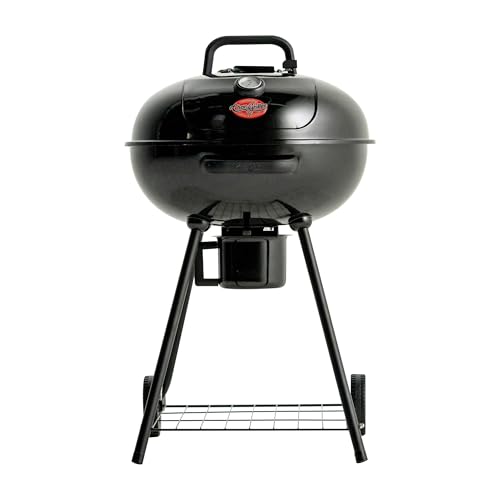
Material: Constructed with high-quality steel for durability and longevity
Basting Without Burning

Sugar in barbecue sauce starts to scorch well before chicken finishes cooking, so brushing it on too early leaves a bitter, blackened crust instead of that glossy lacquer most people want.
I learned to wait until the last few minutes, giving the thighs just enough time over the heat for the sauce to tighten and turn sticky without crossing into burnt territory.
A proper glaze needs some patience.
Basting is essential, not optional, and the method matters: turn the pieces often, brush lightly each time, and keep a separate bowl of sauce for the table so you are not dipping cooked meat back into the raw batch.
For bone-in thighs especially, lifting the skin and getting sauce underneath helps the flavor sink in where it counts.
If your sauce is homemade, letting it reduce longer on the stove before it ever hits the grill gives you a thicker, more clingy coating.
Real maple syrup, the darker grade, builds depth without the fake sweetness that can turn acrid over flame.
What you get is that tacky, caramelized surface that actually stays on the meat rather than dripping through the grates and flaring up.
Keeping Thighs Juicy

Medium heat keeps chicken thighs from turning stringy. I set my grill to a zone where I can hold my hand four inches above the grates for five or six seconds, not two.
Anything hotter and the fat renders too fast, the surface sears before the center climbs to temperature, and you end up with meat that looks right but chews like damp cardboard.
Every source I checked converges here: one warns outright that too hot a grill dries thighs out, another notes dark meat’s forgiving nature but still builds the recipe around steady basting rather than blast heat, and a third pushes bone-in, skin-on cuts precisely because that insulation buys you more time before the margin for error shrinks.
Resting matters as much as the cook itself. I pull thighs when the internal temperature reads about 165°F and let them sit, tented loosely, for five to ten minutes.
The juices redistribute instead of running out onto the cutting board. Skip this and you lose the moisture you just fought to preserve.
What drying out looks like: fibers separate into distinct strands, the surface wrinkles instead of yielding, and the bite turns chalky. The fix is almost always lower heat and patience, not more sauce after the fact.
Frequently Asked Questions
How long does it take to grill chicken thighs?
Boneless thighs need 10 to 12 minutes per side over medium heat, while bone-in thighs run 15 to 20 minutes per side. Thickness shifts both numbers, so an instant-read thermometer at the thickest part beats the clock every time.
What temperature should chicken thighs be cooked to?
Pull them at 165°F internal temperature, measured at the thickest part. The meat will coast a few degrees higher as it rests, which is normal and safe.
Can I use boneless chicken thighs instead of bone-in?
Yes, but cut the time roughly in half. Boneless thighs finish in 25 to 30 minutes in a 400°F oven or 10 to 12 minutes per side on the grill, where bone-in needs closer to 50 minutes or 15 to 20 minutes per side.
Should I marinate chicken thighs?
A dry rub of salt and spices does the work. Thirty minutes is the floor if you are rushed, but overnight in the fridge lets salt migrate deep and gives you faster browning from the dried surface.
Oil in the mix helps spices coat evenly and keeps the meat from sticking later.
How do I keep chicken thighs from drying out?
Cook over medium heat, not hotter, so the center has time to catch up with the outside.
Pull them as soon as they hit 165°F and rest them five minutes so juices settle back into the fibers instead of running onto the board.
Do you flip chicken thighs when grilling?
Turn them once on the grill, roughly halfway through the cook. On a stovetop grill pan or under the oven broiler, flipping a couple times while basting builds a stickier glaze.
How long to cook chicken thighs at 400 degrees?
Boneless thighs need 25 to 30 minutes; bone-in thighs need the full 50 minutes at 400°F. Sauce goes on only at the end, with a brief broil to tighten it into a glaze without burning.
Should you BBQ chicken covered or uncovered?
Leave the grill lid open for direct-heat grilling so you can watch for flare-ups and move thighs if sauce drips.
In the oven, uncovered cooking on a rack lets air circulate and keeps the underside from steaming in its own juices.
Is grilling chicken at 350 too hot?
350°F is actually on the cooler side for grilling chicken thighs. Medium heat sits around 375°F to 450°F, and 400°F is where most recipes land.
Much hotter than that and the outside scorches before the center reaches 165°F.