Patio shade runs from a $30 sail clipped to fence posts to a $25,000 covered patio bolted to your roofline. What separates them is not just price but permanence: whether you need shade this afternoon or a structure that outlasts your mortgage.
The mistake most people make is buying for the sun angle at noon and forgetting the western glare that actually drives them indoors.
1. Retractable Awnings

A motorized retractable awning lets you pull shade over the patio with a remote when the afternoon sun hits, then roll it back in the morning to keep that open sky.
Manual versions with a hand crank cost less, but the convenience of motorization is what most people end up wanting after a season of cranking.
Expect to spend $2,000 to $8,000 depending on width, motorization, and whether you add wind sensors or smart-home integration.
The real advantage is the retractability itself. Wind and rain sensors can trigger automatic rollback before a storm hits, and you should still retract the awning manually if weather turns suddenly.
That protection is only useful if you actually do it; a neighbor of mine watched a $4,500 unit tear its brackets out because they left it extended in a thunderstorm.
Fabric mildew is the maintenance reality sources keep bringing up. The awning needs to dry fully before you roll it up, and the fabric still requires occasional cleaning even then.
Professional installation is typical, especially for motorized models, since the bracketing has to handle both the dead load and the wind load when extended.
Recommended Products
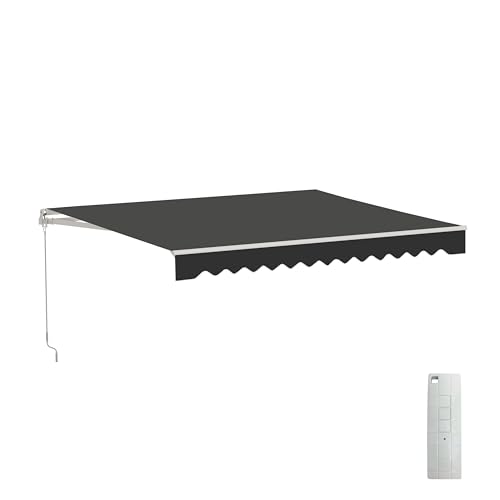
COOLING SHADE COVERAGE: Enjoy a more comfortable outdoor space with this patio awning featuring breathable fabric that helps reduce heat buildup while creating reliable sun protection for patios, decks, balconies, windows, doors, and other outdoor shades for patio areas.

【Electric Motorized & Remote Control】: Retractable awning with upgraded electric motor. Opens and closes smoothly by remote control, eliminating manual struggle. Also includes a manual hand crank for backup operation in case of power outage, ensuring you are never stuck.
2. Pergolas

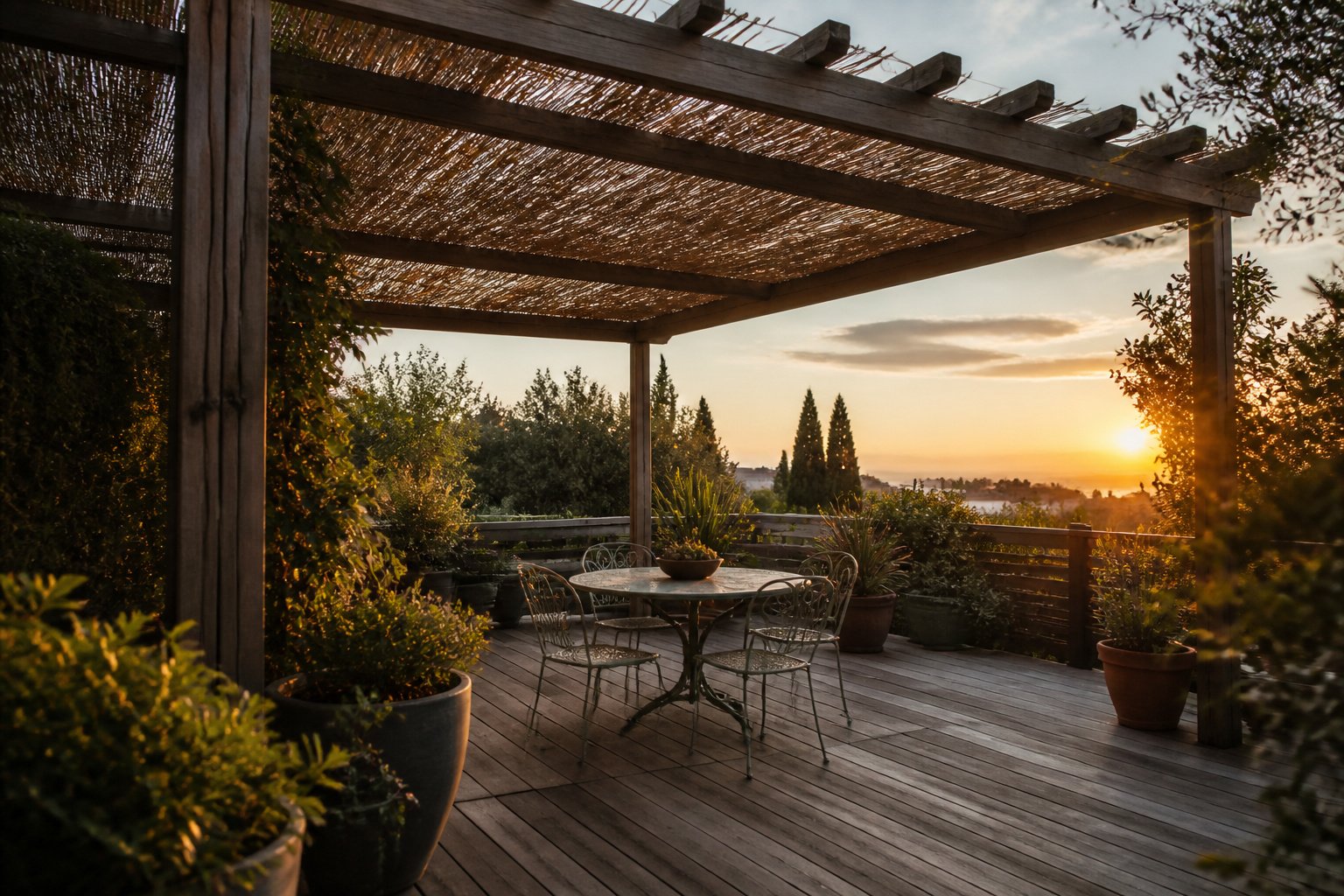
A pergola’s slatted roof filters light rather than blocking it; that is both its limitation and its purpose. Wood, vinyl, and aluminum frames each read differently against a house, but they all share that same open lattice overhead.
You get partial shade sitting underneath, enough to cut the glare without turning the patio into a cave.
For more coverage, the add-ons are where the real decisions live. Outdoor fabric drapes across the top and clips into place, turning the structure into something closer to a covered patio when you need it.
Shade cloth, a mesh fabric that lets 10 to 50 percent of sunlight through, keeps plants alive underneath while still cooling the space. Neither option is waterproof, so rain still finds its way through unless you spring for a dedicated cover.
Turn your slat-roof pergola into a rainy day shelter with a pergola cover. This outdoor fabric can be drawn across the pergola and clipped into place, offering shelter from the rain and protection from the sun.
That clip-in flexibility matters more than it sounds. You leave the frame bare in spring, add fabric once July hits, and the whole system adapts without a second structure eating your yard.
Climbing plants are the slower, prettier route. Grapevines and other perennial vines eventually fill the gaps with something green and living, though they need years and regular trimming to get there.
DIY kits run $550 to $4,000, while professional installation lands at $2,100 to $6,000. Either way, the pergola becomes the visual anchor of the layout, a fixed point that everything else arranges itself around.
The cost stings less when you realize it is doing the work of a room divider, a ceiling, and a garden trellis all at once.
Recommended Products

✔ Superior UPF50+ & All-Weather Protection – Crafted from high-density 160g PA-coated polyester fabric, this lean-to awning blocks harmful UV rays to keep your space cool. The water-repellent treatment resists light rain and dries quickly, ensuring your outdoor moments are never ruined by unexpected drizzles.

Wide range of applications: Whether it's a family yard, patio or cafe or restaurant, this versatile 17x6.8 ft pergola replacement gazebo top provides a new shade for your existing metal or wooden pergola

【UV Protection & Cooling】Made of 100% brand new High Density Polyethylene material and eliminate the use of splicing fabrics.Blocks up to 95% of harmful UV rays and direct sunlight exposure."Breathable" fabric allows air to pass freely and achieve a certain degree of cooling.
3. Shade Sails

A basic triangular or rectangular shade sail kit starts around $30 and covers 100 to 300 square feet, which is enough to shade a modest dining set or a corner where kids play.
The price climbs fast: professionally tensioned installations can run $2,000 to $8,000, so the real decision is whether you can anchor it properly yourself.
That anchoring is where shade sails live or die. The fabric catches wind like, well, a sail.
Posts need to be structural, through-bolted, and set in concrete footings at least 2 to 3 feet deep. Stainless steel turnbuckles and pre-tensioning matter more than the fabric grade, because flapping is what tears most sails apart.
Skip the footing depth or use the cheap hardware that comes in the kit, and you will be restacking your patio furniture after the first stiff breeze.
Shape matters for coverage. Triangles give you one open side and work well over walkways; rectangles cover more ground but need higher anchor points to shed water and avoid sagging.
Neither shape blocks rain unless you spec a waterproof membrane, which adds cost and weight and puts even more load on those anchors.
Recommended Products

90% UV Blocking & HDPE Material: Sunocity's shade cloth is crafted from 200 GSM UV-resistant high-density polyethylene (100% HDPE)material, offering an impressive 90% UV protection for a safer outdoor experience. Its highly breathable design allows hot air to escape, keeping you cool and comfortable during scorching summer
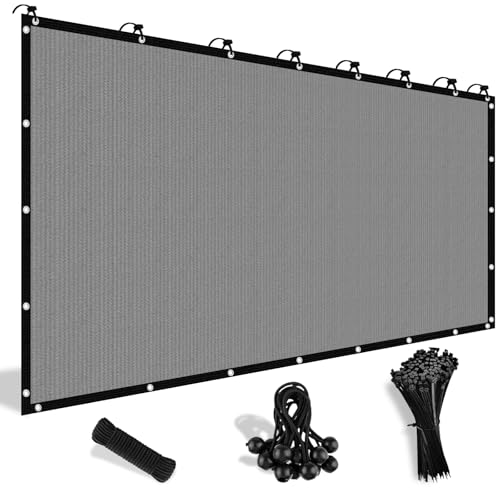
90% Sun Block: Shade&Beyond shade cloth with grommets provides 90% UV protection and resists UV fading. With excellent shading and heat insulation, you can get a shady retreat and keep your belongings away from the sun's harsh effects. By lowering the temperature under its shelter, these sunshades for patio always allow you to enjoy a cool and refreshing outdoor experience, making them ideal for patios, gardens, and more

Durable & Heavy-Duty Material: Crafted from 200GSM high-density polyethylene (HDPE) with reinforced binding and grommets, this sun shade cloth offers exceptional durability for outdoor use. Its permeable design allows rainwater to pass through easily, preventing water accumulation and sagging. Resistant to tearing and mild weather, it provides reliable sun shade and light wind protection season after season
4. Umbrellas

A center-pole umbrella is the cheapest way to get shade on a patio, with decent models starting around $50 and running up to $500.
The pole sits right through the middle of your table, which keeps the base compact but also eats the space where a centerpiece or a shared dish would go.
Offset umbrellas, also called cantilever umbrellas, fix that by hanging the canopy from a side pole on an arched arm. The shade lands where you want it, and the ground underneath stays open for furniture or traffic.
That freedom costs you in base weight. A cantilever needs a heavier anchor to keep from tipping, and a cheap umbrella in wind is a kite waiting to launch, pole and all.
The base is not the place to save money. For either style, look for UPF 50+ fabric and a tilt feature so you can angle the canopy as the sun moves.
Wojciech Chrzanowski, who runs Euro Paving in Chicago, told me that if he had $1,000 and no permanent plan yet, he would spend it on the largest cantilever he could afford and park it over the main seating zone.
It gives real coverage, keeps the layout flexible, and buys time until the full backyard design is ready.
Recommended Products
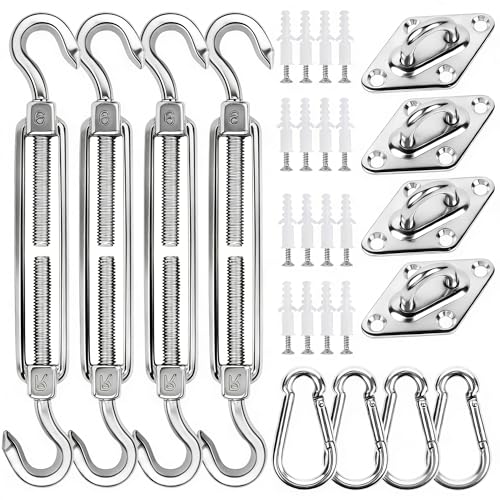
All-in-One Sun Shade Sail Hardware Kit: Our complete shade sail hardware kit includes everything you need for easy installation: 4 turnbuckles, 4 snap hooks, 4 pad eyes, 16 screws, and 16 expansion anchors. Ideal for sun shades outdoor patio, pergolas, awnings for patio, and outdoor sails for shade waterproof.
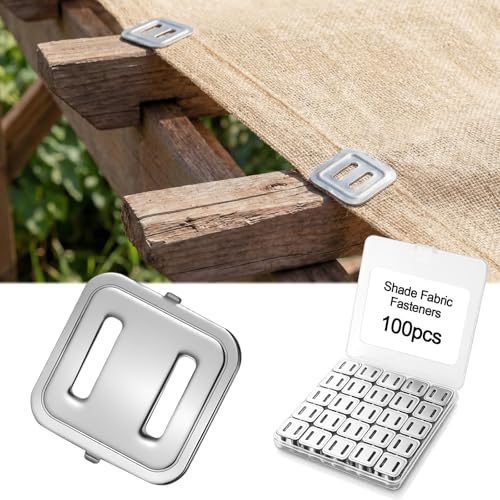
Designed for Soft Timber: engineered for soft wood, these timber fasteners securely attach shade fabric to wooden frames, pergolas, and fences without splitting, ideal for outdoor shading in backyards, patios, and greenhouses
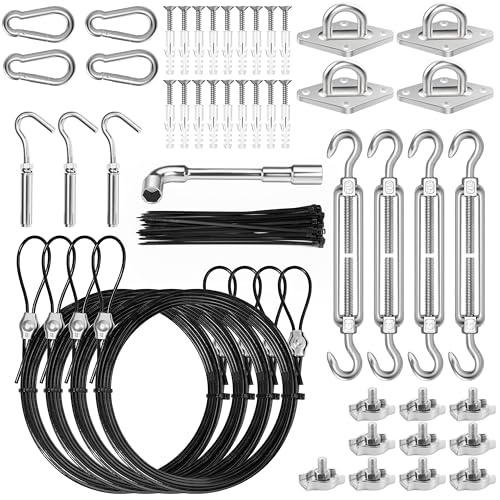
Complete Accessory Set: The Sun Shade Sail Hardware Kit includes 4 PCS 10ft nylon-coated steel wire ropes, 4 adjustable turnbuckles, 4 grommets, 4 snap hooks, 4 expansion hooks, 10 rope clips, 20 nylon expansion tubes, 1 socket wrench, and 28 tie straps. Everything you need for secure and flexible installation in various outdoor settings.
5. Gazebos

A gazebo turns a patio into a proper outdoor room, and that permanence is exactly what makes it different from the rest of the shade options on this list.
You are not just blocking sun; you are anchoring a dining table or a seating area in a space that feels finished.
The choice between hardtop and soft-top models matters more than the sales photos suggest.
Hardtops with metal or polycarbonate roofs shed rain better and last longer, but they cost more and weigh enough that you will want the foundation right the first time.
Soft-top versions with fabric canopies cost less upfront and go up faster, though the fabric will need replacing after a few seasons of UV and weather.
Prefab gazebo kits start around $1,500, while a custom build runs $5,365 to $9,025. That spread reflects size, roofing material, and whether you are pouring footings or anchoring to an existing slab.
The permanence that makes a gazebo appealing also makes it the most regulated shade structure here. Many municipalities require permits for these, and skipping that step can mean fines or forced removal.
A quick call to your local building department before ordering saves months of headache.
Recommended Products

PROTECTS FROM SUN & PESTS: Sheilds delicate seedlings and early growth plants from UV rays, wind, and pests to encourage strong rooth and leaf development in herbs, flowers, and vegetables.

【Durability Material】Made of high density polyethylene (HDPE), the knitted structure is not easy to tear and wear. Special weaving process, breathable and durable, service life up to several seasons, any dissatisfaction when you receive the sun screen, please contact us through Amazon in time!

White Shade Cloth with 55% Sun Shade: Provides 55% sun protection, reflecting heat while letting soft light through. Keeps your space cooler and bright, ideal for plants or outdoor relaxation without darkening the area
6. Covered Patios

A covered patio is the most permanent shade solution you can build, an outdoor room with real roofing that attaches to your house.
These structures often integrate lighting, ceiling fans, or even screens, and they add genuine living space rather than just blocking sun. The cost runs steep: $5,000 to $25,000 depending on size, materials, and whether you go custom-built.
For that investment, you do get significant property value in return, plus year-round protection that awnings or sails cannot match.
Before measuring anything or choosing roofing material, check with your local building department. Most regions require permits for permanent attached structures, and skipping this step can mean fines or forced removal after the work is done.
Annual maintenance means inspecting the roof and support structure, but the finished look and the way it extends indoor living space make the upkeep worthwhile for anyone who lives on their patio through the warm months.
Recommended Products

COOLING SHADE COVERAGE: Enjoy a more comfortable outdoor space with this patio awning featuring breathable fabric that helps reduce heat buildup while creating reliable sun protection for patios, decks, balconies, windows, doors, and other outdoor shades for patio areas.

COOLING SHADE COVERAGE: Enjoy a more comfortable outdoor space with this patio awning featuring breathable fabric that helps reduce heat buildup while creating reliable sun protection for patios, decks, balconies, windows, doors, and other outdoor shades for patio areas.

【Electric Motorized & Remote Control】: Retractable awning with upgraded electric motor. Opens and closes smoothly by remote control, eliminating manual struggle. Also includes a manual hand crank for backup operation in case of power outage, ensuring you are never stuck.
7. Outdoor Curtains

Outdoor curtains hang from a pergola frame, covered patio edge, or a wire cable you string yourself, and they do one thing overhead shade cannot: block low afternoon sun from the side.
The fabric is weatherproof, usually polyester or acrylic rated for outdoor use, and a full set runs roughly $100–$300.
Draw them open for light and breeze, pull them shut for privacy or when the western sun turns your seating area into a glare box.
They add softness no hard structure matches. The drawback is wind.
Curtains billow, tangle, and can tear if left unsecured in gusts. Grommets and tie-backs help, but in harsh climates the practical move is taking them down before winter storage and washing them seasonally.
They also do little at midday when the sun sits high; pair them with overhead cover or plan seating away from the noon exposure.
For renters especially, the low cost and no-permit installation make this the easiest shade to experiment with and the quickest to walk back if the layout changes.
Recommended Products

Fit for Pergola Structures Up to 17x7.4 Ft: This 85"x208" shade cover fits a wide range of household pergolas up to 17x7.4ft, working seamlessly with both flat-top and curved styles. It’s the ideal replacement to bring back cool shade and refresh the look of your outdoor space.
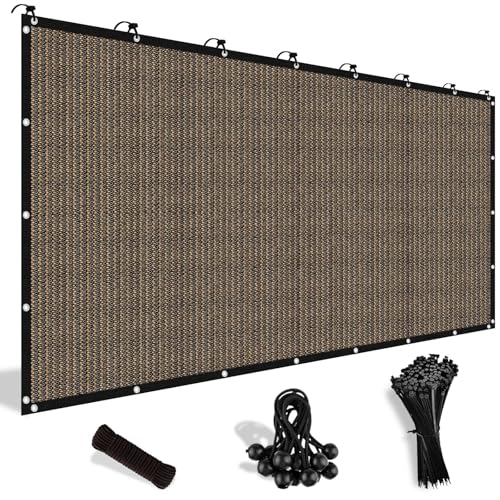
90% Sun Block: Shade&Beyond shade cloth with grommets provides 90% UV protection and resists UV fading. With excellent shading and heat insulation, you can get a shady retreat and keep your belongings away from the sun's harsh effects. By lowering the temperature under its shelter, these sunshades for patio always allow you to enjoy a cool and refreshing outdoor experience, making them ideal for patios, gardens, and more

Versatile Application: Perfect for various settings including home gardens, patios, cafes, or restaurants, this 17x6.8 ft pergola replacement canopy offers ideal shade renewal for existing wooden or metal pergolas.
8. Lattice Panels with Vines

Lattice panels, whether wood or vinyl, give climbing vines a frame to work against while you wait for the shade to arrive.
I mounted a 4-by-8-foot cedar lattice along the south edge of my patio three springs ago, and the first summer it blocked almost nothing.
By the second year, a clematis had reached the top rungs and a morning glory was filling the gaps. The third summer, the dappled light coming through the leaves was the main reason I sat out there.
This is a multi-season project, not instant shade. Fast growers help close that gap.
In warmer zones, trumpet vine or wisteria can cover a panel in two growing seasons if you are ruthless about training the stems horizontally.
In cooler zones, hardy kiwi or hops vine push hard enough to matter within a couple of years.
Material and plant costs run between $100 and $1,000 depending on whether you start with a simple wall panel or build out a full arbor frame.
The maintenance is real. I prune my clematis back to living wood every late winter, and I cut the morning glory to the ground each fall so it does not strangle itself.
The reward is light that changes through the day, leaf shadows moving across the concrete, and a canopy that looks different in June than it does in August.
That shifting quality is what a fixed awning or sail cannot give you, but only if you have the years to grow into it.
Recommended Products

Perfect Fit & Wide Compatibility: Designed to fit Pergola Model L-PG080PST and other pergolas of similar size. Measuring 208" L x 85" W , this replacement canopy brings new life to your outdoor pergola.

High quality material & UV resistant: Made of new, non-recyclable 100% HDPE shade fabric and 5% UV-resistant granules for strong shade and performance in inclement weather, durable and long-lasting

High quality material & UV resistant: Made of new, non-recyclable 100% HDPE shade fabric and 5% UV-resistant granules for strong shade and performance in inclement weather, durable and long-lasting
9. Natural Shade from Trees

Deciduous trees usually make the best shade trees for patios because they drop their leaves in fall, letting winter sun through when you want it. Evergreens give year-round coverage, which works better where summers stay brutal and winters stay mild.
Either way, three well-placed trees can cut annual cooling energy use by 10% to 50%, according to USDA Forest Service research, with two on the west side and one on the east doing the heavy lifting.
Placement matters more than species. South and west of your space blocks the summer sun at its peak.
Afternoon sun from the west is what cooks a patio worst, so that side gets priority. Keep smaller trees at least eight feet from the house, larger ones fifteen feet or more, and always check mature size before you dig.
Fast growers get you there sooner but bring headaches later. Red maple adds one to two feet yearly across most of the country, zones 3–9.
Tulip poplar hits two to three feet in zones 4–9 but needs room. River birch handles wet soil at 1.5–3 feet per year, same zones.
Quaking aspen races up at three to five feet yearly, though it wants cooler zones 1–7. Root systems and branches can damage foundations, roofs, and gutters if planted too close, plus you get decades of leaf litter to manage every fall.
Recommended Products

【 High-Quality Material】:Our 6 inch/ M6 sun shade sail installation kit is made of high-quality 304 stainless steel for rust and corrosion resistance. The hardware kit is perfect for all square/rectangle/triangle sun shade sail and you can mount it between trees, wall to wall, wall to tree, wall to a pole or wherever you want it, suitable for windy areas or large fixtures such as sun shade, canopy.

Ultimate All-Weather Durability: Experience unmatched reliability with BUDONI's Shade Sail Hardware Kit, designed exclusively for outdoor use in every season. Crafted from premium 304 stainless steel, resistant to rust and corrosion. It's engineered to endure high winds and harsh conditions, making it a steadfast companion for your patio deck shade sail. Enjoy the safety and durability of BUDONI's Shade Sail Hardware Kit, ideal for any outdoor area and a top choice for reliable shade solutions.

Accessories Include:Sun shade sail hardware kit includes 79 accessories, 4pcs of 10ft nylon coated wire ropes, 4 adjustable turnbuckles, 4 grommets, 4 snap hooks, 4 expansion hooks, 10 rope clips, 20 nylon expansion tubes, 1 socket wrench and 28 tie straps. Enough accessories to meet the various needs of your different occasions
10. Misting Systems

Misting systems sit in a strange spot among patio shade ideas because they do not actually block the sun.
What they do is lower the temperature you feel through evaporative cooling, which makes a hot afternoon tolerable even under open sky.
The hardware runs from $50 to $500, and the difference is usually pressure: cheaper kits connect to a garden hose and mist gently, while pricier setups use a booster pump to force water through finer nozzles for a drier, cooler effect.
Evaporation only works in dry air, so humidity limits the cooling effect. In humid climates the water hangs in the air instead of disappearing, so cushions get damp and concrete turns slick.
One installer noted clients who loved the cooling at first later ran their systems only in short bursts during peak heat, not continuously, to avoid the wet-furniture problem.
Nozzles also clog with mineral buildup and need periodic cleaning, and the whole setup depends on decent water pressure. If your hose already trickles, a misting line will too.
For dry-climate gardeners, though, this is one of the faster ways to make a sun-baked patio usable without building anything overhead.
Recommended Products

50% Shade Rate: Our Shade Cloth can resist rays and most sunlight while air can still flow through so as to create a comfortable cool and shaded place for people or plants.It blocks 50% of the sunshine and bring 50% the shadow, 50% of the sunshine can through it.

【High Quality Shade Cloth 】- Our Shade Cloth can resist rays and most sunlight while air can still flow through so as to create a comfortable cool and shaded place for people or plants.
90% Sun Block: Shade&Beyond shade cloth with grommets provides 90% UV protection and resists UV fading. With excellent shading and heat insulation, you can get a shady retreat and keep your belongings away from the sun's harsh effects. By lowering the temperature under its shelter, these sunshades for patio always allow you to enjoy a cool and refreshing outdoor experience, making them ideal for patios, gardens, and more
What Shade Costs at Every Tier

Shade for a patio can land anywhere from a quick Saturday fix to a down-payment-level project. The ten options sort into three brackets that matter when you’re standing in a store or staring at a contractor quote.
The under-$100 tier is where most first-timers start, and it is narrower than marketing makes it look. A basic umbrella or a DIY shade sail with improvised anchors fits here, along with a misting kit clipped to a hose bib.
The shade itself is real; the durability is the gamble. I have watched a $45 sail stretch to a catenary hammock inside one hot season because the grommets were stamped, not reinforced.
If you go this cheap, budget for replacement hardware inside two years.
| Tier | Typical Options | What the Money Actually Buys |
|---|---|---|
| Under $100 | Basic umbrellas, DIY shade sails, misting kits | Temporary relief; plan on replacing or re-anchoring |
| $100–$1,500 | Better umbrellas, shade sails with proper hardware, outdoor curtains, lattice materials | 3–7 year lifespan; wind and sun control you can live with |
| $1,500+ | Gazebos, pergolas, retractable awnings, covered patios | Structure, not just shade; $1,500 prefab gazebo to $5,365–$9,025 custom build |
The $100–$1,500 middle bracket is where I think most small patios find their match.
A shade sail with proper wall brackets and turnbuckles, a cantilever umbrella that actually clears a table, or a curtain rod mounted under a soffit: these stay up, adjust with the season, and do not ask for a structural permit.
The upper end of this band gets you a motorized retractable awning, which several sources recommend as the best all-around for sun and rain together.
Above $1,500, you are buying architecture, not accessories. A prefab gazebo kit starts around $1,500.
Custom builds run $5,365 to $9,025. Retractable louvered pergolas sit at the luxury end, with full light and rain control.
The question at this tier is not whether you get shade; it is whether you are staying in the house long enough to amortize the cost.
Installation Realities I Have Learned

Shade that looks good on paper often fails the first time the wind picks up. I have watched a sail rip its D-ring clean out of a fascia board because the lag bolt went into rotted trim, not solid framing.
The real work is everything that happens before the fabric goes up.
- Check your footing before you check your fabric. Shade sails need steel or wooden posts set in concrete footings; block-wall anchors alone will lift in a gust. Cantilever umbrellas need weighted bases rated for their span, not just their weight. The cheap resin base that came with the umbrella is rarely enough.
- Permanent structures, covered patios, and gazebos often trigger permit requirements. Call your local building department before you cut a post hole; the setback and height rules vary by municipality, and the fine for skipping this is usually the cost of the project itself.
- Locate utilities before you dig. A single call to 811 is free and mandatory in most states; hitting a gas line with a post auger is not.
- HOA rules can ban certain colors, heights, or attachment points. Submit your plan in writing and get approval before you order hardware.
- Wind ratings matter more than UV ratings for longevity. Ask the manufacturer for the sustained-wind and gust ratings for any sail or umbrella you are considering.
- Plan the takedown while you are still in the planning stage. Sails and umbrellas last longer if they come down before winter storms or heavy snow. If the hardware is too complicated to remove in twenty minutes, you will leave it up and watch it tear.
Keeping Shade Structures Clean

Fabric and metal shade structures fail faster when they sit dirty. My neighbor’s retractable awning mildewed in one season because the fabric was never brushed off, and the manufacturer voided the warranty for neglect.
A quick seasonal checklist keeps each material sound:
- Retractable awning fabric: Brush off leaves and pollen monthly; wash with mild soap before storing for winter; let it dry fully extended to prevent mildew in the folds
- Shade sail fabric: Check for UV brittleness every two to three years by flexing a corner; if it cracks or powders, replace before the next season of wind stress
- Metal frames and posts: Scrub off bird droppings and sap promptly; they etch powder coating faster than rain alone; touch up chips with matching paint to stop rust
- Hardware and cables: Tighten turnbuckles on sails after the first month of summer heat expansion, then again mid-season
Matching Shade to Your House Style

A sleek aluminum pergola reads as an extension of a modern facade, while the same structure in rough timber looks like a shed that wandered into the wrong neighborhood. The visual weight matters as much as the material.
I learned this walking a client’s low ranch house where a gazebo proposal sat in the drawings: at full scale, the octagonal roof and finial would have hovered like a birthday-party tent against the horizontal roofline.
We swapped to a pergola attached in two places, its grid keeping the silhouette low and the sightlines open.
Size relative to the house sets whether a shade structure anchors the space or dominates it. A simple patio umbrella suits cocktails for two; scale it to a summer picnic crowd and the proportions turn toy-like against brick or siding.
The rule I follow now: the shade footprint should echo a window bay or a porch depth already present on the house, never introduce a new geometry larger than what the facade itself offers.
Match the structure’s visual weight to your home’s horizontal or vertical lines, and the patio reads as intentional architecture rather than an afterthought.
Frequently Asked Questions
What is the best shade for a backyard?
Start by measuring your space, deciding how much shade you actually need, picking a style that fits your house, and setting a realistic budget.
A large permanent structure will overwhelm a small patio, while a single umbrella will not cover a big deck. Factor in replacement costs too; cheaper options often need swapping out sooner.
How do I block afternoon sun on my patio?
Hang outdoor curtains, blinds, or shutters on a permanent structure like a pergola or covered patio. They stop the low western sun that overhead cover misses.
Planting shrubs or trees in the sun’s path also works, though it takes longer to fill in.
Do I need permits for permanent patio covers?
In many areas, yes. Covered patios and gazebos usually trigger permit requirements, and rules on setbacks and heights vary by municipality.
Call your local building department before you dig or order materials; the fine for skipping permits can equal the project cost.
What is the most affordable patio shade option?
Shade sails and outdoor umbrellas start around $50 and go up from there. They install quickly, need no permits, and suit renters or anyone testing a layout before committing to something permanent.
Just know that a $45 sail with stamped grommets may stretch to a hammock shape inside one hot season.
What are the best shades for an outdoor patio?
That depends on your space, sun exposure, and how permanent you want the solution to be. Retractable awnings give flexible coverage at $2,000–$8,000.
Pergolas with fabric or shade cloth add-ons run $550–$6,000 installed. For instant, low-cost shade, a cantilever umbrella or tensioned shade sail covers seating well without construction.
How to shade a patio on a budget?
Stay under $100 with a basic umbrella, a DIY shade sail, or a hose-connected misting kit. The $100–$1,500 bracket gets you a better umbrella, a sail with proper turnbuckles and footings, or outdoor curtains on a wire.
At those prices, expect three to seven years of life if you take hardware down before winter storms.
What are some effective ways to block the sun on my porch?
Overhead options include retractable awnings, pergolas with clip-in fabric, or shade sails tensioned between posts. For side sun, outdoor curtains hung from the porch edge or a cable block low afternoon glare.
A large cantilever umbrella can also park over a seating area without drilling into the house.