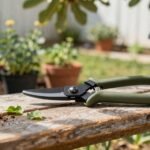
Pruning thick branches demands leverage, tight spaces demand compact frames, and long days demand light tools.
I evaluate loppers by gear ratio, the mechanical advantage that multiplies your hand force, and total weight, because ounces become pounds across hundreds of cuts.
My favorite entry, the Jardineer 16.5″, packs 3x gear assist into under two pounds, though its short handles limit reach. You’ll need to weigh your typical branch height against storage space.
Fiskars 24″ Bypass Lopper with SoftGrip Handle

IDEAL FOR PRUNING GREEN GROWTH: Bypass blade design perfect for cutting tree branches up to 1-1/2 inches LIGHTWEIGHT AND MANEUVERABLE: Shorter handles and lightweight...
The Fiskars 24″ Bypass Lopper uses a bypass blade mechanism, which means two curved blades slide past each other like scissors to make clean cuts through living wood.
The rust-resistant coating reduces friction, so the blade glides smoothly through branches up to 1-1/2 inches thick. I value this precision-ground edge because it stays sharp through heavy seasonal use.
You want lightweight maneuverability with control. The 24-inch handles hit that balance perfectly.
The SoftGrip padding absorbs shock, which minimizes hand fatigue during extended pruning sessions. Clean cuts mean minimal sap buildup. Reduced debris keeps your workspace tidy.
This tool suits gardeners prioritizing comfort over reach. The shorter handles limit leverage on thick branches. That’s the trade-off.
My favorite feature remains the smooth operation. It transforms pruning from chore to satisfaction.
Best For: Home gardeners who prioritize comfort and control over extended reach when pruning green growth and branches up to 1-1/2 inches thick.
Pros:
- Smooth, clean cuts with minimal sap buildup and debris thanks to rust-resistant low-friction coating and precision-ground bypass blades
- Comfortable extended use from shock-absorbing SoftGrip handles that reduce hand fatigue during long pruning sessions
- Reliable lasting performance from blades that stay sharp through heavy seasonal use
Cons:
- Limited leverage on thicker branches due to shorter 24-inch handles compared to longer loppers
- Restricted reach for higher or deeper cuts in dense foliage
- Not ideal for dry/dead wood as bypass blades are optimized for green, living growth
Recommended Products

IDEAL BRANCH TRIMMER: Fiskars 28-Inch Power-Lever Bypass Garden Lopper glides through branches up to 1.75" thick for easy cuts; Works well for trimming tree branches to maintain your yard and garden and encourage overall plant health and appearance

IDEAL BRANCH TRIMMER: 28" Steel blade garden bypass lopper that glides through up to 1.5" thick branches for easy cuts; Works well for trimming tree branches to maintain your yard and garden, and to encourage overall plant health and appearance
IDEAL FOR PRUNING GREEN GROWTH: Bypass blade design perfect for cutting tree branches up to 1-1/2 inches
Jardineer 16.5″ Garden Loppers with Gear Assist

【LIGHTWEIGHT LOPPER FOR SENIORS & WOMEN】 Weighing only 1.09 lbs, Jardineer 16.5-inch lightweight anvil lopper is specifically engineered for the elderly, women, and users...
Jardineer’s 16.5″ gear-assisted lopper suits gardeners needing serious cutting power without wrist strain. The gear mechanism multiplies your leverage, delivering three times less effort than standard loppers. This matters.
The 65 manganese steel blade, a high-carbon alloy, slices through 1.2-inch branches cleanly. Its non-stick coating resists resin buildup.
I recommend this tool for seniors, women, and anyone with limited grip strength. The 1.09-pound frame won’t fatigue your arms during weekend pruning sessions. The pull-tested handles stay secure under pressure. Clean blades after use; store dry. This isn’t industrial equipment.
My favorite feature: the compact 16.5-inch design reaches dense foliage where longer loppers fail. Jardineer backs this with long-term support.
Best For: Gardeners with limited hand strength, including seniors and women, who need a lightweight, compact tool for trimming branches up to 1.2 inches in tight spaces.
Pros:
- Gear-assisted mechanism delivers 3X leverage reduction, minimizing wrist strain and effort
- Compact 16.5-inch design accesses dense foliage and narrow spots where longer loppers cannot reach
- High-carbon 65 manganese steel blade with non-stick coating resists resin buildup and cuts cleanly
Cons:
- Not suitable for industrial or heavy-duty cutting tasks
- Limited to branches 1.2 inches or smaller
- Requires regular maintenance (cleaning and dry storage) to maintain performance
Recommended Products
【LIGHTWEIGHT LOPPER FOR SENIORS & WOMEN】 Weighing only 1.09 lbs, Jardineer 16.5-inch lightweight anvil lopper is specifically engineered for the elderly, women, and users with limited hand strength. This compact hand lopper makes trimming shrubs, hedges, and small fruit trees effortless. Perfect for weekend garden upkeep and flower shaping, it handles dry wood, dead growth, and overgrown branches up to 1.2 inches

IDEAL BRANCH TRIMMER: Fiskars 15-Inch Anvil PowerGear Super Pruner glides through branches up to 1.25" thick for easy cuts on dry, dead growth; trim tree branches to maintain your yard and garden and maintain overall plant health and appearance

IDEAL TREE BRANCH CUTTER: 32" Steel blade bypass lopper that glides through up to 2" thick branches for easy cuts; Tree Pruner that works well for trimming tree branches to maintain your yard and garden
Fiskars PowerGear Lopper, Lightweight Anvil Garden Tool, White

ENHANCED CUTTING POWER: Patented PowerGear technology multiplies leverage for up to 3X more power on every cut, handling branches up to 1 1/4". ANVIL-STYLE BLADE: Ideal for...
Who needs raw cutting force without the arm fatigue? I found my answer in the Fiskars PowerGear Lopper, model 381411.
Mechanism: Patented PowerGear technology, a lever system that multiplies force, delivers 3X cutting power. The anvil blade, a sharp upper blade pressing against a flat lower surface, slices dry dead growth cleanly. Fully hardened steel resists dulling. Low-friction coating prevents rust and gumming.
Purchase criteria: FiberComp construction, a reinforced fiberglass composite, cuts weight without sacrificing strength. You’ll handle 1¼-inch branches.
The white color isn’t vanity—it’s practicality. Spot it fast in grass.
User match with caveat: This tool targets gardeners clearing old wood. It’s my favorite anvil design. However: green live stems crush, not cut.
My recommendation: Buy this for serious pruning with minimal wrist strain. Fiskars backs it—warranty details sit at Fiskars.com/USwarranty.
Best For: Gardeners who need to clear dry, dead branches and old wood with maximum cutting power and minimal arm fatigue.
Pros:
- PowerGear technology delivers 3X cutting power, reducing strain on hands and wrists
- Lightweight FiberComp construction provides strength without heavy weight
- Bright white color makes the tool easy to locate in gardens
Cons:
- Anvil design crushes rather than cuts green live stems
- Limited to branches up to 1¼ inches in diameter
- Specialized design means it’s not versatile for all pruning tasks
Recommended Products
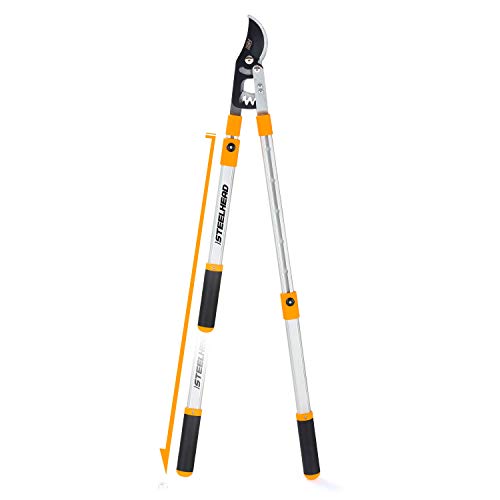
[COMPOUND-RATCHETING GEAR-BYPASS JAW] – Ideal for cutting back large, hard and stubborn shrubs & tress. Get up to 3x the cutting force with the ratcheting gear-bypass fulcrum. Reduces cutting effort, fatigue and shock to hands, wrists, shoulders & arms.


Solid Handle: The handle of the loppers is made of solid iron pipe material, which is stronger than ordinary steel pipe and will not bend or break even after long-term use, greatly extending its service life
Fiskars 32-Inch Heavy Duty Tree Loppers
IDEAL TREE BRANCH CUTTER: 32" Steel blade bypass lopper that glides through up to 2" thick branches for easy cuts; Tree Pruner that works well for trimming tree branches to...
What makes a lopper truly effortless? The answer lies in mechanical advantage—the Fiskars 32-Inch Heavy Duty Tree Loppers deliver this through PowerGear2 technology, a gear and cam system that multiplies your hand force to slice through branches.
This modified mechanism powers through the middle of cuts, the toughest zone, where traditional loppers stall.
You’ll want this tool if you regularly trim limbs up to 2 inches thick. The fully hardened steel blade carries a low-friction coating; this means smooth cuts, less sap buildup, and rust resistance.
SoftGrip handles reduce hand fatigue during extended use.
My favorite feature: the lifetime warranty. This lopper suits dedicated gardeners who prioritize durability over ultralight weight. It’s heavier than compact models. You sacrifice portability for cutting power.
I recommend this for established yards with mature trees. The 32-inch reach keeps you safe from falling debris.
Best For: Dedicated gardeners with established yards and mature trees who prioritize cutting power and durability over portability when trimming branches up to 2 inches thick.
Pros:
- PowerGear2 technology multiplies leverage to maximize cutting power and slice through the toughest middle zone of branches where traditional loppers stall
- Fully hardened steel blade with low-friction coating provides smooth cuts, reduced sap buildup, and rust resistance for long-term reliability
- Ergonomic SoftGrip handles and 32-inch reach enhance comfort, control, and safety from falling debris during extended use
Cons:
- Heavier than compact models, sacrificing portability for cutting power
- 32-inch size may be unwieldy for smaller users or tight storage spaces
- PowerGear2 mechanism adds complexity that could require maintenance compared to simpler traditional designs
Recommended Products
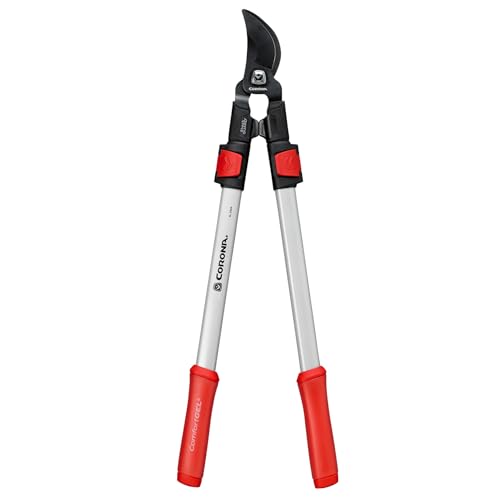
Extendable handle lopper with specially coated nonstick blade

ULTRA SHARP BLADE: Yesker garden loppers have upper and lower blades made of different high-quality materials. The upper blade is made of 65Mn high-carbon steel, heat-treated to HRC52-56, and has a black TEFLON surface. The lower blade is made of 50# steel, heat-treated to HRC44-48, and has a chrome-plated surface. It is durable, rust-resistant, and corrosion-resistant, ensuring smooth and efficient pruning every time. This is a perfect tree trimmer tool that can easily meet your pruning needs

1-1/2-inch Cut Capacity for Thick Branches – Easily cuts live branches and woody stems up to 1-1/2-inch thick for efficient tree and shrub pruning.
FELCO F211-50 Swiss Made 20″ Lightweight Gardening Loppers

LIghtweight Aluminum Handles Micrometric Adjustment Mechanism for Easy Blade Replacement Carbon Steel Blades for Maximum Edge Retention Phalate to Free Durable Grips All...
The FELCO F211-50 suits gardeners who demand precision without fatigue. These 20-inch loppers feature curved bypass blades, which slice cleanly past each other like scissors for healthy cuts. The micrometric adjustment mechanism, a precise calibration system, simplifies blade replacement.
I-beam aluminum handles distribute force efficiently. The carbon steel blades maintain sharpness through extensive use. Phthalate-free grips feel secure in damp conditions.
This Swiss-made tool rewards owners who maintain equipment. Consider these loppers if you trim regularly and value repairability. Every component replaces individually, extending service life significantly.
My favorite detail: the balanced weight distribution reduces wrist strain during extended sessions. However, the 20-inch length limits reach compared to longer alternatives.
I recommend this investment for dedicated gardeners prioritizing longevity.
Best For: Gardeners who trim regularly and prioritize precision, durability, and repairability, particularly those who value Swiss-made engineering and need a lightweight tool for extended use without fatigue.
Pros:
- All components are individually replaceable, significantly extending service life
- Lightweight aluminum I-beam handles with balanced weight distribution reduce wrist strain during extended trimming sessions
- Micrometric adjustment mechanism enables precise blade calibration and simplifies maintenance
Cons:
- 20-inch length limits reach compared to longer lopper alternatives
- Carbon steel blades require ongoing maintenance to preserve sharpness despite their durability
Recommended Products

CHOPS THROUGH 1-3/5" BRANCHES EFFORTLESSLY: Tree trimmer (Y1829) steel blade with low-friction coating helps the loppers glide through branches for a smooth cut and reduces hand fatigue, making it easier to handle tough trimming jobs. Tree branch cutter is ideal for trimming live branch & dry wood

Ultra-Sharp Blade: The blade is made from premium 65Mn steel, fully heat-treated for long-lasting sharpness (HRC53-55) and coated for rust resistance. Effortlessly trims both green and dry branches with precision

Cut Live Branches Up to 1.5 Inches Thick: This bypass tree trimmer is perfect for trimming green wood, helping you keep your yard tidy, promote healthy plant growth, and enhance the beauty of your outdoor space
Factors to Consider When Choosing Lightweight Loppers
I’ll break down what you need to evaluate before buying any lightweight loppers. Weight and maneuverability determine how long you can work without fatigue, while cutting capacity limits, the maximum branch diameter the blades can sever, must match your actual yard tasks.
My favorite criterion is blade material quality, since hardened steel alloys stay sharp longer and resist corrosion, though grip comfort design matters significantly if you’ve got arthritis or small hands, so test the handles before you commit.
Recommended Products

IDEAL TREE BRANCH CUTTER: 32" Steel blade bypass lopper that glides through up to 2" thick branches for easy cuts; Tree Pruner that works well for trimming tree branches to maintain your yard and garden

Comfort GEL soft, ergonomically shaped grips for maximum comfort, fit and control

CUT, TRIM & PRUNE: With these 16 inch gear action loppers, cutting and trimming your branches, hedges, shrubs, bushes and trees is easy, thanks to Gear Action High Carbon Steel Blades and Comfortable Grips. Keep your bushes and trees healthy and pretty!
Weight and Maneuverability
Why does weight matter so much? Heavy tools exhaust your arms fast. Lightweight loppers, typically 1.0 to 1.5 pounds, let me prune for hours without strain. Aluminum and fiber-reinforced composites, strong plastic materials, cut pounds while keeping durability.
Shorter handles improve maneuverability in tight spots between branches. I gain precision but lose some leverage distance, the mechanical advantage long handles provide. This trade-off works perfectly for detailed work.
Ergonomic, non-slip grips and shock-absorbing systems, padding that reduces vibration, minimize hand fatigue during repeated cuts. My favorite feature? Gear-assisted mechanisms. These internal levers multiply force without adding significant weight.
Choose these if you prioritize control over raw power. Warning: lightweight construction demands proper technique. Force the cut, and you’ll damage the tool.
Cutting Capacity Limits
Cutting capacity separates practical tools from disappointing purchases. Lightweight loppers typically handle branches from 1 inch to 2 inches diameter. That’s the sweet spot where weight stays manageable and performance holds strong.
Most models list 1-1/4 to 1-1/2 inches for green growth: living, flexible branches, while heavier lightweight designs reach 2 inches. Gear mechanisms, lever systems that multiply your force, genuinely help near these upper limits. They maintain clean cuts without adding bulk.
I strongly prefer bypass blades, the curved scissor-type cutters, for green growth within standard limits. Anvil styles work for dead wood but crush rather than slice.
Exceeding rated capacity ruins cut quality, binds blades, and strains the tool. Match the lopper to your actual branch sizes. My favorite approach: size up by a half-inch, then stop.
Handle Length Options
Once you’ve matched cutting capacity to your branch sizes, handle length becomes the next decision point. Longer handles multiply your leverage, the mechanical advantage that multiplies force, for tougher cuts. Shorter handles sacrifice raw power for control.
Lightweight loppers typically run 16–24 inches. This range trims weight and fights fatigue during marathon pruning sessions. Shorter handles demand less forearm strength. Users with limited grip strength or dexterity gain real advantage here.
Look for SoftGrip or non-slip coatings. These textures distribute pressure and prevent blisters.
Your workspace dictates my recommendation. Narrow gaps between branches? Shorter handles win. Open yards? Longer handles deliver.
My favorite compromise hits 20 inches. Enough leverage. Enough control. Match the tool to your body and your yard.
Blade Material Quality
How does a lightweight lopper slice through thick branches without bogging down? Blade material quality determines everything.
High-carbon steel blades, an alloy containing extra carbon for hardness, retain sharp edges through hundreds of cuts. This steel alloy costs more but delivers my favorite performance ratio.
Precision-ground blades, sharpened to exact angles, reduce cutting resistance dramatically. Rough-cut blades snag and tear. Low-friction coatings prevent rust and stop sap from sticking. Clean blades move faster.
Bypass blades, which pass each other like scissors, slice live wood cleanly. Anvil blades crush against a flat plate: they’re better for dead wood.
Replaceable blade components extend tool life. You sharpen less, replace strategically.
Choose high-carbon steel with coating. Your cuts stay clean, your arms stay fresh.
Grip Comfort Design
A lopper’s grip determines whether you’ll finish the job or quit halfway. Soft-grip handles reduce hand fatigue and improve comfort during extended pruning sessions. Ergonomic, non-slip grips help maintain secure control when cutting dry or dense growth. Shock-absorbing systems in handles minimize impact transfer to the hands and wrists.
Lightweight loppers with comfortable grips enable easier maneuvering in tight spots. Wrap-around or contoured grip designs enhance palm support and reduce slipping on long cuts. Look for rubberized or thermoplastic elastomer coatings, which provide cushioning without adding weight. Test the grip circumference against your hand size: too large causes cramping; too small reduces leverage.
My favorite pairing combines shock absorption with slim profiles. This matters most for gardeners with arthritis or repetitive strain concerns. Skip basic plastic grips entirely.
Gear Mechanism Benefits
Why wrestle with thick branches when gear-assisted loppers multiply your cutting power? These tools use interlocking gears, mechanical wheels with teeth that transfer force, to amplify your effort dramatically. Some models deliver three times the cutting power of standard loppers. The mechanism distributes force through the branch’s center, the toughest section, so you expend less energy per cut.
I always pair this gearing with high-carbon steel blades, a hard metal that stays sharp, for maximum efficiency. Check for low-friction coatings and ergonomic handles when you buy. These features minimize fatigue during long sessions.
Gear systems add slight weight. If you need absolute minimal heft, choose bypass loppers instead. My favorite setup combines hardened blades with compound gearing. It transforms exhausting chores into manageable work.